Wednesday April 15, 2026: Maximum Shelf: Whale Harbor
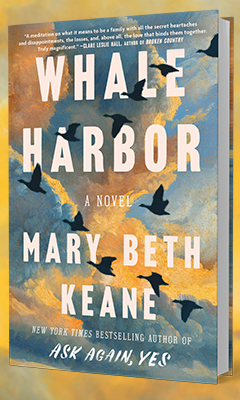
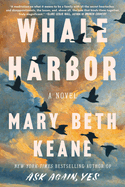
Whale Harbor
by Mary Beth Keane
A fishing village nestled within the rugged terrain of Connemara, Ireland, serves as gravitational center in Whale Harbor by Mary Beth Keane (Ask Again, Yes), a captivating drama that follows the fortunes of a large Irish clan as they plant their flag in various parts of the United States. In particular, it is the story of Macdara Joyce, a young man haunted by a decision he made as a teenager, its impact reverberating like a fault line through his sprawling family. Anchored by moments of grace and humor as the drama migrates from Connemara to Montana and New York, Keane's prose deploys a light, luminous touch even as its plot ventures into heartbreaking territory.
Mac, the industrious second eldest son of Cathal and Mary Joyce, is 16 when the story opens in 1963. Cathal, a stubborn and proud man, is the village postman and local producer of the illicit Irish spirit poitín. Whether out on official business or delivering poitín to customers, he often disappears for days on end from their tiny cottage. Mary is expecting their 11th child, and all indications are it will be a boy like the others. Mary, with her quick wit and boundless love, personifies the formidable pragmatism of mothers, a woman who "had a deep understanding of every possible feeling, even when the person himself might not know he was feeling it."
Mac and his brothers are aware from a young age that they must one day leave their home on the Cuan, a harbor inlet "locked between mountains and sea" where they collect seaweed, raise chickens, and keep two ponies, Elvis and Presley. There are few well-paying prospects for the boys. Learning English, therefore, is a must. Mac's English is better than most and it falls on him to serve as a translator for the university researchers who descend on the Cuan to study the remains of a 66-foot-long fin whale that has washed up on shore.
Nature adds magnificent texture and rhythm to Keane's fifth novel, the vast ocean a backdrop for the Joyces' adventures. Looking down on his village from a mountaintop, Mac can see the "water studded with small islands," and the comfortingly familiar "muck-drowned lane" leading to his family's cottage. Vivid yellow furze lines Connemara's roads, where it is said that "nourishing grass was so scarce the sheep had to wear eyeglasses to find it." Over the years the 40-ton whale, extraordinary in its sheer size, blends into the harbor landscape and carries a symbolic weight for the Joyce brothers as their worlds expand beyond the Cuan.
Keane is an exceptional storyteller, focusing her lens on Mac while, under a more diffused light, his brothers' lives unfold around him. From the handsome Barry to red-headed Thomas, Cathal and his sons are recognizable by hair that sticks straight up, growing "heavenward." Early in the novel readers witness the tender bond between Mac and his rambunctious nine-year-old sibling, Rian, "a boy who once bit the arm of one twice his size when that boy took a pencil off his younger brother." A mischief-maker who adores his older brother, Rian believes that wherever Mac goes, he will take him along.
Mac is expected to follow his eldest sibling, Sean, to England for work, but he is needed at home. "If anyone could find trouble, Rian could," so Mac feels a special responsibility to watch over his brother. Mac is still young, but shoulders adult burdens, especially when a calamity descends on the Joyce household. In its tragic wake, he is compelled to leave Ireland, effectively abandoning Rian.
The second part of the book finds Mac working at a horse ranch under Montana's blue skies, the enormous mountains dwarfing those back home. Adjusting to a new life means burying parts of his old one, and he is wary of the "crushing breathlessness" and guilt he feels when he thinks about Rian. Keane excels at illuminating her protagonist's inner life, the way he is "careful about wanting too much." By the time Barry and others follow him to America and settle in New York, years have passed and Rian, struggling after Mac's departure, has long since run away from home.
New York is where the Joyce brothers are destined to lay down roots, find love and build their own families, yet Rian's absence casts a haunting shadow. For Mac, it's not just about duty toward his younger brother, it's about keeping alive the memories that make you who you are and ensuring that frayed bonds aren't severed forever. "A chasm existed between his old life and this one," and it turns out that the mystery of Rian's whereabouts, and whether he is even alive, can only be solved back in Connemara.
It is Mac's delightful daughter, Mary, who takes center stage as Whale Harbor moves toward its devastating finale. She has inherited Joyce family traits that include a maddening stubbornness, unapologetic authenticity, and a strong commitment to kin, especially her grandfather. It is ultimately through Cathal, a patriarch who in the solidity of his later years represents all that is sacred about home, that a middle-aged Macdara Joyce can finally confront Rian's, and his own, unfinished story. With richly descriptive prose and a deep understanding of ancestral roots, Whale Harbor reminds readers that when it comes to family, there are no neat and tidy endings. --Shahina Piyarali
Scribner,
$29,
hardcover, 352p., 9781668224632,
November 3, 2026
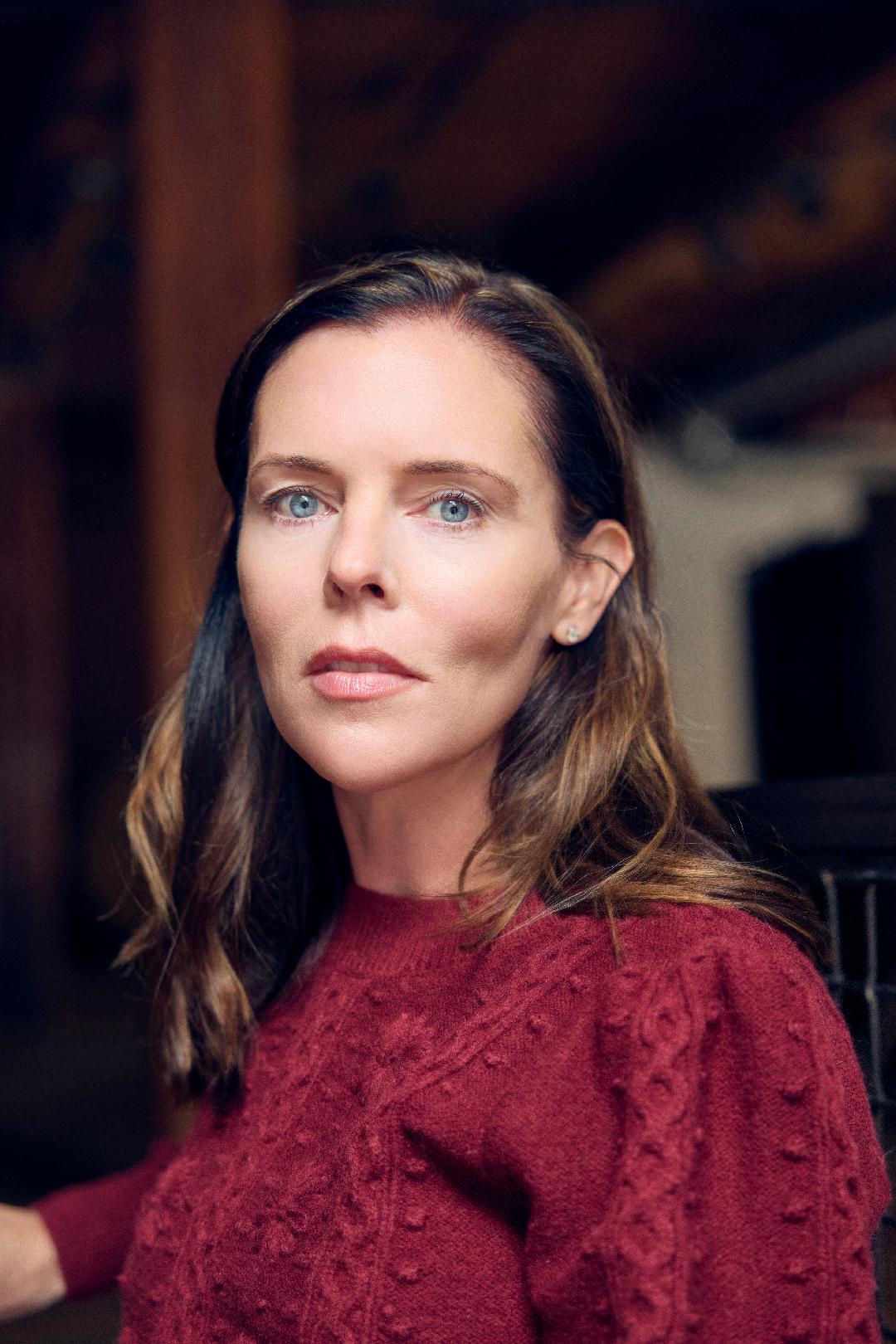
Mary Beth Keane is the author of five acclaimed novels, includingAsk Again, Yesand the brilliantly originalFever, based on the historical figure known as Typhoid Mary. Inspired by her father's family and their migration to the U.S. from Ireland in the 1960s, Whale Harbor (Scribner, November 3, 2026) is the story of Macdara Joyce, one of 11 brothers who grew up in Connemara, Ireland. Keane was awarded a John Simon Guggenheim Fellowship for fiction writing and has received citations from the National Book Foundation, PEN America, and the Hemingway Society. Born in the Bronx to parents from the west of Ireland, she lives in New York with her husband and two sons.
Where did the name Whale Harbor originate? Is there a symbolic value to whales in your novel?
Many Irish place names reflect something about the landscape or physical features of the area and come from the Irish language (though some come from English or Viking languages).The name of the town was a blank for me through the first draft--all I knew was that I wanted it to be completely fictional and did not want to use a real village name where readers might draw comparisons. Once the whale entered the story--something that didn't happen until the second draft--I knew I wanted to reference whales in the name of the place. My uncle Gerry helped me come up with the name in Irish, and told me what locals would refer to it as: The Cuan.
You have a soft spot for Cathal, the local postman and Joyce family patriarch.
I have a soft spot for all characters (and people) who are essentially good, but somehow keep messing up or getting in their own way. I love a redemption arc. I knew that Cathal was full of love, but he was from a time and place where love got so often squashed by practical worries--his being how to feed and clothe all these children. And his worry turned into paralysis turned into severity of a kind and on and on. But Cathal is a curious person, a very smart person, and I knew all along that it would never be too late for Cathal to wise up to what's most important.
In a family of 11 brothers, it's remarkably easy for readers to follow each character. How did you accomplish this narrative feat?
I honestly don't know and it was something I worried about quite a bit. I tried to make it clear early on that the reader doesn't really have to keep track of them--no need to pick up a pen and jot down "okay Noel has black hair, Thomas has red," how boring. I wanted a reader to just relax and take the story in. Instead of describing each boy, I tried to put each of them in action where I could and then I hoped they'd sort of rise up and distinguish themselves in small, surprising ways. And from what I'm hearing, they do.
The invisible thread connecting the Joyce brothers to Rian, their missing sibling, is a powerful force. Without this tragedy would they have remained as close?
Yes, I believe they would have remained close simply because immigration keeps families close, in my experience. If they'd all stayed in Ireland maybe not, but they left and in leaving they made a choice to stick together in this new place they called home.
The women in your story shine with a particular brilliance, from the boys' mother, Mary, all the way through to her namesake granddaughter. Do you see yourself in any of them?
I certainly see myself in the younger Mary Joyce--I too went to an all-girls Catholic high school and was often called to Guidance for emergency meetings about my position on birth control and a woman's right to choose, mortifying my poor mother--but I also see myself in some of her uncles and her grandparents, particularly Cathal (for all his flaws). There is a sort of pathological stubbornness that runs through the Joyces and I definitely mined a well very close to home to find that.
Yours is a large Irish American clan. Are any of them writers?
They are not writers as far as I'm aware, but my family is full of good storytellers. Many of them can hold a crowded room with a story, even one we've all heard many times, and make it feel like we were hearing it for the first time. I think that's where this started for me, being one of the kids listening to the adults tell stories, and noticing that some of them were very good at it, and some weren't. What made the same story come alive when one person told it, and sort of fall flat when another tried? I didn't know it yet, but I was studying the differences when I was very, very young.
Your eldest son has read Whale Harbor. Did he see himself in any of the brothers?
I asked him this question because I didn't want to speak for him, and he says as an older brother he saw himself in how much Macdara thinks about Rian, and how much he loves him. He says if Emmett (his brother) disappeared he'd 100% think about it all his life just like Mac does.
Which authors have most inspired your work?
Oh gosh, there are far too many to name. In my youth, certainly Roddy Doyle and William Trevor were huge influences. As I got older a lot of female writers: Willa Cather, Katherine Anne Porter, Eudora Welty, Edna O'Brien, Claire Keegan. There are so many contemporary writers and novels I find inspiring, and my favorite thing is discovering authors that are new to me, only to find entire backlists that I can then read. The new literature coming out of Ireland right now is astounding in how good it is. --Shahina Piyarali