Latest News
Candlewick Press (MA): Piper at the Gates of Dusk by Patrick Ness
WHAT TO READ NEXT: REVIEWS OF GREAT BOOKS

You won't need a travel agent to book passage on the luxury cruises in these three recent novels: Heather McBreen's Sunk in Love follows a married couple on the rocks as they set sail through the Hawaiian Islands with family members who have no idea that they're preparing to divorce. Meanwhile, Jung Yun's All the World Can Hold sends a ship full of TV soap fans to Bermuda shortly after the 9/11 tragedy hit New York City. And Emma Straub's American Fantasy roams the open ocean with boy band fanatics. Balancing outlandish atmosphere with grave matters, each junket is teeming with joviality and disappointment, public drama and private sorrows, as the waves crest and crash around the passengers. Luckily, you won't need Dramamine, either, as you ease into your sea legs!

--Dave Wheeler, senior editor, Shelf Awareness
FEATURED TITLES
Cover

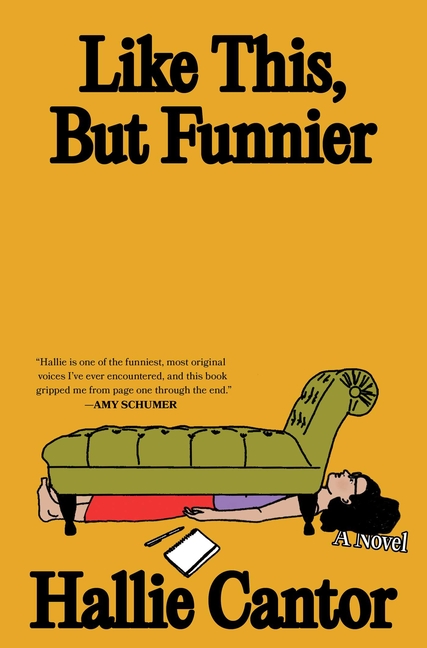
Like This, but Funnier

Hallie Cantor

A 30-something woman writing for television comedy in Los Angeles must wrestle with personal and social as well as professional qualms in this discomfiting and hilarious novel.
Cover

Like This, but Funnier

Hallie Cantor

Simon & Schuster | $28 | 9781668088586

Hallie Cantor's first novel, Like This, but Funnier, is a hilarious and brutally honest send-up of comedy writing for television, a serious consideration of the woes of modern womanhood, and a compassionate telling of one woman's fumbling journey.

After a relatively successful and socially engaged stint in New York writing for a sketch comedy show, Caroline Neumann moved to Los Angeles to write for a sitcom, which was then canceled. She's been working from home for the past four years--if you can call it "working" when she's mostly doing unpaid "development." Her husband, Harry, used to be unhappy at work, too, but now he is a therapist. Dubiously employed and depressed, Caroline navigates lonely, work-from-home desperation, while Harry nudges her to consider motherhood.

Propelled by work-related frustration and curiosity about Harry's favorite therapy client, whom she knows only as "the Teacher," Caroline indulges in a tiny bit of snooping. When she happens to mention a tidbit from the Teacher's life in a meeting with a producer, however, events snowball beyond Caroline's control, until she finds herself working on an actual television script featuring the confidential details of a woman's life that she has no business knowing. And just to keep things complicated, she assents to freeze her eggs for possible future motherhood. What could go wrong?

Cantor brings her experience writing for Arrested Development and Dollface to Caroline's often excruciating story: despite the considerable pathos, these conflicts are deeply funny. This protagonist is, against all odds and her own fears, uncomfortably easy to relate to. Like This, but Funnier is winning, awkward, and unforgettable. --Julia Kastner, blogger at pagesofjulia

Cover

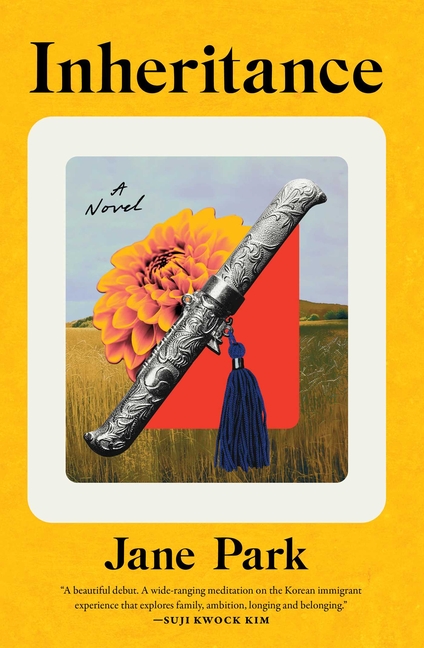
Inheritance

Jane Park

Jane Park's lyrical debut novel resonantly confronts multigenerational family tensions exacerbated by hidden traumas.
Cover

Inheritance

Jane Park

Pegasus Books | $28.95 | 9798897100682

Second-generation Korean Canadian Jane Park's gorgeous debut novel, Inheritance, achingly encapsulates an immigrant family coming to terms with their closest, yet least empathic, relationships: with each other. Anne Kim and her older brother, Charles, were born in Canada, and their parents tell Anne that they moved from Korea for her and Charles's sake. Eventually the family settles in rural Crow Plains, Alberta, where they own and operate a grocery store.

Thirty years later, in 2014, the father has died of a sudden stroke. Anne, now a New York City lawyer with a degree from Yale, returns to Edmonton to help her mother deal with the funeral and aftermath. Charles needs to be picked up from rehab, and she resents him for always forcing her to be the responsible one. Self-admitted "fuckup" Charles also bares hard truths: "You were lucky to be the one to leave and be able to send money and help from a clean distance. I stayed and got my hands dirty." Anne comes to realize how little she knows of their parents: she learns that their father was actually from North Korea; their mother lost an aunt who was rejected after surviving being a comfort woman for the Japanese military.

Park narrates between the "now" that is 2014 and the 1980s and 1990s of the siblings' growing up--and apart--with each time jump effortlessly revealing intricate details of outsider identities, racial tension, societal judgments, cultural divides, mental illness. She meticulously examines the complicated dynamics of a fractured family, of suffocating traditions and splintering rejections, while leading cautiously toward accepting honesty and the possibility of healing. --Terry Hong

NetGalley: Booktrovert.com Sign up free today!
Cover

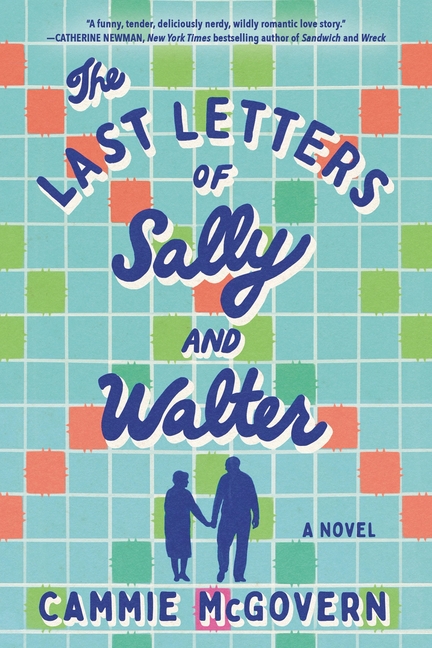
The Last Letters of Sally and Walter

Cammie McGovern

Like playing the Z on a triple-letter score, Cammie McGovern's Scrabble-infused love story is an easy win as Sally and Walter prove it's never too late for a new beginning.
Cover

The Last Letters of Sally and Walter

Cammie McGovern

Sourcebooks Landmark | $17.99 | 9781464246425

Scrabble players rejoice when their tiles and the arrangement of the board align for maximum scoring potential. So, too, will they rejoice at The Last Letters of Sally and Walter by Cammie McGovern (Say What You Will; Hard Landings), a triple-word score of a novel set in an independent senior living community.

Walter is the well-meaning but awkward organizer of Golden Grove's Scrabble club, which newcomer Sally decides to try one night after dinner. "She wasn't sure what she expected, but surely not this: one man seated alone at the center table in the library beside a battered maroon game box." If only to be polite, Sally agrees to play and finds Walter a formidable competitor. Her friend Connie's warning was apt: "Walter was a little intense. But he was also interesting."

When Sally startles Walter with an aptitude for the game, a true friendship blossoms. The game opens them to real conversation--about their marriages, their relationships with and fears for their adult children, and their concerns about the toll aging is taking on their bodies--but Sally resists anything more, worried her progressing Parkinson's disease makes her an undue burden. Ultimately, however, she realizes: "What they needed was connection to others. To look up in the darkness, see a band of light, and be able to say, Oh thank God. There you are." A lively exploration of love's tender persistence even in the face of physical obstacles, McGovern's novel is a win that reminds readers, "We must play while we can. For as long as possible." --Sara Beth West, freelance reviewer and librarian

Cover

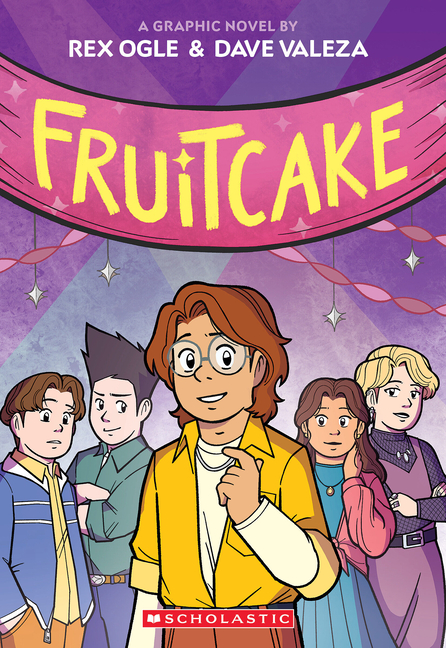
Fruitcake: A Graphic Novel

Rex Ogle, illus. by Dave Valeza

A middle schooler learns what it means to be exactly himself in this breezy and uplifting queer, coming-of-age graphic novel.
Cover

Fruitcake: A Graphic Novel

Rex Ogle, illus. by Dave Valeza

Graphix | $14.99 | 9781338575071

An eighth grader in Texas navigates sexual identity, crushes, and the ever-elusive goal of belonging in this soapy and sweet graphic novel by Printz and Stonewall Honor-winning author Rex Ogle (Road Home), illustrated by frequent collaborator Dave Valeza (Four Eyes; Pizza Face).

As soon as Rex arrives at middle school, he notices that all his friends have "coupled up," leaving him feeling ignored and like a "seventh wheel." Rex awkwardly sets out to find himself a girlfriend, scared of being left out and earning the disparaging "fruitcake" label used by his stepdad and longtime best friend, Drew. But Rex can't deny that his heart races every time he's around athletic, cool Drew. Confusingly for Rex, Drew even flirts with him, but only on his own terms. At the same time, Rex is going on dates with new girl Charlotte. He wants to be a proper boyfriend but, no matter how hard he tries, it feels awkward. "Charlotte's amazing. And I really like her," Rex thinks. "I like Drew, too. Just in a different way.... Not a gay way. No way am I gay.... Right?"

An author's note at graphic novel's end states Fruitcake is largely autobiographical, and with so many details about Rex, his complicated family structure, art class, and his love of comic books, readers can feel the manic heartbeat of a confused young Ogle throughout. Valeza's thickly lined illustrations (colored by Ash Szymanik) and dynamic use of panels similarly immerse one in Rex's world: every single detail is intentional, giving characters additional layers. Unlike the namesake holiday dessert, this is a fruitcake that will likely leave middle-grade readers satisfied and wanting more. --Luis G. Rendon

BOOK REVIEWS
Cover
This heartfelt fable for the digitally automated age follows a sentient vacuum and her endangered owners.
Cover

The Infinite Sadness of Small Appliances

Glenn Dixon

Atria | $27 | 9781668097267

A precocious young machine finds her humanity in the deceptively cozy dystopian novel The Infinite Sadness of Small Appliances by Glenn Dixon (Bootleg Stardust).

In the not-so-far future, a group of smart appliances dutifully serves their aging humans Harold and his terminally ill wife, Edie. The story unfolds mainly through the sensors of Scout, an automated vacuum. She and her friends Watch, the smartwatch who manages the home, Clock, Fridge, and Auto, the self-driving car, don't fully understand the vagaries of human emotion. However, they know Edie's death from cancer means not only grief for Harold but disaster for their household. A technological force known as the Grid rules their world, and it will not allow a lone elderly man to remain in a house as large as Harold's. His grown daughter, Kate, banished from their home by the Grid for hacking into it as a teenager, is allowed to visit to help him downsize, but Harold doesn't want to go. Neither do the appliances. The humans and household gadgets form an alliance to protect Harold's autonomy, but the Grid has eyes and ears everywhere and isn't about to let a couple of humans and a smart vacuum interfere in its plans.

"Futuristic Roomba" must rank high on the list of most unlikely protagonists, but Dixon's characters are calculated to delight without ever tipping the narrative into feeling cynical. The conclusion requires a healthy amount of willing credulity, but readers already charmed by the mechanical cast will likely not mind. This heartfelt fable for the digitally automated age is smart in more than one sense of the word. --Jaclyn Fulwood, blogger at Infinite Reads

Cover
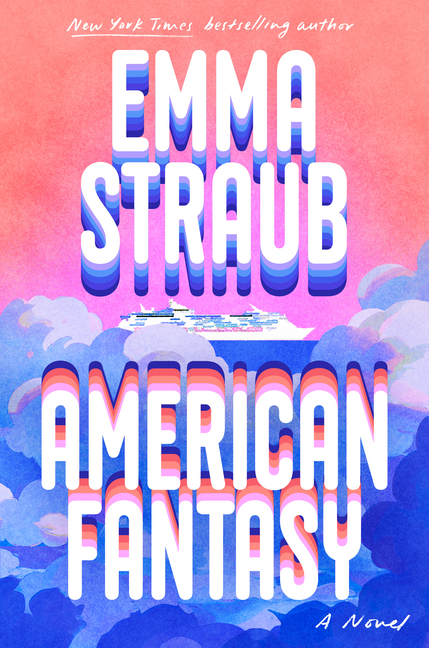
Emma Straub's seventh book blends joviality and disappointment, nostalgia and realism, via the stories of three people on board a boy band reunion cruise.
Cover

American Fantasy

Emma Straub

Riverhead | $30 | 9798217046850

In Emma Straub's buoyant seventh book, American Fantasy, a reunion cruise assembles several people dissatisfied with their lives and hoping to reclaim a sense of possibility.

The Boy Talk 2023 cruise is a five-day route aboard the American Fantasy from Miami to the Bahamas. Thirty-year-old Sarah, head of the Jackrabbit production team in charge of the talent, is nursing a broken heart after her girlfriend left. The other two point-of-view characters are 50-year-old divorcée Annie, a passenger, and Keith Fiore, one of the five boy band members. Keith's older brother, Shawn, is the de facto band leader, eager to prolong the group's success through a world tour. Keith, however, is reluctant. A recovering alcoholic, he'd prefer privacy to live as a normal person and work on his marriage.

At a meet-and-greet, Annie asks Keith if he's okay. Taken aback by a genuine question rather than the usual fawning, he finds himself interested in Annie, and over the next few days they form a connection. Micro-chapters replicate the highly scheduled fun of a cruise. Each night there's another themed party: 1980s, pajamas, prom. The hedonistic atmosphere fosters resentments--and even fistfights--among the band and the passengers.

Compared to the other two protagonists, Sarah gets short shrift, and the round of performances and photo ops can get as repetitive for readers as for the band. Still, this is a potent picture of the downsides of fame and the struggles of midlife. The novel's title is true to the wish-fulfillment nature of the plot, making it a perfect follow-up for fans of Curtis Sittenfeld's Romantic Comedy. --Rebecca Foster, freelance reviewer, proofreader, and blogger at Bookish Beck

Cover
Che Yeun's haunting debut novel, Tailbone, is an aching, raw portrait of an urban teen runaway's unplanned, unprepared independence.
Cover

Tailbone

Che Yeun

Bloomsbury | $26.99 | 9781639737406

Debut author Che Yeun's Tailbone presents a tense, chilling portrait of a teenager's perilous journey into unprepared independence. In 2008, as the global financial crisis hits Seoul, the unnamed 17-year-old narrator is a high school senior unsure she'll graduate with her falling grades. She instead skips classes and roams "the loud, polluted streets of my childhood." Home is made miserable by her abusive father, who only comes home in an alcoholic stupor to berate her mother trapped in eternal subservience.

She leaves home abruptly, becoming "just another hollow teenager bobbing along the stream of Seoul." Traveling to "one of these ghost neighborhoods," she enters "an unrecognizable world" where she takes a room in a women-only lodging house. The current inhabitants of the dilapidated building are unmoored young women, often referred to as a single entity: "girls." They chase dreams of glamour and love while relying on "old desperate idiot men to feed their hunger for pretty things." Juju is the one who stands out, and she teaches the narrator about taking out questionable loans in a parent's name. Juju reluctantly cares, possibly too much, attempting to protect the teen from devolving into one of the women pulled away by "creeps and cars and nightclubs."

Yeun writes with glaring clarity, exposing a tortuous cycle of twisted hope and bleak reality, exacerbated by a sweeping financial downturn that further threatens the girls' already tenuous existence. Societal--and personal--judgment stifles these girls, already openly commodified, but Yeun hauntingly commits to amplifying their humanity, as they confess uncertainty, fight invisibility, savor fleeting moments of kindness and empathy. --Terry Hong

Cover
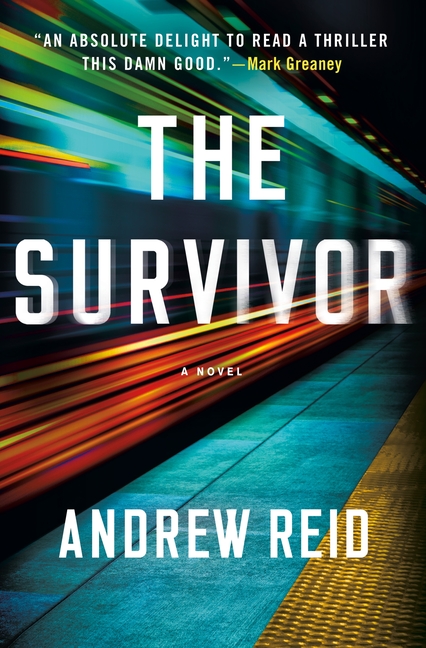
In this unpredictable thriller, a man receives texts warning him that passengers in his subway car will be killed unless he stops them from leaving the train.
Cover

The Survivor

Andrew Reid

Minotaur | $29 | 9781250393289

Intense fear and an evocative atmosphere drive the relentless plot of Andrew Reid's The Survivor as a young man grapples with one of the worst days of his life.

Ben Cross is looking forward to his new job at DataDyne Solutions, a billion-dollar business that helps its clients avoid Environmental Protection Agency fines. But the 26-year-old's first day ends before it begins: he sits at his new desk to find he's locked out of his computer, then he's escorted out by security because he's been fired. Stunned, Ben makes his way to the subway, where his fear of dark, tight places almost prevents his descent down the stairs. After he makes it on board, he receives anonymous text messages saying that unless he stops some passengers from getting off at their stop, they will die. At first, Ben thinks this could be a prank, but then a man is shot after exiting the train. More threatening messages arrive, targeting other passengers and hinting at Ben's secret past. Meanwhile, NYPD Detective Kelly Hendricks, who was recently assigned to the subway system as punishment for publicly humiliating a supervisor, is above ground investigating the first murder.

The Survivor alternates between Ben's and Kelly's perspectives; Reid ramps up the terror as he evokes Ben's vertigo and claustrophobia, while Kelly's motivation comes from her hope that the investigation may put her back in good standing with the NYPD. Reid delivers an unpredictable thriller, doling out Ben's and Kelly's backgrounds as each turn of the train brings more scares. --Oline H. Cogdill, freelance reviewer

Cover
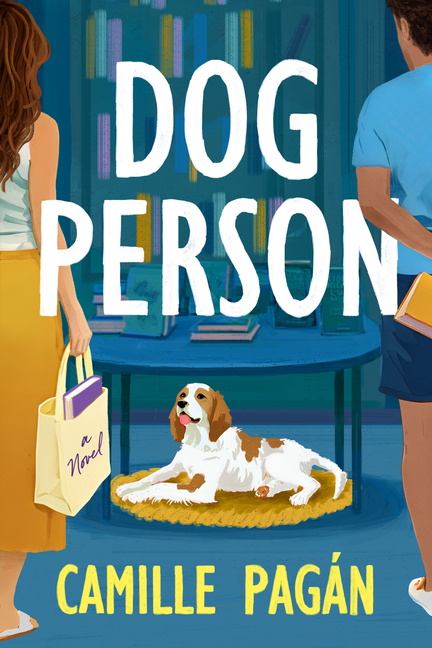
Camille Pagán's warm, witty 11th novel follows an aging rescue dog determined to help his widowed owner find love again--and save his owner's struggling bookstore in the process.
Cover

Dog Person

Camille Pagán

Delacorte Press | $30 | 9798217092055

In her witty, heartwarming 11th novel, Dog Person, Camille Pagán (Good for You) explores the challenges of navigating grief and finding new love--through the eyes of man's best friend.

Since his person, romance novelist Amelia May, died, aging rescue dog Harold has been trying his best to take care of her widowed partner, Miguel. Amelia had charged Harold with helping Miguel find love again after her death, but that's proving difficult; Miguel subsists mostly on cereal and rarely leaves the house, even to tend to Lakeside Books, the Michigan bookstore he and Amelia cofounded. Then, a reclusive author fails to show up for his event, leaving the store in financial trouble, so Harold and Miguel take off for Chicago to find out why. When, instead, they find the author's charming but guarded sister, Fiona, and her precocious tween daughter, Amelia Mae, Harold must employ all his canine ingenuity to fulfill his Amelia's last wish.

Pagán's narrative unfolds in Harold's voice, including sly observations about odd human habits and judgments of people based on their kindness (and dispensing of treats or belly rubs). As Harold and Amelia Mae scheme to nudge Miguel and Fiona closer to each other, Harold is forced to confront his own physical limitations, even as Miguel may finally be emerging from his grief. The supportive staff of booksellers at Lakeside makes a charming addition to a novel that celebrates love in all its forms: platonic, romantic, communal, literary, and--of course--the enduring love of a good dog. --Katie Noah Gibson, blogger at Cakes, Tea and Dreams

Cover
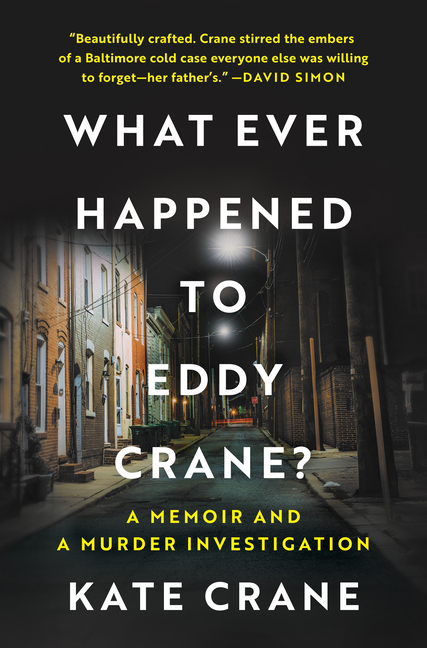
Kate Crane brilliantly traverses genres to offer an intimate but propulsive tribute to her missing father, while uncovering the criminal landscape of 1980s Baltimore.
Cover

What Ever Happened to Eddy Crane?: A Memoir and a Murder Investigation

Kate Crane

Hanover Square Press | $30 | 9781335449399

What Ever Happened to Eddy Crane? is equally gripping as an account of a woman's maturing through loss and grief as it is as a murder investigation. Author Kate Crane's father disappeared one night when she was 12, after calling to say he was on his way home from work. His beloved Mercedes was found abandoned at the airport and, weeks later, the family dog who'd been with him was found unharmed. But nothing was heard from Eddy Crane again.

Kate Crane eventually threw herself into the search for answers, following years of waiting for the authorities to unearth new information, as well as seeing her story used as fodder for television crimes series. Driven by her need for closure, she began an exhaustive DIY inquiry, knocking on the doors of aging witnesses and meeting with anyone involved in the initial investigation. Her quest for truth was far from risk free. As Crane peeled back the layers of a decades-old conspiracy involving local corruption and betrayal, she realized that the people who wanted Eddie gone were still very much alive --and they hadn't forgotten the secrets they killed to protect.

What Ever Happened to Eddy Crane? fluidly blends genres, recounting Crane's personal experience of the 1980s while maintaining a propulsive, thriller-like pace. It is a rare work that manages to be both a rigorous piece of journalism and a tender, heartbreaking meditation on the lasting bond between a father and a daughter. There's no neat cinematic Hollywood ending, but instead this memoir concludes with a raw and candid look at the limits of justice and the limitlessness of love. --Elizabeth DeNoma, executive editor, DeNoma Literary Services, Seattle, Wash.

Cover
Patrick Radden Keefe creates an utterly propulsive true crime investigation from a family's tragic reality.
Cover

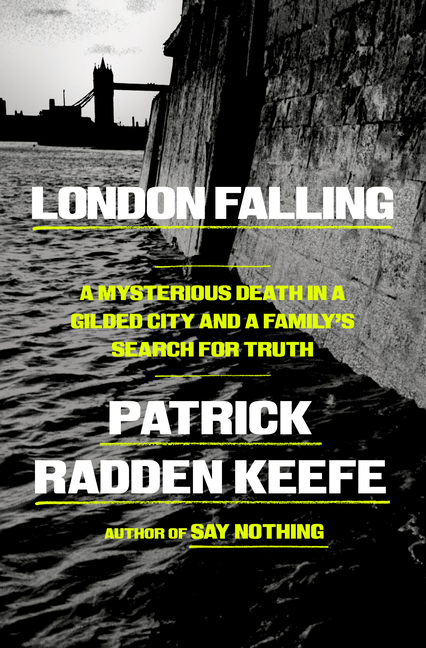
London Falling: A Mysterious Death in a Gilded City and a Family's Search for Truth

Patrick Radden Keefe

Doubleday | $35 | 9780385548533

Investigative journalist Patrick Radden Keefe (Rogues; Say Nothing) transforms family tragedy into a meticulously researched propulsive thriller in London Falling. Born in 2000, Zac Brettler was the younger son of well-to-do Rachelle and Matthew Brettler. "Zac appeared to savor 'the adrenaline of a fast life,' " brandishing wads of cash, accessing exclusive venues. On November 29, 2019, at 2:23 a.m., an MI6 camera caught a young man jumping into the Thames from the fifth-floor balcony of Riverwalk, one of London's poshest addresses. The corpse discovered a few days later was Zac.

The police claimed suicide. But death shockingly exposed Zac's utterly fabricated identity as Zac Ismailov, son of a Russian oligarch estranged from his family and awaiting a £200 million inheritance. Zac spent his final night with "gangster" Verinder Sharma and bankrupt "charlatan" Akbar Shamji, who both managed to exude extreme wealth and high-power connections. Desperate to understand, Rachelle and Matthew invested tireless years fighting "the bizarre passivity of Scotland Yard," eventually hiring a private investigator and conducting their own inquiries.

In a feat of remarkable reportage, Keefe layers expansively diverse narratives--Holocaust survivors, "London's new identity as a twenty-four-hour laundromat for dirty money," the Cipriani Five, Idi Amin, Margaret Thatcher, Muhammad Ali, even Zac's rabbi grandfather's own secret life--to create an irresistible web of mystery. Keefe's unerringly razor-sharp attention links these disparate elements of heedless ambition and otherworldly privilege that created a powerful vacuum of want in a tenacious teen desperate for access. With empathetic insight, Keefe deftly sifts through facts and fictions to distill Zac's young life, enthrallingly seeking the unknowable truth of his tragic death. --Terry Hong

Cover
The phenomenal nonfiction picture book Unbreakable exposes unjust U.S. history while memorializing Japanese American activist Minoru Tonai.
Cover

Unbreakable: A Japanese American Family in an American Incarceration Camp

Minoru Tonai and Jolene Gutiérrez, illus. by Chris Sasaki

Abrams Books for Young Readers | $19.99 | 9781419772894

Unbreakable: A Japanese American Family in an American Incarceration Camp is a spectacular picture book memoir about the childhood experience of Japanese American activist Minoru Tonai, who died in 2023, co-written by Jolene Gutiérrez (The Ofrenda That We Built), illustrated by animator Chris Sasaki (Home Is a Window).

In 1941, Min is a California boy who enjoys collecting rocks. His life begins to change when FBI agents visit his home, suspecting his greengrocer father of being a spy because of his Japanese ethnicity. After the December 7, 1941, Pearl Harbor bombing incites war, FBI agents take Min's father. The boy, his mother, and two siblings are forced to abandon their home, possessions, and dog. Reduced to "family 12803," they're first "herded into a stinking horse stall" at Santa Anita Park, before being incarcerated in Amache Relocation Center in Colorado for the duration of the War.

Tonai and Gutiérrez brilliantly use a personal story to depict the unjust treatment and imprisonment of "more than 120,000 people of Japanese ancestry during World War II." The authors gorgeously capture young Min's doubts, fears, and questions, gifting him agency through an inner narrative. Min's love of stones, a hobby he shares with his beloved father, becomes an affecting motif that signals resilience and strength. Sasaski masterfully controls light and shadow in their digital art, using spare, lilac-hued details--Min's mother's dress, desert blooms--to suggest tenacious hope. Extensive backmatter is appended: standouts include an essay about evolving language and friends' and associates' letters of support for Min's father to the FBI. This formidable trio transforms ignominious history into "something beautiful." --Terry Hong

Cover
This riveting work of middle-grade nonfiction meticulously documents the remarkable 1941 baseball season and its effects on the U.S. as it prepared to enter World War II.
Cover

Baseball's Shining Season: America's Pastime on the Brink of War

Martin W. Sandler and Craig Sandler

Bloomsbury Children's Books | $24.99 | 9781547607976

National Book Award-winning author Martin Sandler (1919: The Year That Changed America) collaborates with his son, journalist Craig Sandler, to chronicle the impact of America's pastime on the United States during the lead-up to World War II in the wholly captivating Baseball's Shining Season.

Major League baseball was a different sport in 1941: the players' salaries were significantly lower; "not a single club was located farther west than St. Louis"; there were just 16 teams; and "every game was played in the afternoon." The Sandlers introduce readers to the New York Yankees' Joe DiMaggio, with his record-breaking hitting streak, and the Red Sox's Ted Williams, with his astounding .400 batting average season. Their accomplishments on the field helped offset fans' dread of impending war: "The bad news would continue to come, but DiMaggio's play would continue to offer a bright spot all the same." Since Major League Baseball was segregated in a "fiercely racist" 1941, the Sandlers dedicate much of the book to the incredible talent found in the Negro Leagues as well as the Japanese and All-American Girls Professional Baseball Leagues. "After the fighting was over, as the world was entering its next chapter, baseball would play a unique and crucial role in rebuilding the relationship" between the United States and Japan.

Baseball's Shining Season is a thorough survey of baseball in 1941, and the Sandlers scrupulously describe the political and historical context of the exceptional season, illustrating its influence on people in the United States and around the world. Martin W. Sandler and Craig Sandler hit it out of the park with this stunning piece of upper middle-grade nonfiction; it's an all-around winner. --Jen Forbus, freelancer

Cover
This stellar YA sci-fi novel, set in the Chaos Walking world, follows brothers as they defend the New World from invasion by gods, and its indigenous populace from humans themselves.
Cover

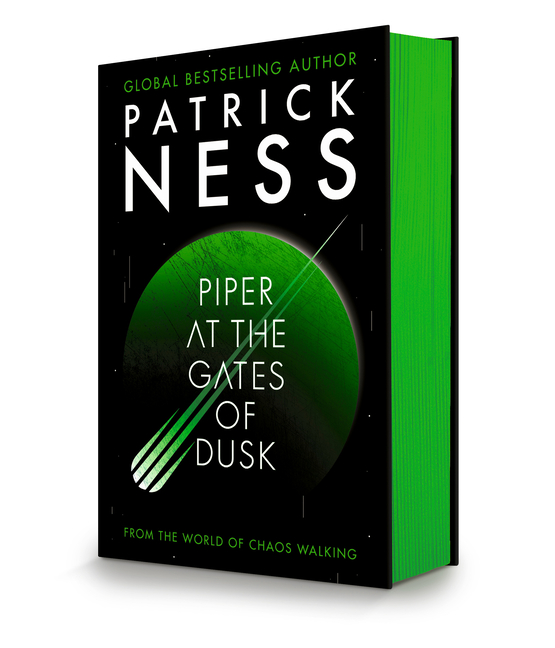
Piper at the Gates of Dusk

Patrick Ness

Candlewick Press | $19.99 | 9781536248302

Two-time Carnegie Medal-winner Patrick Ness returns to the world of Chaos Walking with the gripping and emotional Piper at the Gates of Dusk. This first installment in a planned YA sci-fi trilogy follows the intrepid sons of the original books' protagonists as the teens try to defeat child-thieving gods.

The Land, the indigenous people of the New World, use a wordless form of communication, dubbed "Noise" by the humans who live in "the city" on their planet. "When the first settlers landed... every man had Noise and no woman ever did." A cure was developed and 15-year-old brothers Max and Ben, like all children, received it. Now, a Glyph has arrived in the sky and kids are having Noise nightmares. When gods appear and steal Land and human children alike, Max and Ben learn that this has happened here before--and that an invasion is imminent. The Land and human denizens should unite, but genocidal preacher Margery Wingard denies the existence of gods and claims the Land is responsible. Then the gods surround the city.

Ben and Max offer candid insights in alternating first-person accounts, each expressing sadness and anger for human aggression toward the Land as they endeavor to solve this crisis. Ben, who cannot speak, feels especially voiceless when his communicator breaks; Max, who is adopted and trans, works through a tragic loss and others' judgment to maintain bravery and a good heart. The parents here shine--fallible yet accountable, openly emotional yet nurturing and protective. Ness (And the Ocean Was Our Sky; Different for Boys) delivers an incredibly layered story about settler colonialism, belonging, and the dangers of deceitful leadership, brilliantly juxtaposed with a gorgeous portrayal of interconnection. --Samantha Zaboski, freelance editor and reviewer

Cover
A previously homeschooled teen's world opens as she contemplates escaping her father's coercive control in this disquieting and empathic YA novel.
Cover

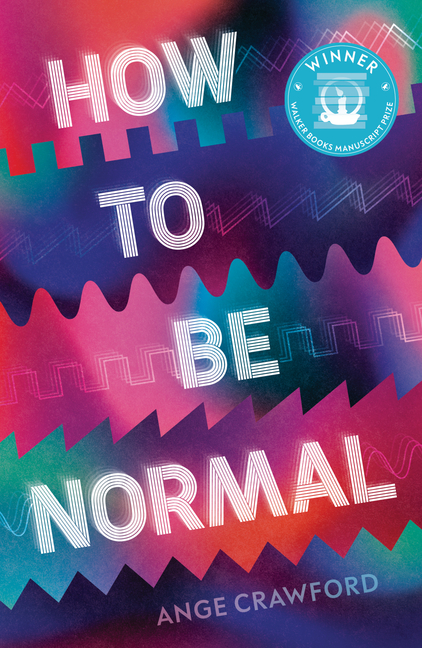
How to Be Normal

Ange Crawford

Walker Books Australia | $19.99 | 9781761602566

Australian author Ange Crawford's compassionate YA debut features a 17-year-old doing her best to appear "normal" at her first "real" high school despite a lifetime of chilling family dysfunction.

Astrid has been homeschooled since her father determined that the family unit is a "tool against the capitalist machine" that must be directed and controlled accordingly. He monitors everything Astrid and her mother eat, wear, and do. But when he loses his job, Astrid's mother must go to work and Astrid starts state school. While the teen is an expert at interpreting her dictatorial dad's moods, high school is a strange and thrilling new world of cursing peers, artificial ingredients, and tentative freedom. Her love for her father clashes painfully with her growing understanding that coercive control is a form of emotional abuse. "Sometimes," she thinks, "love, fear and control are all the same thing." Growing relationships with classmates and her disowned older sibling confuse, excite, and calm Astrid while creating electronic music becomes an escape and an exploration: "I am holding down that same note... twisting it and distorting it, until it wavers like me, and without words it tells everyone how formless I feel under all these lies."

In the gracefully insightful How to Be Normal, Crawford is sensitive to the challenges of seeking and accepting support in circumstances like Astrid's. Crawford shows Astrid's world expanding incrementally as the teen explores her sexuality, her identity, and the possibility of a future free from control. Fans of Jandy Nelson and Helena Fox should be drawn to the deep and dark mental maneuverings of a teen in unsettling transition. --Emilie Coulter, freelance writer and editor

Cover
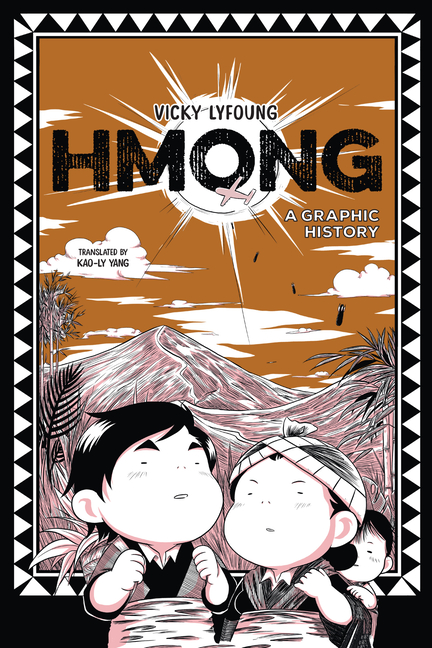
In her striking debut, Hmong: A Graphic History, French-born comics creator Vicky Lyfoung affectingly interweaves her Hmong refugee family's personal story with broader Hmong history.
Cover

Hmong: A Graphic History

Vicky Lyfoung, trans. by Kao-Ly Yang

Graphic Universe | $18.99 | 9798765659823

Author/artist Vicky Lyfoung's debut upper middle-grade memoir, Hmong: A Graphic History, smoothly translated by Kao-Ly Yang, evocatively explores her French-born Hmong identity. Lyfoung was born near Paris in 1990 to Hmong refugee parents, and her childhood was marked with racist taunts, microaggressions, and questions about her ethnicity. At 15, Lyfoung watched a documentary, Laos, la Guerre Oubliée (Laos, the Forgotten War), that changed her life: "It was precisely that moment... that I began to want to know the history of my people."

To better understand herself as a diasporic young Hmong woman, she turned to diligent research. Although specific origins are unclear, the Hmong were "nomadic mountain people from Northern China." Repeated, vicious displacements began in 2000 BCE and populations eventually settled in Myanmar, Laos, Vietnam, and Thailand. The French colonized Laos in 1893, recruiting the Hmong to cultivate poppies for opium, and later to serve as guerilla fighters. The U.S. military followed the French with promises of safety (ostensibly from Communism), then abandoned the country to violent turmoil. Fleeing was the only chance of survival for Lyfoung's family, instigating a perilous journey through Laos, Thailand, and arriving in France in 1977.

Lyfoung displays an unblinking vulnerability and proud admiration as she reconstructs her parents' challenging, isolating experiences as non-French-speaking refugees. Her stark black-and-white panels with impermeable borders suggest a tightly controlled narrative as she concisely condenses sprawling political and cultural history into an approachable, informal graphic novel for young readers. Her rounded characters--more cartoonish cute than realistic--help temper the inhumane brutality she bravely refuses to elide. Stalwartly bearing witness, Lyfoung promises, "I am proud to be Hmong--and will be until the day I die." --Terry Hong

The Writer's Life

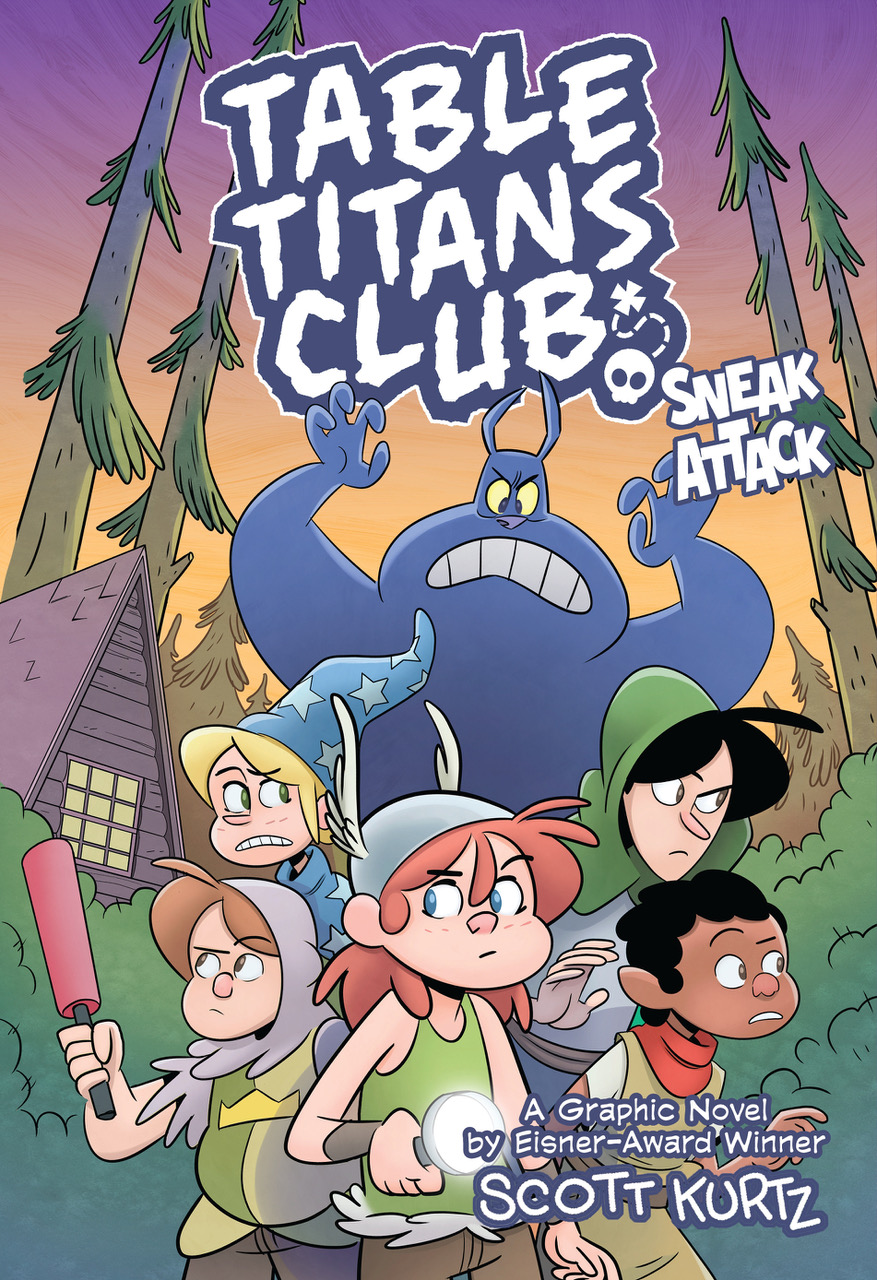
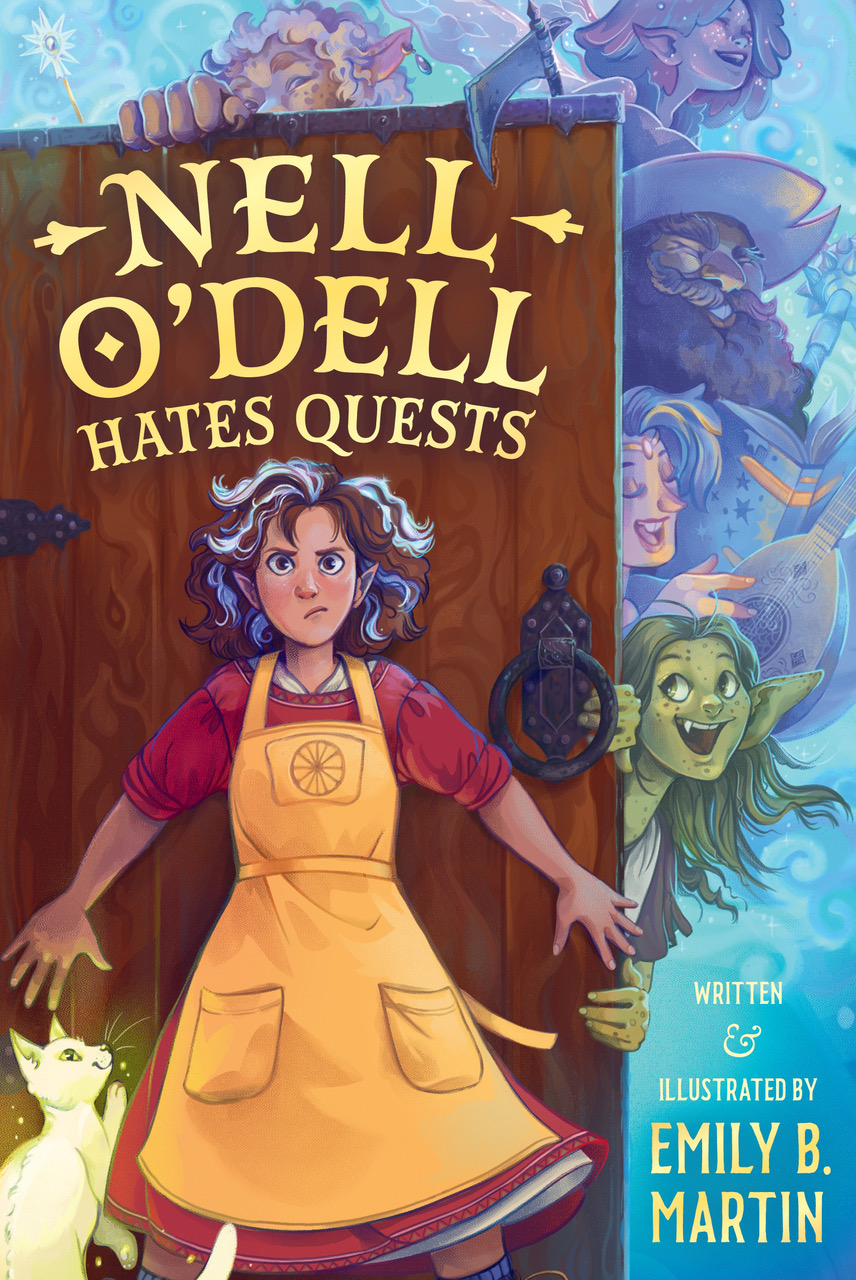
Eisner- and Harvey Award-winning cartoonist Scott Kurtz's second title in his middle-grade Table Titans Club series, Sneak Attack, focuses on five kids excited to be spending their summer at a live-action roleplay camp. Emily B. Martin's middle-grade fantasy Nell O'Dell Hates Quests (Candlewick) features a reluctant adventurer who works at her family's inn serving half-giants, fairies, fauns, and more.

Here, Kurtz and Martin talk D&D, LARPing, their fantasy favorites, and old-school mass-market fantasy covers.

The Writer's Life

Scott Kurtz and Emily B. Martin: Fantastical Origins

Scott Kurtz is an Eisner- and Harvey Award-winning cartoonist who helped pioneer webcomics with his daily feature PvP. Kurtz can be found in the Pacific Northwest, where he occasionally leaves his studio to enjoy the dog park or visit his family.

Emily B. Martin splits her time between working as a park ranger and as an author and illustrator, resulting in her characteristic eco-fantasy adventures. An avid hiker and explorer, she lives in South Carolina with her husband and two daughters.

The second title in Kurtz's middle-grade Table Titans Club series, Sneak Attack (Holiday House), revolves around five friends spending their summer at a live-action roleplay camp. Martin's middle-grade fantasy Nell O'Dell Hates Quests (Candlewick) features a reluctant adventurer who works at her family's inn serving half-giants, fairies, and fauns. Here, Kurtz and Martin talk D&D, LARPing, their fantasy favorites, and old-school mass-market fantasy covers.

Scott Kurtz: I was introduced to Dungeons & Dragons in the fifth grade. Rainy days were my favorite because that meant indoor recess, which was usually spent playing D&D and drawing. In Table Titans Club: Sneak Attack, the club spends the summer at a role-playing camp. Those didn't exist when I was a kid; otherwise, I might have felt differently about being outdoors.

Emily B. Martin: For me, nature and magic go hand in hand.

Kurtz: D&D didn't just introduce me to fantasy stories; it introduced me to storytelling itself. World-building, character development, and plot hooks. Gary Gygax and Dave Arneson lifted elements from Tolkien and Robert E. Howard to turn their tactical combat game into a fantasy role-playing game. I suppose it's ironic that the game led so many of us to the literature that inspired it, rather than the other way around.

Martin: I love that about fantasy--there are so many on-ramps. Even though you, Scott, came to it through RPG and I came to it through Tolkien and folklore, we wound up in very similar places. We both use the building blocks of classic fantasy to explore themes of friendship, belonging, and the ordinary bravery required by everyday life.

Emily B. Martin
(photo: Scott Thomason)

Fantasy lets me write more earnest characters than other genres. When I write in real-world settings, I often shave off some of the wonder--after all, people can only be so starry-eyed if they're battling rush-hour traffic. But the fun comes in for a story like Nell O'Dell Hates Quests when I start adding some of that jaded attitude back in, and it becomes 100 times funnier. Sure, that mage conjuring golden light at table five is one of the most powerful beings alive, but he also asked Nell to make his broccoli-cheddar soup dairy-free, and she doesn't have time for this right now.

Kurtz: I think fantasy is so appealing to me because it has a long tradition of letting readers explore truth at a mythic distance. It gives you the freedom to take complicated, sometimes uncomfortable, and deeply human ideas and wrap them in dragons and magic so readers can approach them safely. I know any genre is capable of this, but there's something ancient about fantasy that seems to be baked in the DNA of every culture. I mean, there's gotta be a reason the first bedtime stories we hear usually start with "Once upon a time."

Martin: Yes! Both of our stories lean into RPG tropes rather than trying to subvert or transcend them. Why did you want to acknowledge and embrace those tropes instead of avoiding them?

Kurtz: For me, it's about nostalgia. It's a way of recapturing that feeling I had as a kid sitting around a kitchen table and creating worlds with my best friends. Rolling dice, snack foods, and arguing over rules is as much a part of those memories as the heroes we played and the quests we embarked on.

Scott Kurtz

You incorporated those tropes brilliantly into Nell's world, making them a metaphor of consumer culture. Questing is an economic driver and marketing ploy. So good! I'm nowhere near as clever.

Martin: Not true! Combining RPG tropes with summer camp culture is such a great marriage of halcyon memories. I know my time at summer camp always carried a veneer of fantasy. I also think the clear skill classes RPG builds on are very appealing to young readers, who are often looking for ways to express their identities. With Nell O'Dell Hates Quests, I got to build a world around those well-defined identities and then have Nell ask, "But do we have to do it like this?"

Kurtz: Both of our books also feature tension between a reluctant quester and a reckless one. What about that dynamic speaks to you?

Martin: For me, it creates this beautiful push-and-pull that permeates the whole story, which can help juice up a sagging plot. It also gives me ample opportunity for character development at the end of the book, when both characters finally recognize the value of the other's opposite approach.

How about you? In Table Titans Club: Sneak Attack, we wonder if the gung-ho attitudes of Val and Midge will launch this quest into new chaos, or whether the cooler heads of Kate and Nell will prevail. And it opens possibilities for banter and unexpected solutions, like when practical Kate gets Val and the others through the minotaur's maze by following the "right-hand rule."

Kurtz: It was a way for me to create conflict without making anyone an outright villain or antagonist. Friction is fuel when it comes to storytelling. Plus, it's just fun to see characters who refuse to be anyone else but themselves, no matter what trouble it causes. Nell is a cynic, and Midge is a believer. Val wears her heart on her sleeve, and Kate hides hers behind her popularity and status. It opens all kinds of avenues to explore as they interact and learn from each other.

Martin: Exactly. So, we're both artists. Fantasy novels and classic fantasy illustration have a storied history. Did those illustrations shape your imagination?

Kurtz: I remember the painted covers of all the fantasy mass market paperbacks I read as a kid. Dragonlance, Xanth, Dragonriders of Pern. They're burned in my brain. I can tell you which cover my copy of The Hobbit had. The same goes for the covers of my Player's Handbook and Dungeon Master's Guide.

Martin: Same! Those paperback covers were some of the earliest inspirations for my art subjects and style, and they influenced how I pictured fantasy worlds on a macro level.

Lately I've been digging into the historical foundations of things like clothing, travel, and castle construction to understand why visual fantasy tropes emerged as they did across so many of those influential illustrations: the folk-culture revival in the '70s pulling from the troubadour style of the early 19th century pulling from the medieval period. It's very fun, and it gives me a better understanding about how and why my worlds look a certain way.


Book Candy
Rediscover

German filmmaker and author Alexander Kluge, "who elevated cinematic collages into an art form and won the top prize at the Venice film festival in 1968," died March 25 at age 94, the Guardian reported. A former assistant of legendary filmmaker Fritz Lang, Kluge "was an accomplished director of intellectually rewarding, if at times oblique filmic essays, and an ever-productive writer of short fiction."

Rediscover

Rediscover: Alexander Kluge

German filmmaker and author Alexander Kluge, "who elevated cinematic collages into an art form and won the top prize at the Venice film festival in 1968," died March 25 at age 94, the Guardian reported. A former assistant of legendary filmmaker Fritz Lang, Kluge "was an accomplished director of intellectually rewarding, if at times oblique filmic essays, and an ever-productive writer of short fiction."

He also played a key role in organizing the New German Cinema movement, which "brought forth better-known auteurs such as Rainer Werner Fassbinder and Werner Herzog, and he continued to bring experimental film to the small screen in his later years," the Guardian noted.

After World War II, Kluge studied law, history and church music at the Goethe University Frankfurt, where he was mentored by the philosopher Theodor Adorno. Although he began practicing law, he was increasingly drawn to literature and film. In 1962, he signed the Oberhausen Manifesto, which called on the German film industry to break free from current trends.

Abschied von Gestern (released as Yesterday Girl in the U.S.), one of the first films to emerge from the manifesto, is the story "of a Jewish woman who struggles to settle in West Germany after fleeing from the east, it was told in a jarring style, using discontinuous sound and a non-sequential narrative," the Guardian wrote. It won the Silver Lion at the Venice film festival, an honor Kluge followed up by winning the Golden Lion two years later with Artists in the Big Top: Perplexed.

As an author, Kluge's first collection of short stories, Case Histories (1962) "brought him accolades for its empathetic depiction of characters trying to navigate a country defeated in war," the New York Times noted, adding that his experimental novel The Battle (1964) "focused on the Battle of Stalingrad as seen through German eyes" and won the Bavarian State Prize for Literature.

Kluge's films often included a montage of photographs, archival footage, paintings, drawings and intertitles. This was echoed in his short stories and novels, which included documentary material like photos, maps and diagrams, complicating narratives as he melded nonfiction and fiction, the Times added. One of the best-known writers to be influenced by Kluge's use of photographs was W.G. Sebald (The Rings of Saturn).  

In the 1960s, Kluge became involved in Gruppe 47, the West German literary association whose members included Günter Grass and Heinrich Böll.

Kluge worked with the German sociologist philosopher Oskar Negt, whom he met in 1969. They co-authored three books about political and social subjects, including historical materialism and the philosopher Jürgen Habermas's concept of the bourgeois public square. In 1972, they published Public Sphere and Experience, a sociological study of television, his first book-length collaboration with Negt.

Kluge's book Chronicle of Feelings (2000) is a two-volume, 2,000-page collection of his stories. The Times wrote that he "initiated collaborations with artists, writers and thinkers for exhibitions, theater productions and staged readings. Among those he partnered with were the German artists Gerhard Richter and Georg Baselitz."

Kluge also collaborated with the U.S. author Ben Lerner on a "poetic dialogue" book, The Snows of Venice (Spector Books, 2018). "My language is not as beautiful as lyrics," he told the Paris Review at the time. "This is something that you have to know how to do. Poets are diamond polishers. But there are also collectors of raw diamonds--I am a good archaeologist."

His many honors include the Georg Büchner and Heinrich Böll literary prizes and, in 2007, the Order of Merit of the Federal Republic of Germany, the Times noted. Despite his success as a filmmaker, Kluge maintained that he always considered himself an author first, observing in his 1993 Heinrich Böll Prize acceptance speech: "This is because books have patience and can wait, since the word is the only repository of human experience that is independent of time.... Books are a generous medium, and I still grieve when I think of the library burning in Alexandria. I feel in myself a spontaneous desire to rewrite the books that perished then." Many of Kluge's books are available in English from Seagull Books.

Powered by: Xtenit