For the past 30 years, the Academy of American Poets has celebrated April as National Poetry Month, highlighting the social influence of poets and the power of literature in verse. Notably, this year also marks the country's 250th anniversary of its founding. Today's issue features an interview with Joshua Bennett about his book We (the People of the United States) and how such a powerful pronoun spirals outward from the tight cohorts of family to the broad collective of a nation. And we're also sharing "He Said My Name," a poem supercharged with environmental energy, excerpted from the new collection by Jake Skeets, Horses. April may be half over, but poetry deserves to be fêted all year long!
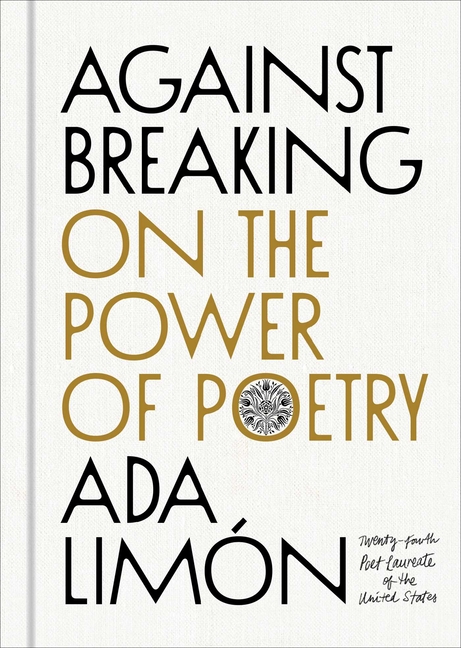
Against Breaking: On the Power of Poetry
Ada Limón
Against Breaking: On the Power of Poetry
Ada Limón
Scribner | $20 | 9781668224724
At the close of her term as the 24th U.S. Poet Laureate, Ada Limón (The Hurting Kind; You Are Here) delivered a final lecture at the Library of Congress on April 17, 2025. Published in book form (and dedicated to former Librarian of Congress Carla Hayden, "who is the best of us"), Against Breaking: On the Power of Poetry is an invocation and invitation. Limón calls on poets such as Lucille Clifton and Mary Oliver and William Butler Yeats as she attempts to "do at least one thing: make a case for poetry." Though the book is slight, the effort is weighty, and Limón does well more than just one thing.
Time and again, Limón asks questions of herself and of humanity such as, "Aren't we all walking around with some unsaid pain, or some uncelebrated wonder?" She argues that "poetry is powerful in part because it exists in the questions and holds no answers. It's the opposite of a polemic, or a prescription; instead, it's an interrogation of the world and one's place within it." Trusting that power, she notes the necessity of poetry: "We need a secular sacred language, something that is galvanizing without certainty," and "if you need to be reminded of what makes us human, tender, brave, flawed, and worthy of love, then you need poetry." To be read in the sunshine of a single afternoon and again whenever that reminder is needed, Against Breaking is an argument in favor of the good and beautiful found in poetry. --Sara Beth West, freelance reviewer and librarian
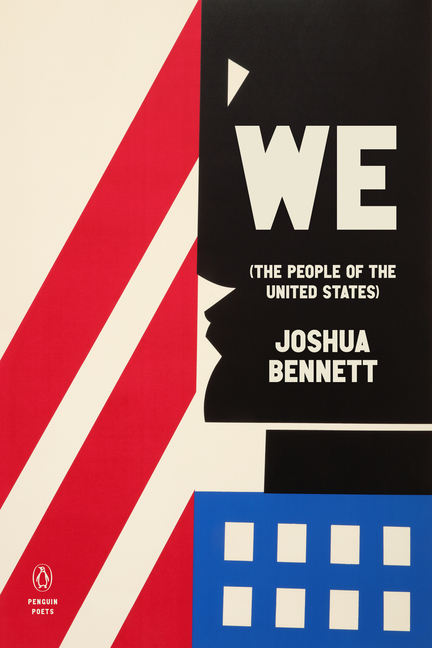
We (the People of the United States)
Joshua Bennett
We (the People of the United States)
Joshua Bennett
Penguin Books | $20 | 9780143138648
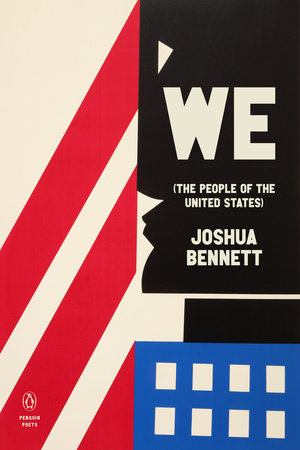
To hear Joshua Bennett's spoken-word poetry performed is to feel something erupt inside the structure and syllable of language. It is a conflagration, each line thrusting errant sparks into the air and threatening to ignite. That same energy and rhythm live in We (the People of the United States), a book-length work in two parts that searches for "the self not mine but ours," a line from A.R. Ammons in the epigraph.
The first section, "We," features a slim six poems about family, a familiar form of "we." In the first of two poems titled "We," Bennett writes of childhood efforts to "command the language// we inherited to live anew, or else/ fail magnificently at trying to say// what we held most dear, but could not/ yet sketch onto the palimpsest// of the world/ as we knew it." The book's second part uses Virgil's Georgics as its backbone; its ancient lines appear within Bennett's collection of 50 poems, one for each state of the United States. In "Decatur, Alabama," he describes how "the roll call of your children reads like the first/ ballot of blackness's hall of fame," and he dedicates "Talbot County, Maryland" to Frederick Douglass, who "spoke the images/ behind his eyes into colors we could carry & keep."
This stunning collection uplifts music and poetry, inventions and scientists, a collective sounding of light and life. And always, Bennett exalts the words and those who craft them, such as Zora Neale Hurston, "arms filled with pages// blank as bone, searching for the words we need/ but cannot hold and remain as we are." --Sara Beth West, freelance reviewer and librarian
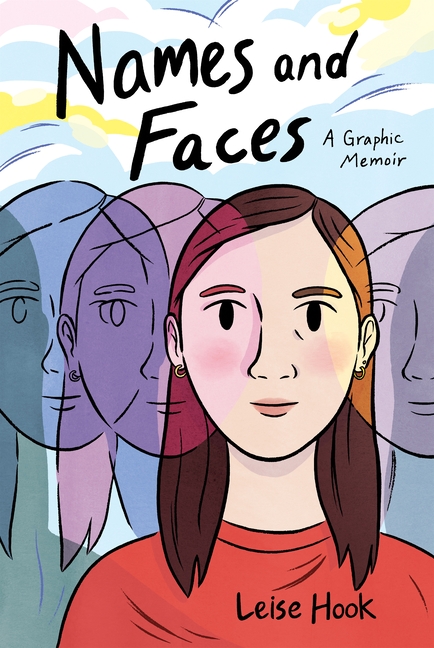
Names and Faces: A Graphic Memoir
Leise Hook
Names and Faces: A Graphic Memoir
Leise Hook
Holt | $29.99 | 9781250845030
In the nine interlinked sections of her thought-provoking, poignant debut graphic memoir, Names and Faces, Leise Hook grapples with "what it means to have a mixed identity in a world that insists on its impossibility."
Hook beautifully marries the verbal and visual representation of her internal struggle, using predominant shadings of blue and salmon pink, with full-color renderings reserved for flashbacks or moments of clarity. In the introduction, she sets the stage for the tug-of-war within, a U.S.-born woman caught between her mother's Chinese heritage and her father's German roots. Her parents, both linguists, each gave her a name: Liang Li Dun in Chinese; Leise Sara Hook in English. A striking panel image in "Names" shows her portrait in triplicate, a red outline sketch and a blue outline sketch flanking a full-color rendering ("Leise and Lidun/ live alongside/ each other").
In "Fluency," Hook again uses a triple portrait image, this time in gray half-tones, to show a left profile speaking in English, the central image looking out at readers, and the right profile speaking in Chinese. Hook breaks her blue- and pink-dominated palette for full-color memories of elementary classmates in Michigan and of sixth grade at an international school in Tokyo. Hook begins the final section in a blue-tinted color scheme with a memory of sitting for a painter at age six, and ends with her own creation of a full-color self-portrait. Hook generously lays out the moving specifics of her journey, and thus allows readers to experience the universal, ongoing struggle to form a self. Her interrogation offers a template of the questions that make for a meaningful life. --Jennifer M. Brown
A Potion, a Powder, a Little Bit of Magic: Or, Like Lightning in an Umbrella Storm
Philip C. Stead
A Potion, a Powder, a Little Bit of Magic: Or, Like Lightning in an Umbrella Storm
Philip C. Stead
Neal Porter Books | $18.99 | 9780823458097
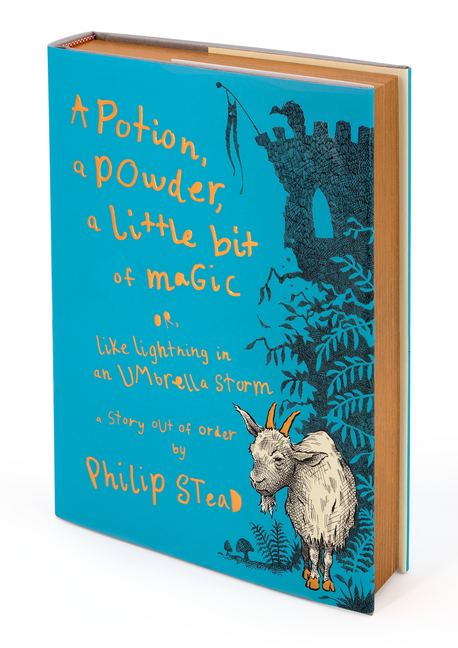
Author/illustrator Philip Stead (A Sick Day for Amos McGee; The Purloining of Prince Oleomargarine) makes his first solo excursion into middle-grade with an enchanting work of nonsense so grand it requires 24 morals. And 24 goats.
At six years old, orphan Bernadette was "plucked... from the side of the road" by the Royal Hiring Committee "to feed and water" the 24 goats holding up the king's castle. Though Bernadette believes she is not "capable of anything unexpected" of her, she is kind, inventive, and works diligently "until the day, six years later, when Lancelot made a run for it." That same day, the king decides to eat Bernadette's best friend, the turtle Perseverance, for dinner. Bernadette ventures out to The Tree Who Grants Wishes in hopes of saving Perseverance; in Bernadette's absence, the other 23 goats free themselves of their "tiresome burden."
Stead's A Potion, a Powder, a Little Bit of Magic is brimming with clever wordplay, entertaining absurdity, and tremendous creativity. His narrator--both the author and a character in the book--tickles funny bones by bouncing back and forth through out-of-order chapters, misusing Latin phrases, and scrambling to finish the protagonist's story before readers can finish the book. (The 24 morals are inevitable truths that the author desperately tries to invent in real time). Stead's heavily cross-hatched black-and-white illustrations are both fabulously silly enhancements to the text and visual depictions of characters that can be dour, sweet, adorable, or scary. A Potion is unconventional and unrestrained as it tells an abiding, elegant fairytale (of sorts). --Jen Forbus, freelancer
The Left and the Lucky
Willy Vlautin
Harper | $26.99 | 9780063346635
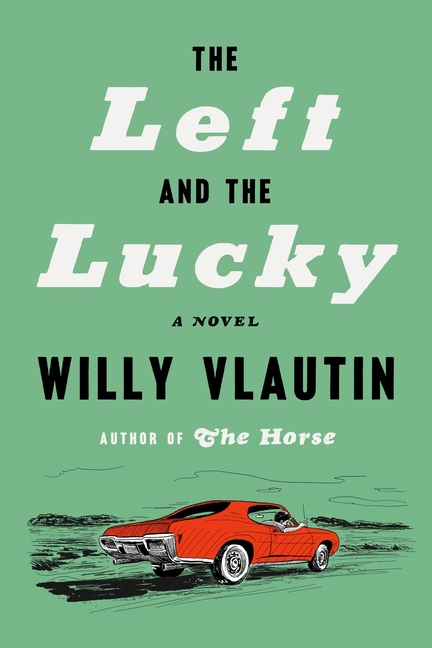
Willy Vlautin (The Horse) applies his characteristic compassion and spare tone to an unlikely friendship in The Left and the Lucky, a novel of hard times and scant hope. A boy whose life has been ruled by abuse and neglect and a man whose hard work has been rewarded by betrayal and loss find each other in working-class Portland, Ore., and forge a hard-won bond to their mutual benefit.
Russell is eight years old and lives with his grandmother, who has dementia; his mother, who works nights; and his teenaged brother, who is angry and troubled. As the latter spins further afield, Russell dreams of building a boat or an airplane to take him away to an unpopulated island near Hawai'i. Eddie, who lives next door, runs a small house-painting business, working six or more days a week. Russell turns up on Eddie's rounds of the neighborhood: out too late, hiding from something. The man offers the boy food, a ride home. Russell begins waiting in Eddie's backyard each night, and Eddie gives him odd jobs and shelter from violence.
In his eighth novel, Vlautin continues to focus upon an American underclass marked by desperation and poverty, people often forgotten or abandoned. With a gruff tenderness, a quiet lyricism, and moments of humor, he highlights not only the built family that Russell and Eddie assemble, but also motley characters from their neighborhood. The Left and the Lucky is often grim, but Eddie's dogged decency uplifts even in this grayscale world of limited options. Vlautin's character sketches and the careful value he places on perseverance are not soon forgotten. --Julia Kastner, blogger at pagesofjulia
Midnight, at the War
Devi S. Laskar
Mariner Books | $30 | 9780063289437
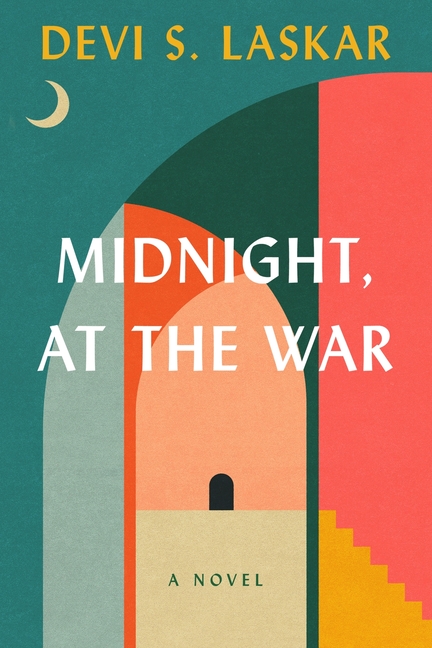
Devi S. Laskar's absorbing novel Midnight, at the War spotlights an international reporter facing personal, professional, and global conflicts.
In April 2001, Rita Das lands at her unnamed, predominantly Arabic-speaking destination, only ever referred to as "[--------]." Her recent marriage hasn't stopped her from taking far-flung assignments to devastated zones where she reports on "numbers stories" all the while sneaking in "more human interest stories" amid functional tallies. Time with her husband, Sebastian, hardly seems a priority; Rita still regularly seeks out her philandering former lover. She neglects even her most beloved bond, that with her mother: they have "an arrangement" that despite the return of her breast cancer, Mom "will not die until she becomes a grandmother." But when 9/11 happens just before she's scheduled to fly back to New York, Rita misses her opportunity to say goodbye to Mom at the hospital, and that loss further fractures an already tenuous relationship with her father.
Tragedies multiply within her intimate circle: her best friend's last appointment was at the World Trade Center, and a pair of journalist colleagues are kidnapped and tortured. She becomes pregnant, unsure who the father is, and claims an opportunity to escape to [--------], where distance, surrounded by danger and decimation, might finally offer Rita some semblance of clarity.
Throughout her multilayered narrative, former journalist Laskar (Atlas of Reds and Blues; Circa) deftly dovetails Rita's complicated backstory of race, culture, disconnects, and dysfunction, with the relentlessly unceasing headlines that have undoubtedly left the world numb. Through the tumult happening on the pages, Laskar distills an impressive novel filled with empathy, inspiration, and ultimately hope. --Terry Hong
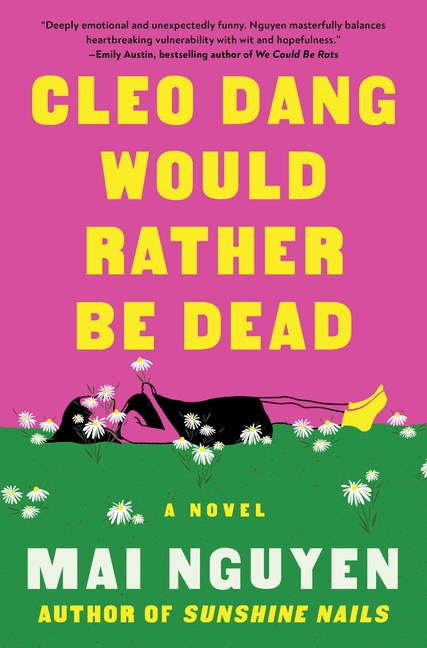
Cleo Dang Would Rather Be Dead
Mai Nguyen
Atria | $28 | 9781668080863
Mai Nguyen's morbidly funny sophomore novel, Cleo Dang Would Rather Be Dead, explores the raw depths of grief as the title character flounders after her infant daughter's death. Devastated and on leave from her job, Cleo takes a position at the funeral home that hosted her daughter Daisy's service. As she drags herself through each day, she encounters not only death, but life--in all its mundanity, frustration, and joy.
Nguyen (Sunshine Nails) writes in Cleo's sharp, wry voice, taking readers deep into her overwhelmed state. Cleo bites her tongue at people's well-meaning condolences, but occasionally, a snarky rejoinder (or a scream) slips out. After a failed attempt to return to her office early, Cleo drifts through the days in a fog, alternating between guilt, rage, and debilitating sadness. Desperate for some form of distraction, she begins working as the funeral director's assistant. Cleo immerses herself in the details of death while she hopes to forget about her heartache, at least temporarily. Instead, she repeatedly faces the reality of death--not only Daisy's but many other people's--and the variety of ways people grieve. Compounding her difficulty is the presence of her best friend and neighbor, Paloma, whose healthy baby was born on the same day as Daisy.
Readers will follow Cleo's jagged journey with a mixture of tension, empathy, and amusement: Cleo is grieving, but she still has a quippy sense of humor, and her impressions of her funeral home colleagues and clients are peppered with sardonic observations. Touching and insightful, Nguyen's novel is a moving depiction of motherhood and an honest portrait of grief in its multilayered complexity. --Katie Noah Gibson, blogger at Cakes, Tea and Dreams
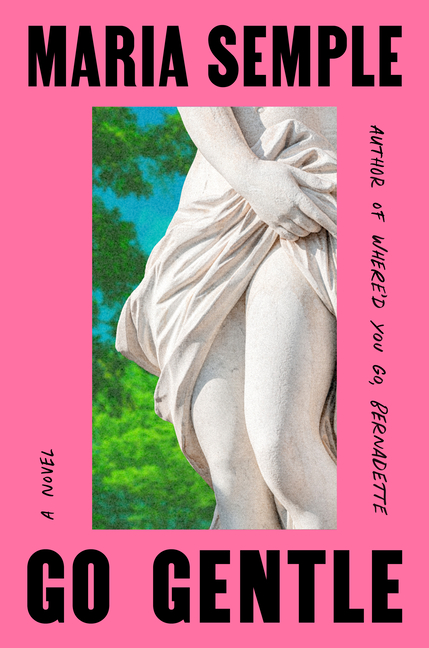
Go Gentle
Maria Semple
Putnam | $30 | 9798217176632
An explosion at London's British Museum sets off the exhilarating drama of Go Gentle by Maria Semple, narrated by a New Yorker who finds herself at the center of an international art heist connected to her employer. The story is set amid the whimsical grandeur of a prestigious Manhattan address with scenic detours to a French chateau, attractive backdrops for an adventure swirling with art world mystique, comedy, and middle-aged sexual exploits.
Adora Hazzard is a resident philosopher at the swanky Lockwood Library museum. Its fabulously wealthy owners, Layla and Lionel Lockwood, live in a massive glass structure with a statuary garden and guards who are ex-Mossad agents. The novel's Stoic-inspired heroine is convinced her dating days are behind her until, in tandem with the art heist, she unwittingly stumbles into a romance that upends her tidy life. It all starts with a suave, mysterious stranger she meets at the ballet. The erotically charged attraction between Adora and the "expensively moisturized" Digby shatters her peace of mind even as their clever back-and-forth makes for dazzling dialogue. Meanwhile, the latest addition to the Lockwoods' statuary, a valuable French statue of questionable provenance, arrives in New York to great fanfare.
Go Gentle's marvelously madcap storylines converge as the action shifts to Paris and Digby's true identity becomes devastatingly clear, setting into motion an unanticipated finale that will have Semple fans cheering heartily from the sidelines. Semple (Today Will Be Different; Where'd You Go, Bernadette?) is an acclaimed storyteller with a fondness for intellectually dazzling heroines of a certain age, and her fourth novel is her best yet. --Shahina Piyarali
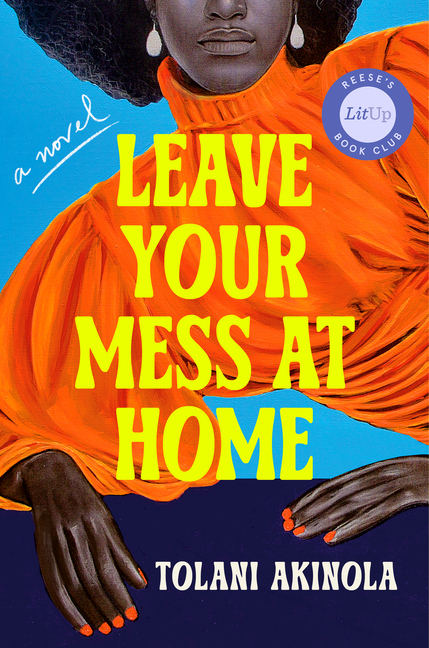
Leave Your Mess at Home
Tolani Akinola
Pamela Dorman Books | $29 | 9780593834190
Tolstoy may have made famous the claim that every unhappy family is unhappy in its own way, but Tolani Akinola takes the old adage to new heights in Leave Your Mess at Home, an incredible and moving debut novel centered on one family's dysfunction that probes questions of familial belonging and duty, immigration and identity, harm and healing.
The Longes moved to Chicago from Nigeria in search of the American Dream and, from the outside, they've achieved it. But Ola, a successful businessman, is considering how to raise his first child in a world not built to be kind to men like him, neither Black enough for American culture nor Nigerian enough to belong fully to his parents' people. Anjola, a doctor, is burnt out in her career and secretly in love with her best friend, who is engaged to someone else. Karen is still in university, but is as unclear on how to tell her parents she does not want to be a doctor as she is on how to tell them she might be gay. And all of that is not to mention Sola, the eldest daughter, long estranged from her family.
When Sola returns to Chicago following the very public implosion of her influencer career, her homecoming proves the harbinger of a great reckoning for the Longes, as long-buried secrets are laid bare. Heartfelt and heartbreaking, Leave Your Mess at Home is a reminder that everyone is a product of where they come from, yet in belonging to a family, there is always choice in what shape that belonging may take across hurt and harm and, ultimately, healing. --Kerry McHugh, freelance writer
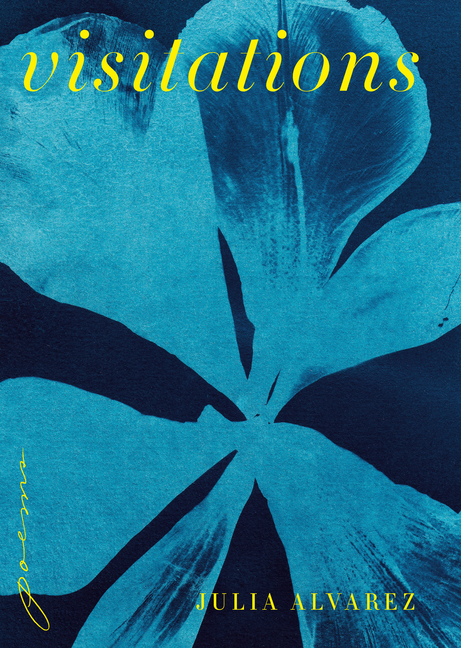
Visitations: Poems
Julia Alvarez
Knopf | $27 | 9780593805039
Like a miniature autobiography in verse, Julia Alvarez's radiant poetry collection Visitations offers snapshots from her life: a childhood in the Dominican Republic, immigration to 1960s New York City, the vicissitudes of adulthood, and the bittersweetness of later-life love.
Alvarez's ability to inhabit earlier mindsets and re-create decades-old pivotal moments is astounding. In her afterword, Alvarez (The Cemetery of Untold Stories) recalls, "despite the silencing and censorship of the Trujillo dictatorship, poetry flourished" in oral form in 1950s Dominican Republic. Poetry "was political by its very existence," and she imagines that the poet's role then, as now, is to lighten the evening--and perhaps the burden of repression: "I am to make the difference, turn the tide/ on the darkness massing round as the night drops down."
After the family's move to the U.S. in 1960, her world expanded as her father's shrank--brilliantly captured using the metaphors of Alice's Adventures in Wonderland, which she reads in "Waiting for My Father to Pick Me Up at the Library." "I'd already gone through that door/ and couldn't go back" versus the "This was the trade-off for coming to America:/ you became as small as the country you came from" that she addresses to her late father, who struggled to learn English. Aging and troubling world events threaten her sangfroid, but unexpected romance ("this spring-surprise/ of love in our autumn years") and the comforts of home ("I Go Through the House, Turning Off Lights") keep her steady.
With its vivid scenes and alliterative phrasing, this gorgeous collection presents food and family, memory and companionship, as talismans to hold against the darkness. --Rebecca Foster, freelance reviewer, proofreader, and blogger at Bookish Beck
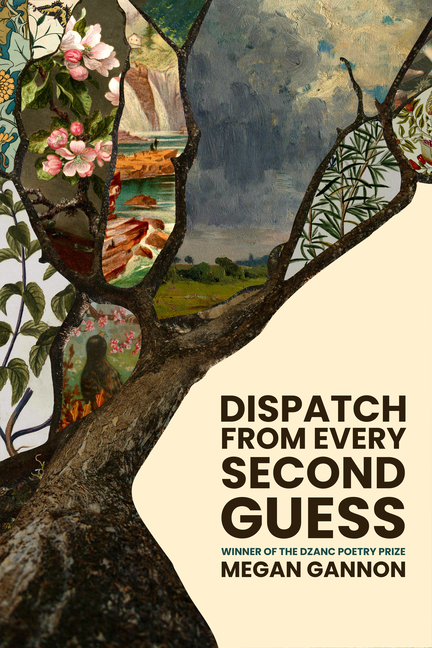
Dispatch from Every Second Guess
Megan Gannon
Dzanc Books | $17.95 | 9781938603761
Dispatch from Every Second Guess, Megan Gannon's fourth work, is a moving memoir in verse about midlife marriage and parenting in an "age of senseless storylines."
The book cycles through landmarks from the author's life, including transracial adoption, divorce, finding love again, and blending families. But "personal and political begin and end// the same way," Gannon (Cumberland) notes, and news of police and vigilante murders make her fear for her Black son's future. He's not even protected at a hotel pool, where an angry mother manhandles him for stumbling into her blonde daughter; when Gannon confronts the woman, she insists it was a misunderstanding.
All of the poems include the word "Dispatch" in the title. Most are in unrhymed couplets, sometimes ending with a single envoi-like line. A clever in-joke: in this free-verse work, the only end rhymes are to be found in "Dispatch from Advanced Poetry." More often, the poems are laced with alliteration or enhanced by repetition, such as "Because..." anaphora and "safe" closing each stanza of a ghazal. The collection also contains lines borrowed from Mary Oliver and one adapted from Robert Frost.
Gannon interrogates everyday metaphors (e.g., a trapped bird) and fairy tales--if her husband's daughter is the princess, is she the wicked stepmother? Given life's uncertainty and fragility, she seems to suggest, one must cling all the more to loved ones during turbulent times. A poem pondering marriage commemorates "the always-lost-but-somehow-still-lasting-now"--all experience, especially happiness, is fleeting, but Gannon's poetry is adept at capturing it. --Rebecca Foster, freelance reviewer, proofreader, and blogger at Bookish Beck
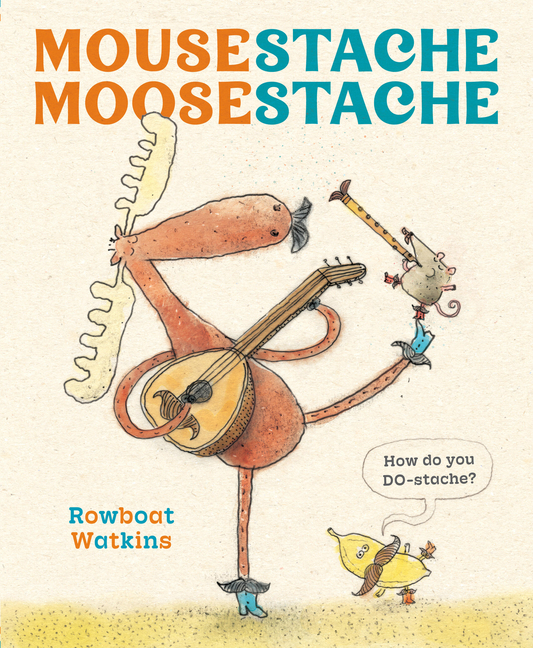
Mousestache Moosestache
Rowboat Watkins
Chronicle Books | $18.99 | 9781797233918
Mousestache Moosestache by Ezra Jack Keats Award-winner Rowboat Watkins (Rude Cakes; Go-Go Guys) is a delightfully rhythmic, rib-tickling picture book about a mouse and a moose who together encounter an abundance of zany facial hair.
Readers meet Mousestache, a tiny gray mustachioed mouse, and Moosestache, a gargantuan brown moose with a thick black 'stache, as they bow down to each other in salutation ("How do you DO-stache?"). What follows is a cyclical series of spreads with comic-style vignettes, each repeating the opening text's portmanteau pattern. "Cowstache" is reading under a tree; "Coostache" is the bird reading beside the cow. The absurdity increases as mustaches adorn unexpected objects: "Shoestache" is the mouse's shoe-shaped abode with a mustache roof; "Grandfather clockstaches" have hair in place of hands; "Mountainous rockstaches" are crowned with clouds in a recognizable shape. Mousestache and Moosestache arrive in an equatorial forest where "tropical fruitstaches" (bananas and pineapples) "dancing in bootstaches... strum... lutestaches" and "toot flutestaches." Eventually the mouse and moose give readers a meta-farewell from outer space because they "ran out of roomstaches."
Watkins's eccentric yet charming illustrations, sprightly rendered with pencils, pens, and "whatever else happened to be right under the artist's nose," complement both the book's casual tone and quirky premise. The text's wild plays on the word "mustache" are likely to encourage humorous, tongue-tied read-alouds, while its simple rhyme and sentence structure should be accessible to emerging readers. Fans of Dr. Seuss, Philip Bunting's Wombat, and Scott Rothman's Parfait, Not Parfait! simply must(stache) pick up this book. --Cristina Iannarino, children's book buyer, Books on the Square, Providence, RI.
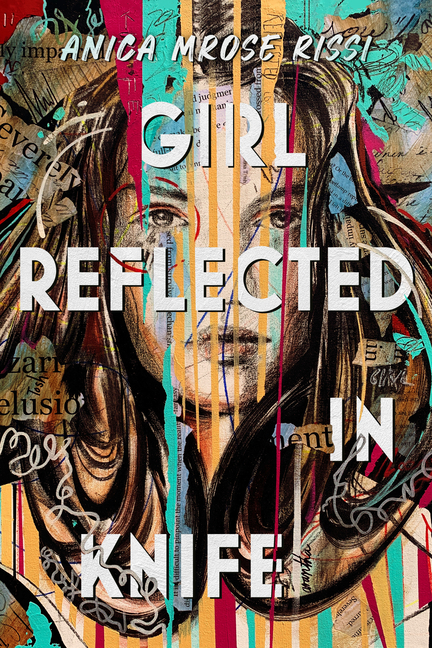
Girl Reflected in Knife
Anica Mrose Rissi
Dutton Books for Young Readers | $19.99 | 9780593859827
Girl Reflected in Knife is a psychologically harrowing YA novel that follows a vulnerable teen as she navigates a breakup and the grief-fueled disassociation that ensues.
Seventeen-year-old white Destiny Black has "never been lucky in anything"--her mother has a history of addiction, she's suffered abuse, and a childhood "game of make-believe" as a trauma response "crossed from survival mechanism into full-blown delusion," landing her in psychiatric treatment. Destiny expects more of the same when her recently sober mother moves them to yet another new town. Then she meets Ryan, the town's football star, and the two fall in love. Just as Destiny starts believing in "happily right now," Ryan breaks it off to "focus on the season." Destiny is shattered. An impromptu lie lends her some "stolen hope," but ultimately leads to her escaping back into her childhood fantasy world. Destiny slowly spirals into a distorted reality that will make her lose everything she believes she has gained.
Anica Mrose Rissi (Wishing Season) deftly examines mental health through the lens of internalized trauma and skewed self-perception. Destiny always has one foot in an alternate reality, either through art or directly in her life, blurring "the line between what feels real and what is real." Rissi handles these sensitive moments with compassion. As Destiny's story unfolds, Rissi builds empathy with heartbreaking examples, such as Destiny's mother selling her bike for drug money. Enlightening fairy tale-like story interstitials appear throughout, further demonstrating Destiny's attempts at self-protection. This emotional YA novel is both tragic and mesmerizing. --Lana Barnes, freelance reviewer and proofreader
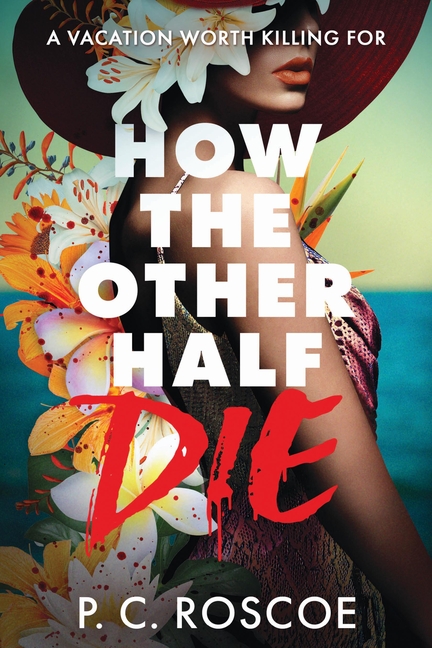
How the Other Half Die
P.C. Roscoe
Little, Brown Books for Young Readers | $12.99 | 9780316601788
British adult romance author Pippa Roscoe, writing as P.C. Roscoe, makes her U.S. YA debut with How the Other Half Kill, a dramatic whodunit set among the rich and powerful on a private Caribbean island.
Avery Finch, Hugo Vandenburg, twins Sydney and Archie Devereux, and Leo Walker have spent their summers on Mokani Island since they were children. Now, the five college-age teens are together again to spend 12 days "on an island so beautiful, so luxurious, only a few of the world's wealthiest people [have] ever set foot on it." However, Avery brought a guest--Nora, her not-wealthy freshman roommate--and is uncomfortable around Hugo, whom she recently broke up with. Hugo is angry and hiding a massive betrayal by one of his fathers, "the gazillionaire owners" of Mokani. Sydney, Avery's best friend, disappeared at the beginning of freshman year without explanation; Archie is being evasive; and Leo, the son of the resort's prestigious Afro-Caribbean private chef and the only non-white kid in the crew, is staff this year. Each teen is hiding something, every parent has a secret, and someone makes the deadly mistake of trying to bring wrongdoing to light.
While this thriller takes its time getting to the thrills, once they arrive, Roscoe's nail-biter takes off. The story shifts among Avery's, Hugo's, and Leo's points of view, three unreliable narrators who share half-truths, confused alliances, and vague understandings of the island's interpersonal politics. The identity of the victim may be unsurprising, but the eventual reveal of the murderer and a sneaky epilogue will almost certainly send readers immediately back to page one. --Siân Gaetano, children's and YA editor, Shelf Awareness
The Dream Factory
Steph Matuku, illus. by Zak Ātea
Tate Publishing | $17.99 | 9781849769891
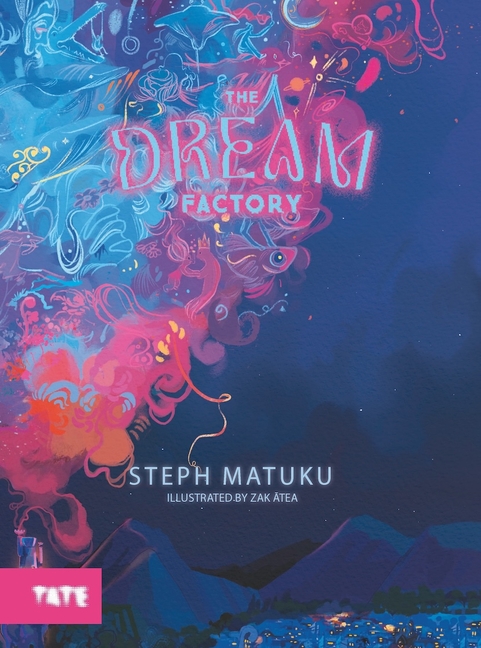
Māori creators Steph Matuku and Zak Ātea make their U.S. debuts with The Dream Factory, an inventive, imaginative, and inspirational picture book folktale.
The dream factory stands at the edge of a town. When the sun sinks behind the hills, the dream machine switches on. "Dream mist in all different colors" pours out of the factory windows, drifts over town, and gifts the townsfolk with dreams "of riding unicorns, and swimming with mermaids." When the dreamers awaken, they paint, bake, sing, and invent. Then a "curious kererū" (wood pigeon) accidentally drops a feather into the dream machine, breaking it. That night, "dream mist in swirling gray and black" pours out of the windows and drifts over town. The next morning, after an evening dreaming of "unicorns with too many horns, and slimy mermaids with long, sharp teeth," the people decide to shut down the factory. The dreams stop, and so too does art and invention. It is only the kererū who can bring life back to the dream machine.
The world visualized here features people from different cultures--most with brown skin, some with traditional Māori tattoos--a variety of legendary creatures, and riotously colored architecture and clothing. The kererū is treasured in Māori culture and sometimes considered a symbol of transformation; the bird is the only consistent spot of vibrant color as the palette goes from technicolor to drab shades that match a lackluster life without art, creativity, and scientific exploration. With the return of "wonderful dreams" comes a return to explosive color. The Dream Factory--with soothing text and bountifully creative illustrations--should prove an excellent bedtime read. --Melinda Greenblatt, freelance book reviewer
Airports: Behind the Scenes
Anna Ridley, illus. by Maxim Usik
Thames & Hudson | $21.95 | 9780500653876
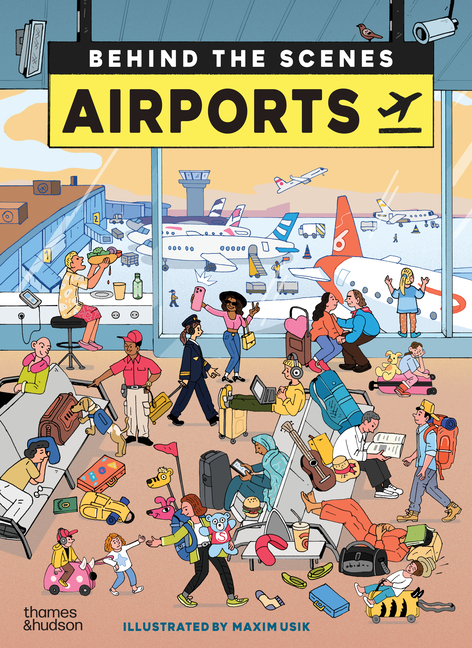
Young travelers-to-be can explore the inner workings of an international airport in the instructive and illuminating, Richard Scarry-style picture book Airports, from illustrator Maxim Usik (Where's Attenborough) and "consultant" Laurence Hardisty. In nine factual (and funny) chapters, the creators reveal the mysteries and intricacies of these large transportation hubs that "move millions of people around the world every year."
Sections--such as "What's Behind the Scenes," "Can a Body Scanner See Me Naked," and "What Side of the Road Do Planes Fly On"--include thoroughly labeled illustrations of the topic area, like the departure gate, airport security, or taxiways. The plethora of labels do sometimes make it challenging to determine what a specific label is referring to, but this may lead to engaging discussion about the content. Accompanying the busy imagery are answers to questions the target age range should find especially captivating: "Can I take snakes on a plane?" "Where does all the poop go?" "Can a plane fly itself?" Each chapter contains enlightening details ("take regular sips of cold water and focus your eyes on the horizon" if you feel queasy while flying) and fun trivia (most airports choose beagles as sniffer dogs "because they are very friendly") that can be edifying for anyone in an international airport or on a plane.
Airports is an entertaining and informative way to familiarize oneself with the inner workings and myriad employees of these transportation nerve centers. Back matter includes an index and glossary of bolded terms. Whether you're a frequent flyer or preparing for your first endeavor, fasten your seat belt, sit back, and enjoy the ride. --Jen Forbus, freelancer
Poet Joshua Bennett's new collection, We (The People of the United States), is a fireworks display of light and sound and color, considering both family and country in a book-length poem about collectives. It's the perfect way to mark the 250th anniversary of the United States, and in today's interview, Bennett elaborates on what it feels like to write a poem and what it means to live in poetic times.
The Writer's Life
Joshua Bennett: We, a Powerful Plural Pronoun
![]() |
|
| Joshua Bennett (photo: Rog Walker) |
|
Joshua Bennett lives with his family in Massachusetts, where he serves as a professor of literature and distinguished chair of the humanities at MIT. His work (The Sobbing School, Being Property Once Myself, The Study of Human Life) includes spoken-word and scholarship, poetry and prose.
Bennett has two new titles: The People Can Fly (Little, Brown), a memoir and history; and the poetry collection We (the People of the United States) (Penguin Books; reviewed in this issue). This book-length fireworks display of light and sound and color is perfect way to mark the 250th anniversary of the United States.
Which came first: the poems themselves or the idea for the collection?
I'm a poet who writes a lot about my family, and it started with me thinking about a certain vision of domestic tranquility, to pull some more language from formal state documents. I thought, well, this is my "we." This is my collective that is forming the way I think about the highest aims and stakes of human life. And that's when it started to cohere, this idea of a powerful plural pronoun that's not just a family, but a people, a nation. So a poem for each state, a meditation on invention, what it means to be part of a family, a nation, a people. I tried to make sure that, for every state, I had a poem that wasn't just historically accurate, but emotionally resonant, that felt like it was in pursuit of a larger historical or social or emotional truth.
Did you have ties to the places that you were highlighting? How did you build the map?
I did start, I think, from the heart. The first poem in the "The People of the United States" sequence is in Yonkers. We begin in the place where I grew up. I model that after Virgil's invocation to book one of the Georgics, which became the beating heart of the book. From there, we end up in Alabama, where my father was born, where my uncles and aunts are from. I tried to start from a place of thinking critically about family, about family ties, about geographic ties. And then from there, I started thinking deeply about the works of art that framed so much in my childhood, so when I went to write about Minnesota, I thought about Prince. When I went to Michigan, I thought about Motown. And then I thought about the poems and the poets. That's really how I built out the map. It was a series of concentric circles from that childhood life emanating outward to the works of art and the inventions--the trampoline, the typewriter, the television.
The word "ascension" jumps off the page in this collection, a resonance with your memoir The People Can Fly. What makes that such a powerful image?
As a little boy, I thought I could literally fly. One day, if I said the right words or put myself in the right position or thought the right thoughts. So, that's always at the core of my poems. But I think that's also the feeling that a good poem gives you, right? Dickinson talks about a poem making her feel so cold that no fire can ever warm her. Poetry should make you feel a kind of metaphysical thing, should in some ways make you feel the most in your body you've ever felt and like you've been transported beyond its bounds. I'm always thinking about how poetry can take us higher.
What does that poem feel like inside you before it has been born?
When I sit down to write a poem, I'm trying to be quiet and let the language flow through me. I think of what Merwin says about the electricity of writing poems, that feeling when a sequence of words begins to pick up an electrical charge. I feel a little bit of that. When I'm typing, I can see when the music starts to come together in a certain way. It's almost like the words are reaching into the space of the blank page, and they're pulling new partners onto the dance floor. And by the end, you have an ensemble.
In "Cincinnati, Ohio," you write about the way that Charles Henry Turner understood that ants had "a shared store of recollection, maps of the world exchanged over time and across consciousness," which is the project of the book too, right?
Yeah, that's exactly right. And for me, that's not a form of diminishment. It's quite natural that ants would be a part of our ensemble. I'm devoted to thinking about these writers who imagined what I call relation without rank--the idea that we could, and maybe even must, have a relationship to the flowers and the animals, the earth and the air, understanding that we are in a deep, relational wisdom. The poems are one way for me to think about how we can pass down these maps of the world from generation to generation and deepen our understanding, but also maybe give us a bit more delight. I think life is more beautiful and a bit more fun, frankly, when you understand that you're not alone. You never were alone. You never have to be alone. You are part of a constellation that spans thousands of years, and you can tap into it through these things called books, through songs, through images. You can practice the art of accompaniment.
What makes poetry the right response to this moment?
I think about that line from Nikki Giovanni's poem "For Saundra": "perhaps these are not poetic/ times/ at all." But I think we're always in poetic times. Because poetry is how we give heightened language to the fullness of our lives, right? In times of social and political upheaval, that's absolutely the time for us to return to a certain kind of heightened language for life itself. Because the preciousness of life is being attacked on all sides. So it's not just the practice of writing poetry, but of reading poetry, which was first. It's our inaugural literary art. Our ancestors created this thing to commemorate new love, to mourn the day, to celebrate new life, to remember the locations of mountains, rivers, and trees. It is a technology of memory. And there's a reason we've kept it going for thousands of years. We'll always need to return to the language that reminds us that we're called to each other. That we need each other to survive. The act of writing the poem tends to imply a listener, an audience. It's a reminder that there's someone out there who might hear you and call back to you. --Sara Beth West, freelance reviewer and librarian

On Instagram, poet and psychotherapist Jane Seskin, author of Older, Wiser, Shorter: The Truth and Humor of Life After 65: Poems (Tallfellow Press), reflects on what it's like to have a poem published in Women's Day in her 80s after publishing five poems in the magazine in the '80s. "There's room for a second act."
---
The New York Public Library recommended titles by and about "women who shaped New York City."
---
"What Inspired William Shakespeare's Romeo and Juliet?" Mental Floss has an answer.
Book Candy
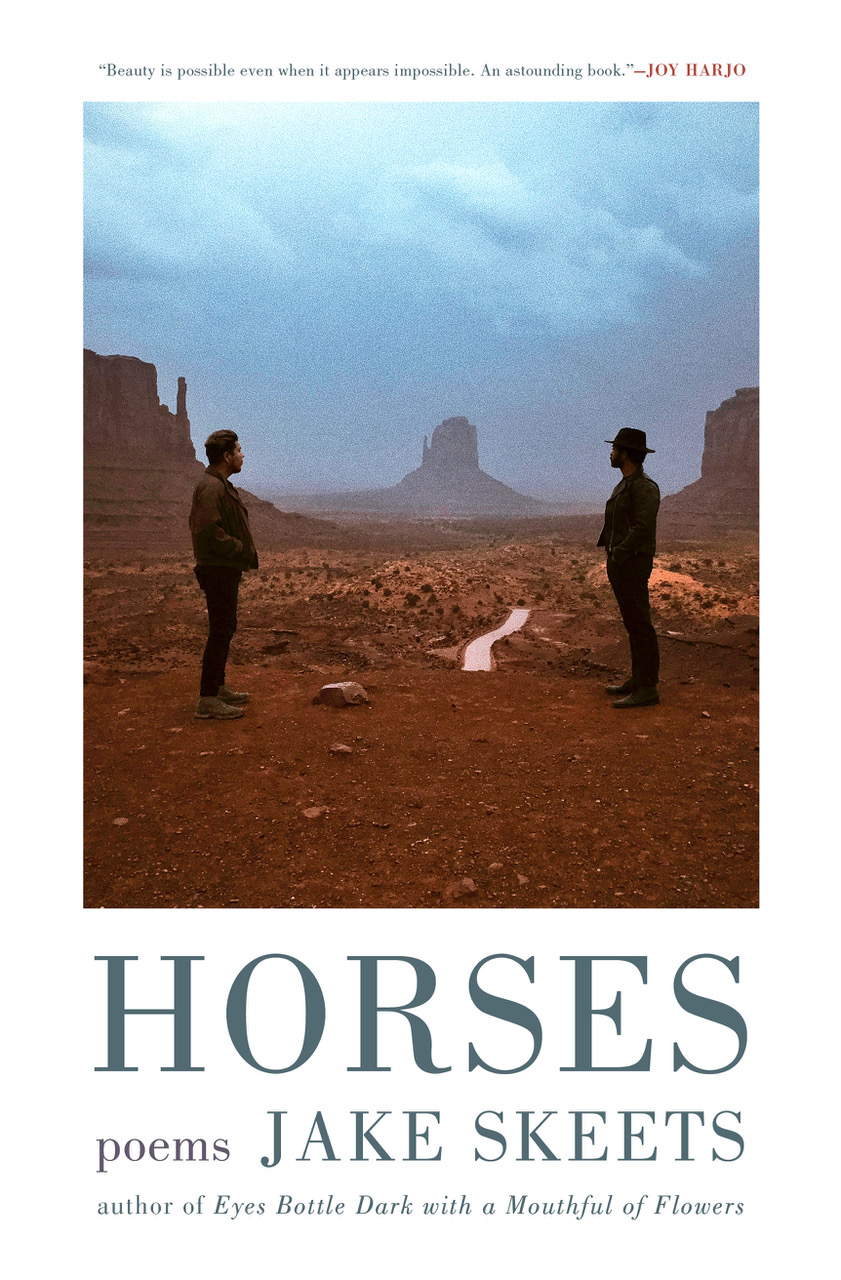
In celebration of April as Poetry Month, our issue today includes reviews of recent works and an interview with a poet. But we also wanted to include something extra special to mark the occasion. So please enjoy this piece excerpted from Horses, the new collection by Jake Skeets, an award-winning poet from the Navajo Nation who teaches at the University of Oklahoma.
A Poem for the Day
Jake Skeets: 'He Said My Name'
|
|||
![]() |
|||
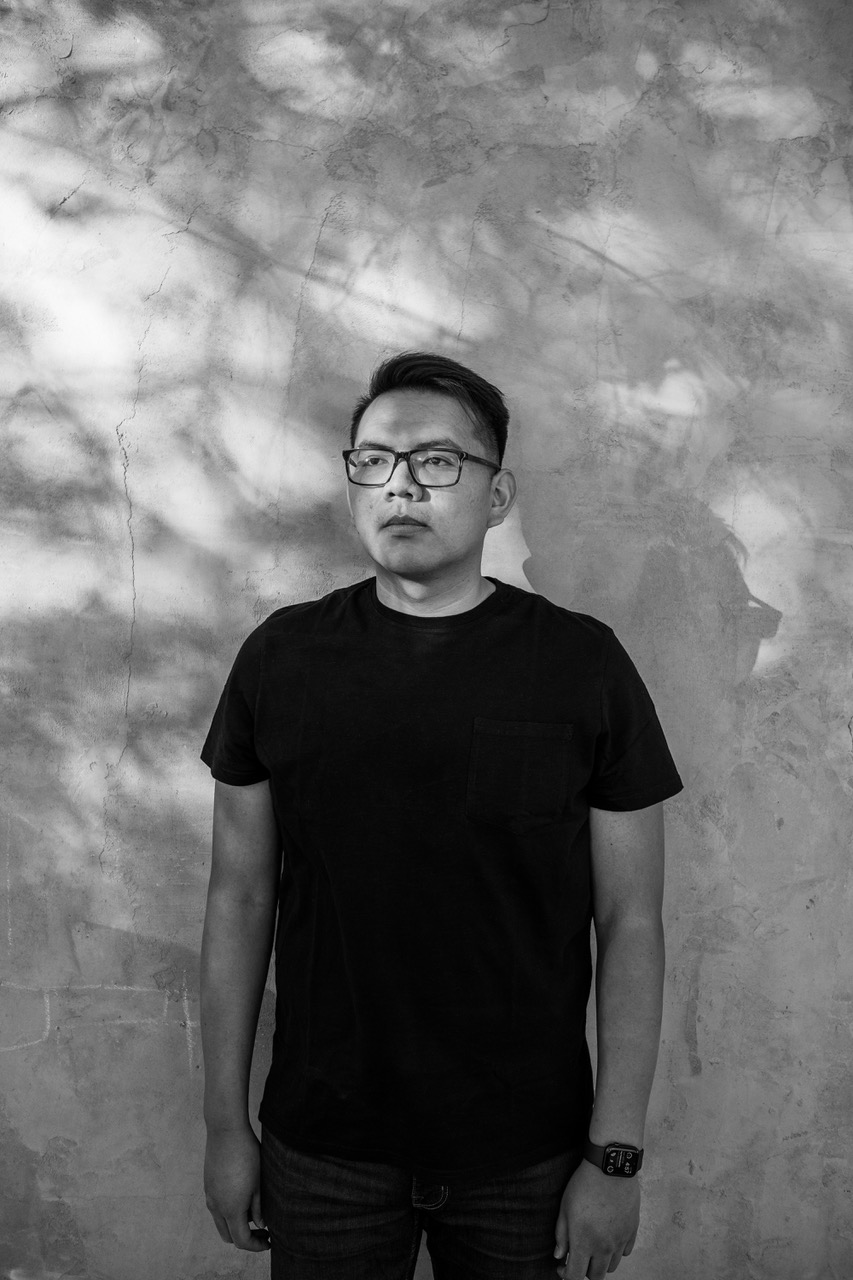
Jake Skeets is Black Streak Wood, born for Waters Edge. Diné from Vanderwagen, New Mexico, he holds an MFA in poetry from the Institute of American Indian Arts. He is the author of Eyes Bottle Dark with a Mouthful of Flowers, winner of the National Poetry Series, Kate Tufts Discovery Award, American Book Award, and Whiting Award. He is from the Navajo Nation and teaches at the University of Oklahoma. "He Said My Name" is a poem excerpted from his second collection, Horses (Milkweed Editions), which tracks impacts of climate change on the land and its myriad inhabitants.
He said my name is really a kiln, a haul of groundwater
because mouths open into hot vapor. He said my name
is actually a riverbed. He said to make of my name a choking
of cracked ice. He said to say my name is old water in a ditch.
He said to make of my name a peach tree on fire, a palm
of pollen. He said my name is really an aquifer, an aster field,
an orchestra of damp tarps in a sheep corral, a downed pole
in Rocksprings. He said my name is as tall as a smokestack.
He said my name tends to cause a draft, to be a touch of tequila.
He said my name is reed, heavy blue mornings
in June. He said to make of my name wildfire smoke.
He said my name is rumor, the low beams of a pickup.
He said my name is really a sermon of locusts, boulder rust
in a river gorge. He said to make of my name a desert garden.
He said my name is the one pink evening when you whisper
your name to the moon and it whispers back in monsoon.
Excerpted from HORSES by Jake Skeets, published on March 24, 2026, by Milkweed Editions. Copyright ©2026 Jake Skeets