Latest News
Hanover Square Press:  Japanese Gothic: A Gothic Dual-Timeline Novel of Ghosts, Hauntings and Redemption by Kylie Lee Baker
WHAT TO READ NEXT: REVIEWS OF GREAT BOOKS

Adaptation is always a contentious endeavor. Where ought fidelity give way to interpretive license? Director Emerald Fennell has certainly offered plenty of food for thought with her take on Wuthering Heights, whose titular scare quotes aren't enough to placate audiences who contend that the film doesn't do Emily Brontë's novel justice. And yet, I thrill any time I see so many people fervently debate a work of 19th-century literature.

By contrast, Moby-Dick, published just a handful of years after Brontë's and a work I'm particularly fond of, tends to inspire glazed expressions for most people after the first three words. Not Alexis Hall, though, who remixes Melville's masterpiece into the far-future space opera Hell's Heart. Moreover, Rachel Hochhauser's Lady Tremaine upends the whole "evil stepmother" trope at the core of the Cinderella story. Love it or hate it, abridgements, adaptations, fan fictions, and retellings all contribute to the robust ecosystem of literary longevity. 

--Dave Wheeler, senior editor, Shelf Awareness
FEATURED TITLES
Cover

Shut Up and Read

Jeannine A. Cook

Jeannine A. Cook's powerful memoir chronicles the struggles and triumphs she experienced while building several community bookshops inspired by iconic Black women.
Cover

Shut Up and Read

Jeannine A. Cook

Amistad | $28.99 | 9780063428232

In her powerful memoir, Shut Up and Read, Jeannine A. Cook (It's Me They Follow) explores the value of conversation, the necessity of listening, and the struggles and triumphs of her journey as a bookseller, writer, and community organizer. Cook brings readers into her conversations (verbal and written) with her ancestors and patron saints, including the namesakes of her three bookstores: Harriet Tubman, Josephine Baker, and Ida B. Wells.

Cook opened Harriett's Bookshop in Philadelphia weeks before the 2020 outbreak of Covid-19. She recounts the challenges of balancing bookstore management with writing, interviewing authors, and mentoring the shop's youth conductors, some of whom traveled to Minneapolis with Cook to hand out books after George Floyd's murder. Cook opened Harriett's in search of "a quiet place to write," but "lost track of [her] mission, so everyone else had a place to read." The narrative captures the constant push-pull between Cook's own needs and those of her community; her writer self and her shopkeeper/event-planner self; and her need to be in two literal places at once: Philadelphia, tending to Harriett's, and Paris, France, where, like James Baldwin, she writes. Incorporated throughout are phone conversations with Cook's father, whom she calls Lazarus; his longtime health issues don't prevent him from dispensing candid (if unsolicited) advice to his daughter. As Cook listens to him and the other wise voices in her life, she gradually finds her own voice as a writer: sharp, dynamic, visionary, and absolutely worth reading. --Katie Noah Gibson, blogger at Cakes, Tea and Dreams

Cover

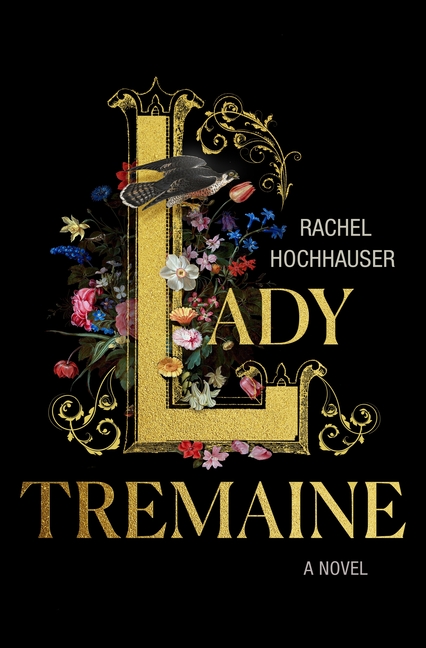
Lady Tremaine

Rachel Hochhauser

This brilliant feminist retelling of "Cinderella" casts the evil stepmother as not so evil after all, reimagining her story with nuance and intrigue.
Cover

Lady Tremaine

Rachel Hochhauser

St. Martin's Press | $29 | 9781250396341

In Lady Tremaine, a brilliant feminist novel, Rachel Hochhauser recasts Cinderella's evil stepmother as not so evil after all.

Lady Tremaine, daughter of a brewer, widow of a nobleman, and parent of two daughters and a stepdaughter, spends her days playing pretend. "For the sake of presentability, all our lives were a performance," she notes. She pretends her dead husband did not leave their estate in never-ending debt. She pretends to know how to mother, pretends she doesn't have to poach birds off royal lands in order to feed her family, pretends that her home is not falling apart around her. If her performance succeeds, its curtain call will see her daughters and stepdaughter married to wealthy noblemen.

Throughout this debut novel, Hochhauser skillfully incorporates details of the Cinderella story into an entirely fresh offering--not merely envisioning Lady Tremaine beyond the confines of the evil stepmother trope but also reframing her story with nuance and intrigue unto itself. "I was old enough to know that death wasn't always bad, and mothers weren't always good," Lady Tremaine reflects. Hochhauser invites questions about what it means to be a mother at all, let alone a good one, and what a cruel and patriarchal world demands of women. Gripping, suspenseful, and brimming with whimsy and wisdom, Lady Tremaine is a stunning retelling of one of the most well-known fairy tales. It's a celebration of strong, powerful women who refuse to limit themselves to societal confines. --Kerry McHugh, freelance writer

Little, Brown Books for Young Readers: Kid X (Boy 2.0 #2) by Tracey Baptiste
Cover

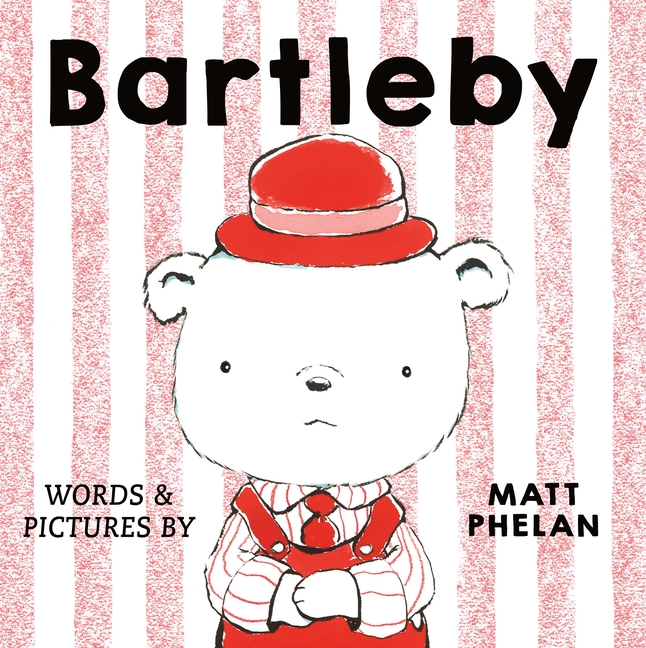
Bartleby

Matt Phelan

Matt Phelan's Bartleby is a gentle and clever Melville-inspired picture book about individuality and belonging.
Cover

Bartleby

Matt Phelan

Farrar, Straus and Giroux | $18.99 | 9780374393557

Matt Phelan's Bartleby is a quietly subversive picture book whose literary cleverness may sail past its young readers but will delight adults who recognize its affectionate nod to Herman Melville's "Bartleby, the Scrivener." Phelan recasts Melville's famously resistant clerk as a polar bear in a red bowler hate who prefers distance to belonging and contemplation to compliance. "Everyone says NO sometimes," the book opens. "Bartleby says, 'I PREFER NOT TO.' He says it a lot."

At school, Bartleby sits apart from the crowd, opting out of circle time, music time, and free play. Wordless spreads bathe the classroom in cool blue washes that depict the children enjoying the activity while Bartleby, bright in red, gazes elsewhere, visually marking him as both present and apart. He is not disruptive or unkind; he simply chooses differently. When Ms. Melville asks the class to draw self-portraits, Bartleby requests another task. The accommodating teacher agrees, and Bartleby produces not a portrait but a frame: a series of bowler-hatted squares labeled "OUR CLASS." Ms. Melville declares that it "completes the portrait!" The gesture reframes difference as contribution. Instead of joining the group by becoming like them, Bartleby defines the space that allows them to be seen. Only after this moment of recognition does he decide to play alongside his classmates: "I would like to."

Phelan's spare text and restrained palette honor children who move at an oblique angle to the crowd, those who watch before acting and listen before speaking. Bartleby offers a gentle tribute to students who live just outside the circle, reminding readers that belonging can take more than one shape. --Julie Danielson

Cover

I Am the Ghost Here

Kim Samek

A dozen fascinating women-centered stories--intriguingly enhanced with speculative elements--compose Kim Samek's fabulously quirky collection.
Cover

I Am the Ghost Here

Kim Samek

Dial Press | $28 | 9798217153572

Emmy-nominated writer and television producer Kim Samek's fascinating I Am the Ghost Here gathers 12 quirky, poignant stories laced with intriguing speculative elements. Certain notable narrative threads repeat: women concerned about being good mothers or good Thai daughters, environmental degradation, reality TV. All feature female protagonists, and most are written in first person, as if Samek is returning agency to women facing otherwise impossible, out-of-control challenges.

A 36-year-old mother turns into scrambled eggs a few months after giving birth in "Egg Mother." A woman desperate to be free from the pain of her debilitating illness risks time travel, hoping to be a more physically involved parent, in "Return." And in "The Cloud," blackouts during an unbearable Los Angeles heat wave cause women to lose various limbs that (usually) reappear when power is restored.

The protagonist of "The MILF Hotel" appears on a reality show about older widows and younger men, after 18 years of intense motherhood, mostly as a solo parent. Meanwhile, in "Sven," a woman picks up an abandoned earpiece from a park bench and becomes the star of her own reality show. And "Everything Disappears When You're Having Fun" depicts a workaholic television producer reluctantly falling for the regretful Craigslist buyer of her uncomfortable office chair.

Within the brevity of her stories, Samek creates fabulously multilayered worlds featuring automatic vacuums equipped with hidden cameras, puppeteers for hire who transform people into better versions of themselves, a rampant disease that causes victims to excise major organs then carry their body parts in mason jars, and strangers who become lovers over a plastic-eating obsession. Most convincing throughout is her limitless imagination. --Terry Hong

BOOK REVIEWS
Cover
The horrors of coming-of-age meet ectoplasm and spiritual mediums in a boarding-school gothic that confronts fear, longing, authority, and death.
Cover

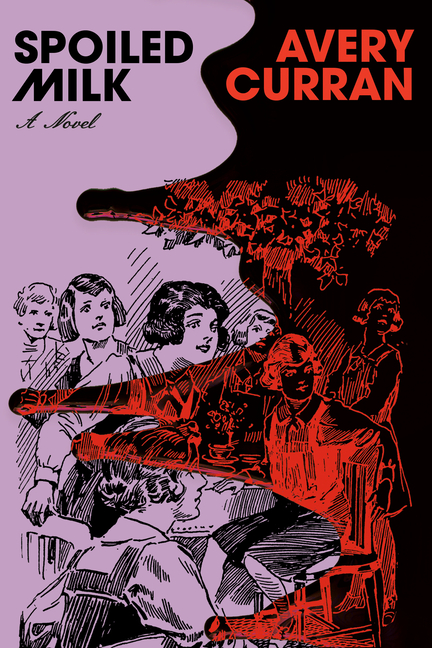
Spoiled Milk

Avery Curran

Doubleday | $28 | 9780385551595

Avery Curran's Spoiled Milk is a gothic boarding-school tale of suspense filled with small and large horrors, schoolgirl skirmishes, lust, death, and the supernatural.

In the fall of 1928, Emily Locke is settling into her final year at Briarley School for Girls in the English countryside as one of a tight-knit group of seven upper-sixth girls. Emily's family life is unhappy--not unusual among her year, but perhaps especially so--and Briarley has been her effective home since she was 11. Her very best friend, the girl she loves, is Violet. The book opens on Violet's 18th birthday, when the whole school celebrates and fawns over her. It is also the night that Violet dies. When the girls gather after the funeral for a midnight feast to honor her in their own way, they find that the freshest milk on the school grounds has inexplicably gone bad. These are the first clues that more change is afoot than the girls' coming-of-age.

With Violet gone, Emily and her remaining classmates determine to find out what happened--who or what killed her, and why the food at the school has begun to taste strange. They contact a medium in the village. They try a séance of their own. But the oddities and accidents at Briarley intensify, and their experiments with the spirit realm feel ever more life-and-death, until it seems that no one will get out of Briarley alive. Tensions rise for the small group of girls in this closed-room thriller, as petty rifts give way to serious terrors. Classic, but still surprising, Curran's first novel will satisfy gothic fans. --Julia Kastner, blogger at pagesofjulia

Cover
This reissued 1995 novel tells a satisfyingly disorienting story of the unexpected political intrigue a woman discovers when she's brought to Paris to reunite with her lover.
Cover

Konfidenz

Ariel Dorfman

Other Press | $18.99 | 9781635424508

Love and war have much in common, such as that both can get unfathomably complicated, albeit with different levels of consequence. The Argentine-born Chilean writer Ariel Dorfman (The Suicide Museum) examines this and other themes in the satisfyingly disorienting Konfidenz, a reprint of a 1995 novel. Told mostly through dialogue, this short work begins when Barbara, a woman from an as-yet unidentified country, arrives at a hotel in Paris. Readers don't yet know who she is or what year it is. As soon as she enters her room, she receives a call from a man named Leon. He claims to be a friend of Martin, Barbara's lover. She had expected Martin to meet her, as the note summoning her claimed he was in a life-or-death situation. All Leon will tell her about Martin's absence is that "if you don't cooperate, something dreadful can happen to him."

Over several hours' worth of conversations, Leon's manner grows more insidious as he discloses further details, including the story of the men who may be after Martin and the unsettling admission that, when Martin showed him Barbara's photo, Leon recognized her as the woman who has appeared in his dreams since he was 12. As this crafty novel progresses, secrets are revealed, relationships grow clearer, and the setting becomes obvious. It's no spoiler to point out that Dorfman may be drawing parallels with his own experience as an exile. Fervor is a hallmark of love and war, as Dorfman demonstrates in this welcome reissue. --Michael Magras, freelance book reviewer

Cover
A woman is drawn into a dangerous homicide investigation by her true crime-obsessed 10-year-old in this marvelous mystery set in a historic Richmond, Va., apartment building.
Cover

The Primrose Murder Society

Stacy Hackney

Morrow | $18.99 | 9780063466029

A woman is drawn into a dangerous homicide investigation by her true crime-obsessed daughter in middle-grade author Stacy Hackney's marvelous first book for adult readers, The Primrose Murder Society, a mystery with a delightful splash of satire. At its center is the challenging relationship between Lila Shaw and her 10-year-old daughter, Bea, an aspiring amateur detective, and their path toward reconciliation.

Lila's husband, Ryan, was recently indicted for fraud and fled the country. Struggling to pick up the pieces of her imploded family, Lila accepts a temporary job at the historic Primrose, an elegant apartment building for residents 55 and older in Richmond, Va. Its charming exterior exudes stability but conceals a "dark past."

Precocious and strong-willed Bea misses her father terribly and takes it out on Lila. When the enterprising fourth grader discovers a generous reward exists for solving a decades-old murder at the Primrose, she teams up with residents Evelyn, who is skilled in uncovering secrets, and Jasper, a former detective. What initially seems a harmless distraction turns sinister when a neighbor winds up dead.

Hackney's characters add hilarious color to the fast-paced action: a TikTok-watching Primrose resident sports "Alexander McQueen platform tennis shoes" and the bejeweled, imperious Evelyn wields her walker like a weapon at potential suspects. As the investigation veers into perilous directions, it becomes frighteningly clear that the only people Lila and Bea can trust are each other.

A thoroughly enjoyable read with a thrilling, unanticipated conclusion, The Primrose Murder Society leaves open the enticing possibility of a sequel. --Shahina Piyarali

Cover
Alexis Hall delivers a sexy, expansive, vibrant adventure in this sapphic, futuristic retelling of Moby-Dick.
Cover

Hell's Heart

Alexis Hall

Tor Books | $29.99 | 9781250394958

Alexis Hall (Confounding Oaths) dives deep into adventure and introspection in Hell's Heart, an expansive, sexy, and vibrant retelling of Moby-Dick set in the atmosphere of Jupiter.

Flat broke and in danger of having her expensively modified body repossessed by her debtors, the narrator decides to join an expedition to hunt Leviathans. She meets a harpooner she calls "Q," a woman from a devastated Earth the narrator has heard described as the home of cannibals and criminals. The narrator is both drawn to Q and unable to understand her. The two women find employment on a ship called Pequod whose hull is fashioned of Leviathan bones. The eerie craft is captained by a one-legged woman referred to only as "A." She carries a burning obsession with taking revenge on the Möbius Beast, the vast white Leviathan she claims took her leg. Some call the creature a myth, but A quickly gains sway over the narrator and the entire crew through "the inescapable, neutron-star gravity of her," the promise of possible wealth, and to some extent through being "extraordinarily hot." The voyage brings the narrator up against terrifying beasts, dangerous people with perilous beliefs, and the deepest hells of the human heart.

Hall imbues an American classic with sharp British wit, delivering an update to Melville by way of Wilde with a modern, frequently erotic sensibility. The narrative alternates between propulsive action, uncanny world-building, and the narrator's own soul-searching, but always maintains a constant seeking ferocity at its core. This catastrophic prophecy of humanity's spacefaring future marries with scenes of feverish beauty for an imaginative and unforgettable adventure. --Jaclyn Fulwood, blogger at Infinite Reads

Cover
These intricate essays interrogate scenes from author Lauren W. Westerfield's life and the life of her mother, in tandem and in the light of inherited trauma.
Cover

Woman House: Essays and Assemblages

Lauren W. Westerfield

University of Massachusetts Press | $24.95 | 9781625349231

The 16 linked autobiographical essays of Woman House, Lauren W. Westerfield's reflective second book, examine the author's mother's life and her own in the context of women's art and health.

Westerfield (Depth Control) is the primary caregiver for her mother, who has experienced alcoholism and depression and had a string of intestinal surgeries. Westerfield ponders how family stories are remembered and retold--or not. Previous generations' addiction, dementia, and domestic violence threaten to recur. In "On Becoming," Westerfield creates faux medical records for her parents, then herself, and reveals her mother's history of rape. She traces the pathways of trauma, as problem drinking and nonconsensual sex touch her own life. Her parents' acrimonious divorce also colors how she defines herself in relation to partners in "Double Exposure" and "Sequence of Events," the two strongest pieces.

The second person is a frequent tool here for considering memories at a remove and exploring conflicting feelings. Four interludes paint lyrical scenes from different points in Westerfield's past. Covid-19 diaries ("Distance Instructions" and "Pentimento") contemplate anxiety and isolation. The collection's title comes from a series of Louise Bourgeois drawings of the female body. References to Bourgeois's work (as well as Westerfield's mother's art from the 1970s) thread through; Westerfield finds in it "a celebration and exploration of the contradictory," such as "innocence and sexuality. Freedom and constraint." She even gets a tattoo of Bourgeois's Spiral Woman in honor of the artist.

Memory and feminism are potent themes in this intricate essay collection. --Rebecca Foster, freelance reviewer, proofreader, and blogger at Bookish Beck

Cover
Now in Paperback: In this poignant romance, a sexy veterinarian and the woman whose kitten he saved must navigate substantial obstacles to their relationship.
Cover

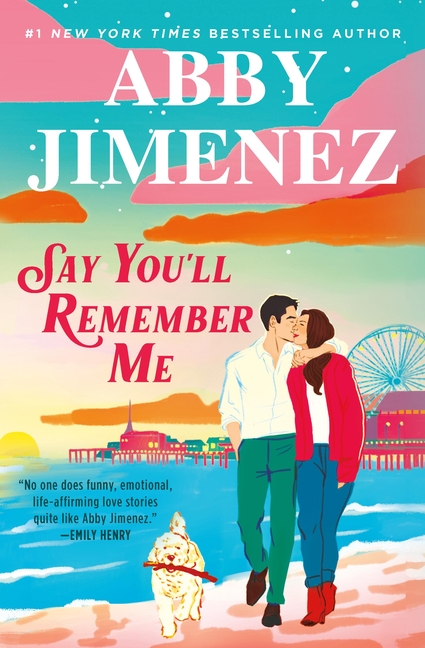
Say You'll Remember Me

Abby Jimenez

Forever | $18.99 | 9781538759189

Abby Jimenez (Just for the Summer; Yours Truly) has created another captivating, deeply emotional novel with Say You'll Remember Me.

The story begins when Samantha Diaz, a social media manager, takes a kitten she found in a woodpile to possibly the hottest veterinarian ever. But Dr. Xavier Rush says something Samantha finds incredibly hurtful: he repeatedly recommends euthanasia, because the surgery the kitten needs costs far more than Samantha can afford. Determined to prove Xavier wrong, Samantha crowdfunds the money over the course of four days, and to her surprise, Xavier graciously admits he was mistaken. Six weeks later, she gets back in touch with Xavier to get a certificate of health for the cat, and he asks her out. Xavier then takes her on the best date of her life.

Their connection is undeniable, but they face an immediate obstacle: the date was on Samantha's last evening in Minneapolis, Minn. She's moving back to California to help her family through a crisis. But Xavier can't let Samantha go after their perfect night together. Both Samantha and Xavier are dealing with hard situations in their extended families--including dementia, financial debt, and past trauma. Their burgeoning relationship is a lifeline of hope in the midst of it all.

Abby Jimenez has once again crafted an appealing novel that speaks to her skill for combining elements of hilarity and heartfelt romance while thoughtfully exploring complex subjects. Although fans of Sophie Cousens and Annabel Monaghan will especially enjoy it, Say You'll Remember Me is a delightful and poignant romance that will appeal to a wide audience. --Jessica Howard, former bookseller, freelance book reviewer

Cover
Now in Paperback: In a series of poetic musings, Imani Perry uses the color blue to recount Black history.
Cover

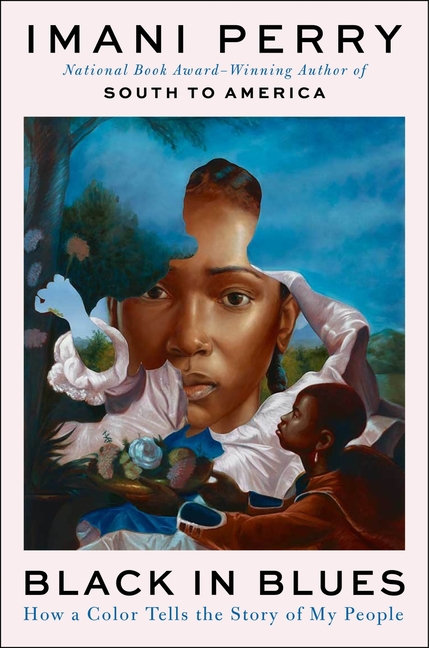
Black in Blues: How a Color Tells the Story of My People

Imani Perry

Ecco | $17.99 | 9780062977410

In Black in Blues: How a Color Tells the Story of My People, Imani Perry (South to America) offers haunting reflections on the strong connections between the color blue and the history of Black people. In a lyrical style, she muses about the roles that blue has played: blue, the feeling of sadness; blue, the sound of thoughtful music; blue, the color of beads that enslavers traded for Black lives in the Congo.

As Perry writes, "The association of the color blue with sadness is of English origin. The sound is African-rooted. The color is global." She expertly uses this framework to tell the stories of many Black people, including Liberian settlers, members of the Nation, and Toni Morrison. Perry finds insight in work by people she'd long known about: Rosa Parks and Duke Ellington and W.E.B. Du Bois. This led to discoveries of figures she was less familiar with, such as Jean-Jacques Dessalines, the Haitian revolutionary; Paul Gonsalves, the Cape Verdean American jazz musician; and Andrée Blouin, an extreme rarity: a Black female political activist and anticolonialist leader from the Central African Republic.

Perry's spare and poetic writing powerfully encapsulates history. It also underlines the frequency with which English-language speakers refer to ideas such as black-and-blue bruising, blue-black skin and hair, or the blues music predominantly played by Black musicians.

Black in Blues is sure to appeal to readers who enjoy exploring social justice topics. Perry's blue-tinted history offers a fascinating lens through which to see the world. --Jessica Howard, freelance book reviewer

Cover
Now in Paperback: Charmaine Wilkerson's powerful second novel explores family, resistance, and skilled craftsmanship through the story of a handmade jar known as "Old Mo."
Cover

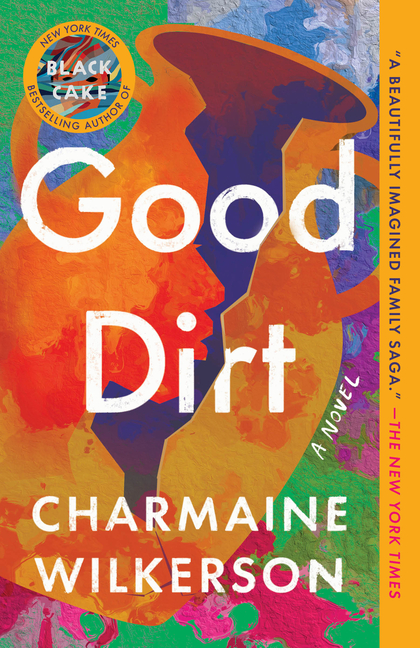
Good Dirt

Charmaine Wilkerson

Ballantine | $19 | 9780593358382

Charmaine Wilkerson's powerful second novel, Good Dirt, explores the lasting effects of a long-ago tragedy and its connection to a beloved family heirloom. Through the history of the Freeman family and the provenance of a handmade pottery jar affectionately known as "Old Mo," Wilkerson (Black Cake) considers family secrets, race and respectability politics, the long-term nature of childhood trauma, and the complexity of American history.

On an autumn day in 2000, two armed burglars break into the Freemans' house to find the children, Baz and Ebby, at home unexpectedly. The encounter results in Baz's murder; Old Mo is shattered into fragments, and 10-year-old Ebby experiences a trauma that will haunt her for the rest of her life. Wilkerson continues her narrative years later with a different kind of tragedy, as Ebby's wealthy white fiancé, Henry, fails to show up for their wedding.

Ebby begins to ask questions about Old Mo and the circumstances of its attempted theft, as she reckons with the pain Henry caused her and the lingering trauma from Baz's death. The jar, made under enslavement, holds more history than even Ebby can guess, and Wilkerson reaches back a few centuries to excavate some of that history through the stories of skilled potter Moses, his brother-in-law, Willis, and their descendants.

Wilkerson probes the layers of each family member's connection to the jar; their deep love for one another and fierce pride in their heritage; and the guilt they carry, logical or not, relating to Baz's death. Layered and complex, Wilkerson's novel brilliantly sculpts a story of quiet resistance, skilled craftsmanship, and dedication to family and freedom. --Katie Noah Gibson, blogger at Cakes, Tea and Dreams

Cover
Now in Paperback: On the boundary of Maine's Penobscot reservation, a solitary man wrestles with questions of truth, family history, and what is owed to the next generation.
Cover

Fire Exit

Morgan Talty

Tin House | $17.99 | 9781963108491

Stark and tender, Fire Exit by Morgan Talty (Night of the Living Rez) compassionately addresses tough choices in matters of family and love. In hardscrabble circumstances, surrounded by poverty, alcoholism, and family violence, one man wishes to give his daughter a meaningful gift: the truth.

Charles Lamosway has grown up on the Penobscot reservation in Maine, but doesn't have Native American blood. Although he's very close to his Native stepfather, Frederick, his biological parentage meant he had to move off the reservation when he came of age. Frederick purchased land and helped to build the house where Charles lives now, just across the river. Largely isolated, with few friends, Charles watches from his porch the family on the other side: Mary, Roger, and their daughter, Elizabeth. Charles is Elizabeth's biological father, a secret he has kept at Mary's request. But as he ages, and as his mother Louise's health worsens, he feels increasingly that Elizabeth, now an adult, must know the truth. This urge becomes a fixation, a bodily need. Elizabeth faces medical problems, and he is convinced she needs the truth--including Louise's medical history--to survive. But it's possible that what Charles sees as necessary will have an entirely different outcome from what he intends.

Fire Exit is concerned with bodies, with visceral needs not only for food and shelter but for truth. Talty's tersely poetic, descriptive prose grounds this story in the physical. This first novel grapples with family issues and hard choices about love and responsibility; blood, culture, and belonging. It is an utterly absorbing story, always firmly rooted in the corporeal; tough, honest, but not bitter. --Julia Kastner, librarian and blogger at pagesofjulia

Cover
A little broken robot discovers that it still deserves love in this hopeful and tenderly illustrated children's picture book.
Cover

The Lost Robot

Joe Todd-Stanton

Flying Eye Books | $17.99 | 9781838740726

The Lost Robot by Joe Todd-Stanton (The Comet) is a heartwarming, heartfelt children's picture book. Through charming art and one endearing robot's peregrination, it highlights the beauty in broken things and the importance of self-love.

The titular robot does not know why it has awoken in a pile of garbage, its display cracked and one arm missing, but it knows this must be a mistake. It wanders past "decaying machines" and "abandoned spaceships" to reach a city. There, the robot remembers having a friend. After a bit of creative mending to look presentable, it finds the boy it once belonged to--the child with whom it enjoyed quests and hugs and stories--only to discover the boy now has a "new best friend." Visibly dejected, the robot returns to the rubbish heap, "exactly where it was supposed to be." Days turn into weeks, into months, and then years, when a mother and daughter come to the dump in search of broken things to repair.

Readers will likely empathize with the lost robot through its quirky tilted-head expressions and the detailed, emotionally cued backdrops. Color-packed Miyazaki-reminiscent scenes give way to somber shadows in the junkyard, then shine with natural light once more as the robot is taken "through the countryside" to a new home. A dusty, graffiti-filled marketplace with dystopian vibes and a tech-heavy city of sterile high-rises and homes are followed by sunny mountain vistas and star-filled skies, providing clever worldbuilding and suggesting all green spaces are not lost. This warming and comforting story exudes hope of many kinds. --Samantha Zaboski, freelance editor and reviewer

Cover
Yuko Torii's heartwarming picture book captures the struggles of a small, lonely street dog and the very lucky humans who get to take the pup home.
Cover

My Someone: A Pet Adoption Story

Yuko Torii

RISE x Penguin Workshop | $17.99 | 9780593887271

Author/illustrator Yuko Torii's inspiring picture book, My Someone, gives voice to a small, scruffy yellow dog who declares, "I don't like being alone."

The street pup eats from garbage cans only when other larger canines aren't fiercely laying claim. Scary loud noises and bad weather pose additional threats: "I want to feel safe." The storm-drenched pup looks out from its slight cover of a garbage can lid at a smalltown sidewalk filled with families and their furry companions walking, browsing, sipping, and shopping. The pooch dreams, "I want to find my someone." An irresistible tasty treat lands the pup with an animal rescue team ready to groom and vaccinate ("I REALLY don't like this," the dog declares at the offensive shot). But all that pampering pays off when a parent and child choose the floofy bundle to take home. "I like this place," the pup thinks, "it's warm and quiet." At last, the pooch can eat, play, rest, and, best of all, share cozy overnight cuddles with "my someone."

Torii's charming "human made... watercolor and ink" illustrations use plenty of white space, suggesting at first an emptiness in the small dog's uncertain existence. Dangers, however, including massive trucks and torrential storms, dominate whole spreads. Torii's pages noticeably begin to fill with colorful details as a promising future takes shape: the dog's rescue, a new home, a bedtime hug. Her repeated use of red--collar and leash, shoes, polka-dotted blanket--underscores the connections between parent, child, and dog. Torii charmingly offers plenty of convincing reasons for furry family additions. --Terry Hong

Cover
Young readers can interact with this picture book's playful images of Earth's epochs to learn about and find the various life forms that have inhabited the planet.  
Cover

Finding Life: A Prehistoric Search and Find

Sophie Williams

Cicada Books | $18.99 | 9781800660540

Sophie Williams (Map of You) invites readers to interact with prehistory in her eye-catching nonfiction children's picture book Finding Life. Each double-page spread summarizes one of Earth's epochs (from the late Precambrian Era through the Halocene) and challenges readers to find different creatures hidden in the detailed, art-filled depictions of each era. Budding scientists can learn plenty of facts while simultaneously practicing their observational skills in this enlightening exploration of life on Earth.

In each period, Williams introduces scientific terms, such as chordates in the Cambrian period (541-486 million years ago), tetrapods in the Devonian period (419-359 mya), and the K-Pg extinction in the Cretaceous period (145-66 mya). While this may be the first exposure to such terms for some readers, Williams presents them in accessible text that encourages valuable knowledge building about not only the creatures, but the planet itself. "During the Permian, almost all of the land on Earth came together to form one huge supercontinent called Pangea." Further strengthening this scientific foundation is the search-and-find activity on each page. Williams has hidden creatures (such as a Wiwaxia, a Parexus, and a Plesiosaurus) with various degrees of difficulty on land, under water, and in the air.

Finding Life concludes with a glossary that defines general terms and describes all the animals in the searches. This informative, engaging picture book for middle-grade readers may hook young audiences with an easy spot and encourage them to look longer at the striking images to unearth those animals which are more difficult to locate. Finding Life is a treasured literary find. --Jen Forbus, freelancer

The Writer's Life

Jeannine A. Cook is the owner and curator of several independent bookstores. She has worked as a writer, designer, and consultant for startups, corporations, nonprofits, influencers, and most recently, for herself. Here Cook discusses Shut Up and Read, her memoir about life as a bookseller, writer, and community organizer, as well as the ancestors whose spiritual guidance have influenced her every step of the way.

The Writer's Life

Jeannine A. Cook: Building Literary Bridges

Jeannine Cook
(credit: Visit Philly)

Jeannine A. Cook has worked as a writer, designer, and consultant for several startups, corporations, nonprofits, influencers, and most recently, herself. She is the owner and curator of Harriett's Bookshop in Philadelphia's Fishtown neighborhood; Ida's Bookshop in South Jersey; and Josephine's Bookshop, a roving installation in Paris. Cook's debut novel, It's Me They Follow, was released in September 2025. Her memoir, Shut Up and Read (Amistad; reviewed in this issue), chronicles her experiences as a bookseller, writer, and community organizer.

Tell us about the genesis of Shut Up and Read.

I wanted to tell a different kind of bookshop and bookseller story. When my editor and I first presented the title to HarperCollins, they said it was too aggressive--you don't want to antagonize your reader. But the title stuck, as people started reading the text and understanding what I was trying to say. The book has a lot to say about finding your voice, but it's also about listening, and conversations, and about silence.

Throughout the book, you are in conversation with Harriet Tubman, Ida B. Wells, Lorene Cary, and other women who have shaped your life and the bookshops.

I'm constantly talking to these women because I spend a lot of time with them. As I'm building these spaces in their names, I'm in conversation with them to better understand who they were, so that the spaces reflect who they were. In our tradition, the ancestors are not totally gone; an ancestor is still someone you can access, if you choose. There's some vulnerability when you're speaking to your elder or someone you admire, and asking for guidance or help. It's almost like a literary family tree.

Tell us more about that literary family tree.

In a memoir, you assume you're going to find out a lot about someone's family, and you do find out about some aspects of my [biological] family. But you really find out who my family is that makes the bookshop happen. My relationships with these literary figures, living or dead, become my support system.

Through conversations with these literary figures, you gain insights about the bookshop and your own writing.

Yes. The memoir is very much about finding a voice--it starts with this doctor who wants to cut open my throat, because of some physical issues I'm having. The throat is where our voice is located, so I refuse to let her do that! I'm also thinking about silence: all the major world religions have a practice of silence. Early on, Lorene told me that the bookshop can be a nondenominational spiritual experience for people. That's always stuck with me, because we are seeking some sort of transformation when we read.

I also am thinking about where silence lives in movement work. Is silence violence? Can it be a sanctuary? As I'm watching everything that's happening in society, I'm thinking: we got so comfortable sharing that it might have stunted our listening ability. My dad, whom I call Lazarus, is a major character in the book, and the reader hears the banter between us. He's got this angelic voice, and I say he's an awful listener--but our whole relationship is about us being in conversation. That trains me to ask: How do we listen better to what people are really saying, rather than just being ready to respond and react?

Shut Up and Read is partly about the survival of bookshops in uncertain times. What do you think has been key to the success of Harriett's and Ida's?

The shops are where I got to meet another version of myself: to find out, in some ways, what I was made of. The shops are for me, but also for a lot of other people: a sanctuary, a space for solace, and coming together to oneself. The shops, in some ways, are an altar. They're each built around a different woman, similar to a saint's chapel: her name, her image, objects from her life and her history are central to the space. It's an immersive experience into this woman's life and how her life can become a beacon of light for our lives. Each of these women has a different way they did that, a different spirit they embodied. When you spend time with them, I believe you can take on elements of that spirit, if you choose.

Harriett has that indomitable spirit: you can't break that woman. That's how Harriett's feels to me. She figured out ways to strategically navigate what she was up against. Same with Ida--she was unstoppable, unusual for her time. She said, "I'm going to approach these atrocities, and I'm going to use the tools I have available to inspire and connect and challenge." She does it with her writing. Then you have Josephine. I find her fascinating; I find the work she did globally to be just as important as what Harriett did locally. Each one of them gives you different tools.

Talk to us about the youth conductors at the shop.

It doesn't work without them. Going back to that literary family tree: you have to understand that there are people who came before you, and people who are coming behind you. And you have a responsibility to both at the same time. I get to live as a bridge, in a way, and remind the youth conductors that they're also a bridge. That's the job: they're doing the same thing the conductors were doing on the Underground Railroad so long ago.

It was important to me that you hear youth voices in the memoir: you hear them sharing their experience on the front lines of a protest. This one young woman--I met her when she was 14. She told me, "I'm too weak to carry boxes of books, and I don't like to read." But then she has been one of the most committed young people to our work. She's now at Johns Hopkins on a full scholarship. It's amazing to see somebody who came from a place called the Bottom, to see how they can learn, and believe: "I'm important, and I have agency, and I'm necessary to the operation of this bookshop."

The bookshop is a prime space for intergenerational conversation, especially when the young people are working. Sometimes they're running the bookshop or building a pop-up by themselves, and it's a huge responsibility. It does change your mind about what you're capable of. Like this young man, Elijah: we used to tell him to speak up because we couldn't hear him. By the end of his time with us, he was giving speeches. It was incredible, and beautiful to watch. And there's also young people like the one I call Nephew, who continue to struggle. Throughout the narrative, I'm constantly holding those two spaces.

The memoir deals a lot with the struggle--between work and life, between safety and threat, between writing and bookselling.

It's very Harriett, in a way. This woman did what she had to do to escape: she got herself out of slavery. But she kept going back, many times, risking her life and the lives of others. There was always the question: If I don't go back, who is going to do this job?

I think the struggle is a part of being the kind of bookshop we have. These institutions that we've built live in those two worlds. People don't always know about the push-pull, which is why the memoir is so important. This is not the typical kind of bookshop memoir; it doesn't glorify the struggle. Instead it says: here's all the underground stuff that you don't know is happening behind the scenes to make a bookshop happen. --Katie Noah Gibson, blogger at Cakes, Tea and Dreams


Book Candy
Rediscover

Rose Lesniak, "a feminist poet who dazzled and upended the male-dominated literary scene in New York during the 1970s before suddenly bolting to South Florida, where she worked as a child abuse investigator and then--in the final act of her kaleidoscopic life--became a dog trainer," died on February 1, the New York Times reported. She was 70. In 2023, she published What the Dogs Tell Me, a collection of poems about her dogs, Martha and Joey.

Rediscover

Rediscover

Rose Lesniak, "a feminist poet who dazzled and upended the male-dominated literary scene in New York during the 1970s before suddenly bolting to South Florida, where she worked as a child abuse investigator and then--in the final act of her kaleidoscopic life--became a dog trainer," died on February 1, the New York Times reported. She was 70.

Lesniak moved to Manhattan in 1977 after graduating from college in Chicago, where she edited Out There, a literary magazine. ''You know how they say somebody lights up the room?'' asked Bob Holman, a close friend from those days. ''Rose was actually the lightbulb. Being with her was like living on another planet. It was the Planet Rose.''

With her friend Barbara Barg, Lesniak "plunged into the avant-garde world that orbited the Poetry Project at St. Mark's Church in-the-Bowery, the Times wrote. "The stars were Allen Ginsberg, John Ashbery, John Giorno, and other men. At readings, Ms. Lesniak and her friends would heckle them, calling out their sexist tropes, sometimes by making loud animal noises."

''We weren't really anarchists, and we wouldn't hurt anybody,'' she said in an interview in Women in Independent Publishing: A History of Unsung Innovators, 1953-1989 (2024). ''We wanted to ask you: 'Why did you say that? Where'd that come from? Do you need therapy?' ''

Lesniak explained that she and her friends were fun: ''We'd all get high together, and we'd drink together afterward, and we'd get to know each other.'' They knew she was a serious writer, however, working on poems that were later included in her books Young Anger (1979) and Throwing Spitballs at the Nuns (1982).

Lesniak shared a loft in Chelsea with Barg, who was also a poet. They hosted readings and parties attended by Ginsberg, Giorno, Andy Warhol, and others. ''Everybody just wanted to be around Rose,'' said Eileen Myles, a poet and former lover of Lesniak. ''She was crazy beautiful. She was brash. She carried this big, exciting energy everywhere she went, in everything she did. There was nobody like her.''

To help pay the bills, Lesniak worked for Majority Truckers, "an all-female company that delivered gay male pornography to newsstands using old U.S. Postal Service trucks painted bright pink. (New York in the 1970s was something to behold.)," the Times wrote. Lesniak usually drove the truck. Author Sarah Schulman recalled that she "was the jumper. So we would stop at all these newsstands, and I would jump out with the deliveries. We'd go up Broadway and then come back down. Rose was extremely efficient.''

In the early 1980s, Lesniak helped start Out There Productions, an organization that funded and staged performance art, and the Manhattan Poetry Video Project, which produced short films in which poets recited their work.

''Rose was just full of life, love and the pursuit of poetry,'' Holman said. ''She was full of ambition for poetry and poets.''

In 1988, she left New York for Miami. ''I just wanted to get out and do something different,'' she said. ''I said, 'You know, I'm going to Florida, I'm going to do investigative work, that's what I want to do.' '' She worked as an investigator with the Florida Department of Children and Families, at an office in the special victims unit of the Miami Beach Police Department. In 2003, she reinvented herself once again by taking classes in positive-reinforcement, or ''force-free,'' dog training.  

Lesniak told her friends that she had put poetry aside once she moved to Miami, but she did keep writing. In 2023, she published What the Dogs Tell Me, a collection of poems about her dogs, Martha and Joey.

From her poem "Little Dog":

And I am so proud, little dog,
To take your paw ...
We look out at the
Beautiful world...
And bark like hell.

Powered by: Xtenit