Spring paperback releases transform some of yesteryear's most-talked-about titles into prime selections for summer vacationing, whether you're reading them on an airplane, at the beach, in the park, or poolside! Percival Everett's multi-prize-winning novel James (Vintage) is the brilliant retelling of Adventures of Huckleberry Finn that challenges Twain's original. Sarah Damoff's The Bright Years (Simon & Schuster) is a dazzling debut about the limits and possibilities of a troubled family's hope and love. Meanwhile, On Muscle (Algonquin) is Bonnie Tsui's energizing scientific journey into the world of muscles and those who use them. And On the Hippie Trail (Rick Steves) delves into the formative adventures that shaped one of the world's most noteworthy travel writers, a memoir that just might inspire your next vacation!
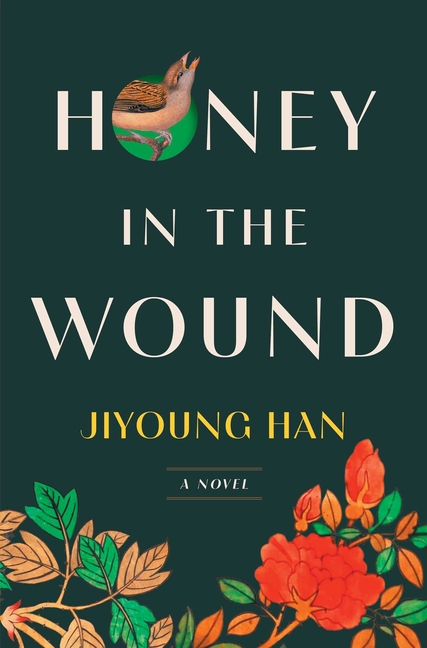
Honey in the Wound
Jiyoung Han
Honey in the Wound
Jiyoung Han
Avid Reader Press/Simon & Schuster | $28.99 | 9781668202166
Debut novelist Jiyoung Han's Honey in the Wound alchemizes 90 years of Korean history into an extraordinary multigenerational epic. Twins Geum-Ja and Geum-Jin, born in 1902, were both named after the Korean word for gold "in hopes they might prosper in a way [their mother] never had." Sorrow becomes their legacy: Geum-Ja seemingly disappears and their parents die, leaving Geum-Jin alone. Japanese colonialization looms, and Geum-Jin's family, including wife Jung-Soon and three children, is decimated by vicious Japanese soldiers; only the youngest, Young-Ja, survives.
The traumatized 11-year-old temporarily finds safety with an older Japanese couple until the man begins nighttime molestations; the woman hopes to save her by abandoning her to a "clean-cut young man." He takes her to Manchuria, where she works in a popular café--and rebel resistance hub. But again the Japanese brutally destroy, and at 19, Young-Ja is forced into sexual enslavement for Japanese soldiers. After Japan's defeat, Young-Ja ekes out a meager existence in Seoul. Her son, Joon, knows nothing of her past, but his Japanese-born daughter, Rinako, makes a shocking connection that reunites the scattered family just in time.
Han's author's note included with reviewer editions reveals the novel's provenance was a 2023 article about the last nine nonagenarian "comfort women" left in Korea, still denied an official apology from the Japanese government. Tempering the horrors with magical realism--Geum-Ja's avenging reappearances as a tiger, Young-Ja's food infused with emotions, Rinako's truth-revealing dreams--Han's exceptional storytelling bears spectacular witness to history. --Terry Hong
The Secret War Against Hate: American Resistance to Antisemitism and White Supremacy
Steven J. Ross
The Secret War Against Hate: American Resistance to Antisemitism and White Supremacy
Steven J. Ross
Bloomsbury | $32.99 | 9781635578003
Steven J. Ross (Hitler in Los Angeles), a distinguished professor of history at the University of Southern California, couldn't be more timely in charting the evolution of organized bigotry and fascism in the United States, from the end of the Second World War up to the uncomfortable present day. The Secret War Against Hate is a reminder that the forces of antisemitism and white supremacy were not defeated along with the Axis powers at the end of World War II. Ross's words vibrate with a visceral urgency, shattering the myth of postwar domestic tranquility and providing a necessary roadmap for anyone seeking to understand the resurgence of those virulent ideologies. His utterly immersive work begins with the postwar surge in extremism, and as the narrative moves into the 1950s, Ross describes the rise of the American Nazi Party, illustrating how hate groups capitalized on the anxieties of the Cold War and the Civil Rights movement. For every villain, Ross also celebrates a corresponding little-known hero or group. He demonstrates how the tactics of these early resistance networks formed a blueprint for modern anti-hate advocacy, and champions the clandestine efforts to infiltrate and dismantle cells from within.
Ross leaves readers with the message that democracy is not a self-sustaining experiment. This book is a crucial read for historians, policy makers, and civil rights activists, but it is equally vital for any citizen concerned with polarized politics and civic abuses. Ross provides the historical literacy necessary to recognize old threats in new disguises, making The Secret War Against Hate an indispensable manual for safeguarding the future by understanding threats from the past. --Elizabeth DeNoma, executive editor, DeNoma Literary Services, Seattle, Wash.
Erase Genesis
Rebecca Gayle Howell
Erase Genesis
Rebecca Gayle Howell
Bridwell Press | $49.99 | 9781957946320
There are those who feel a sacred text should never be tinkered with. Poet and translator Rebecca Gayle Howell's stunning Erase Genesis is for those who disagree, who remain open to the possibility that Scripture can speak its truth even when transformed.
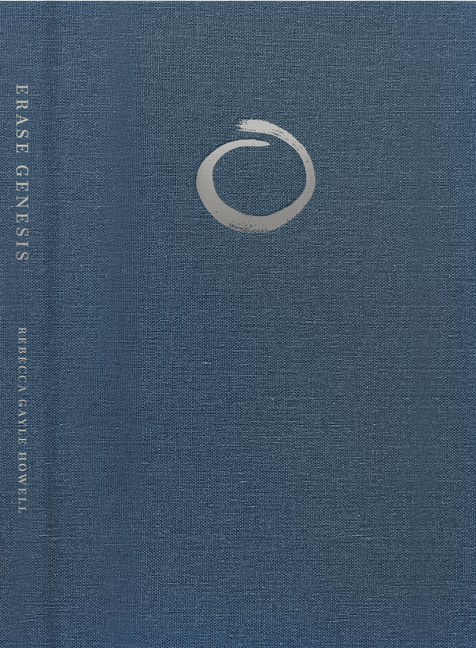
Howell's thoroughly moving book-length poem is an iterative encounter with the King James Version of the first three chapters of Genesis. These words, already rich in poetry and familiar to many, are faithfully recorded in the opening pages, providing the ground from which Howell's brilliant work of re-creation springs. Using inky-blue watercolor lines to obscure parts of the text, Howell calls forth an artful new song. After first retelling the original story of human "dominion/ over/ all," she rewinds the text, returning to obscure everything but "or/ or/ or/ the/ earth/ the earth/ the sea/ the air over/ you." In this way, she inverts the hierarchy, suggesting that humanity was made to live in harmony with the earth.
Although erasure is sometimes seen as a rejection of the source, Howell's disruption here serves to deepen rather than dismiss a sense of holiness, inspiring gratitude for what has been given: "Thus the heavens and the earth/ the earth and/ the earth/ breathed into his nostrils/ a garden." The poem doesn't shrink from the harsher truths of humanity's choices--"And the man/ parted/ to keep/ evil/ good/ and his ribs closed up"--but insists on the hope that might yet be found in seed and root and gathering together. Armed with a quiet urgency, Erase Genesis transfixes as it transforms the text and its readers. --Sara Beth West, freelance reviewer and librarian
Everything Is Music
Miran Park, trans. by Paige Aniyah Morris
Everything Is Music
Miran Park, trans. by Paige Aniyah Morris
Blue Dot Kids Press | $19.95 | 9798999567673
Miran Park's Everything Is Music, translated from the Korean by Paige Aniyah Morris, is a lyrical picture book that is both meditative and playful as it invites young readers to tune in to the world around them. On the opening spread, a child pedals away from home as "sounds stretch awake," an evocative description that sets the tone for a story rooted in curiosity and sensory awareness.
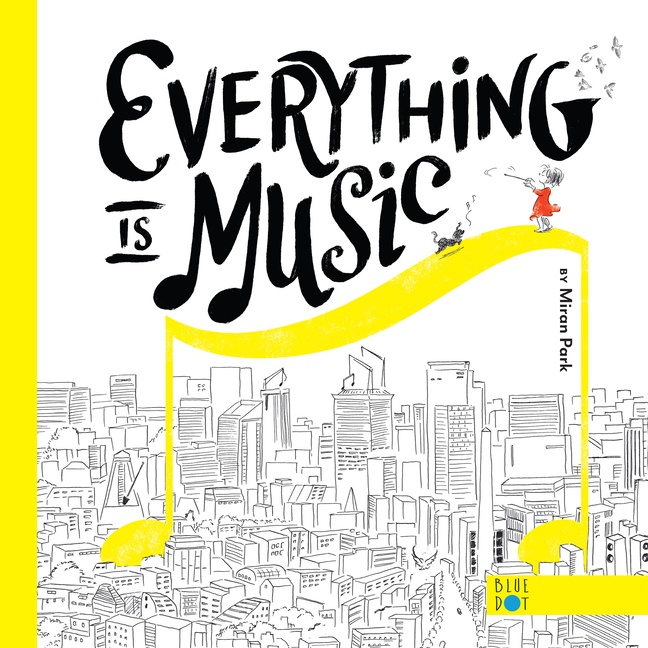
The child rides through landscapes, a puppy tucked into the bike basket, collecting the city's sonic textures. "The sounds whizz by": the whirr of bicycle wheels, distant laughter, birds overhead, the rumble of an approaching storm, even the "pitter-patter percussion" of rain and footsteps on the street become part of the child's attentive exploration. Park's pacing encourages readers to linger, to pause, and to notice as continually shifting perspectives prompt readers to look again and discover musical motifs hidden in plain sight. A cello, a guitar, and a harp materialize where one might expect ordinary urban or natural forms.
These visual discoveries reward careful observation and offer a gentle lesson in finding beauty within everyday environments. Park's palette is deliberate, the expanses of white punctuated only by the striking red of the child's dress and the yellow of the disguised musical imagery. A closing key reveals the musical instruments seen throughout the book. Everything Is Music, a book meant for slowing down, encourages young listeners to attune themselves to sound, shape, and wonder. Park's combination of expressive linework and visual metaphor form a harmonious exploration of perception and play. --Julie Danielson
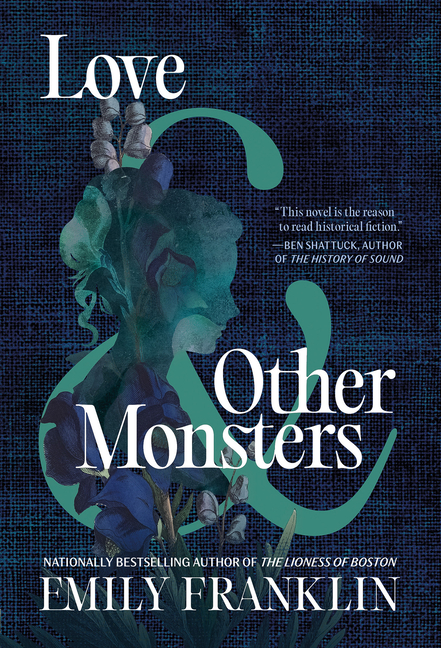
Love & Other Monsters
Emily Franklin
David R. Godine | $30 | 9781567928556
Emily Franklin's ravishing Regency drama, Love & Other Monsters, is inspired by real-life literary luminaries of the Romantic period and the Englishwoman whose ghost lingers in some of their most consequential works. Resurrecting the talented aspiring writer Claire Clairmont from the dusty pages of historical archives, Franklin (The Lioness of Boston) delivers a sexually charged saga of thwarted love set on the banks of Switzerland's Lake Geneva.
The novel opens in 1879; Claire is an octogenarian taking a backward glance through the pages of a journal she penned during 1816 as a vivacious teenager on the brink of life. She finds adventure in the arms of Lord Byron, a celebrity poet and regular fixture in the gossip pages. That summer, Claire decamps from London to Villa Diodati, Byron's Swiss vacation home, with her stepsister, Mary, and Mary's beau, Percy Shelley.
Franklin's storytelling is saturated with the lush atmosphere and mystical undertones of a torrentially wet summer. Mary hunkers down to create her masterpiece, Frankenstein, and the men to write their poetry. Tired of Byron's growing cruelty and Mary's intellectual condescension, Claire turns in on herself like the "cold-worn poppies" in the garden. When relations with Byron take a sharp downward turn, resourceful Claire must salvage what she can of her power over him by grafting her own secret literary legacy onto his.
Blending history with heart-quickening fiction, Love & Other Monsters introduces readers to an obscure, unashamedly sensual writer consistently underestimated for the ambitions that eventually render her immortal on the page. --Shahina Piyarali
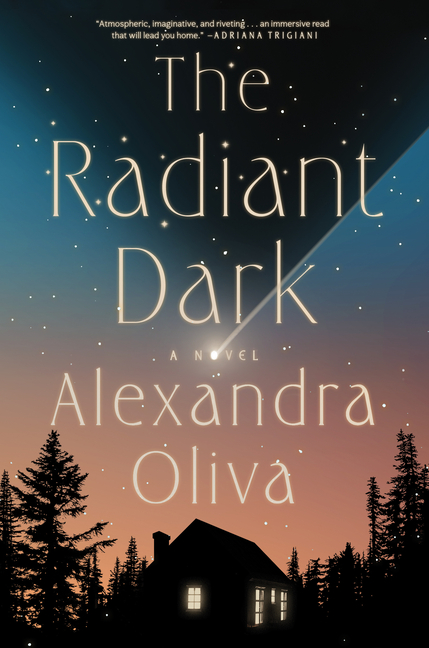
The Radiant Dark
Alexandra Oliva
SJP Lit/Zando | $28.95 | 9781638932529
Alexandra Oliva explores the tangled bonds between mothers and daughters, and the implications of generational cycles, in her thought-provoking third novel, The Radiant Dark.
In a small Adirondacks town in 1980, new mother Carol is stunned and thrilled to hear that a strange flickering of light in the sky indicates a strong possibility of intelligent life on another planet, 11 light-years away from Earth. As she struggles to care for her newborn son, Michael, Carol becomes fascinated by odd transmissions from a planet known as Ross 128 b, eventually coming to believe the Rossians' messages have spiritual implications. Many years later, Carol's daughter, Rosanna, will grow up to become a scientist whose work deals with transport and communication to other planets. The prospect of contact with interstellar beings, and the implications for life on planet Earth, powerfully shapes the lives of Carol and her children.
Oliva (Forget Me Not); The Last One) draws her characters with sharp, keen-eyed compassion, examining Carol's lingering trauma from her abusive childhood, and the ways it influences her fierce, often misguided love for her children. Michael, a peacemaker drawn to a life outdoors, spends his young adulthood wandering the country, searching for something he can't quite define. Meanwhile, Rosanna--prickly, analytical, driven--earns a spot at Yale and fights to carve out a place for herself in academia, while holding her mother at arm's length. Oliva sensitively guides her characters apart and back together. Tender and quietly luminous, The Radiant Dark asks how we relate to our fellow beings (interstellar or otherwise) and highlights the ways the past echoes through the present and shapes the future. --Katie Noah Gibson, blogger at Cakes, Tea and Dreams
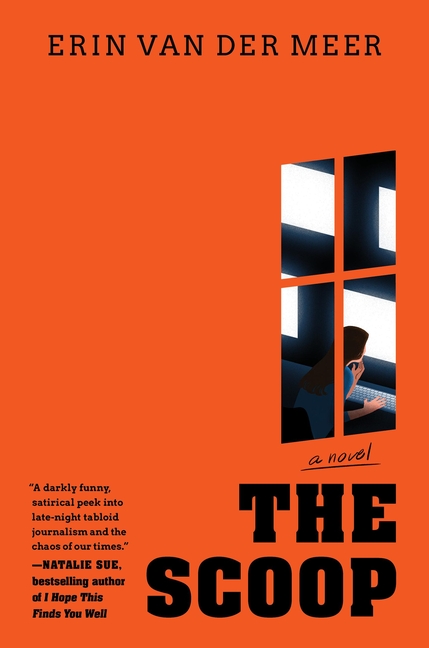
The Scoop
Erin Van Der Meer
Grand Central | $29 | 9781538776339
In her barbed and immensely engaging debut novel, The Scoop, Erin Van Der Meer skewers the business of tabloid journalism through the struggles of a young editor trying to make her mark. Laid off from her dream job at Marie Claire and mourning a breakup with the boyfriend she thought she would marry, Francesca "Frankie" Miller is desperate for a stable income. Against her better judgment, she takes a job as a night editor at the Scoop, a trashy online tabloid (think the National Enquirer) owned by media conglomerate Johnson News. David, the editor-in-chief, offers Frankie a large salary and promises he will see to it that she's transferred to the respectable Business Day (think the Wall Street Journal), also owned by Johnson, so Frankie tells herself she won't be there long. At first, Frankie is able to keep herself above the fray, offering pointed observations of a business where "paparazzi photos were often treated with the hysterical sense of urgency other news outlets reserved for the most serious of events," but it doesn't take long before she is swept up in the frenzy. She abandons her integrity by digging up dirt on Amanda Myles, a 1990s rock star trying to live quietly out of the spotlight. Frankie's relentless invasion into Amanda's past leads to devastating consequences for Amanda and a harsh reckoning for Frankie.
Van Der Meer, a former journalist, knows this terrain well. Her depiction of the well-meaning but naïve Frankie shows how easily morals and ethics can be swayed in the pursuit of success. Sharp and provocative, The Scoop is a smart and satisfying read. --Debra Ginsberg, author and freelance editor
Small Boat
Vincent Delecroix, trans. by Helen Stevenson
Mariner Books | $25 | 9780063491694
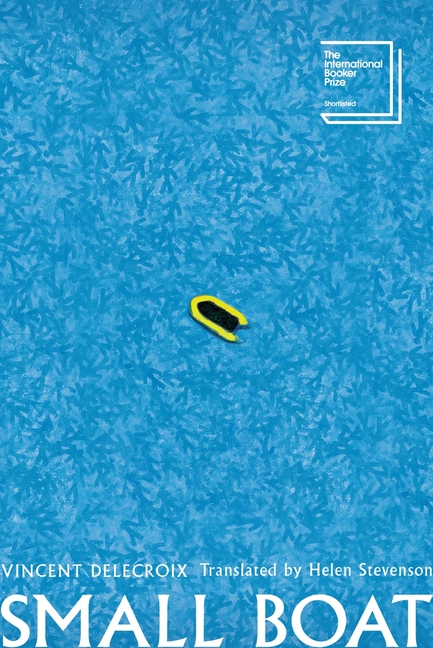
Inspired by the real-life tragedy in November 2021 when 27 migrants drowned trying to cross the English Channel from France, French philosopher and writer Vincent Delecroix's slim and searing novel Small Boat limns the failings of conscience and complacency in the face of human suffering. Told mostly from the viewpoint of the French radio operator who falsely assured the migrants during their distress calls that help was coming, Delecroix imagines the thought process behind her callousness. Under investigation for negligence, the narrator is questioned by a policewoman who looks "exactly like me," a resemblance that repels her. She toggles between blaming the victims--"it really wasn't me that asked them to leave"--and expressing self-pity for being singled out for a problem created by societal inequity beyond her control. She notes that her job does not entail feeling sorry for anyone. "Empathy," she says, "is an idiotic luxury indulged in by people who do nothing."
The narrator's account is broken into two sections by a short passage in the middle of the novel that tells the story of the fateful night from the migrants' viewpoint. The language shifts in this section to an unadorned and unsparing description of slow horror as they drown, one by one, "without even noticing." As monstrous as the narrator seems, however, Delecroix avoids painting her as an easy villain. It is, rather, her all-too-human capacity for indifference and moral justification that is chilling. Aided here by Helen Stevenson's subtle, brilliant translation from the French, the timely, thoughtful, and unsettling Small Boat is a powerful and necessary read. --Debra Ginsberg, author and freelance editor
The Dead Can't Make a Living
Ed Lin
Soho Crime | $29.95 | 9781641297240
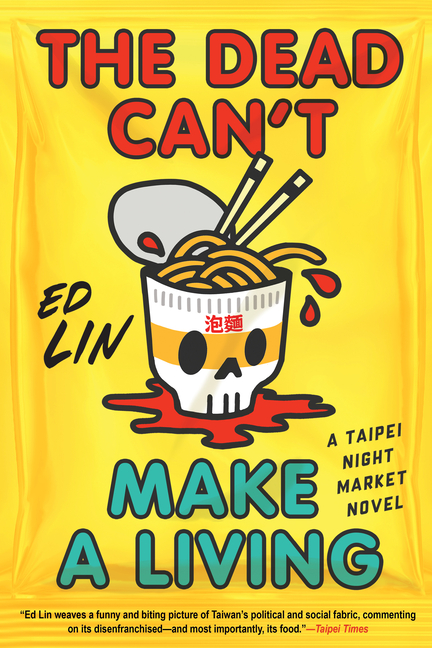
The entertaining fifth volume of Ed Lin's popular Taipei Night Market series, The Dead Can't Make a Living, gathers the familiar crew of Unknown Pleasures, which specializes in grilled skewers in Shilin Night Market. Reunited are proprietor Jing-nan, a UCLA dropout who returned to Taiwan to salvage the family business in challenging times; his brilliant biomedical researcher girlfriend, Nancy; and loyal employees Dwayne (yes, a nod to "the Rock"), who is Indigenous Amis Taiwanese, and Frankie the Cat, a former soldier and political prisoner.
Jing-nan may be persona non grata with the local police precinct, because they blame him for their chief's recent death, but customers still come to his booth in droves for the delectable food, the inviting social media presence, and of course death. In this installment, the corpse is a young man who turns out to be a Filipino migrant factory worker. The government sees him as merely collateral damage that can be erased with a financial settlement, but his family needs justice, which sends Jing-nan undercover to the factory to expose what really happened. Dangers aside, in case of trouble, he can always name-drop his powerful gangster uncle's moniker, right?
Lin cleverly ensures each volume easily stands alone, but reading in order reaps significant benefits; for example, check out the fourth entry, Death Doesn't Forget, for details explaining police animosity. Lin continues to write with an irresistible nonchalance, adroitly balancing heavier themes of migrant exploitation, criminal organizations, and government corruption with well-timed humor. Murder is never funny, but discovering whodunit here certainly has rollicking, comical moments. --Terry Hong
The Rise of the Celestials
Kritika H. Rao
Harper Voyager | $19.99 | 9780063349230
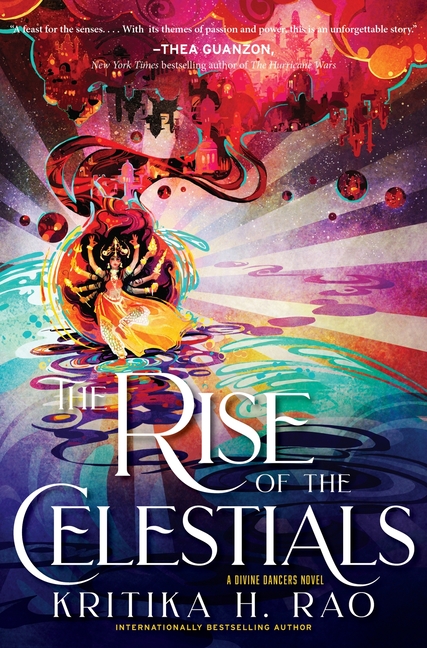
Kritika H. Rao (The Legend of Meneka) expands on a fantasy universe based in traditional Hindu stories as she concludes the Divine Dancers duology with the adventure-rich, introspective fantasy novel The Rise of the Celestials.
Meneka, an apsara (celestial dancer) from the heavenly city of Amaravati, is now living among mortals with her lover, the sage Kaushika. "Living here with him in stillness has been a quiet rebellion, a slow warfare... deliberate in its nourishment," she reflects. However, their passionate relationship is tarnished for Meneka by external pressures. Shachi, the wife and sometimes adversary of Indra, Amaravati's ruler, has asked Meneka to win Kaushika to her side against Indra. Meneka is unsure of her place in Amaravati after recent events. Then Indra calls her home, only to send her forth again on a mission to the underworld. Meneka can refuse, but if she does, Indra will never allow her to return to the mortal world and Kaushika. Her travels route her through the most hellish corner of the immortal lands, then to the lush paradise of the underworld, where she becomes entangled in Indra and Shachi's power struggle. Their battle will decide the fate of Amaravati forever, and Meneka's choices could cost her Kaushika--or worse, herself.
Rao's unabashedly sexy epic centers the journeys and fellowship of women but portrays the feminine aspect of the divine as potent and aspirational regardless of one's gender. Readers of the duology's first volume will enjoy Meneka's powerful path to self-understanding and finding her place. --Jaclyn Fulwood, blogger at Infinite Reads
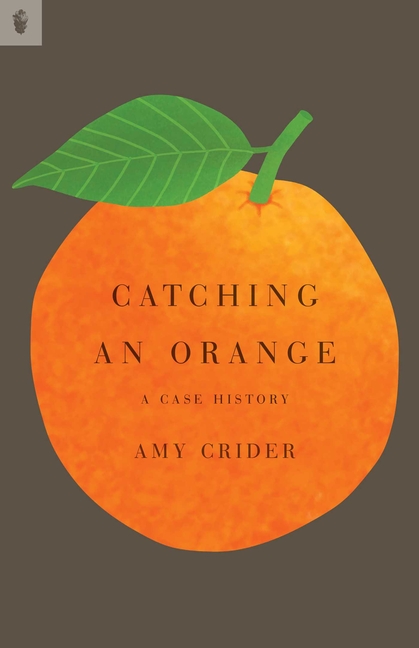
Catching an Orange: A Case History
Amy Crider
Garrett County Press | $19.95 | 9781939430274
Amy Crider's introspective memoir, Catching an Orange, illuminates her mental health struggles. The intriguing title refers to a dream Crider had just before she learned of her long-ago psychiatrist's death. Reading his obituary, she felt she'd lost a valued confidant: "I want to tell you everything, and you are gone."
Chicago-based novelist/playwright Crider (Kells) highlights the turning points in "a lifetime of crippling anxiety." While in graduate school in upstate New York, she reunited with a high school friend whose brother she married. Together she and her first husband bought farmland and built a house. Her husband took on big DIY projects and had ideas for inventions but never followed through. Learning of her mother's personality disorder and her husband's paranoid schizophrenia explained their behavior and interactions with her. Her own bipolar diagnosis accounted for her manic episodes and the occasional hallucinations and delusions that resulted in hospitalizations. During one of these, she met Dr. L. and started writing to him--a habit she maintained for 30 years, even though their acquaintance lasted just three days.
Crider's recollections constitute a warm, frank confession addressed "Dear Dr. L." Dissolution of her first marriage became inevitable; her ex's boat-building disasters came to symbolize failure to keep the relationship afloat. The title image suggests newfound control ("I caught a ball for the first time") as Crider takes ownership of her past and future. She imagines Dr. L. replying, "Who do you think threw it to you?"--proof that even brief connections matter profoundly. --Rebecca Foster, freelance reviewer, proofreader, and blogger at Bookish Beck
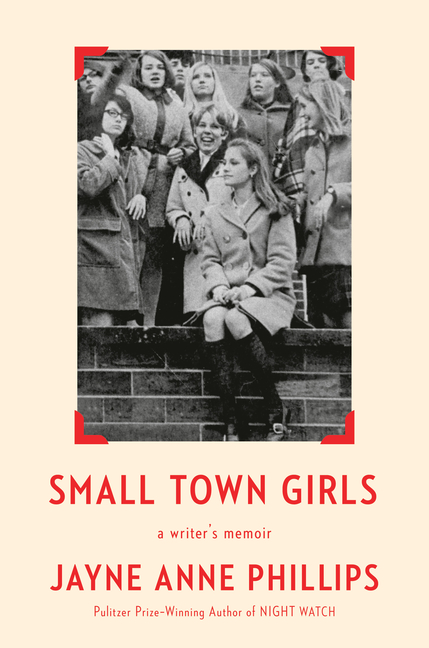
Small Town Girls: A Writer's Memoir
Jayne Anne Phillips
Knopf | $28 | 9780593804933
Though the Pulitzer Prize she received for her 2023 novel, The Night Watch, was well deserved, it didn't take that honor to confirm Jayne Anne Phillips's status as one of America's preeminent contemporary fiction writers. But in a career that has spanned nearly 50 years, Phillips has never produced a work of nonfiction. Small Town Girls, her varied and confiding memoir in essays, remedies that omission and further demonstrates the breadth of her talent.
Born in 1952, Phillips grew up in the tiny town of Buckhannon, home to West Virginia Wesleyan College and, during her childhood, a thriving coal-mining industry. Roughly half of the 22 pieces in the collection touch on how that upbringing helped shape her identity. It's a place--"geographically isolated and relentlessly exploited by outsiders and some insiders, all looking to sell paradise and make a buck"--that she views with a mixture of pride and candor tinged with melancholy.
The "star-crossed, dramatic life" of Phillips's mother, the descendant of a wealthy family that lost its fortune in the Great Depression, is a recurring subject. Phillips, who holds an MFA from the Iowa Writers' Workshop, also offers several impressive examples of her literary sensibility and journalism. Among them are tributes to novelist Stephen Crane and to Phillips's West Virginia contemporary Breece D'J Pancake, whose prose, she writes, "has the clarity of a struck bell" and who died by suicide in 1979, at age 26. In these and the other essays, she consistently penetrates to a subject's emotional core, in the process revealing to her readers her own life alongside a bit of their own humanity. --Harvey Freedenberg, freelance reviewer
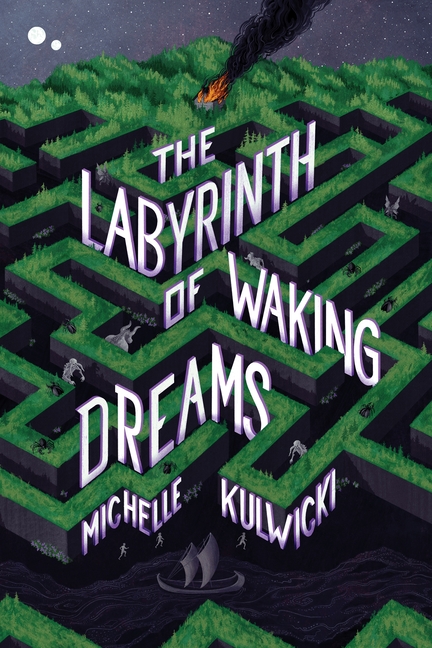
The Labyrinth of Waking Dreams
Michelle Kulwicki
Page Street YA | $19.99 | 9798890033802
Three teenagers enter the Labyrinth of Greek myth and fight nightmarish supernatural creatures in the high-adrenaline, blood-stained YA dark fantasy The Labyrinth of Waking Dreams by Michelle Kulwicki (At the End of the River Styx).
The Labyrinth is "a plane of darkness," filled with "horrors," separated from the world by an invisible magical barrier. A secret society of blood magicians, all "children of gods," protect the Earth by keeping the barrier closed. However, the barrier is breaking down and wears especially thin over Barren's Peak, a small West Virginia town. Eighteen-year-old, blonde Thea is a lifelong Barren's Peak resident who dropped out of high school to care for her disabled father. Her only escapes are parties and Callum, the mysterious new boy in town with "dark olive skin and weirdly grey eyes." Thea doesn't know Callum is a magician, ordered to spy on her by the magicians' Council. When tan, chestnut-haired Oliver, Callum's first love and an exiled magician, arrives, flesh-eating fairies attack Thea and Callum. The only way Oliver can think to escape is into the Labyrinth--but once there, the minotaur "is only the beginning." Thea, Callum, and Oliver must fight their way out again "through monsters and trials [they] can't even begin to consider."
Kulwicki's plot races at a breakneck speed, forcing the teens on a bloody race through a world of fearsome monsters and shadowy magicians in this first title in a series. Thea, Callum, and Oliver have distinctly different POVs, personal arcs, and complex relationships that Kulwicki skillfully uses as motivations and corruptions throughout their perilous quest. --Alanna Felton, freelance reviewer
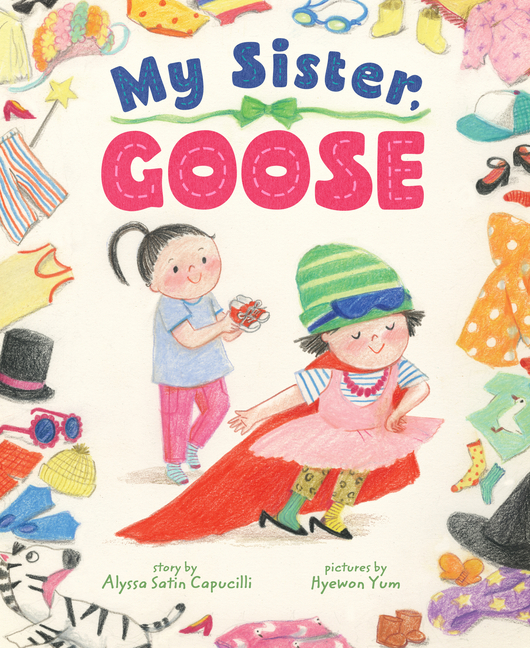
My Sister, Goose
Alyssa Satin Capucilli, illus. by Hyewon Yum
Hippo Park | $18.99 | 9781662640995
In the delightful picture book My Sister, Goose, prolific author Alyssa Satin Capucilli (Biscuit series) presents a supremely uplifting relationship between two sisters: the elder, Miranda, nurturing and encouraging; the younger, Goose, inimitable and imaginative. Artist Hyewon Yum (Toto) works in colored pencils on paper, giving texture to the girls' world of whimsical wonder.
Miranda couldn't pronounce "Graciela Rose" when her sister was born, simplifying it to Goose and "the name stuck." Now, Miranda knows, "No matter what we're doing... Goose will make some unusual decisions." Before their story even begins, Goose takes over the title page, already taking a bow, acknowledging she provides a memorable performance simply by existing. Goose expends her most creative energy on fashion statements: "When Goose gets dressed, I never know what to expect," Miranda confesses, deftly pivoting Goose's impractical choices without dampening the child's infectious enthusiasm. With Miranda's gentle recommendations, Goose forgoes the high heels and dons light-up high-tops for the playground and (eventually) exchanges the "too hot"-zebra costume for pajamas at bedtime. Despite what could be mistaken for (charming) self-absorption, Goose proves her appreciation for Miranda's stalwart kindness, ready to share her extraordinary wardrobe with her gracious older sister.
Capucilli and Yum are an indubitably complementary pair: the former provides the invitingly chatty text, and the latter's wonderfully winsome illustrations deftly mirror Goose's kinetic energy while highlighting the sweetly engaging sororal interactions. Together, they elevate the art of dressing up to enthralling new levels while celebrating the incomparable joys of supportive sisterhood. --Terry Hong
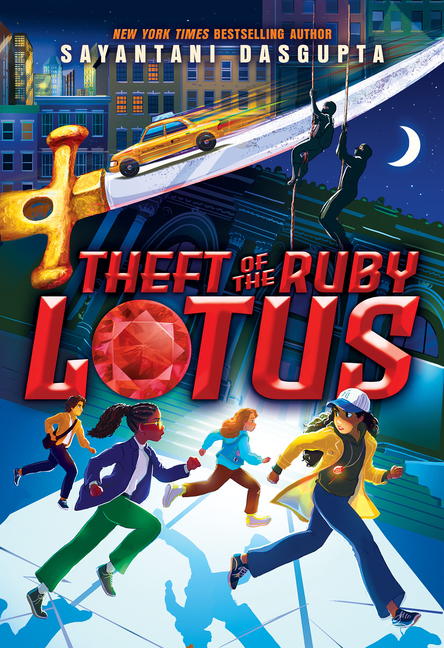
Theft of the Ruby Lotus
Sayantani DasGupta
Scholastic Press | $18.99 | 9781338766875
Sayantani DasGupta (The Serpent's Secret; The Chaos Monster) takes readers on a riveting, wild excursion through New York City as three seventh graders race to return an iconic jewel to its rightful home while eluding an onslaught of nefarious villains.
Twelve-year-old Ria Bailey is furious when her art historian mom is mysteriously fired from her job at the Metropolitan Museum of Art. Ria will be leaving friends, school, and her diverse Hell's Kitchen neighborhood in New York City to live in some "dinky butt town" in Germany. Her mom has gone ahead to start her new museum job, while Indian British American Ria and her dida wait in the city. Then, a mysterious package addressed to Ria's mom arrives. Thieves recently attempted to steal the Met's "fancy, jeweled" Lotus Sword, but only managed to take the Heart of the Lotus, the brilliant ruby set in its hilt. In the box is the (possibly?) real Heart of the Lotus! Ria, along with besties Miracle Owusu and Annie Hernandez, must skirt "danger and death" to protect the gem. On their grand expedition through the streets of Ria's beloved New York City, the trio encounters a mysterious boy who makes Ria's chest feel "oozy-woozy," a potentially zombie "all-woman art thief gang," and a billionaire tech bro who is inordinately interested in museum artifacts.
Theft of the Ruby Lotus is a twisty-turny middle-grade caper with plenty of peril that is balanced by ample doses of pitch-perfect humor. Ria's bright, snappy dialogue pegs her as the sassy heroine she is, and her well-defined supporting cast nicely balances the dynamic. DasGupta gives middle-grade readers an exciting action-adventure-mystery that provides plenty to ponder. --Lynn Becker, reviewer, blogger, and children's book author
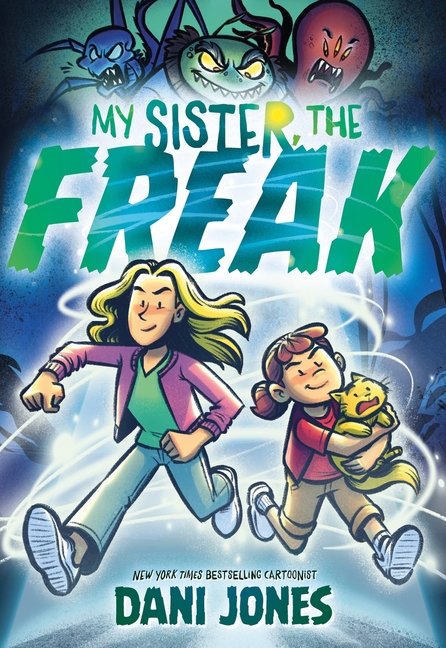
My Sister, the Freak: A Graphic Novel
Dani Jones
HarperAlley | $15.99 | 9780063343269
Two distinctly dissimilar sisters react very differently to an alien invasion in this tremendous middle-grade graphic novel about what it means to be "normal."
The Seaver sisters--popular high school freshman Al and 10-year-old sci-fi lover and school "freak" Mary--couldn't be more unalike. Most importantly, the peachy-skinned girls don't agree that aliens have invaded their hometown. Then Mary is attacked by one. And Al? She unleashes her secret superpowers and defeats it. Turns out, Al was adopted from aliens but is simply trying to be a "normal, boring teenager." Unfortunately, her abilities have now been reactivated and she keeps losing control. Al just wants to find where she fits: with the dress-shopping, dance-fevered, school championship-loving crowd, or with brown-skinned nonbinary short-film maker and sci-fi artist "witch" Meg, with whom Al feels comfortable. But Mary keeps finding ominous extraterrestrial warnings that Al ignores, leaving Mary to conclude she'll have to save her "butthead" sister herself.
My Sister, the Freak by artist and writer Dani Jones, illustrator of the PopularMMOs series, is upbeat and uproarious. Jones's lively, thickly lined art has a cartoon-like quality reminiscent of Dan Santat and Raina Telgemeier and her use of light allows for Al's epic superpowered battles to glow gorgeously. The visual humor is admirably, unabashedly hammy and features classic onomatopoeia as well as tongue-in-cheek jokes (one girl woefully settles for "Mild Jared" over "Hot Jared"). There are gasp-worthy twists, snippets from Mary's own comics, and a budding queer romance. --Samantha Zaboski, freelance editor and reviewer
Stuart Gibbs, author of popular middle-grade series Spy School, FunJungle, Moon Base Alpha, Charlie Thorne, and Once Upon a Tim, as well as the new nonfiction series Spy School Secret Files, has six books coming out in 2026. Here, Gibbs talks about his (obvious) love of writing and how his first nonfiction title, Totally True Tales from World War II, was only made possible by a personal invite to CIA headquarters.
The Writer's Life
Stuart Gibbs Got a Call from the CIA. Really.
![]() |
|
| Stuart Gibbs | |
Stuart Gibbs is the author of five middle-grade series--Spy School, FunJungle, Moon Base Alpha, Charlie Thorne, and Once Upon a Tim--as well as the new nonfiction series Spy School Secret Files. He has written screenplays, worked on animated films, developed TV shows, been a newspaper columnist, and researched capybaras. Here, Gibbs chats with Shelf Awareness about having six books coming out in one year, turning his novels into graphic novels, and receiving a surprise call from the CIA.
You published your first book, Belly Up, in 2010. And now, in 2026, with the recent publication of the graphic novel Spy School: Secret Service, you have 45 books published.
I have wanted to be an author my whole life, because I have always wanted to share the stories that I came up with. I spent plenty of time writing books that didn't get published. And I also spent a lot of time as a screenwriter, where you could make a good living--but still not get anything made. So now that I'm finally able to write things and get them published, I suppose I might be overcompensating.
You have five other books coming out in 2026: Ape Escape (March 24), the Spaced Out graphic novel (August 18), a graphic novel from DC (Bruce Wayne, Not Super: The Bat-Catastrophe, September 1), another Spy School: Spy School Goes East (October 6), and Totally True Tales from World War II (November 10). What does a day in the life of Stuart Gibbs look like?
The days can vary dramatically. For me, part of the key to writing a lot is to not write every day. I like to give myself time away from the computer, so I don't work on weekends or on vacation. That said, I'm mainly thinking about what I could write during those times. It's rare for me to visit a place and not get inspired in some way or another. A random fact might spark an idea, or I might come up with a way to fix a book that I'm currently working on, or I might end up plotting an action sequence.
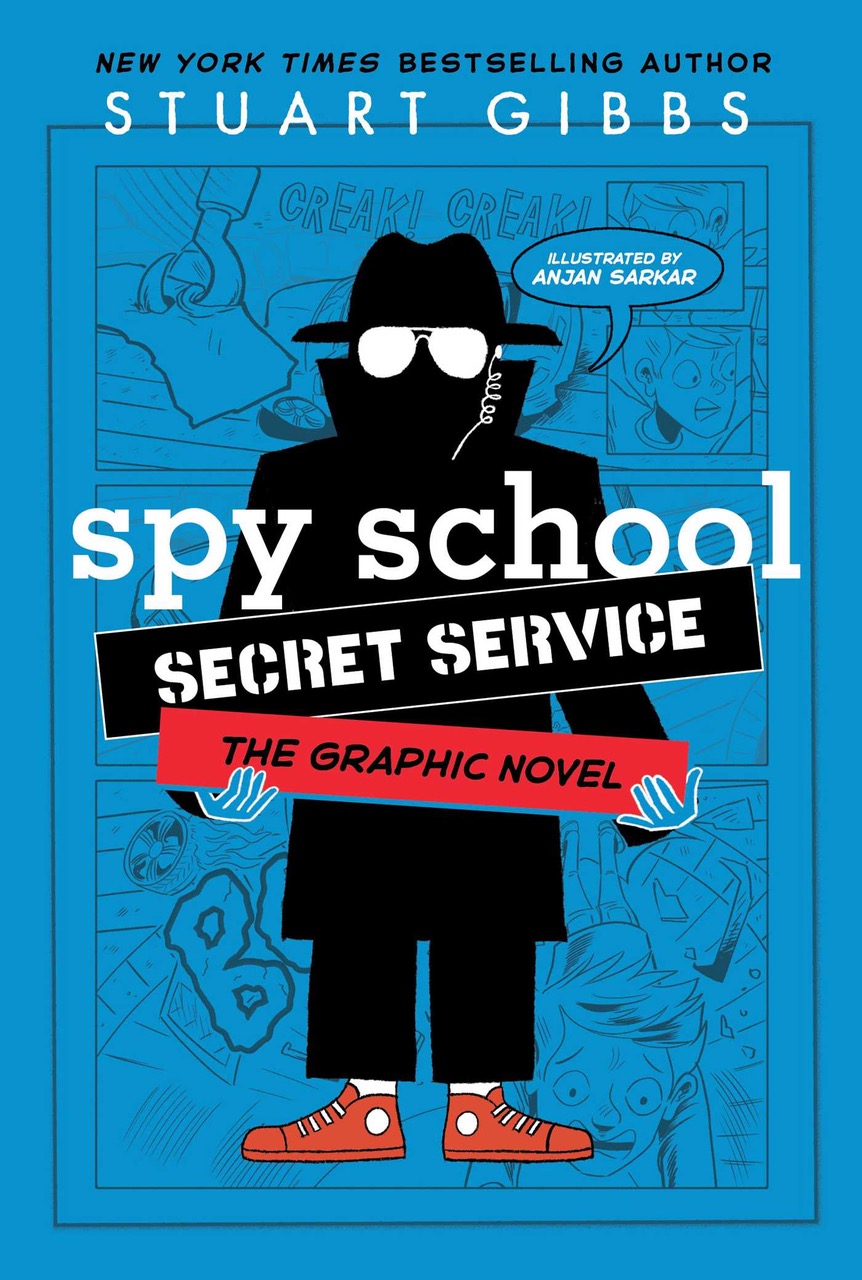
Do you write the graphic novels? What has your experience been like moving your novels to this format?
I do write them. I realized, right off the bat, that a graphic novel is more like a movie than a book. So, I just write the screenplay version of my books. I try to keep as much of the original dialogue from the books as possible (although I have to pare it down) and I try to show things happening instead of telling about them happening. I leave it up to the artists to figure out how to do the layouts, which is a little unconventional for a graphic novel, but I have always figured they should do that, rather than me. (No one has ever complained.) The best part of the process is seeing what my talented artists have done with the scripts.
How much fun is it to come up with outrageous spy stories for an all-around-pretty-average kid?
I love it. I had the idea for Spy School when I was a kid myself, and to me, the core of the humor has always been that if you dropped anyone into the midst of a James Bond movie, no matter how smart and competent they were, they would still screw everything up. So, I'm always looking for outrageous situations to place Ben and his friends in.
Do you think Benjamin Ripley is growing and changing the more Spy School books you write?
He is definitely changing. His skills are improving (albeit slowly). And so is Erica Hale and all the rest of the gang. To me, the key characters development in the series is that Erica is making Ben a better spy--and Ben is making Erica a better person.
And Totally True Tales is a new format for Spy School, right? What made you want to do a nonfiction book in this series?
The idea was originally brought to me by my editor, Krista Vitola, and my immediate reaction was, "It'd be great to do that, but where am I going to find all those stories?" And then, shortly afterward, I got a call from the CIA.
Really.
I was invited to come visit their headquarters. I had always known there was a museum there--the hardest museum in the world to visit. One of the curators gave me a tour and it's wonderful. The stories that were being told in the museum were fascinating. So, I asked the curator if there was any way I could share these stories in a book for young readers and she was thrilled. After that, everything worked amazingly well. The CIA shared the stories with me, and I figured out how to tell them.
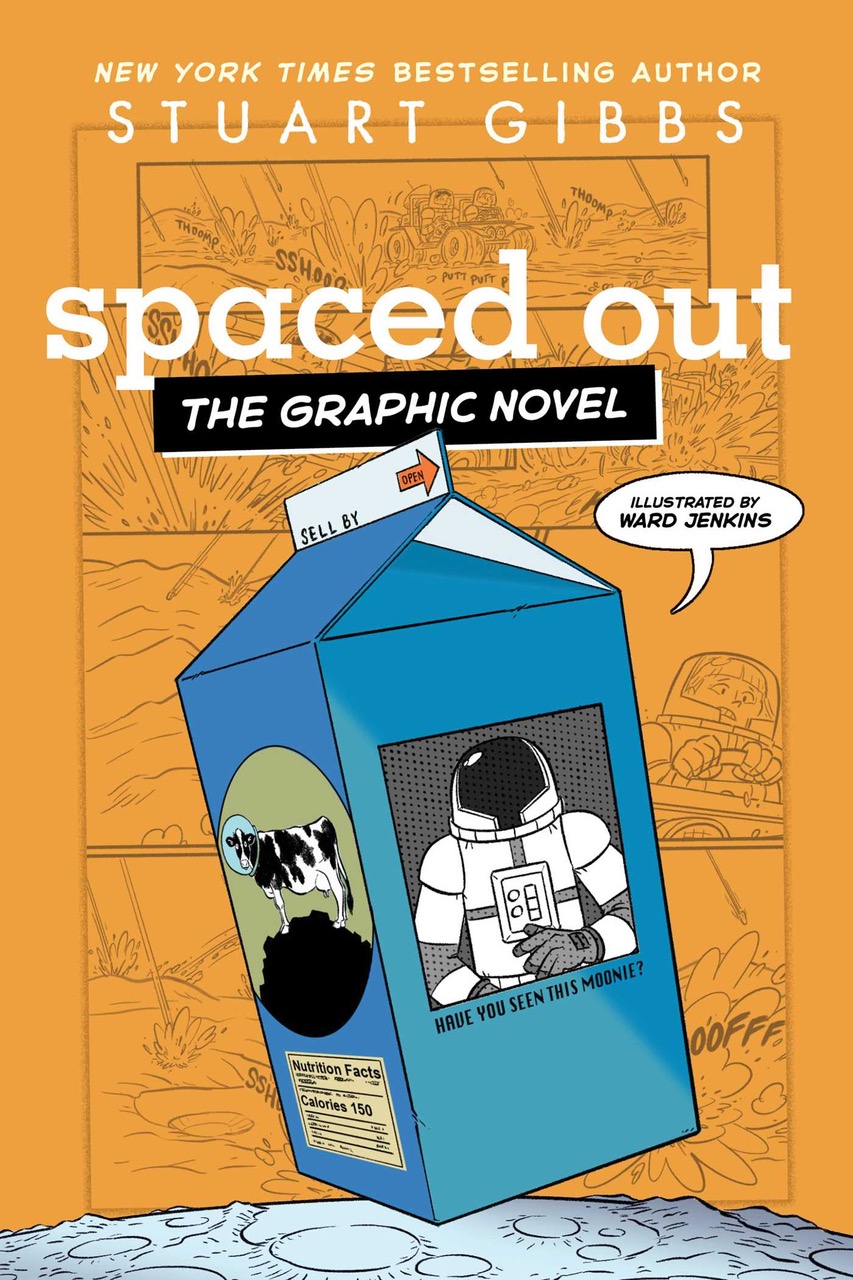
The Spaced Out graphic novel is the second in the Moon Base Alpha series and that series is complete at three novels. What makes you excited about the graphic novels of that series making their way into the world?
I hated having to end the MBA series. When I first started it, I hoped it would run for a long time, but I discovered while I was working on book three that the world was much more limited than I had originally realized. For the most part, the moon doesn't change. If I go five miles from my home in any direction, the landscape changes dramatically. But that's not the case on the moon: it's all moon dust and craters and you're in a big, bulky space suit. And the moon base I had created was small and cramped and there were only a few rooms in it, and I had already set scenes in all of them. So, I couldn't figure out how I would keep everything feeling fresh after book three. The graphic novels are a wonderful way to re-invigorate the series. Ward Jenkins has done an incredible job bringing the base and everyone in it to life.
Have you always wanted to create expansive book series like this?
Even though I always wanted to write, I never imagined that I would be where I am today. I never expected that this idea that I had when I was a kid would one day have 13 books--with more to come--and graphic novels and puzzle books and kids coming to my events dressed as the characters. I am not sure how long this series will run, but for the time being, I have lots more ideas for it.
Is there anything you'd like to say to Shelf Awareness readers?
I know it's unusual for an author to publish six titles in one year--and to be the person who wrote every word of them. The fact that all six are coming out in 2026 has a bit to do with chance: I wrote some of these graphic novels quite some time ago. But I really do all the writing myself. I find great joy in writing (most days, at least) and have so many stories that I want to tell. I highly doubt I will have this many books come out in one year again. In fact, I'd like to slow down a bit--but I still intend to keep on writing books and graphic novels for a long time to come. --Siân Gaetano, editor children's and YA, Shelf Awareness

"How George Orwell predicted the rise of "AI Slop" in Nineteen Eighty-Four (1949)," courtesy of Open Culture.
---
"Favorite poetry picture books to read aloud to kids" were recommended by the New York Public Library.
---
Ande Pliego, author of The Library After Dark, considered "the marvelous libraries that inspired her new novel." (via CrimeReads)
Book Candy
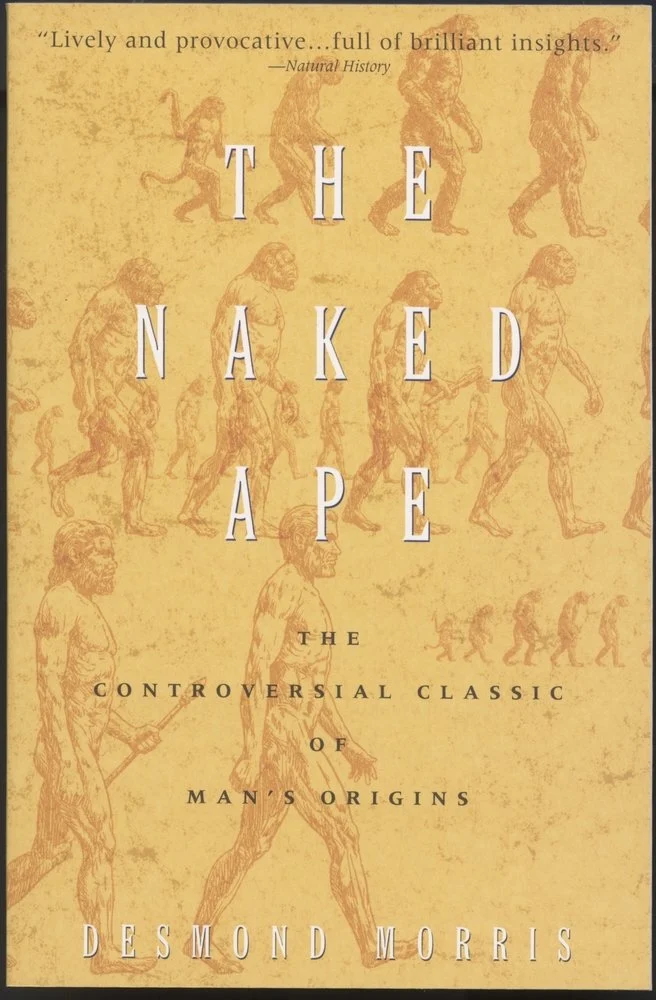
Desmond Morris, an English zoologist "who used observation, logic and insight to contend in his immensely popular 1967 book, The Naked Ape, that humanity, stripped of civilized veneer, is just another species of ape," died April 19 at age 98. In addition to writing more than four dozen books and 50 scientific papers, Morris presented 700 TV episodes, using "observational powers that he had honed as a zookeeper to study the ways of humans as well as those of animals."
Rediscover
Rediscover: Desmond Morris
Desmond Morris, an English zoologist "who used observation, logic and insight to contend in his immensely popular 1967 book, The Naked Ape, that humanity, stripped of civilized veneer, is just another species of ape," died April 19 at age 98, the New York Times reported. In addition to writing more than four dozen books and 50 scientific papers, Morris presented 700 TV episodes, using "observational powers that he had honed as a zookeeper to study the ways of humans as well as those of animals."
The Naked Ape: A Zoologist's Study of the Human Animal sold more than 20 million copies and was translated into 23 languages. It argued that ancient genes, shared with apes, shape human behavior. Morris "offered new interpretations of basic human functions like sleeping, fighting, mating and child-rearing. He noted that humans had evolved not only the biggest brains among primates but also the biggest penises, compared to body size. He said this was one of many sexual adaptations that keep couples sufficiently interested to stay together," the Times wrote.
When readers objected to some of his claims, Morris responded that The Naked Ape was "deliberately insulting." As he observed in the book, "Our climb to the top has been a get-rich-quick story, and like all nouveaux riches, we are very sensitive about our background. We are also in constant danger of betraying it."
Although critics challenged some of his theories about apes and humans, the field gained increased credibility in 1971 when Jane Goodall published In the Shadow of Man. Since then, "social biology, the explication of behavior in an evolutionary context, has grown in importance, even as debates over interpretations have flared," the Times noted.
"If I am honest, it is a struggle I have never fully resolved, the 'ham' and the academic in me doing battle with one another, with first one, then the other, getting the upper hand," Morris wrote in Animal Days (1979), one of three memoirs.
His many books include The Human Zoo (1969); Patterns of Reproductive Behavior (1970); Intimate Behaviour (1971); Amazing Baby: The Amazing Story of the First Two Years of Life (2008); The Naked Man (2008); Postures: Body Language in Art (2019); The British Surrealists (2022); and 101 Surrealists (2024)
As a child, Morris acquired an interest in art after using a great-grandfather's microscope and set of slides, which inspired him to draw and paint patterns based on the shapes of microorganisms. By the early 1950s, he was selling his surrealist paintings in London and Belgium and had directed two surrealist films.
Morris's first job after attending the University of Oxford was hosting Zoo Time, a Granada Television series on animals in the London Zoo. He became curator of mammals at the Zoo in 1959. During the 1960s, he wrote several nature books, including three with his wife, Ramona (Baulch) Morris.
Desmond Morris spent four weeks writing The Naked Ape, "racing to pay for a new house," the Times noted, adding that "as huge profits almost immediately materialized, he moved to the Mediterranean island nation of Malta in 1968, in part to avoid British taxes.... When the money ran out, Dr. Morris returned to Oxford to do more research.... He churned out book after book, many of which were very popular--not least his quasi-scholarly guided tours, one for each sex, to the erogenous precincts of the human body." Other titles dealt with dogs, cats, horses, and soccer players. At 90, he was still exploring the art world with The Lives of the Surrealists (2018).