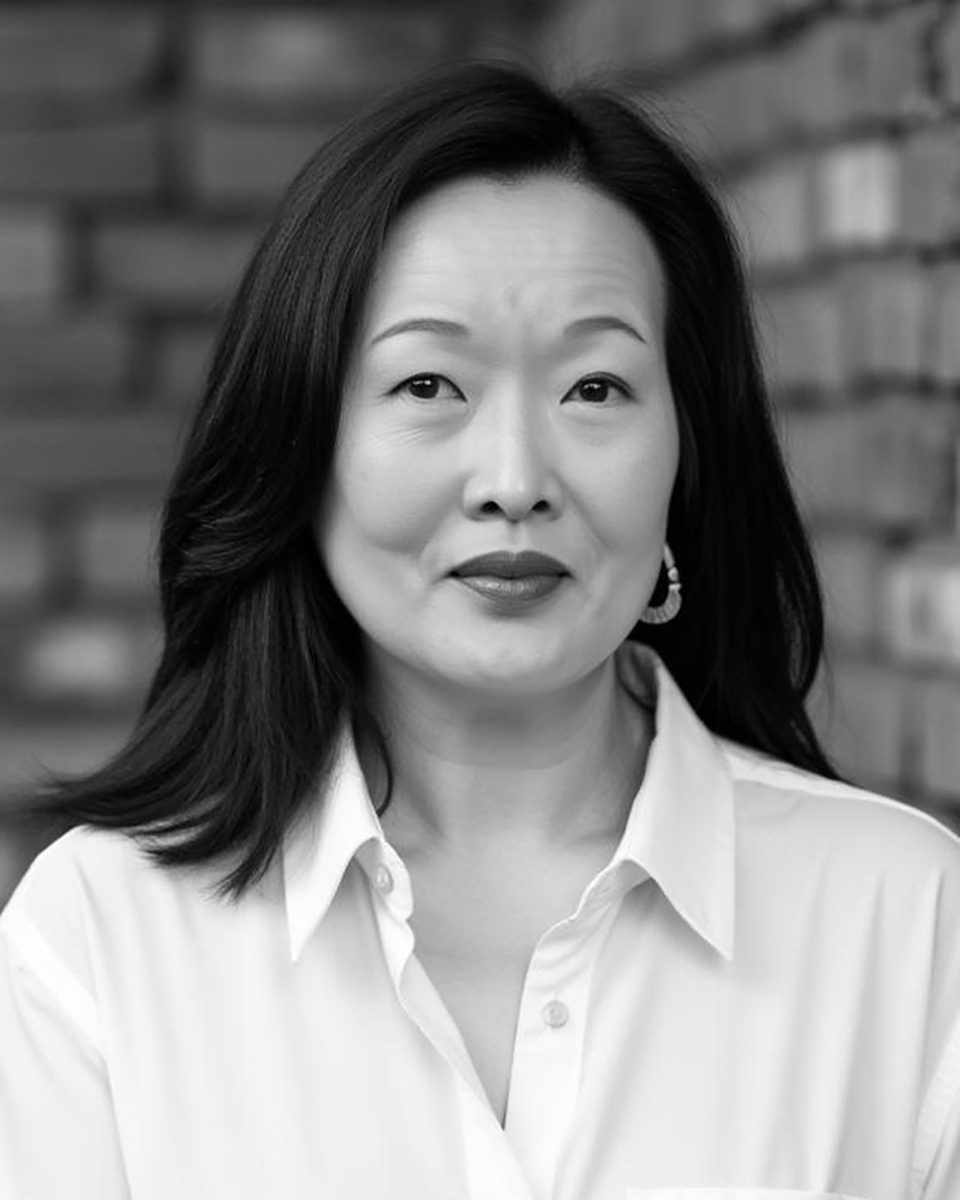
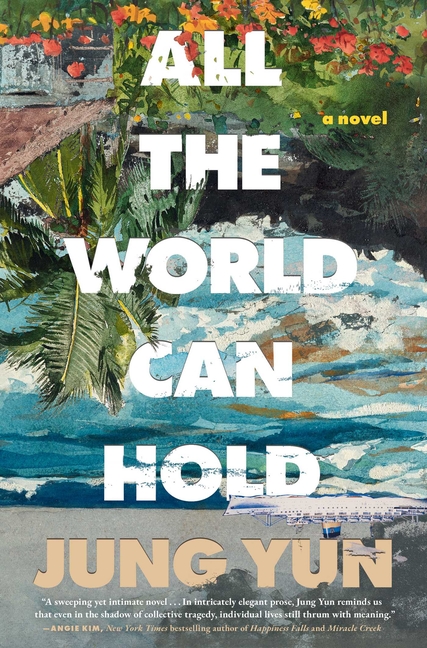
 Jung Yun is the author of the novels O Beautiful and Shelter, which was longlisted for the Center for Fiction First Novel Prize. Her third novel, All the World Can Hold, draws on her experience of identity crisis during a cruise shortly after 9/11 to explore the destabilized lives of three passengers. Here she discusses the nuances of nostalgia and optimism, the power of care in the midst of crisis, and the reason she will (probably) never write a memoir.
The Writer's Life
Jung Yun: 'Crises help us see the good more clearly'
|
Jung Yun
(photo: A. Scott) |
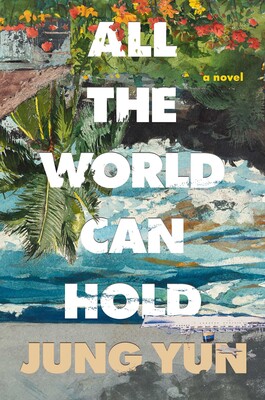
Jung Yun's third novel, All the World Can Hold (37 Ink/Simon & Schuster; reviewed in this issue), draws on her experience of identity crisis during a Love Boat-themed cruise shortly after 9/11. Her previous novels are Shelter, longlisted for the Center for Fiction First Novel Prize, and O Beautiful. Yun was born in South Korea and grew up in Fargo, N.Dak. She lives in Baltimore and is an assistant professor of English at George Washington University.
What convinced you that your 2001 cruise was the fodder for a novel? How did the story develop over the 25-year gestation process? Did you feel that you were writing historical fiction?
I'd been wanting to write a 9/11-related novel ever since I started writing, but whenever I sat down and tried, I ended up writing a story about 9/11, so I kept putting the pages back in the drawer and returning to them again every few years. Something else I deeply resisted was setting the novel on a cruise to Bermuda, probably because I was still mortified that that's what I was doing right after 9/11. Being away at sea so soon after a major event and then returning to a city that had been encouraged to "get back to business" again clearly affected the way I processed it. Eventually, I decided those feelings of dissonance and disconnect were worth exploring in my fiction, and the novel finally took off from there.
As for writing historical fiction, I think of that genre as being more centered around a real-life event than this book really is. September 11th is in the background, while the three main characters--with all their regrets and unfulfilled desire--occupy the foreground.
It's such an evocative title, one that speaks of optimism and possibility. Do you think of that outlook as being unique to the Y2K years--with disillusionment fated to set in after 9/11 and the financial crash?
The title, and the book as a whole, is about the possibility of individual lives, and how the future isn't as fixed or fated as people might think it is, even though that may be hard to see in a particular moment. The main characters--Franny, Doug, and Lucy--have more agency and capacity for change than they initially give themselves credit for. I don't think that outlook is specific to any particular era (and I certainly hope it's not an era that's behind us).
 Is it perverse to be nostalgic for a time of crisis such as 9/11 or Covid-19 lockdown? Those of us not directly affected might have fond memories of communities coming together, for instance. Can we find solidarity in the everyday without experiencing tragedy?
I have really nice memories of my husband making me cocktails on Tuesday and Thursday nights during the pandemic. I'd finish teaching on Zoom and walk out to find him ready with some concoction that I hadn't asked for but was exactly what I wanted. I'm still nostalgic for those cocktails because they made me feel so well cared for, but that's very different from being nostalgic for that particular period of time. In general, I think crises help us see the good more clearly (or we look for the good more because we're surrounded by crisis). I can't speak for anyone else, but I could definitely be more mindful about doing that kind of looking every day.
You reveal in a prefatory note that Franny, Doug, and Lucy embody aspects of your own struggles at that time. Were you tempted to shoehorn more overt connections between your life and the main characters?
Leaning into autofiction didn't appeal to me at all. It was enough to set the novel on a ship and give each of these characters a strand or two of my DNA. I've always enjoyed starting my fictional characters this way and then spinning them so far out from me until I'm the only one who understands the initial connection. I really have such awe and respect for memoirists, which is why I'll probably never be one. I don't know how they do the things they do, sharing such personal details about themselves and their lives. I get embarrassed if my neighbors watch me parallel park (which happened this morning and I'm clearly not over it yet).
What was it like revisiting your younger self through fiction? What would the you of 2001 think of yourself a quarter-century later?
It was interesting to think about how writing books seemed like such a distant, impossible thing back then. I desperately wanted to do it but didn't have the time or energy to try given my day job. But really, the bigger hurdle was that I didn't think regular people made a living by centering their lives around writing and books, particularly people who looked like me or came from my family's background. My younger self would probably be pretty astonished--and maybe even a little proud--to discover that books are such a big part of my life now.
What is it about a cruise ship that allows for exploring these themes of memory, nostalgia, regret, and reinvention? Is it something about moving through time and space yet being within the confined space of a ship?
What I remember most about my post-9/11 cruise was how hard the crew worked to take our minds off of what was happening in the world. I think some people really appreciated this and went all-in on their vacation, while others--and I count myself in this latter group--felt really restless and uncomfortable with the attempt at normalcy when everything was so far from normal. Layered on top of this was the confinement that you mentioned, which can make people act out in ways they might not on land. I'm actually surprised that more books haven't been set on cruise ships. It's a setting that has so much potential for drama, humor, surrealism, you name it.
What do you imagine your three protagonists would be doing in 2026?
Ah, that would be cheating! I'm always more interested in what readers think these characters would be doing. My early readers seemed particularly curious to hear about Lucy, probably because she'd be a millionaire several times over by now if she got the job at Google and decided to take it. I think people's ideas about what happens to these characters really depends on their own values, as well as their sense of optimism or pessimism. This is one of the things I'm most looking forward to discussing with readers. --Rebecca Foster, freelance reviewer, proofreader, and blogger at Bookish Beck













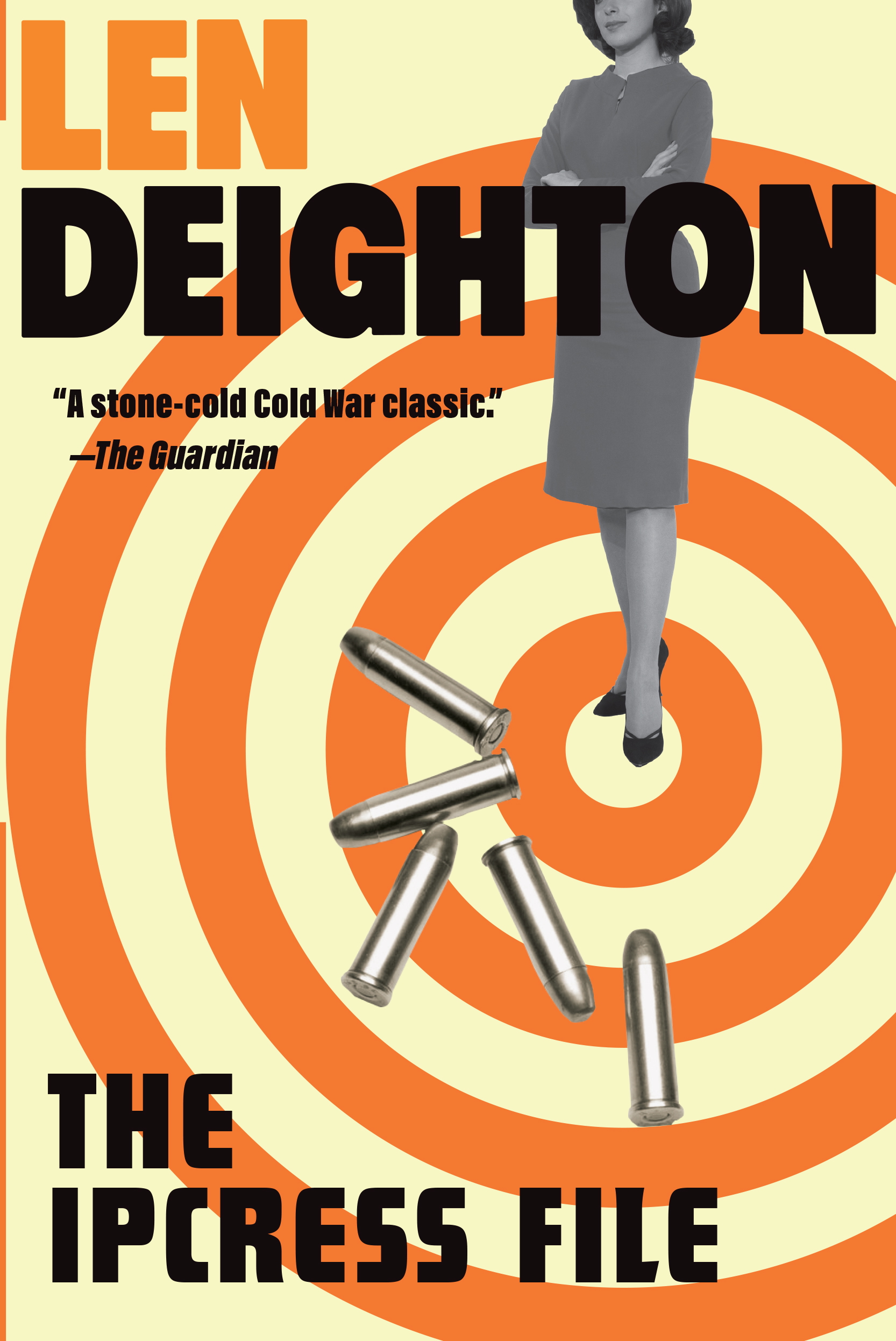 British author Len Deighton, a prolific writer "whose tough, stylish spy thrillers featured on bestseller lists for decades," died March 15 at age 97, the