Oscar Wilde famously wrote that there are two tragedies in life: "One is not getting what one wants, and the other is getting it." Sophie Mackintosh's new novel, Permanence, dances both sides of that line in its consideration of a couple whose love affair transports them back and forth between a real world that demands secrecy and a fantastical realm where they're free to live openly. Meanwhile, Mona Tewari's Burn the Sea heroine watches her dreams of becoming a warrior fall apart when she's forced to become queen. And Kate Cavanaugh's struggling social media influencer in Thanks for Watching receives an enviable brand-name sponsorship, only it's far more dangerous than she anticipated. Given these terms, getting what you want or not getting it at all seems like a devilish game of a Would You Rather. Luckily, we readers get to watch everything play out before deciding.
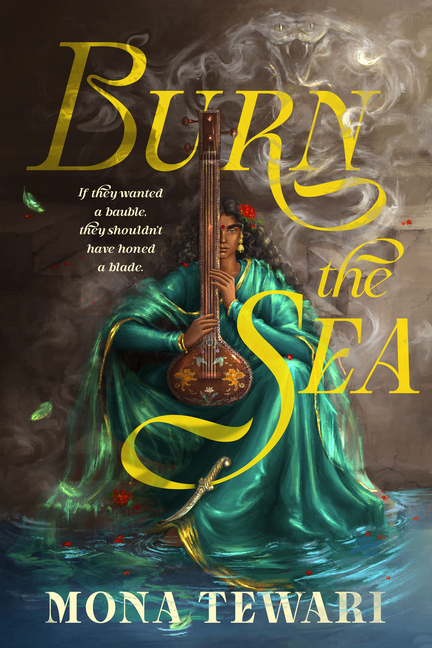
Burn the Sea
Mona Tewari
Burn the Sea
Mona Tewari
Bindery Books | $19.95 | 9781967967063
Mona Tewari rewrites the story of a South Indian rani who fought against Portuguese invasion and colonization in the adventurous, sensual historical fantasy epic Burn the Sea.
Abbakka Chowta, rajkumari of Ullal, grew up training in combat as her elder sister, Ektha, trained to become the next rani. Abbakka expects to serve as her sister's adviser and supporter. Then Ullal's historic enemy, the half-human, half-snake water creatures called the Porcugi, launch attacks on their soil and demand tithes for "protection." Abbakka's family negotiates her betrothal to the handsome, charming, and spineless raja of a rich neighboring country, hoping the alliance will save Ullal from the Porcugi. Abbakka is livid: "If you wanted me to be a bauble, you never should have given me a blade." A Porcugi attack on the palace ends in Ektha's murder, and it's Abbakka who becomes rani. She follows through with her betrothal for the good of her nation but soon realizes her husband is under the thumb of a ruthless and power-hungry counselor who is only too happy to bargain with the Porcugi. Abbakka will need cunning, determination, and the support of the spirit creatures she befriended in childhood to keep Ullal independent and herself alive.
Tewari's debut is fierce, vibrant, and emotional, and introduces a brave and intelligent heroine who would sacrifice everything for her people. Culture and spirituality permeate every aspect of the story, creating a breathtaking depth of world-building that will leave readers eager for the planned sequel. --Jaclyn Fulwood, blogger at Infinite Reads
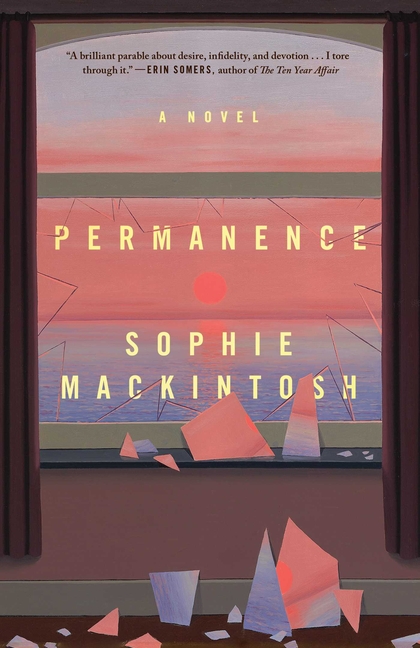
Permanence
Sophie Mackintosh
Permanence
Sophie Mackintosh
Avid Reader Press/Simon & Schuster | $28 | 9781668206522
"She was dreaming... or perhaps she was dead, and so in heaven," thinks the protagonist of Sophie Mackintosh's incisive novel, Permanence, after she awakens next to her married lover for the first time. The clandestine couple, Clara and Francis, find themselves one morning in a strange apartment that somehow contains their favorite clothes, art, and books, in a strange city populated entirely by other couples. There are gold coins in their pockets and plenty of pleasant places to explore. In spare, precise prose, Mackintosh (The Water Cure; Blue Ticket) sketches a sort of paradise for the unfaithful, a realm where secretive love can finally be enjoyed in the open. This is enough for Clara, who is "committed to the cause of love as an organizing principle," though Francis occasionally has qualms about being apart from his young daughter and wife.
Then, they're returned to their respective homes in the real world, with no time seeming to have passed. A back and forth between worlds begins, and Mackintosh reveals what each character leaves behind and what they hope to return to. While Francis and Clara present as a classic midlife-crisis man and manic-pixie dream girl (he's an art history professor, she's a gallerist, they met at a museum), this feels extremely intentional; the love story Mackintosh writes is inherently clichéd in order to throw in sharp relief what isn't: what happens when desires are made manifest, and what kind of life can be made in the unreal. --Nina Semczuk, writer, editor, and illustrator
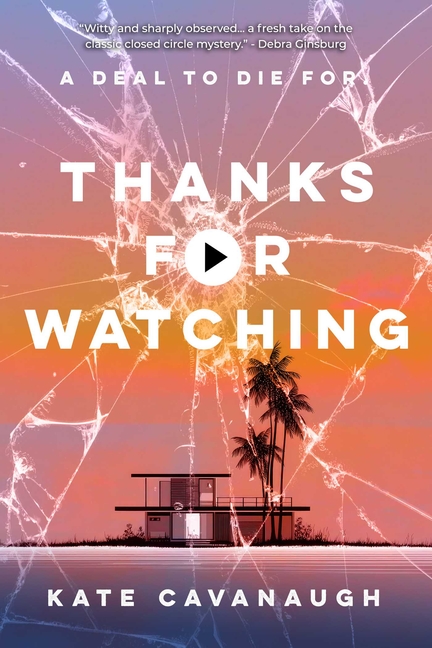
Thanks for Watching
Kate Cavanaugh
Thanks for Watching
Kate Cavanaugh
Inimitable Books | $16.95 | 9781958607565
Sharply observed and full of dark humor, Kate Cavanaugh's debut psychological thriller offers a fresh take on the classic closed-circle mystery with 10 influencers trapped together on an island without Internet. The novel begins with Michelle Monroe, a previously successful influencer whose career is sputtering. Once-plentiful brand deals have vanished, fans have left her, and even her trolls have lost interest. As eviction from her fancy apartment looms, Michelle receives an invitation for an exclusive brand-deal trip to promote an energy drink at an isolated villa in the middle of the ocean, and she jumps at the second chance for social media relevance. But the luxury "vacation event" soon turns deadly as the influencers, all of whom harbor jealousies and grudges against one another, start dying one by one in increasingly bizarre and horrible ways.
Although there is more than a dash of the absurd in the way that the self-obsessed influencers react to the deaths of their frenemies (mostly by plotting ways to use leverage death for clicks), Cavanaugh creates real tension in the novel by puncturing the familiar comfort of an Agatha Christie-style mystery with biting social satire. Without the reassuring dopamine hits of likes and subscribes, the influencers must face the emptiness of their lives and confront the price of pursuing fame and social relevance.
Despite its thematic weight, Thanks for Watching is tremendous fun. Cavanaugh's brisk pacing and unexpected twists propel the novel, while her spot-on skewering of influencer culture makes this a provocative, entertaining read. -- Debra Ginsberg, author and freelance editor
Claire and the Cathedral
Pam Fong
Claire and the Cathedral
Pam Fong
Greenwillow Books | $19.99 | 9780063360006
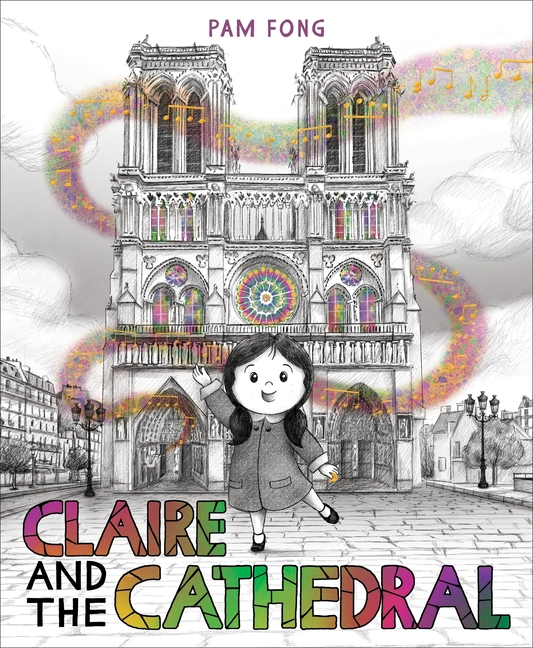
Claire and the Cathedral by author/illustrator Pam Fong (The Clock) is a wordless, intricately illustrated grayscale picture book about a child who finds profound joy in art through the glow of light and drift of music.
The book's opening endpapers depict a child, presumably Claire, and an adult caretaker venturing out to visit Notre-Dame on a cloudy day. At the door of the cathedral, the sound of a violinist's music creates an iridescent wave of color floating above Claire; embedded within the rippling colors are musical notes (the same gold color as the coins in the musician's hat). Once inside the cathedral, Claire is bored with the historic art and slips away from her caretaker. When Claire notices the rainbow hues of sunlight shining through the South Rose Window, she jubilantly dances through colorful rays of light that glisten with golden dust motes. As the rain darkens the cathedral, Claire is drawn to the soft glow of candles. Instead of donating a coin, though, she follows the rippling colors back to the violinist and gifts them her own little piece of light. The music's shimmer highlights the reflection of the stained glass in puddles, and Claire delightedly leaps, creating a riot of color in her splashes. Back at home on the book's closing endpapers, adult and child play music together, creating their own dazzling colors.
Fong's digital, grayscale renderings of Paris and Notre-Dame, with thick cross-hatching and deep shadows, are reminiscent of the European masters, while her strategic bursts of watercolor contrast the book's dreary palette while spotlighting Claire's moments of joy. Those who admire David Macauley's artwork and Aaron Becker's (Wordless Trilogy series) will likely delight in Claire's cathedral outing. --Cristina Iannarino, children's book buyer, Books on the Square, Providence, RI.
Ghost Town
Tom Perrotta
Scribner | $28 | 9781668080634
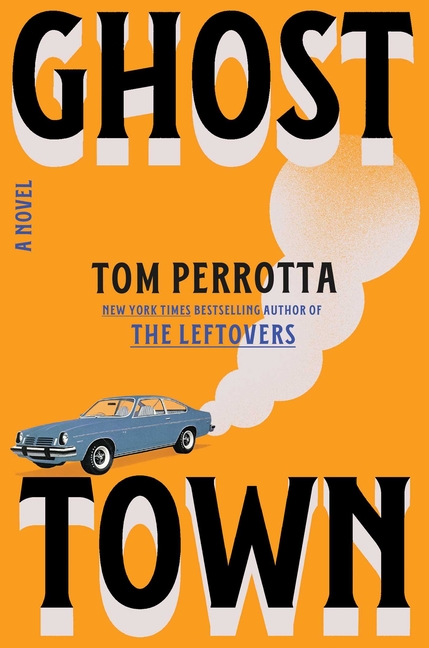
Fans of the satires of Tom Perrotta (Tracy Flick Can't Win) will find a different but equally rich experience in Ghost Town, a novel about trauma that includes a hint of the supernatural. Jay Perry is a successful novelist and creator of an animated kids' show based on his Ghost Teacher novels. He lives in Los Angeles but grew up in 1970s New Jersey. The current mayor of his Creamwood, N.J., hometown invites Jay to a ribbon-cutting ceremony for a municipal building named for his father. But Jay is reluctant to return and keen to forget a time when he was 13-year-old Jimmy Perrini and his mother died from lung cancer, "a sucker punch from a bright blue sky."
Perrotta presents the events of that summer of 1974 with infectious sincerity. He describes Jimmy's volunteer firefighter dad, "the kind of guy who played softball with a stubby Dutch Masters cigar jutting from the corner of his mouth," as well as other Creamwood residents, all of them white, a factor that comes into play when "hippie cousin Wayne" moves in next door with his olive-skinned wife. Add to the mix Jimmy's friendship with Eddie, "a stringy-haired burnout" with shady associates, and Olivia, a high school valedictorian who says her Ouija board will let Jimmy chat with his mom, and the result is an endearing if troubling portrait of small-town America. A gift for breezy prose helps material like this go down easily; Perrotta demonstrates that gift in this heartfelt work. --Michael Magras, freelance book reviewer
Layaway Child: Stories
Chanel Sutherland
Astoria | $19.99 | 9781487013639
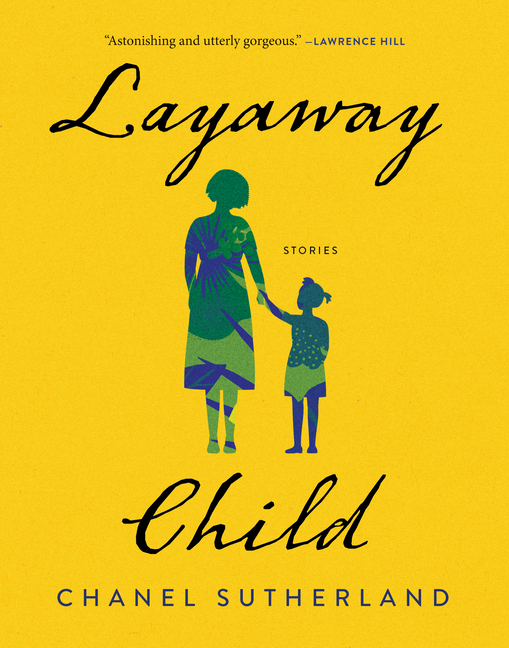
In her tender, lyrical debut collection, Layaway Child, Chanel Sutherland explores the inner landscapes of Caribbean women who immigrate to Canada from their island homes, often leaving behind their children. Through a series of linked stories, Sutherland probes the complexities of motherhood from a distance, the dubious benefits of building a new life, and the complications of living between two worlds--for mothers and daughters alike.
In "My Mother's Hands Are Silver," a daughter admires and pities the streaks on her mother's skin. She remembers her mother taking her to art galleries, giving her a library card, urging her to pursue her education. In a sense, all of Sutherland's mothers do the same: sacrifice their own dreams, hide their longings to give their children a chance at success. For the daughters, the stakes are different but no less high. In "With Friends Like These," immigrant daughter Shelly finds an unexpected connection when she meets her white friend's housekeeper. As they share a glass of malt and a conversation, Shelly gains a glimmer of insight into her mother's life and makes a choice about how to live her own.
Sutherland draws a sharp contrast between the island of St. Vincent--lush and vibrantly warm, crowded with bodies and ripe fruit and memories--and Montreal-- sterile, impersonal, "a city with teeth." Her characters must learn to make lives for themselves in Montreal's unfamiliar landscape, dealing with homesickness and racism while holding onto their bonds of family and identity. Powerful and moving, Layaway Child is a sensitive evocation of lives shaped by immigration, separation, and the tenacious love of mothers for their children. --Katie Noah Gibson, blogger at Cakes, Tea and Dreams
Memory House
Elaine Kraf
Modern Library | $18 | 9798217153749
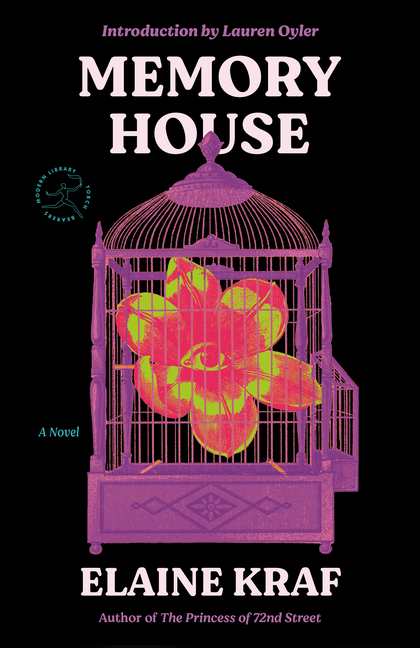
In Memory House, a posthumous novel by Elaine Kraf (1936-2013), a novelist enters a commune for failed artists. Magical realism and metafiction coalesce in another of this unsung genius's typically weird explorations of memory, creativity, and sexuality.
Marlane Frack is apprehensive as she sets out for Memory House, a retreat with a no-creation policy and an entry prerequisite of faking one's death. When Marlane asks chauffeur Solomon Ito, a film director (and Memory House resident), what state their destination is in, he jokingly replies, "A state of perpetual lethargy." "Expect confusion," he additionally instructs--which turns out to be good advice.
A ritualized welcome involves communal chanting of "These are not our best years!" Marlane soon recognizes poet Nadia Lagoon and composer Garreth Styne. She's troubled by recurring hallucinations that her mentally ill husband, Lenny, is there. Doctor Amazing promises to restore her creativity via "rejuvenation of memory," which unearths recollections of childhood molestation. Oddest of all, though, is the arrival of Marlane's father--whom she believed dead of prostate cancer. Flashbacks and fantasies are delivered in italics; former lovers and artistic endeavors (including ballet) drift through. "This place is stranger than my weirdest novel," Marlane remarks. "If I don't leave soon, I'll have a breakdown."
Readers familiar with Kraf (The Princess of 72nd Street) get the fun of looking out for Easter eggs from her previous work (e.g., Ferdinand the circus performer from I Am Clarence). Kraf left behind several rejected manuscripts; Marlane, her autobiographical stand-in, feels she is passé due to changing literary tastes. Happily, Kraf's work is now being rediscovered. --Rebecca Foster, freelance reviewer, proofreader, and blogger at Bookish Beck
No Way Home
T.C. Boyle
Liveright | $29.99 | 9781324097525
Want to run a fool's errand? Ask someone to explain their infatuation with a person who is wrong for them in every way, and wait for a logical answer. One could start by asking the trio that headlines No Way Home, T.C. Boyle's entertainingly cynical novel about a love triangle that quickly turns bloodthirsty. Terrence Tully, better known as Terry, is a single and sleep-deprived resident at a Los Angeles-area hospital. He receives a call from Nevada informing him that his widowed mother has died. He drives out there to arrange her affairs and claim ownership of her house and dog. Once there, he meets Bethany, a hospital receptionist who has broken up with her boyfriend and brushes hair off her face during a meal together "with the hand that clutched the steak knife." After she and Terry have sex in his mother's house, she asks if she can live there. Terry says no. She moves in anyway, and tells people she's Terry's fiancée.
Boyle (San Miguel; The Harder They Come) makes a satisfyingly unnerving narrative edgier by introducing Jesse, Bethany's ex-boyfriend, an eighth-grade teacher prone to stealing her paychecks. He begins stalking Bethany when he learns she's dating a doctor. The novel gets even creepier from there. In a seeming paradox, however, it also grows more nuanced, as Boyle shows the fragility of reason when it comes to romance. Readers who appreciate Boyle's unparalleled skill at serving up benighted reprobates will find much to feast upon in this excellent work. --Michael Magras, freelance book reviewer
The Pillagers' Guide to Arctic Pianos
Kendra Langford Shaw
Pantheon | $28 | 9780593702437
"My little brother, Finley, drowned the first time wrestling the Napoleon pianoforte under the galactic starlight of an Arctic sunset." The Pillagers' Guide to Arctic Pianos is a wildly imaginative story centered on the adventures and trials of a homesteader family in the Arctic. Kendra Langford Shaw's first novel follows these determined renegades as they establish and struggle to keep lives, livelihoods, homes, and community in a tremendously harsh environment.
Chapters alternate between characters and perspectives: siblings Milda, Finley, and Temperance; their parents; their ancestor Moose Bloomer, who began his immigration to the Arctic Territory as part of a large train of settlers; and the shrinking but hardy next generation. In a fantastical twist, each settler family brought a wildly impractical piece of equipment. "They were required to bring salt pork, botanical texts, and pianos... music being what would elevate the territory from raw, unbroken land into a homeland worth having." Moose's train abandoned pianos across the region before settling and striving; pianofortes, preserved by freezing waters, washed about the floors of the ocean and the Kamikaze River. Later homesteaders work as piano hunters. Readers meet Finley when he is a young boy obsessed with recovering his family's Napoleon, and this obsession will guide several lives.
In this strange Arctic world in which sunken pianos are desirable prey, glaciers melt, sea levels rise, and scant resources dwindle. Shaw's imagination is broad, her characters delightful, and their fates often painful but also transcendent. The Pillagers' Guide to Arctic Pianos is a lovely profile of a singular, stark place and a small, tight cast of indelibly colorful characters: a heart-wrenching, unforgettable debut. --Julia Kastner, blogger at pagesofjulia
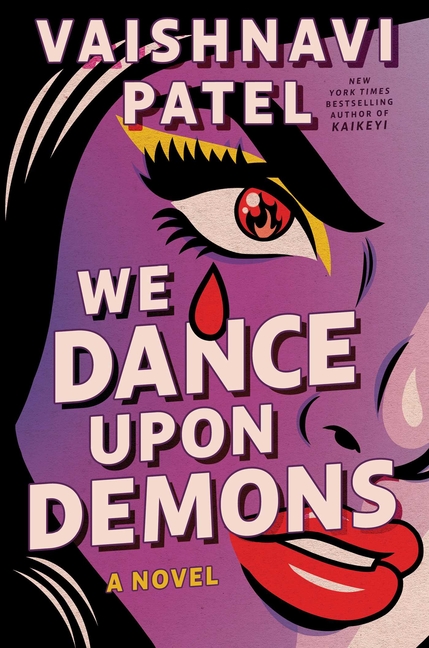
We Dance Upon Demons
Vaishnavi Patel
Saga Press/S&S | $28 | 9781668068595
In Vaishnavi Patel's fiery, defiant contemporary fantasy We Dance Upon Demons, an exhausted Indian American reproductive health care worker becomes the target of demons when she accidentally obtains magical powers.
Ash Wednesday unleashes a deep dread in Nisha, who knows the Lenten season brings even more intense protesting than usual at the Chicago clinic where she works. Nisha decompresses at the Art Institute, where an ancient Nataraja statue catches her attention. She touches it and faints. After she recovers, she contends with hallucinations and then she meets Muya, an aspect of the ignorance demon Muyalagan. He explains that she inadvertently freed him from his prison in the statue and absorbed some of his demonic power, giving her the ability to change reality. Muya demands she return his magic; when she does not believe his story, he charges her to look within herself. Nisha reconnects with her love of dancing Kathak, and it allows her to see the brave, subversive, and marginalized women who have carried Muya's power in past centuries. However, fiercer demons than Muya want Nashi to surrender the power to them, and they will not hesitate to threaten her friends, family, or the clinic she believes in to get it.
Patel's harrowing vision of the fight to provide reproductive health services in a post-Dobbs United States confronts burnout, depression, and the constant threat of violence facing women's rights advocates. Nisha's journey from the disillusioned belief that she can change nothing to an understanding of the power every individual can hold is charged with the strength of women, community, and the belonging she finds in her family and culture. --Jaclyn Fulwood, blogger at Infinite Reads
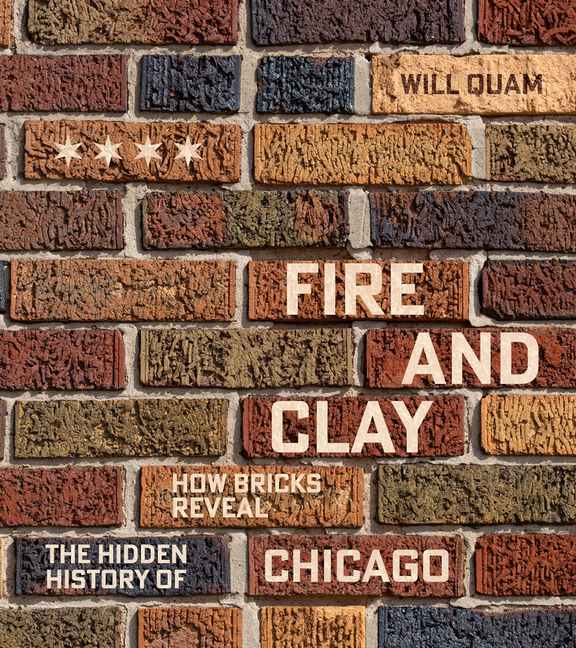
Fire and Clay: How Bricks Reveal the Hidden History of Chicago
Will Quam
University of Chicago Press | $27 | 9780226828107
When the vicissitudes of life leave one out in the cold, which of the Three Little Pigs should one channel? Why, the bricklayer, of course! With that in mind, Will Quam carefully and systematically excavates the world of brick specific to the Second City in the fresh and inviting history Fire and Clay.
The Great Chicago Fire of October 1871 destroyed 17,000 buildings and left some 100,000 people homeless--but with the development of faster brickmaking machines out east and "more people, more resources, more railroads, more gumption, and more brick," city leaders and builders insisted, "The city would not burn again.... It would be made anew. It would be made of brick."
In this addition to the ambitious Chicago Visions and Revisions series, brick-cognoscente, photographer, architecture historian, and first-time author Quam guides readers through time, from the glacial clay bed of Lake Chicago (Lake Michigan) to the present, where 100-year-old bricks are now sought out to be reclaimed and repurposed. This history is informed by 75 years' worth of the Brick and Clay Record, a published journal begun in 1911, and by great fiction set in Chicago, such as Upton Sinclair's The Jungle and Richard Wright's Native Son. Quam entices readers via his personal fascination with the topic, along with his humor, expertise, and exemplary and keen-eyed photographs.
Lovers of unconventional approaches to history, architecture, sightseeing, and insightful writing will reap many new and unexpected insights from Quam's book. --Rev. John Michael Barich, former pastor at First Saint Paul's Lutheran Church, Chicago (featured on page 193)
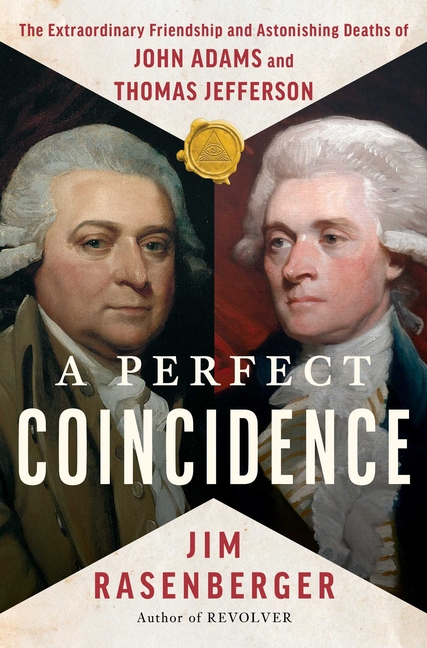
Perfect Coincidence: The Extraordinary Friendship and Astonishing Deaths of John Adams and Thomas Jefferson
Jim Rasenberger
Scribner | $31 | 9781668003428
Many observers would insist that U.S. politics have never been more tumultuous than in the first quarter of the 21st century, but even a casual acquaintance with the history of the country's early decades belies that claim. In A Perfect Coincidence, Jim Rasenberger (Revolver) offers ample evidence for that proposition in a lively depiction of the era, seen through the complex relationship between two of its preeminent figures: John Adams and Thomas Jefferson.
The book's title refers to the remarkable fact that Adams and Jefferson died on the same day--July 4, 1826, the 50th anniversary of the Declaration of Independence. But as Rasenberger reveals in this smoothly paced chronological account, their public careers and private lives intersected in innumerable ways. Rasenberger doesn't confine himself to recounting epochal events either, as he devotes considerable attention to the personal lives of both men. He frankly reveals Adams's obstinacy, self-regard, and his uncanny talent for political self-sabotage, alongside Jefferson's hypocrisy on the issue of slavery and his lifelong financial profligacy.
One of the most appealing aspects of this work is how the two men overcame long-simmering political grievances to resume in 1812 what Rasenberger calls "one of the great correspondences of American history." Over their remaining years, they regularly exchanged letters that reflected on their lengthy and productive careers, while sharing the deeply personal joys and sorrows experienced by two men fortunate to live long, fruitful lives. Though some of their fellow members of the founding generation may have come close to matching their achievements, none surpassed them. Jim Rasenberger makes that abundantly clear in this engaging work of popular history. --Harvey Freedenberg, freelance reviewer
A Door Is to Open
Kyo Maclear, illus. by Julie Morstad
Tundra | $18.99 | 9781774887448
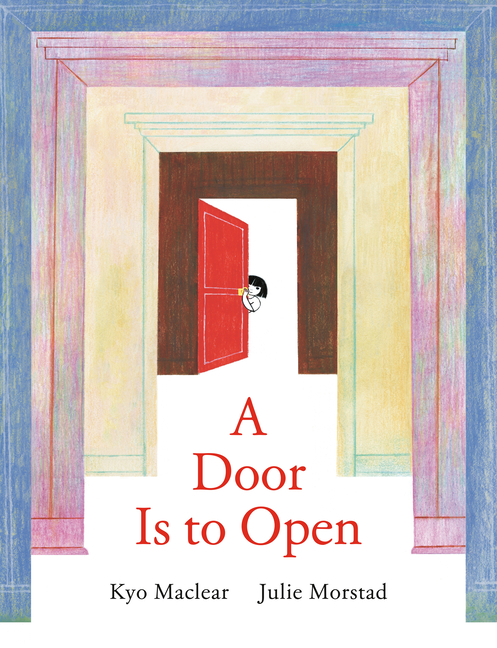
Author Kyo Maclear (Hello, Rain!) and illustrator Julie Morstad (When Green Becomes Tomatoes) collaborate once again (Julia, Child) for the picture book A Door Is to Open, which offers a tantalizing glimpse into the nature and essence of doors.
A door can be so many things. Most obviously, "a door is to open." It's to "knock on and go through... and close." Beyond the doors there may be a cozy dinner or a large party with balloons and presents. One door might become an opportunity for playing, another for looking in, and yet another for looking out. A door may be for "who will come through" or asking, "Where will it lead?" Some doors are "secret openings"; some are "hidden underwater where it's cold and fishy"; and an extraordinary door might even hide tiny fairy friends. But "the only way to find out... is to go through!"
In Maclear and Morstad's accomplished hands, even the most basic door becomes chock-full of promise. Maclear's crisp, evocative text explores the concept, offering an insightful range of suggestions while establishing "the door" most notably as a portal for imagination. Morstad's mixed-media illustrations add to and advance the narrative, turning "a door is to open" into a train of black kittens coming home and "a screen door is for feeling the night air" into a darkened, outdoor scene with a child happily camping. Reminiscent in tone and style of the classic A Hole Is to Dig by Ruth Krauss (to whom the book is dedicated) and illustrated by Maurice Sendak, A Door Is to Open adroitly sweeps readers into the infinite wonder and potential that awaits behind closed doors. --Lynn Becker, reviewer, blogger, and children's book author
The Redwood Bargain
Markelle Grabo
Page Street YA | $20.99 | 9798890033925
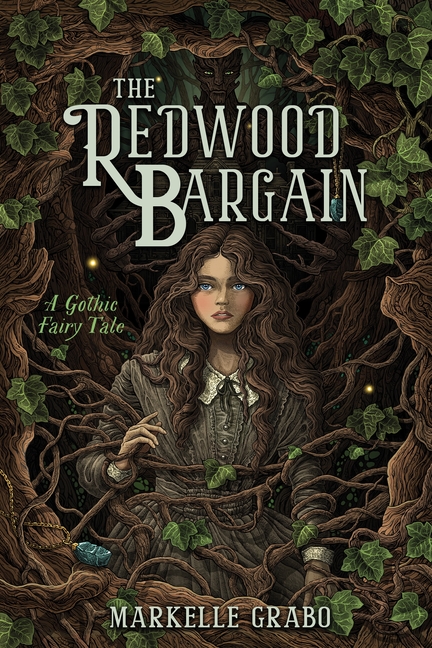
The Redwood Bargain, the sophomore novel by Markelle Grabo (Call Forth a Fox), is a sapphic, gothic take on "Hurleburlebutz" or "The Dwarf, the Fox, and the Princess" as collected by the Brothers Grimm.
When Lord Elwood Barras returns alone from a hunt horseless and covered in blood, Katrien and the other manor employees know something concerning is afoot. They're correct: the lord has promised his 17-year-old stepdaughter, Zaviera, to the Redwood Man, a supernatural forest creature "with branch-like limbs" and "needled hair." Zaviera's sisters refuse to surrender her and instead try to (unsuccessfully) trick the Redwood Man. The first corpse "has evergreen needles stuffed down her throat"; the second a "tree branch through her middle"; and the last "is missing her eyes." As the Redwood Man's impatience grows, the forest begins to take over the manor, killing inhabitants. Katrien makes a desperate attempt to save her indentured cousin, Helsa, by agreeing to be girl number four. But as Lord Barras's daughters train Katrien, she and Zaviera fall for each other. Now, Katrien must succeed at tricking the Redwood Man to save both her family and her love.
Grabo's story is divided into three parts, the first from Katrien's perspective, the second from Helsa's, and the third switches between Katrien and Helsa as they grapple with the supernatural creature's threats. Readers get a thorough idea of goings-on at the manor from the viewpoints of two young women who are expected to be quiet and invisible. The Redwood Bargain is a delightfully dark and at times frightening interpretation that feels true to the Grimms' source material, even as it reinvents the fairy tale in a wholly unexpected way. --Michelle Anya Anjirbag, freelance reviewer
Seconds to Spare
Rachel Reiss
Wednesday Books | $21 | 9781250366160
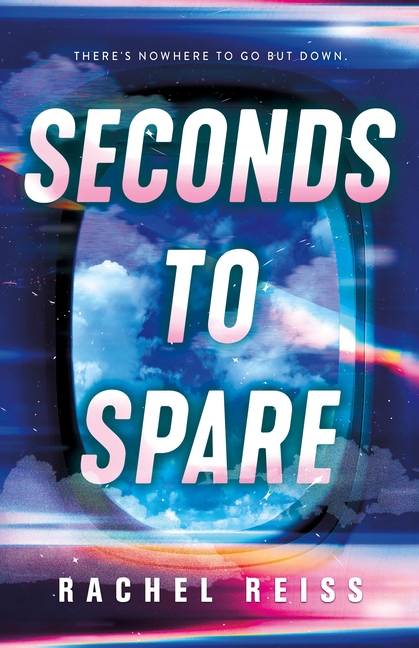
Two teenagers are stuck in a time loop, reliving the last few minutes before a plane crash, in Rachel Reiss's clever and arresting YA locked-door mystery, Seconds to Spare.
Eighteen-year-old Evelyn Werth is trapped on a mostly empty flight from Hawaii to California, repeating the same 28 minutes before the plane plummets in a "one-person endless time loop of epically shitty proportions." No matter what dark-eyed, brunette Evelyn does, the same four things happen: 1.) "The pilot announces the internet has gone out and warns of upcoming turbulence." 2.) "The plane begins to shake for five and a half minutes." 3.) A woman "in the last row, collapses." 4.) The plane "begins to nose-dive." Evelyn's vision "flashes white for a split second" and the time loop restarts. Evelyn has no idea "what the hell is happening, why it's happening, or how to stop it." Orion James, a boy Evelyn had briefly met and formed a connection with at the airport, has "been asleep the entirety of every loop." On loop 395, blue-eyed, dark-haired Orion wakes up, and the loop is "growing less than a second longer each time." Evelyn worries that the next crash will be permanent.
Characterization is sometimes thin but kinetic pacing and unexpected plot twists make Seconds to Spare a gripping narrative. The time loop element, reminiscent of movies like Groundhog Day and Lauren Oliver's Before I Fall, adds an intriguing speculative angle to the mystery, and the clock ticking toward a permanent plane crash raises the stakes. Reiss (Out of Air) develops visceral action scenes, and the plane cabin setting creates an atmosphere of claustrophobic suspense. --Alanna Felton, freelance reviewer
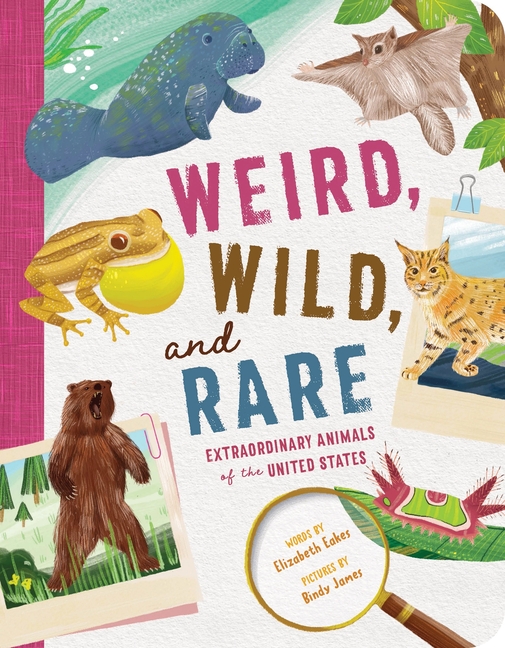
Weird, Wild, and Rare: Extraordinary Animals of the United States
Elizabeth Eakes, illus. by Bindy James
duopress/Sourcebooks | $12.99 | 9781464236532
Animal lovers of all stripes will almost certainly find a new creature to adore in the intriguing primer for chapter book readers Weird, Wild, and Rare: Extraordinary Animals of the United States by debut author Elizabeth Eakes and artist Bindy James (illustrator of Curiosity Club). The United States is "a country with many different environments" where "some of the weirdest, wildest, and rarest animals on Earth" reside. Eakes and James deliver a clever, approachable chapter book covering a handful of these incredible animals.
Eakes features bugs (like greater wax moths, which have "the best hearing of any insect"), birds (the blue-footed booby, whose "blue feet become brighter when they have recently eaten"), and mammals (raccoons who eat "ANYTHING"). Rather than break the animals down by size or region, Eakes groups creatures around loose themes, such as residing in extreme habitats or using an unusual method of self-protection. The reasoning for these themes isn't always clear--one grouping is "endangered animals," though different endangered species appear throughout the book--but the fascinating facts about each animal make up for the hodgepodge sorting.
James's charming artwork highlights the "weird" and "wild" features of each animal in semi-realistic spreads. Symbols indicate when an animal is "Near Threatened," "Vulnerable," "Endangered," or "Critically Endangered," and back matter includes a guide on observing animals, a glossary, and tips on how children can get involved in the fight to protect endangered species. For young readers who love nature and trivia, Weird, Wild, and Rare delivers an assortment of absorbing and fascinating animal facts. --Nicole Brinkley, bookseller and writer
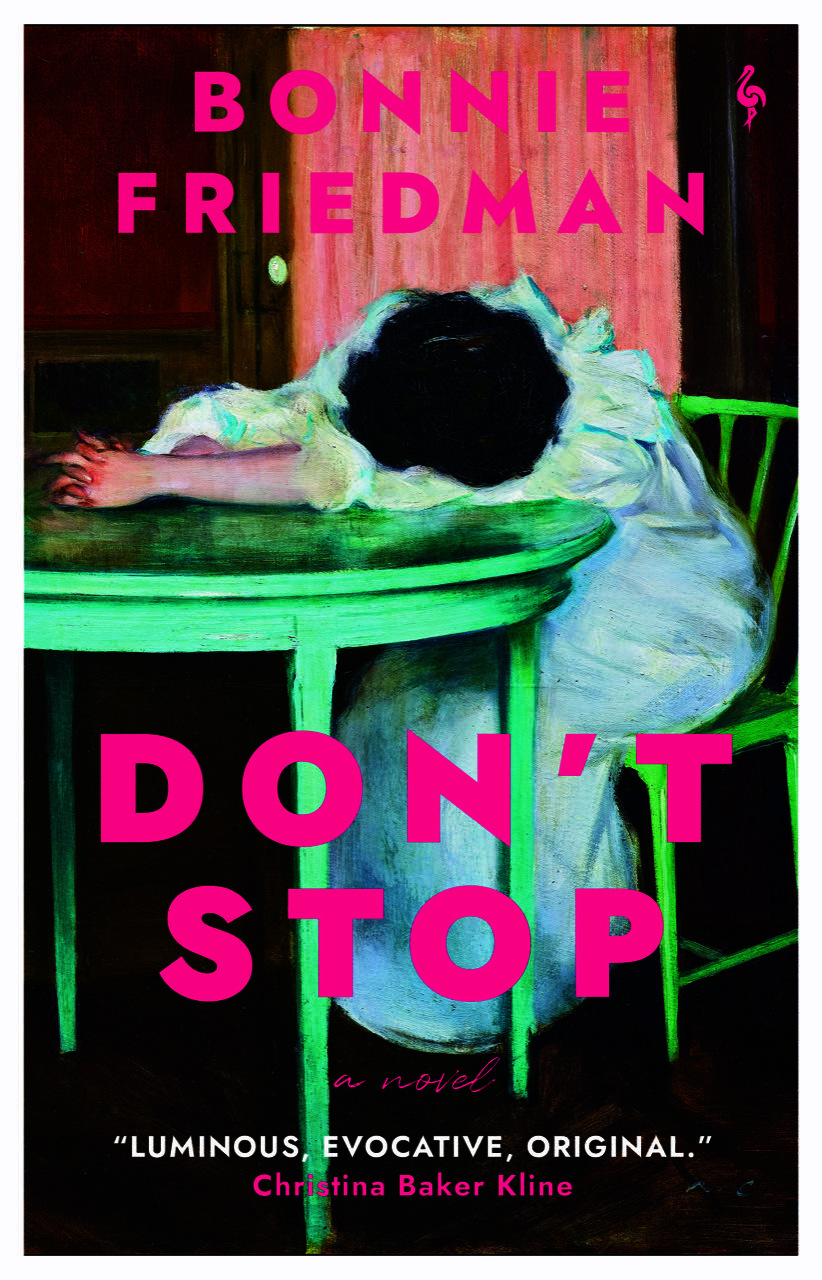
Seasoned nonfiction writer Bonnie Friedman's first novel, Don't Stop, is an erotically charged story about ambition, desire, and the dangerous pursuit of self-knowledge. Take a stroll through her bookshelves as she highlights the classics that "half-invented" her and mirrored the "erratic" movement of her thoughts, as well as the "critically underrated" novel she recommends for its insights about shame.
The Writer's Life
Reading with... Bonnie Friedman
![]() |
|
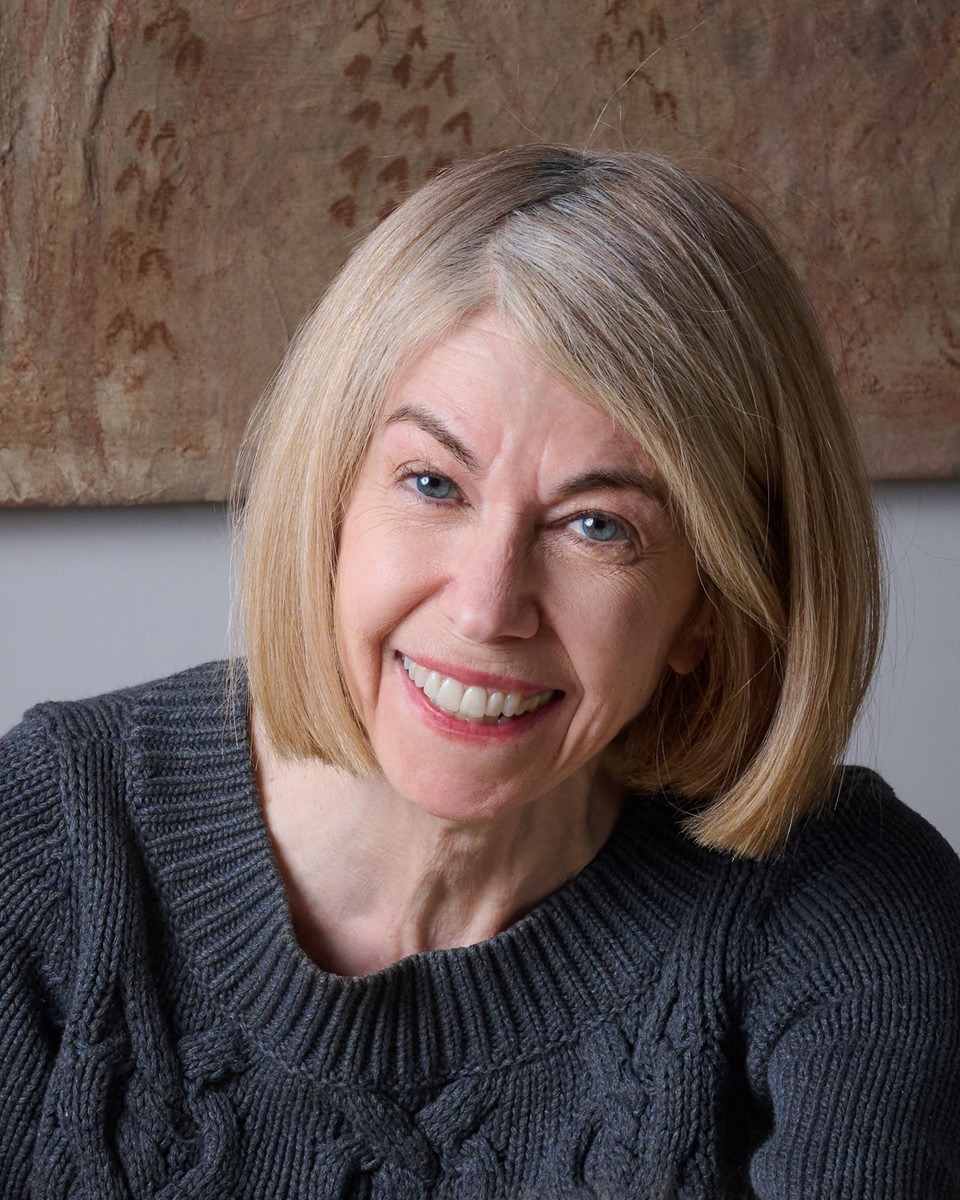
| Bonnie Friedman (photo: Winky Lewis) |
|
Bonnie Friedman is the author of Writing Past Dark: Envy, Fear, Distraction, and Other Dilemmas in the Writer’s Life, named one of the Essential Books for Writers by the Center for Fiction and Poets & Writers. She is also the author of the memoirs The Thief of Happiness and Surrendering Oz, a finalist for the PEN Award in the Art of the Essay. Her work has appeared in the New York Times, Ploughshares, and numerous other literary journals, and she has been named a notable essayist four times in The Best American Essays. She has taught writing at the University of Iowa, Dartmouth, New York University, and the University of North Texas. Don't Stop (Europa, April 21, 2026), her first novel, is an erotically charged story about ambition, desire, and the dangerous pursuit of self-knowledge.
Handsell readers your book in 25 words or less:
Don't Stop is about a brilliant 41-year-old scholar whose sexual obsession threatens to unravel her carefully built life.
On your nightstand now:
My nightstand is for books I've read and want to keep close, like inspiring friends. All the following are openhearted, original, and constructed of sentences strong as granite: Fellowship Point by Alice Elliott Dark; Giving Up the Ghost by Hilary Mantel; Stones for Ibarra by Harriet Doerr; The Diaries of Franz Kafka (translated by Ross Benjamin). This last, chock-full of Kafka's surprisingly bon vivant Prague evenings and nights, lets you see Kafka training himself to describe how people actually look and behave in life and also how to make use in his stories of the logic of dreams.
Favorite book when you were a child:
Hilaire Belloc's Cautionary Tales for Children, originally published in 1907, made my sister and me howl with joy. We used to borrow the book constantly from the Francis Martin Library. My mother had the idea that each of her four children should memorize one of the long and comically horrific poems, which had titles such as "Henry King, Who chewed bits of String and was early cut off in Dreadful Agonies." My sister memorized "Rebecca, who slammed doors for fun and perished miserably." I can still chant my way through "Jim, Who ran away from His Nurse and Was Eaten by a Lion." About once a year, given enough wine at a dinner party, I will stand up and declaim.
Your top five authors:
E.M. Forster, who grew on me over time. Such well-constructed plots and humane charm! I still read A Room with a View every summer. I know it is July when Lucy Honeychurch is plunging into the field of violets.
Hilde Bruch, who pioneered the understanding of anorexic girls, and had herself escaped a repressive regime. She was one of the first psychological writers I read, and she opened up a world of significance.
Ottessa Moshfegh. I didn't want to like her. I revere her. Brilliant, funny, perverse, with an extraordinarily sharp eye for the details of contemporary life. Fearless.
Edna O'Brien for the Country Girls trilogy and A Fanatic Heart. Details from "The Love Object" still return to me decades after I read it. A pin from a man's new shirt left on a windowsill and the ashes from his cigar collected in an empty lozenge box and helplessly, ludicrously cherished; the beloved's wife glimpsed at a party. The writing is precise and piercing as that shirt pin, if that pin were a knife.
The James Joyce of Dubliners, even if he completed the collection at the age of only 25. I love the way he decenters the stories, the way he takes Anton Chekhov a step further. Also, he makes you feel like you're allowed to acknowledge what you see in peripheral vision.
Book you've faked reading:
David Copperfield by Charles Dickens. I did a junior high book report on it, cribbing from the back of a crummy encyclopedia my mother bought at the A&P, which had novel summaries at the end. I was worried that I wouldn't fool the teacher and worried that I would. Whenever I read the first paragraph of David Copperfield, it mixes with the cheap glue scent from that encyclopedia and fills me with despair that I will ever make a decent job of anything in my life.
Book you're an evangelist for:
Looking for Mr. Goodbar. Judith Rossner is a shockingly good novelist and has constructed a book with great psychological insight about shame and the desire for oblivion. Rossner was a literary novelist, divorced, who needed to support her children and herself. She used all her gifts to write this critically underrated if extravagantly well-selling book.
Book you've bought for the cover:
None. I just don't! (Or, at least I think I don't!) That said, who could resist the cover of Just Kids by Patti Smith? Those two photo-booth faces, she glamorously sullen as a Sex Pistols performer, he looking angelic and stewed.
Book you hid from your parents:
Valley of the Dolls by Jacqueline Susann. My mother was given this glorious trashy read while she was in the hospital, and I rendezvoused with it every afternoon when I was about 13, fascinated and plagued by the sensations it aroused. At some point it disappeared from our bookshelves and was never ever mentioned by my mother or me.
Book that changed your life:
Pilgrim at Tinker Creek by Annie Dillard. It made me an essayist for two decades, before I returned to my first love, fiction.
Favorite line from a book:
"People who have shelved their feelings, or their capacity for trust, always feel not quite real." --Marie-Louise von Franz, The Feminine in Fairy Tales.
Five books you'll never part with:
Gustave Flaubert's Madame Bovary. Leo Tolstoy's Anna Karenina. Colette's The Shackle. Impossible to part from them because they half-live inside me and also because they half-invented me. Virginia Woolf's Mrs Dalloway, with its brilliant evocation of the internal life. I recall reading it at college while drinking cups of French vanilla-flavored instant coffee from a tin, and feeling that I made more and more sense. Others had thoughts that moved the erratic ways mine did. Woolf was my religion for many, many years. Philip Roth's Goodbye, Columbus: The Great Gatsby comes to Newark, N.J.
Book you most want to read again for the first time:
Reading Turgenev by William Trevor. Set in a rural town in Ireland, it concerns a shy young woman who is bullied and scanted--and then encounters a man from her past who cherishes her for who she is. Trevor writes crisply disciplined prose whose scenes linger in the mind. He is an ultimate master.

An exhibition celebrating the 90th anniversary of the publication of the classic The Story of Ferdinand by Munro Leaf, illustrated by Robert Lawson, has opened at the Eric Carle Museum of Picture Book Art in Amherst, Mass. Under the Cork Tree: The Story of Ferdinand runs until November 8.
---
"Discover the Copiale cipher: the mysterious 18th-century book that took 260 years to decode." (via Open Culture)
---
The value of reading: Mental Floss examined "7 rare first-edition books that are worth a fortune."
Book Candy
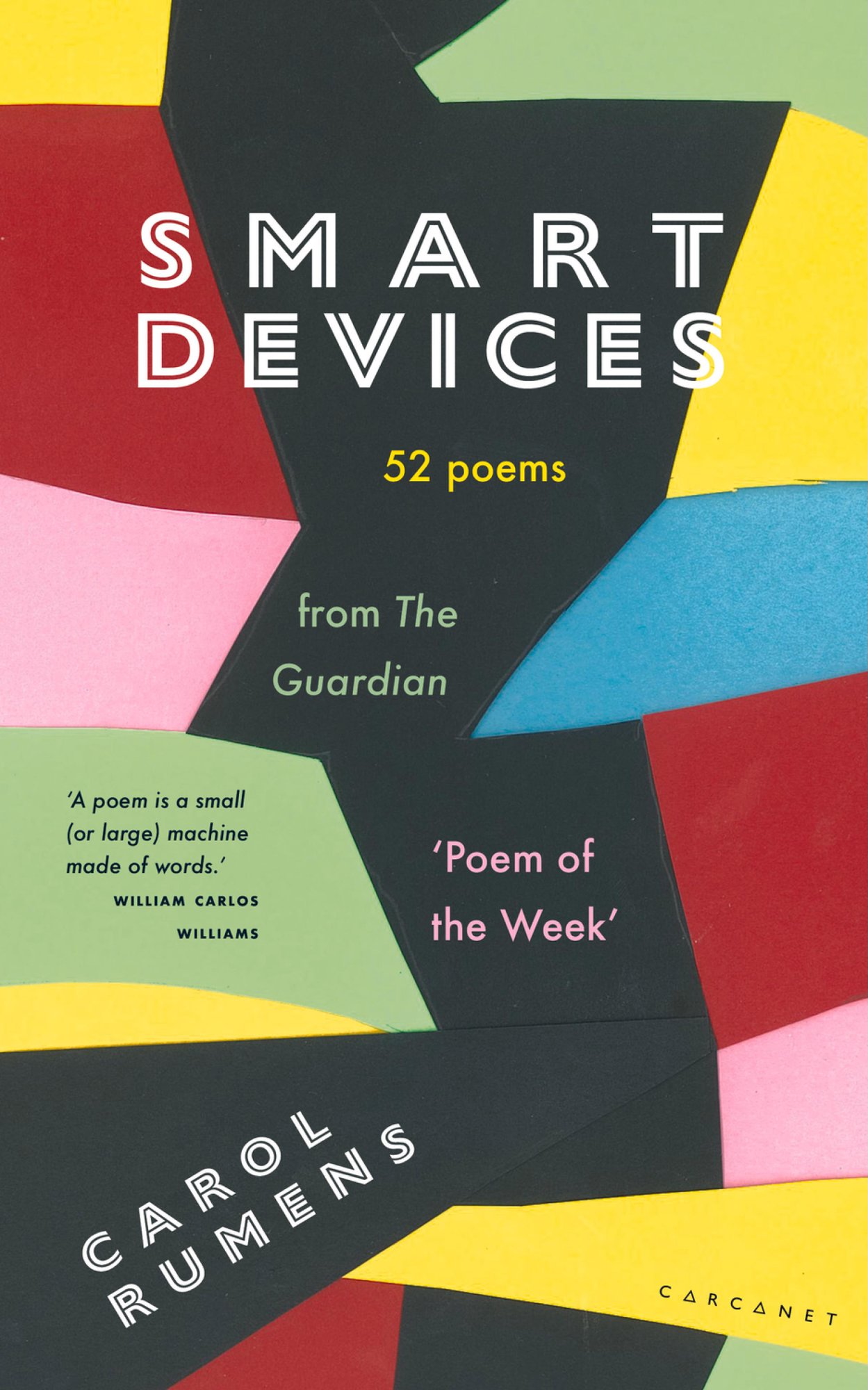
British poet Carol Rumens, "whose Guardian poem of the week column ran for nearly 20 years and was beloved among its loyal readership," died April 25 at age 81, the Guardian reported. Rumens's poems were published in over a dozen collections, including Animal People, De Chirico's Threads, and Blind Spots. She also wrote plays, fiction, criticism, and translated poetry. A collection of 52 poem of the week columns and their accompanying commentaries were published in a book titled Smart Devices.
Rediscover
Rediscover: Carol Rumens
British poet Carol Rumens, "whose Guardian poem of the week column ran for nearly 20 years and was beloved among its loyal readership," died April 25 at age 81, the Guardian reported. Rumens's poems were published in over a dozen collections, including Animal People, De Chirico's Threads, and Blind Spots. She also wrote plays, fiction, criticism, and translated poetry.
Her first collection, A Strange Girl in Bright Colours, was published in 1973. In the mid-1970s, she worked as an editor on Pick magazine before becoming poetry editor at Quarto and Literary Review in the early 1980s.
Rumens published several collections in the 1980s, including Star Whisper and The Greening of the Snow Beach as well as her first volume of selected poems. She also collaborated on the first of several translated volumes by Russian poets, including Evgeny Rein and Irina Ratushinskaya.
She taught at a number of universities, including the University of Hull, where she established an MA in creative writing, and the University of Bangor. Rumens was elected a fellow of the Royal Society of Literature in 1984. Her work was shortlisted for the Forward poetry prize for best single poem twice, and she won a Society of Authors Cholmondeley award.
In October 2007, she began writing the Guardian poem of the week column, choosing "Far Rockaway" by the Welsh-language poet Iwan Llwyd, translated by Robert Minhinnick. She would ultimately write nearly 1,000 columns, with the final one appearing in February and featuring two poems by Matthew Rice. In 2019, a collection of 52 poem of the week columns and their accompanying commentaries were published in a book titled Smart Devices.
Writing about the columns on the Carcenet blog in 2019, Rumens observed: "I think I wanted to learn how to think about poems, as well as find out what I thought of them. That's the selfish, self-loving bit. The more altruistic motive is that I feel poets owe each other (or each other's poems) a duty of care. One person can't do very much but they can do something, make a few sounds to erase the stupid silence which hangs around poems and collections of poems.
"I'm sick of hearing that too much poetry is written and published. No, too little poetry is taught and read. A poem isn't usually a butterfly or a mobile phone. It deserves a longer life. I wish I wrote better about poems and poetry, but I know I should go on writing, anyway, as best I can."