Latest News
Bloom Books: King of Gluttony (Kings of Sin #6) by Ana Huang
WHAT TO READ NEXT: REVIEWS OF GREAT BOOKS

The recent revelation of thriller writer Freida McFadden's true identity has me contemplating the value of anonymity. In a culture as fame-hungry as the one precipitating from reality television and social media, I'm charmed by authors who manage to nudge work into the spotlight while remaining hidden themselves. Chuck Tingle wears a cheeky pink bag over his head at public appearances. Thomas Pynchon is nearly as renowned for being withdrawn as he is for his fiction. Elena Ferrante, too, of course--despite an alleged unmasking a decade ago, the details of that case left me with enough doubts that I prefer to carry on as if it never happened. And now debut author Liadan Ní Chuinn follows in their footsteps.

McFadden, a doctor, stated that she chose a pseudonym out of concern that literary fame could impact her medical practice. Eventually, though, her pen name's secrecy overshadowed its utility. Alas, despite my own misgivings about one more of life's little mysteries being solved, I do think it's fitting that fans of her psychological thrillers would eventually get to find out whodunit.

--Dave Wheeler, senior editor, Shelf Awareness
FEATURED TITLES
Cover

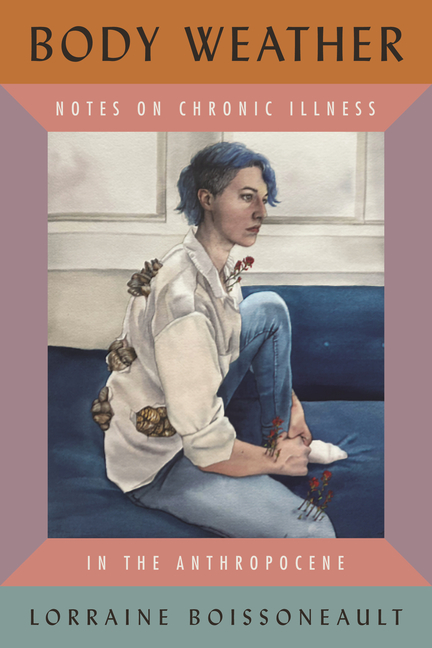
Body Weather: Notes on Chronic Illness in the Anthropocene

Lorraine Boissoneault

In this forthright memoir in essays, a science journalist draws eloquent parallels between her chronic illnesses and aspects of climate breakdown.
Cover

Body Weather: Notes on Chronic Illness in the Anthropocene

Lorraine Boissoneault

Beacon Press | $29.95 | 9780807017555

Science journalist Lorraine Boissoneault's outstanding memoir in essays, Body Weather, draws eloquent parallels between chronic illnesses and aspects of climate breakdown.

The 15 linked essays are divided into thematic trios that illuminate "the similarities between meteorology and medicine." Autoimmune conditions run in Boissoneault's family, but she also wonders whether water pollution near her hometown of Toledo, Ohio, might have something to do with it. Thyroid problems (Hashimoto's thyroiditis and Graves' disease) prevent her body from regulating its temperature. Visiting Death Valley for the biannual count of the endangered Devils Hole pupfish, Boissoneault (The Last Voyageurs) realizes how many species face extinction if temperatures continue rising. She fears the increased frequency of storms at the same time that heart arrhythmias make her feel she can't trust her body.

Flooding and endometriosis, landslides and celiac disease, wildfires and inflammatory arthritis: the correspondences are striking. Boissoneault's metaphorical connections are convincing, and she augments her experiences with scientific research and statistics she gleaned as an editor for Weather.com. Many will relate--if not to her specific ailments, roller coaster of treatment attempts, and encounters with misogynistic doctors, then to the difficulty of living with risk and uncertainty. This is a political as well as a personal text, drawing attention to health-care inequalities and how governments and corporations emphasize individuals' responsibility (BP invented the term "carbon footprint") in an attempt to distract from their inaction and misconduct.

This forthright account of being "in a sick body on a sickening planet" is recommended to readers of Elizabeth Kolbert and Terry Tempest Williams. --Rebecca Foster, freelance reviewer, proofreader, and blogger at Bookish Beck

Cover

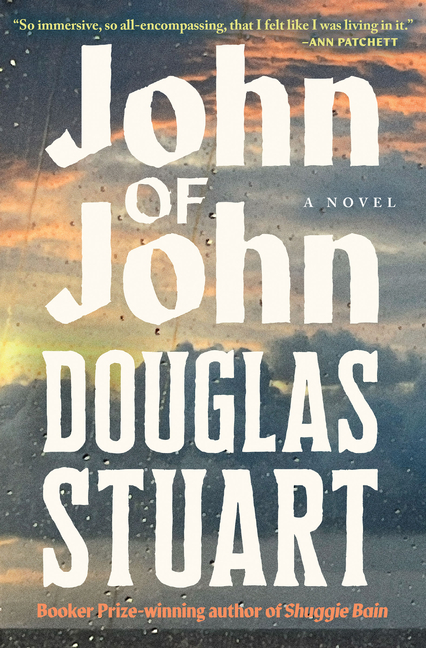
John of John

Douglas Stuart

In a modern masterpiece with the weight of Scripture, Douglas Stuart contrasts the freedom of the big city with the harshness of a gay young man's religious island home.
Cover

John of John

Douglas Stuart

Grove Press | $28 | 9780802167194

In Douglas Stuart's superb third novel, John of John, a young man seeks to reconcile his sexuality and artistic goals with his family's expectations and his devout upbringing.

Twenty-two-year-old John-Calum Macleod goes by "Cal" to distinguish himself from John, his overbearing, violent father. Cal is a penniless Edinburgh art school graduate when his father calls him to their Isle of Harris croft in the '90s. Cal's maternal grandmother, Ella, has lived with them since Cal's mother left when he was nine. Now Ella shows signs of heart failure. John expects Cal's help with the sheep and weaving Harris tweed. It means an end to Cal's hedonistic lifestyle of alcohol, drugs, and sex with men; and it means a return to secrecy.

John is a pillar of the tiny local church, but Cal's faith wavers. Meanwhile, the population is decreasing and traditional professions are waning. Key community members include Innes MacInnes, John's best friend; and Cal's closest friends, brother-and-sister pair Doll and Isla Macdonald. Isla is assumed to be intended for Cal, but he's hoping to resume his friends-with-benefits situation with Doll. The Macdonalds can't make a living from fishing anymore and collect unemployment; mostly, Doll drinks himself into oblivion.

Stuart (Shuggie Bain; Young Mungo) builds an absorbing, deliciously melodramatic story around the contrast between modernity and the old ways. Cal is more like his father than he realizes. Stuart's every observation is profound; the simplest phrase is memorable for its beauty. Intriguing in its particularities but timeless in wisdom, John of John offers hope that relinquishing shame creates freedom to be true to oneself. It's irresistible and an instant classic. --Rebecca Foster, freelance reviewer, proofreader, and blogger at Bookish Beck

Bloom Books: Us Dark Few by Alexis Patton
Cover

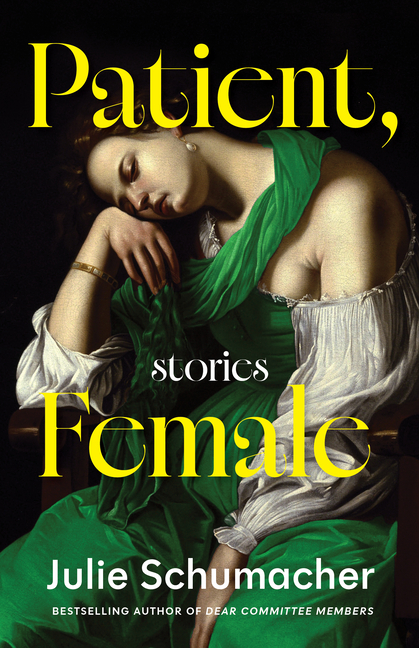
Patient, Female

Julie Schumacher

This funny, moving, and brilliantly written collection of short stories follows women at all stages of life as they navigate the gamut of human experience.
Cover

Patient, Female

Julie Schumacher

Milkweed Editions | $26 | 9781639551651

With this collection of 13 masterfully written short stories, Julie Schumacher, author of Dear Committee Members, for which she won the Thurber Prize for American Humor, demonstrates not only an unerring ability to find mordant humor in the vagaries of everyday life but also an acute and empathetic understanding of human relationships.

The protagonists of these stories are women at all stages of life, from childhood to dotage, who navigate their experiences with wit and resolve. In "Pioneers," a young girl struggles to make sense of her parents' open marriage and lack of boundaries, and in "Urn," a woman must deal with her irresponsible brother after their mother's death. A professional female patient upon whom medical students practice gynecological exams runs into a high school crush while undressed and in stirrups in the titular story and, in "Hospital Bridge," one of the collection's funniest pieces, a middle schooler is sent by her mother to volunteer at a care home and winds up learning to play bridge with a cadre of elderly card sharps.

Schumacher's creativity extends to form as well. An English instructor's irritation is expressed through a biting course outline in "Syllabus," and in "Spin," board game directions describe the game of life. Perhaps Schumacher's greatest achievement here, however, is her nuanced depictions of the complexity of motherhood, especially between mothers and neurodiverse children, as in "Slow Learner," a standout. By turns wise, tender, and filled with the kind of dark humor that sustains resilience in the face of life's trials, Patient, Female is a brilliant and moving collection. --Debra Ginsberg, author and freelance editor

Cover

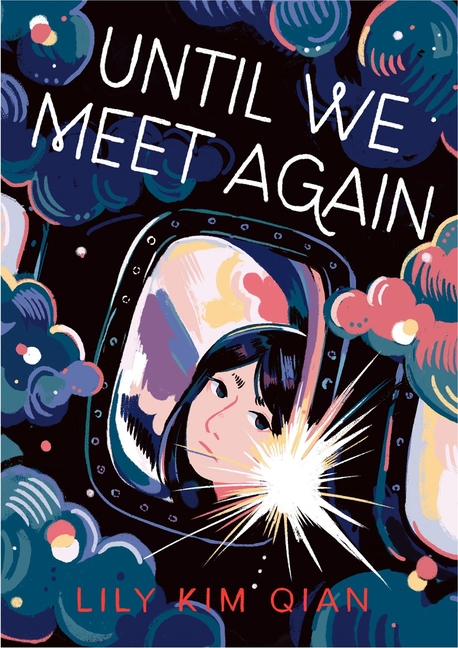
Until We Meet Again

Lily Kim Qian

A painful yet cathartic YA graphic memoir debut about a Chinese Canadian girl growing up with a schizophrenic mother.
Cover

Until We Meet Again

Lily Kim Qian

First Second | $17.99 | 9781250884220

In the painful yet cathartic YA graphic memoir Until We Meet Again, debut author/illustrator Lily Kim Qian balances art and text to explore her experience growing up with a schizophrenic mother.

Chinese Canadian Lily first realizes "mothers could get scared" when a minor cut above Lily's lip sends mother and daughter rushing to the clinic. Lily's father decides that a move to Nanaimo on Vancouver Island may give the three a "peaceful place to raise a family." But Lily's mother whispers "strange conspiracies" and her artwork becomes "increasingly muddled." When Lily's parents divorce, her mother moves into a basement-level complex, where she begins entering and exiting the apartment through a window. Lily grows to hate the chaos of her mother's home until, one day, it is empty. Frequent cross-country moves with her dad bring Lily new friends, extracurriculars, and frighteningly disordered eating; her mother occasionally comes back from China to reappear like a "cyclone" in Lily's life.

Qian's debut graphic novel is affecting and resonant. The first six parts are organized by place, while the last four parts--"Father," "Mother," "Gonggong," and "Daughter"--offer insight into the family's generational trauma and its impact on Lily. In "Daughter," it is only through therapy and medication that adult Lily ultimately begins to untether herself from "intangible perfection" and understand these generational roots. A jewel-toned palette with pointed and heavy use of stark black adds weight to the material. Harsh scribbles, fragmented art, and surreal imagery, such as grappling hands in a crashing wave, deftly encapsulate Lily's fractured state. Perfect for fans of Sarah Myer's Monstrous and Thien Pham's Family Style. --Lana Barnes, freelance reviewer and proofreader

Poisoned Pen Press: A Murder Most Camp: A Mystery by Nicolas Didomizio
BOOK REVIEWS
Cover
Secular saint Monica Lewinsky comes to the aid of a woman in need of healing after a long-ago affair in this nuanced and incisively funny academic satire.
Cover

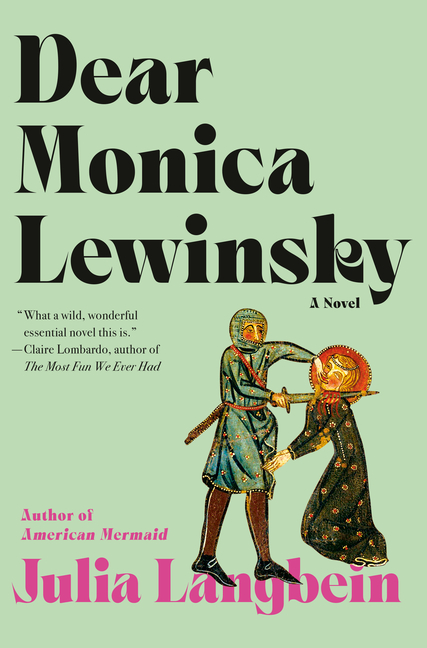
Dear Monica Lewinsky

Julia Langbein

Doubleday | $30 | 9780385551502

A woman plagued by the memory of a college affair with a professor finds insight and understanding through a surprising spiritual guide in Dear Monica Lewinsky, a witty and emotional exploration of young womanhood by Julia Langbein (American Mermaid).

"Saint Monica Lewinsky was consecrated by the collective force of the American conscience during the second decade of the second millennium AD," concludes the prologue, a tale of secular martyrdom that precedes the story of Jean Dornan. Between her sophomore and junior years of college, Jean became entangled with a professor while studying in France. The aftermath left her unmoored, but 20 years later, an invitation to his retirement party sets her truly spiraling. She turns to her old diary and makes a connection for the first time: the year of the affair was the year of the Bill Clinton/Monica Lewinsky scandal. Realizing how callously she had written about Lewinsky, Jean calls out to her for forgiveness. Saint Monica appears.

With plenty of heart and a keen eye for human nature, Langbein depicts Saint Monica guiding Jean on a journey through the summer of the affair. Dear Monica Lewinsky shifts between Jean's present and her past, while interspersing stories of female saints who were characterized into the roles of virgin or whore. Revisiting her past through adult eyes, Jean comes to understand not only how completely her professor failed her but also the power that her young self exercised, for better or worse, in her naïveté. This incisively funny academic satire is nuanced and thought provoking. --Kristen Allen-Vogel, information services librarian at Dayton Metro Library

Cover
Francine Prose vividly imagines a real-life encounter between two 19th-century literary giants.
Cover

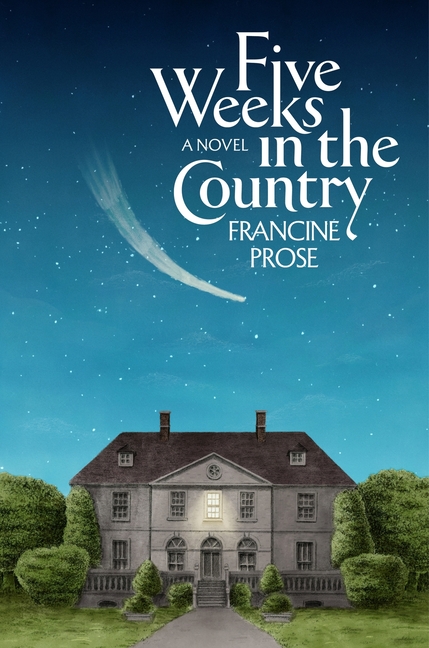
Five Weeks in the Country

Francine Prose

Harper | $30 | 9780063411814

In June 1857, Hans Christian Andersen arrived at Gad's Hill, the country home of Charles Dickens. Unfortunately for the beloved Danish writer, what was to have been a chance to bask in the aura of one of his literary idols instead becomes a painfully awkward and overlong interlude for both men and the Dickens family. In Five Weeks in the Country, Francine Prose has brilliantly imagined this encounter between two giants of 19th-century literature in a story of friendship, professional ambition, and domestic conflict.

Andersen is a bundle of phobias and a hypochondriac, and he finds himself "hopelessly mute" around Dickens. The imperious Dickens writes incessantly to sustain his large household and to satisfy an adoring body of readers, while Andersen is afflicted with a catastrophic case of writer's block. A highlight of this well-drawn portrait of the burdens of artistic fame is the household's simmering tension as the Dickenses' marriage crumbles under the demands of parenting a brood and the writer's persistent flirtations with other women.

Prose skillfully relies on a Rashomon-like structure to describe Andersen's disastrous visit from three perspectives. The first is a collective account by the Dickens children, the second a third-person narrative from Dickens's point of view, while the last is an often deeply moving version in Andersen's voice. Five Weeks in the Country concludes with a lovely coda that deftly knits together several of the novel's plot strands. Anyone who has cherished the work of these literary masters will delight in Francine Prose's ability to bring them to life on the page in a novel that's the next best thing to reading their work. --Harvey Freedenberg, freelance reviewer

Cover
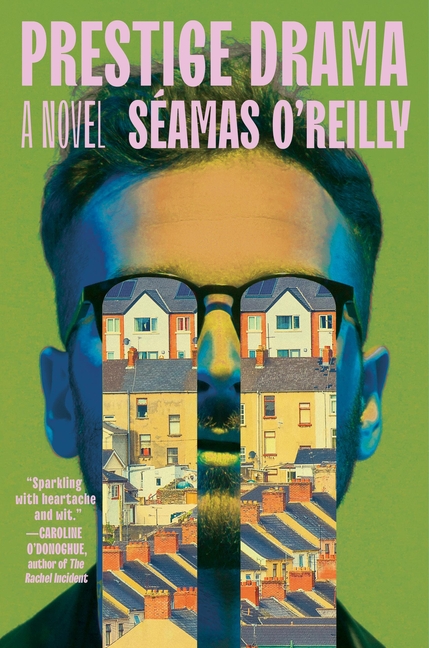
Prestige Drama, a novel by Séamas O'Reilly, tells the stories of Derry, Northern Ireland, residents and a Hollywood actress who comes to town to shoot a series based on a tragedy during the Troubles.
Cover

Prestige Drama

Séamas O'Reilly

Cardinal | $28 | 9781538778210

Media coverage of major conflicts tends to focus on large issues like military strategy and political maneuvers but pays less attention to stories of citizens caught up in campaigns they can't control. In the 20th century, the Troubles in Northern Ireland claimed thousands of civilian lives before the Good Friday Agreement. Séamas O'Reilly pays homage to Derry, one of the towns most affected by the Troubles, and imagines the lives of some of its residents in Prestige Drama, a sly novel that ingeniously subverts narrative expectations.

The prestige drama of the title is Dead City, an upcoming U.S. streaming series depicting "a fictitious account of one family's experience in the aftermath of a terrible massacre" in the 1970s. The screenwriter is Derry native Diarmuid Walsh, author of a failed novel and a "disastrously unsuccessful play." The family the show is based on is the Devenneys, whose son, 17-year-old Jamie, was killed one evening when he went out with some friends. To lure viewers, the producers hire Hollywood star Monica Logue, who plays a TV detective and has come to Derry to play the murdered boy's mother. But an unforeseen problem complicates matters: Logue disappears.

Readers might expect this novel to be like Logue's TV show, a procedural centered upon solving a mystery. O'Reilly offers instead something richer: a melancholy portrait of a town still smarting from Troubles-era trauma. Most of the novel focuses on the townspeople affected by Jamie's death. Highlighted by unforgettably visceral writing, O'Reilly's novel is a tribute to people who fought back against terrorist tactics, a prestige drama of far greater consequence than a TV show. --Michael Magras, freelance book reviewer

Cover
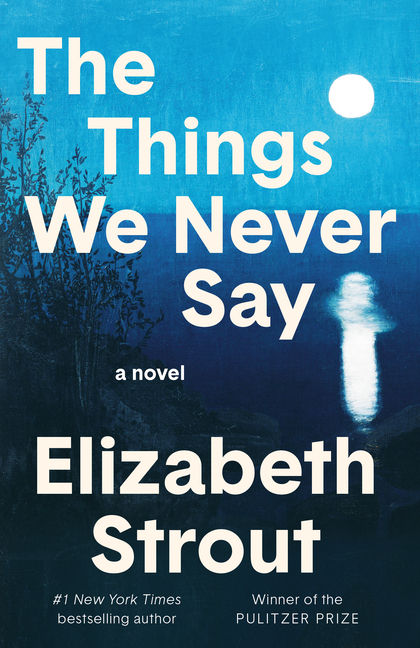
Elizabeth Strout's masterful novel stars a hero who grapples with what it means to say what one thinks, and what if the better course is to keep it to oneself.
Cover

The Things We Never Say

Elizabeth Strout

Random House | $29 | 9798217154746

Readers will likely fall in love with 57-year-old high school history teacher Artie Dam, the hero of The Things We Never Say by Elizabeth Strout (Tell Me Everything; Oh William!), just as readily as his students. Artie keeps his students' letters to him in his mother's jewelry box in the attic. Ten years ago, a tragedy occurred: Artie's son, Rob, was in a car accident that killed his girlfriend. Since the accident, Artie's wife, Evie, seemed less warm; a distance also developed between Artie and Rob, which has grown "more acute" in the past year. Artie feels lonely. He becomes preoccupied with whether human beings have free will, and he considers suicide.

Then one day, Artie slips while stepping onto his boat, falls in the water, and nearly dies in the strong current. A new neighbor, a stranger, saves Artie's life. Suddenly Artie has a new friend and a will to live. Soon after, Rob shares a secret with Artie, which brings them closer. But Artie also finds himself reexamining what he thought he knew in light of what his son confided.

Strout skillfully fashions a web of the interlocking lives in a small Massachusetts coastal town. She explores the roles of class structure, politics, and education, with subtlety and finesse. A gifted teacher, Artie champions each of his students and urges them to fulfill their potential. While Strout anchors the proceedings in the specific, her themes cross eternity in this story of quiet heroes. Her genius is that her words work on readers between the lines. The Things We Never Say poses searching questions, yet ultimately gives readers hope. --Jennifer M. Brown

Highlights: Unplug & Play With Highlights! Enter to win a screen-free book bundle!
Cover
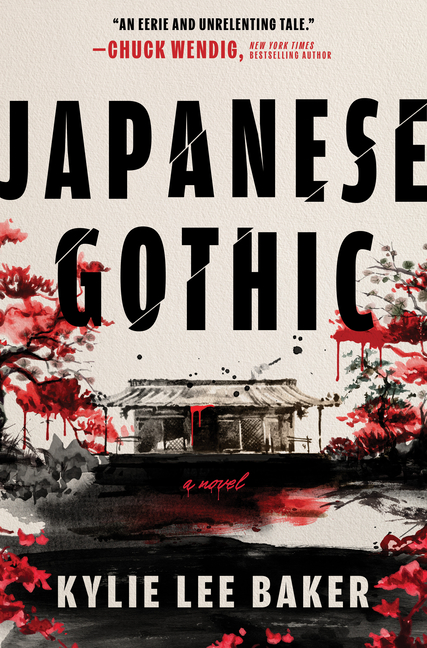
A samurai's daughter and a white college student living centuries apart are brought together by a blood-soaked nightmare house in rural Japan in this ghostly, gory ride.
Cover

Japanese Gothic

Kylie Lee Baker

Hanover Square Press | $30 | 9781335001559

Residents living in a secluded Japanese house in two different centuries are haunted by brutal family legacies in Kylie Lee Baker's horror knockout, Japanese Gothic. After the disastrous Satsuma Rebellion of 1877, Sen's samurai family lives in hiding. In 2026, white college student Lee fears he may have murdered his roommate, James, and flees to the same house to live with his father. Sen's and Lee's days are full of separate torment, but their lives take a supernatural turn when the two connect through their bedroom closet.

Short on students, Sen's father began training her as a samurai when she was young, and he continues to rule with cruelty masquerading as honor, even as his family slowly starves. Meanwhile, Lee can't remember where he put his roommate's body. As days pass and no one reports James's absence, Lee stops taking the cocktail of medications that have kept him in a mental fog since childhood. Soon his obsession with his mother's disappearance when he was 12 intertwines with his goal of finding out what happened to Sen in her time. Sen just wants her family to survive.

Baker (Bat Eater and Other Names for Cora Zeng) soaks the tatami mats with blood, blending samurai tradition with the fever-dream chaos of psychological collapse and suppressed trauma as Sen and Lee question their realities. Baker's excellent character development will have readers invested early and grounds the constantly twisting plot. Japanese Gothic is a ghostly, gory ride. --Suzanne Krohn, librarian

Cover
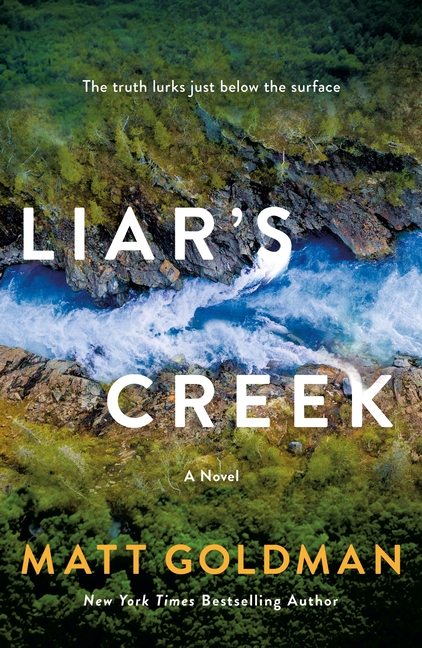
An engrossing tale of fathers and sons set in a small Minnesota town, Liar's Creek infuses a missing-persons case with an emotional family drama.
Cover

Liar's Creek

Matt Goldman

Minotaur | $19 | 9781250409416

Clay Hawkins's return to the small town of Riverwood, Minn., is a complicated homecoming in Matt Goldman's (Dead West; The Shallows) engrossing family drama Liar's Creek, the first volume in a planned series.

The 24 years Clay spent away did not mend his uneasy relationship with his father, Judd, the recently ousted police chief. Neither father nor son ever expected Clay, who made a name for himself on the soccer field in Europe, to return to Riverwood, nor do either understand why he came back three months ago. However, Judd immediately bonds with Braedon, Clay's 12-year-old son, whose mother left when he was an infant.

Meanwhile, Clay's favorite uncle, Teddy, Judd's peripatetic fraternal twin, has recently disappeared. After Clay's mother died when he was 13, Judd became distant, so Clay turned to Teddy for advice and someone to talk to. In contrast to the strict Judd, Teddy was "the coolest," played in a punk band, and taught Clay to fly fish, but was often unreliable. Growing up with these different but flawed ways of parenting made Clay determined to do better for Braedon. Goldman's deft illustration of the complex dynamics among the Hawkins men, including Braedon, underpins the narrative as the family tries to figure out what happened to Teddy.  

Riverwood is the kind of small town that offers comfort yet hides secrets--some of which might be linked to why Teddy went missing--and Goldman shows how small violations and pranks can grow into serious crimes. Liar's Creek flows forcefully as an emotional tale about fathers and sons. --Oline H. Cogdill, freelance reviewer

Cover
In this gritty historical mystery, the heir to an earldom investigates the murders of his nephew's friends.
Cover

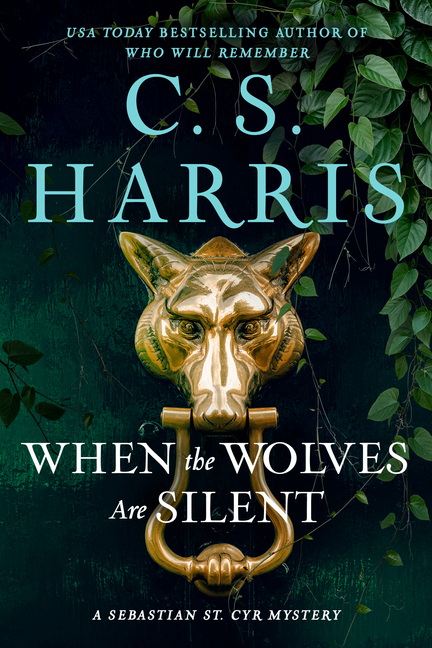
When the Wolves Are Silent

C.S. Harris

Berkley | $30 | 9780593953891

C.S. Harris brings new intrigue to her Sebastian St. Cyr mystery series with its 21st entry, When the Wolves Are Silent. Sebastian St. Cyr, Viscount Devlin, is the heir to an earldom, but he cannot stand to live the usual life of a wealthy dilettante, even though Regency society despises him for it. Along with his wife, Lady Hero Devlin, who writes articles spotlighting the plight of London's poor, Sebastian seeks to bring justice for those who need it.

Sebastian's investigative work hits closer to home when his disreputable nephew, Bayard, begs him to solve the murders of two friends. London is already restless; many of the soldiers who fought for Great Britain in the Napoleonic wars are now back home, yet homeless. Hero's father, Lord Charles Jarvis, is one of the prince regent's most trusted advisers, and he's determined to keep the monarchy strong. But there aren't enough jobs, the political situation is tense, and the actions of Bayard's dissolute group of friends have not helped.

Fans of lighter Regency novels like the Bridgerton series might be surprised by the grittiness of Sebastian's world; Harris focuses on backstreets rather than ballrooms. But Sebastian and Hero are intrepid characters, and with keen insight, Harris brings an era of extreme inequality sharply into focus through them. Readers who love history or suspense are sure to appreciate the propulsive When the Wolves Are Silent. --Jessica Howard, former bookseller, freelance book reviewer

Cover
When their exes start dating, Thea and Alex form a fake friendship that sparks with playful banter and the hint of something more in this funny, delightful romance.
Cover

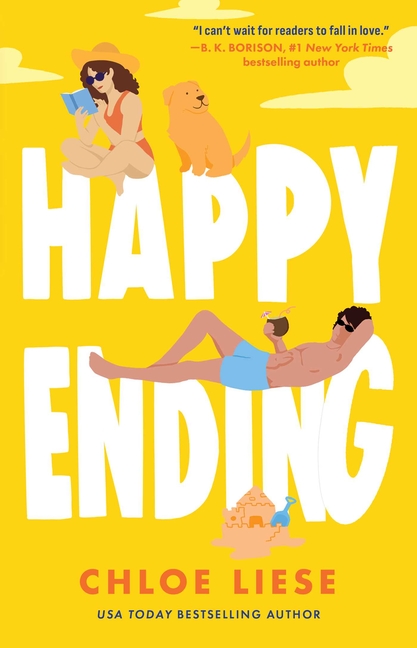
Happy Ending

Chloe Liese

Gallery Books | $18 | 9781668205471

Chloe Liese's funny, slow-burn romance Happy Ending challenges two divorcees to reassess the friendship they formed on a spur-of-the-moment lie. Thea's and Alex's marriages did not have happy endings. Two years ago, they both ended in divorce, and to make matters worse, their exes got together a week after. Because bookseller Thea still shares a dog with her ex-husband, and chef Alex shares a child with his ex-wife, they lied, saying that they also knew each other and, in fact, were first loves.

Alex and Thea's mutual emotions over their divorces and a commitment to maintaining their ruse helped turn their fake history into a real friendship. Family and friends suspect there might be more between them, and a few intimate moments fan the flame, but to Thea and Alex, their friendship is too important to risk. Liese intersperses the narrative with flashback chapters, depicting how their bond deepened over delicious food (especially gelato), a mutual love for New York Times games, and disastrous dating-app situations. In the present, the two navigate co-parenting with their exes, an impending "two-family vacation" with a surprise "special occasion," and most importantly, finally facing their feelings without losing each other.

Liese (Only and Forever) conveys the friends-to-lovers romance through raw moments of shared relationship grief, endearing family and found-family love, and a few delightfully competitive activities with Thea's and Alex's exes. Happy Ending combines humor and heart as Alex's and Thea's lovable personalities, charming connection, and delectable chemistry lead to their very own happy ending. --Clara Newton, freelance reviewer

Cover
A 75-year-long game of Capture the Flag between rivaling halves of a town reveals human kindness and menace in this epically fun middle-grade graphic novel.
Cover

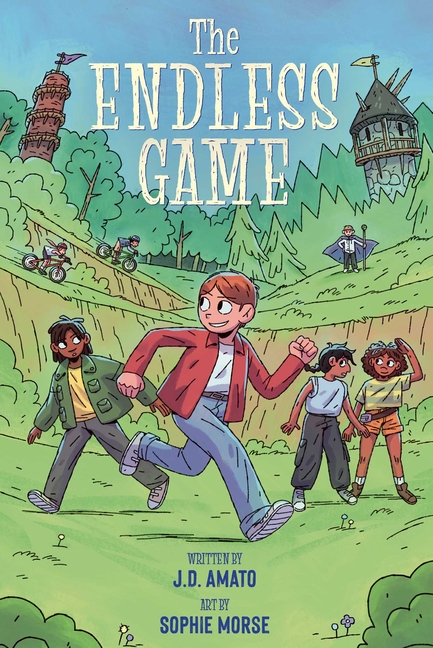
The Endless Game

J.D. Amato, illus. by Sophie Morse and Sara Calhoun

Simon & Schuster Books for Young Readers | $24.99 | 9781665927154

Television producer J.D. Amato's first middle-grade graphic novel is an action-packed, stirring exploration of friendship, teamwork, and finding one's place in the world--all through an epically scaled game of Capture the Flag.

It's the summer of 1998 and lonely new kid Fred has just moved to Lakeside, Ill., a town divided into two feuding sides, "Uphill" and "Downhill." For 75 summers these rivals have been playing a fierce generational game of Capture the Flag. Hordes of kids collaborate as organizers, communicators, guards, spies, builders, bicyclists, and messengers, scheming to capture the flag of the other team without getting caught and sent to "jail." The Downhillers' approach is upright and sincere even in the face of the Uphillers' intimidation and cheating. Fred, white with sandy-brown hair, has "no idea" where he really fits in, but manages to find a home on the Downhill team nonetheless.

Amato's gift for driving the action at a breathtaking clip, then slowing down to dig into characters' backgrounds and personal challenges makes The Endless Game hard to put down. Debut illustrator Sophie Morse uses inset panels, angled illustrations, and close-up features to develop art as dynamic as the story, an intention that is especially prominent when action scenes burst directly out of their frames. Sara Calhoun's deft use of color shines a revealing light on the characters and setting: warm, earthy tones, often suffused with golden light, are used for the Downhill settings; ominous, colder, and institutional gray-green defines the Uphill scenes. The Endless Game is a whopping good story that should appeal to strategist types, bikers, and spies alike. --Emilie Coulter, freelance writer and editor

Cover
A toddler makes a game out of the word "hold" in this joyous slice-of-life picture book.
Cover

Hold

Randy Ribay, illus. by Zeke Peña

Kokila | $18.99 | 9780593856987

A toddler with a patient father spins a seemingly endless game out of a single request in the joyous slice-of-life picture book Hold, written by Printz Award and Asian/Pacific American Award for Literature-winner Randy Ribay (Everything We Never Had) and illustrated by Pura Belpré Illustration Honor-winner Zeke Peña (My Papi Has a Motorcycle).

A gap-toothed child in a bright green raincoat becomes captivated when long-haired, goateed Daddy hands them a cup and says "Hold, please" while attempting to pack for an outing. The child begins to delightedly wield the word "hold" to request a growing pile of items including toys and the family cat. A tolerant and only slightly exasperated Daddy complies, even when requests to hold a tree and rain lead to an impromptu playtime in the yard, further stalling departure. A cry of "Hold plane!" sends the pair back inside to retrieve a toy plane, which requires restacking the entire armful of held items. "¿Listo?" Daddy asks. "Hold Daddy?" the toddler inquires, running in for a heartfelt hug. Finally, the two can depart on their errand, the child held close in Daddy's arms. A final double-page spread shows Daddy's hand reaching back inside the door to grab the keys off the side table, suggesting a parent well-practiced in the art of getting out the door.

Peña's lovably square-headed, chunky-fingered, round-eyed characters evoke movement and strong expression while his colored pencil and digital illustrations bring texture, humor, and life to Ribay's slight text. Hold depicts a charming outing that meets toddlers at their experience level and simultaneously captures life as a parent. --Jaclyn Fulwood, youth services manager, Allen County Public Library

Cover
The natural rhythms of the living world surprise and reassure in this beguilingly illustrated, out-of-the-ordinary picture book, translated from Spanish.
Cover

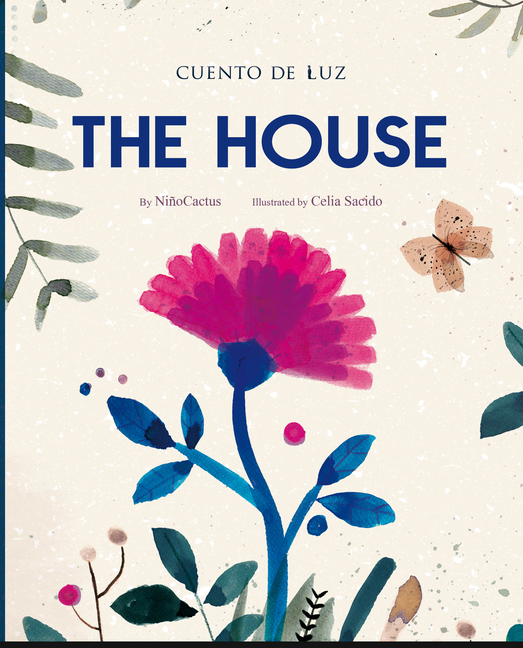
The House

Alberto Martín (NiñoCactus), trans. by Jon Brokenbrow, illus. by Celia Sacido

Cuento de Luz | $19.95 | 9788410438156

An unconventional, fancifully illustrated Spanish import picture book explores resilience and the cycle of life through one house, which is constructed, occupied, and abandoned, only to be reclaimed by nature.

"The house was built in the summer." A family moves in and the house is happy. The two light-brown-skinned, curly-haired children romp gleefully in the yard and wrestle with their dog. "The family looked after the house. And the house looked after the family." One stormy night, though, the roof is struck by lightning, and the family must move away. The house is sentient enough to wonder what will become of it with no one there. And what will "stop strangers from wandering in"? Strangers do wander in, but it might not be the disaster the house anticipates. Ants march across the pretty tiles, a cow peeks in, a rabbit nibbles on a radish under the table. Trees sprout through the floor and then through the roof. The house merges into nature, discovering that it still has work to do as a shelter and "never stopped being a house."

With minimal words, author/musician/puppeteer Alberto Martín (NiñoCactus) crafts a touching story that exudes the comfort of a home well loved. Translator Jon Brokenbrow melodically translates NiñoCactus's words: "The wind, still smelling of smoke, called it a ruin, and the house fell silent." Celia Sacido (The Walk) occasionally uses a naïve style in her pleasing illustrations while relying primarily on simple line drawings and elaborately detailed mixed-media artwork. The House is a vibrant and encouraging picture book that is likely to transfix readers of all ages. --Emilie Coulter, freelance writer and editor

Cover
This clear-sighted and endearing middle-grade novel features a tween who finally gets to attend space camp, only to learn that "wherever you go, there you are." 
Cover

Rayana Johnson's Giant Leap

Jill Tew

Freedom Fire | $18.99 | 9781368104760

In Jill Tew's clear-sighted and endearing middle-grade Rayana Johnson's Giant Leap, tween Rayana finally gets the opportunity to attend space camp where she gets firsthand experience with the adage "wherever you go, there you are." 

Twelve-year-old Ray wants to be a mission control specialist for NASA and has for years dreamed of attending the NASA sleepaway camp, Galaxy Camp. Now that she's arrived, however, the experience isn't quite what she expected. Her initial hours onsite are great as she bonds with the other girls in Pod Three-Delta and meets cute camp counselor Isaiah. But the camp seizes her cell phone (which she needs to stay in contact with bestie Kaya, whose father recently died of cancer), and her thoughts keep returning to her parents' recently rocky relationship. Then, the nervous stomach-ache she can't seem to shake turns out to be menstrual cramps--Ray has started her period "hundreds of miles away from home." Ray feels trapped "by something I didn't ask my body to do," scared about her parents, worried about Kaya, and saddened when one of her podmates calls her a "bougie Black girl whose Daddy has a PhD."

Tew (An Ocean Apart) develops a structured character who creates meticulous lists and reminder alarms while dreaming about being in a position where the categories and tables in her head will be an asset. The author's ability to infuse her characters with authenticity through humorous dialogue and cultural nuance makes Rayana Johnson's Giant Leap feel like a sneak peek into a real-life tween's diary. --Rachel Werner, author and teaching artist at The Loft Literary Center and Lighthouse Writers Workshop

The Writer's Life

Booker Prize-winning author Douglas Stuart discusses his third novel, John of John, about a young man seeking to reconcile his sexuality and artistic goals with his family's expectations and a devout upbringing on Scotland's Isle of Harris. Find out how he sought to balance intimacy and secrecy, community and isolation, all before the Internet arrived in a place where "time moves slowly... and memory is long."

The Writer's Life

Douglas Stuart: It's Not a Novelist's Place to Judge

photo: Desiree Adams

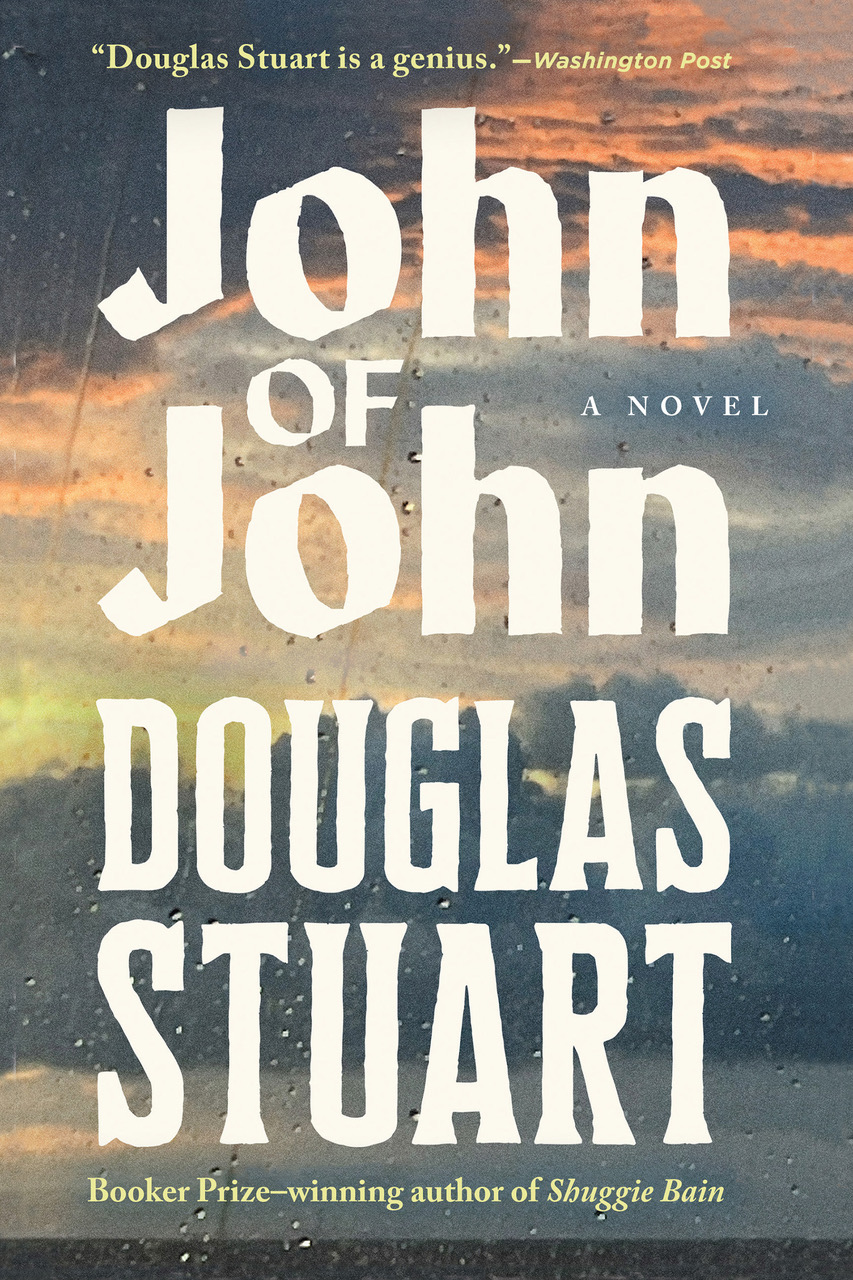
Douglas Stuart is the author of the Booker Prize-winning Shuggie Bain (2020) and Young Mungo (2022). In his third novel, John of John (Grove Press; reviewed in this issue), a young man seeks to reconcile his sexuality and artistic goals with his family's expectations and a devout upbringing on Scotland's Isle of Harris. Stuart was born in Scotland and has a background in fashion design; he lives with his husband in Manhattan.

What did you observe about then versus now on the Western Isles? How did you try to balance a waning way of life and a beloved community? What role does the Gaelic language play?

Time moves slowly on the islands and memory is long. John of John is set in 1997 because I wanted to capture a pre-Internet world, not only because it has revolutionized rural places, but also because it has changed the face of gay dating and queer loneliness. I'm interested in the isolation that people feel most intensely despite the closeness of a tight-knit community--which of course, always comes with an expectation of conformity.

There is no one singular truth about the islands. You can find all the benefits and problems of the broader world there and yet there remains a strong culture that can't be found anywhere else in the world. In all my novels, people are pitted against place. Rural populations are dwindling and communities are aging rapidly. Any young person left behind faces real social and romantic challenges.

Scottish Gaelic is spoken by the tiniest fraction of the population, mostly concentrated on the Outer Hebrides. In the novel, language is used as a device to exclude people, to talk around them. John, the father, speaks to his son, Cal, in Gaelic, as a way to claim Cal as his own and exclude the grandmother, Ella, from their conversations. It's quite childish and mean, but I think the novel is all about these triangles, about the ways families can warp in isolation.

I sensed real love and respect for all the characters, even those with problematic views or behaviors. How did you cultivate empathy and resist villain stereotypes?

I don't believe in villains or heroes. It's too easy. In my own life, I've been most bitterly disappointed by people I have thought the world of, and surprised by the generosity of others who owed me nothing. My mother suffered with a terrible addiction that eventually killed her, and I realized at the age of four that the person you love most in the world can also be the person who is worst to you. A terrible lesson for a child, but a valuable lesson for the novelist.

It's not a novelist's place to judge. And in fact, the more complex you can make a character--the more morally contradictory they can be--then the more human they feel. The struggle is often internal, with each character struggling with the opposing forces of their faith and sexuality. All I can do is present some people and their pain and let readers come to their own moral judgements.
Avoiding spoilers (which was challenging while writing the review!), what did you hope to convey through the repeating of family patterns?

A lot happens in the second half of the book, so thank you for avoiding spoilers! There is very little that is new under the sun, and I wanted to write about the power of secrets, how we hold onto them for fear of being exposed, while not thinking that others might be going through the very same thing.

It's a novel about fathers and sons. It's a particular flaw of masculinity: fathers always want to make their sons in their own image. I think it comes from how narrowly masculinity is expressed in the world. Men spend an enormous amount of energy oppressing themselves and the men around them, which at the end of the day means they're upholding systems they would do better to destroy.

On the other hand, I was interested in the arrogance of youth. How when we were young people we didn't yet see our elders as people in their own right. We believed that we were the only ones living interesting lives full of love and secrets and desire.

Often, the universal dilemma in queer fiction is the story of a young person hiding their sexuality from their family, and so I simply imagined what would happen if that family were hiding their own secrets, too. It was an exercise in tension and claustrophobia for me. The Macleods are a family who are so tightly woven: they work together, eat together, pray together, and they know things about one another on such an intimate level, and yet, could I make it so that the reader saw that they did not know each other at all?

We imagine that secrets are a way to cover our sins, but what if they were also a way to protect those you love?

There are several strong women in the novel, but Ella must have been my favorite character. Who inspired her depiction?

I love Ella. She was the most fun to write. The Macleod men are so repressed and so I needed to create a grandmother who was the keeper of the truth, a woman who was never afraid to speak her mind. I wanted to create someone fleshy and alive, someone full of humour and irreverence, someone who loved dirty talk.

Ella is her grandson's best friend, and it was important that she was a Glaswegian because I wanted her to also feel like an outsider on the islands. In many ways, Ella is a composite of all the women who raised me. These were women who had spent their lives letting the men think they had control and yet they were the ones who were really in charge. I admired them so much. They were confronted with men who lacked any emotional intelligence and yet they had to manage them, survive them, and also help them succeed in the world. As they aged, they reached the point in their lives where they had nothing left to fear, no man left to please.

As I approached the end of the novel, I had to slow down for dread of full-blown tragedy. (I loved Cal's line, "What in the world of Thomas Hardy?") And yet there is humor and hope here, often in spite of abuse and cause for despair. Did you set out to write a happy ending?

I'm sure the critics are going to savage me for that Hardy line! But it's so true. We are still a world governed by Victorian morality--what could destroy a young man in 1890 could still undo him in 1990.

I think I set out to write an ending that liberated everyone and rewarded love for its patience. But I also hope the reader is so concerned about Cal's journey that the ending comes as something of a surprise. I realized that we can never be truly happy or settled until those we love find their peace, too. --Rebecca Foster, freelance reviewer, proofreader, and blogger at Bookish Beck

Book Candy
Rediscover

Australian author David Malouf, who "successfully merged his passion for literature, language and imagination with his connection to home to become one of Australia's most celebrated writers," died April 22 at age 92, the Guardian reported. Malouf "wrote of characters who transcended time and place. His novels explored ideas of identity and post-colonialism, but also broader themes--life and death, liberty and conflict, virtue and vice

Rediscover

Rediscover: David Malouf

Australian author David Malouf, who "successfully merged his passion for literature, language and imagination with his connection to home to become one of Australia's most celebrated writers," died April 22 at age 92, the Guardian reported. Malouf "wrote of characters who transcended time and place. His novels explored ideas of identity and post-colonialism, but also broader themes--life and death, liberty and conflict, virtue and vice--and the interaction of these opposing forces in creating tension and temptation."
"In most of my books and stories, the central character suffers some sort of disruption--loss of innocence if you like, or of the self--and has to work through to wholeness, or healing," he told Colm Tóibín in 2007.

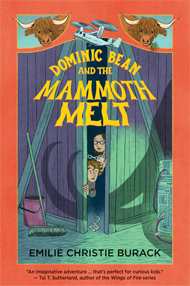
As a poet, Malouf's debut collection was Bicycle and Other Poems (1970), followed by Neighbours in a Thicket (1974), which won the Australian Literature Society gold medal. He published his final novel, Ransom, in 2009, but continued writing poetry, with his last collection, An Open Book, coming out in 2018. 

Malouf's first novel was Johnno (1975), "which many believe to be partly autobiographical, [and] tells the story of two boyhood friends living in steamy, sultry wartime Brisbane," where the author was born, the Guardian noted. His novella An Imaginary Life (1978) was a fictionalized reimagining of the exiled Roman poet Ovid. In 1990, The Great World won the Commonwealth prize and Miles Franklin literary award. 

Remembering Babylon (1993), which was shortlisted for the Booker prize, "tells the story of a shipwrecked cabin boy, who comes to represent the tension between two worlds--that of the local Indigenous people with whom he has lived for 16 years, and the Scottish settlers whom he joins," the Guardian wrote.

Malouf was always a voracious reader, beginning with classic English children's books, then reading Shakespeare aged eight, and at 12 reading Wuthering Heights, Pride and Prejudice, Vanity Fair, and Moby-Dick, his favorite novel. He said these books "kept telling me the most extraordinary things about the world, and I couldn't wait to grow up and get into it."

Addressing the fact that none of his books were adapted into films, Malouf said, "they're all interior; you can't translate that to the screen. Almost nothing happens."

Among his many honors, Malouf was made an Officer of the Order of Australia in 1987 for his service to literature and in 2016 received the Australia Council award for lifetime achievement in literature.

In the Age, literary journalist Jason Steger wrote: "My reaction to the news that David Malouf had died on Wednesday was one of great sadness because he was lovely, kind man--a gentleman. And also one of great gratitude because over the years he gave us so many wonderful works--novels, short stories, essays, libretti and poetry--that will remain essential to any understanding of Australian literature.... Malouf was a modest giant in Australian literature. He had a long life and his work will last for a very long time."

Powered by: Xtenit