Latest News
Viz Media: And Then There Were None, Vol. 1 by Agatha Christie, art by Aya Nikaido
September 18, 2026
WHAT TO READ NEXT: REVIEWS OF GREAT BOOKS

There's a special kinship between writers and booksellers, and that warmth is on full display in several new books, including Katie Clapham's charming and witty Receipts from the Bookshop, which inventories a year of observations and musings at the store she co-owns with her mother in the U.K. Similarly, thriller author Harlan Coben's Plot Twist details his writing life with "succinct insights" and a breezy sense of humor, resulting in a book on craft that doubles as advice on living. Likewise, novelist Isabel Allende presents "an impassioned defense of the labor and the art of writing" in Story Telling, a cache of wisdom earned through her very long career. Whether its books about books or writers on writing, there's always something new to learn from taking a closer look at the wonderfully dynamic and creative community behind the literary arts.

--Dave Wheeler, senior editor, Shelf Awareness
FEATURED TITLES
Cover

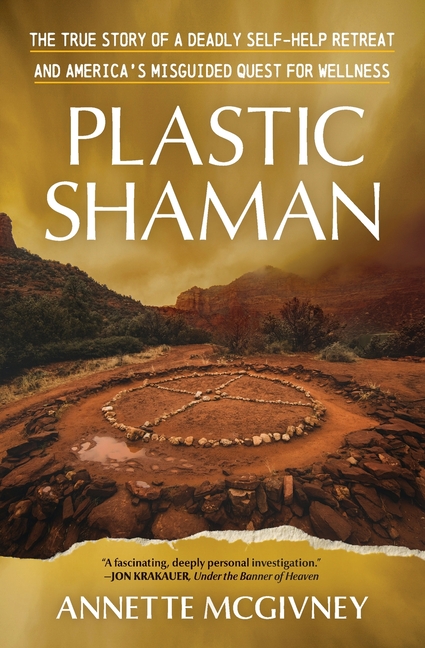
Plastic Shaman: The True Story of a Deadly Self-Help Retreat and America's Misguided Quest for Wellness

Annette McGivney

This propulsive investigative work recounts a tragedy at a high-end desert retreat and explores how the wellness industry and New Age spirituality co-opt sacred Native American practices.

Plastic Shaman: The True Story of a Deadly Self-Help Retreat and America's Misguided Quest for Wellness

Annette McGivney

Torrey House Press | $21.95 | 9798890920454

Annette McGivney uses a tragedy at a premium desert retreat to explore how influential figures and practices within the wellness industry co-opt, corrupt, and weaponize sacred Native American rituals and beliefs, often promising changed lives in exchange for ever-increasing amounts of money. In October 2009, a phony sweat lodge ceremony run by a grifter who exercised undue influence over attendees resulted in three deaths. Plastic Shaman delves into the rise of the New Age self-help and extravagant wellness movements in the U.S., and how they prey on those seeking useful and real experiences. Moreover, they take from Indigenous traditions without permission, causing injury to the people and communities for whom these traditions are a "way of life."

McGivney's undertaking requires walking a fine line, toggling between censure of those who perpetuate harm in the name of clout and wealth and respect for the beauty of Native American rites, all without losing sincere empathy for people seeking healing or growth. McGivney successfully toes this line with honesty and compassion, incorporating her own experience of the appeal of wellness culture and New Age spirituality to make the complicated reality of the interconnection between the two relatable without excusing detrimental behavior. Despite its impressive amount of research and history, Plastic Shaman never feels dry, offering the right amount of propulsion without veering into sensationalism or true crime voyeurism, and ultimately centering the many reasons Native homelands and customs should be returned to the stewardship of their people. --Kristen Coates, editor and freelance reviewer

Cover

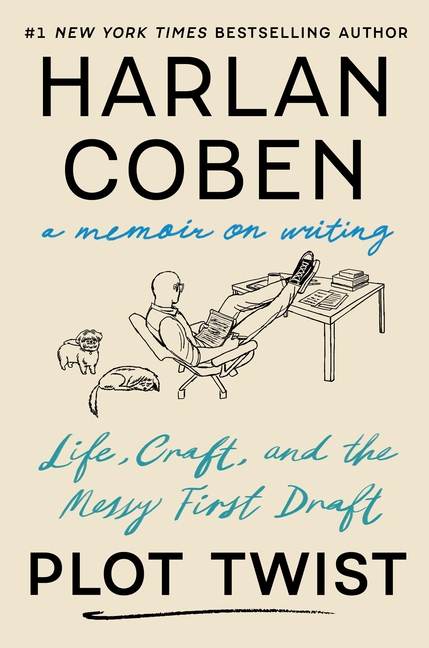
Plot Twist: Life, Craft, and the Messy First Draft: A Memoir on Writing

Harlan Coben

Harlan Coben's Plot Twist rivals Stephen King's On Writing in its conception of writing as a daily practice and in its humanity.

Plot Twist: Life, Craft, and the Messy First Draft: A Memoir on Writing

Harlan Coben

Grand Central | $32.50 | 9781538784624

Harlan Coben's hybrid memoir and book on craft, Plot Twist, rivals Stephen King's On Writing in that even if readers don't write in his genre, Coben's succinct insights apply to every sort of writing--and even daily life.

Coben's organizing principle is to adopt "the writer's mind frame." Using this lens, "everything in life is material." He doesn't mind the question that makes most writers cringe: "Where do you get your ideas?" He breezily responds with an answer about keeping a curious mind. Coben repeatedly asks "What if?" and offers readers examples of how it led to several of his works. He also details which real-life situations became fodder for his fiction.

Coben walks the talk. He shares what he calls "our life axiom": "If it helps me produce pages, good. If it doesn't, bad." He never leaves home without equipping his backpack with laptop, legal pad, small notebook, writing instruments, and snacks. Throughout Plot Twist, he includes instances of writing "this sentence" on United Flight 17, or writing "this paragraph" on a boat while his kids snorkel. Writing is a job, and he takes it seriously, but he also finds humor everywhere and shares poignant moments, such as the early deaths of his parents and how that shaped his writing.

Coben explores point of view, plot versus character, the importance of dialogue, and "incremental ambition," achievable challenges he gives himself. Most of all, he lays out a blueprint for a creative, empathetic life: "Everyone has hopes and dreams," he writes--a great thing to remember as a writer, a heroic thing to remember as a human. --Jennifer M. Brown

Thomas Nelson: Writer in Residence by Rhonda McKnight
Cover

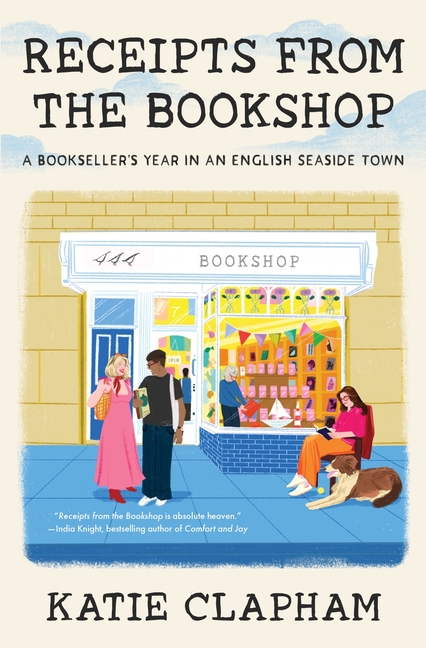
Receipts from the Bookshop: A Bookseller's Year in an English Seaside Town

Katie Clapham

Brimming with charm and wit, Receipts from the Bookshop delights readers with overheard conversations and the kindness of customers in a remarkable celebration of bookstores and booksellers.

Receipts from the Bookshop: A Bookseller's Year in an English Seaside Town

Katie Clapham

Morrow | $28 | 9780063516625

In 2023, children's book author and bookseller Katie Clapham (The Tour at School) launched a feature on her Substack called "Receipt from the Bookshop," wherein she recounted bits from her day in the bookstore she co-owns with her mother in St. Annes-on-Sea, U.K. A few years and thousands of followers later, she has gathered some of the best of those dispatches into a book, aptly named Receipts from the Bookshop.

The wild success of these informal notes, written on the fly, is wholly due to Clapham's wry humor and descriptive skill. She turns even insignificant tasks like receiving the day's delivery or powering on the credit card reader into genuinely laugh-out-loud moments. Sometimes, it's merely something overheard on the street or a simple observation, such as the time a man used their shop window to readjust his trousers, "including undoing his entire belt and refastening it, presumably forgetting that glass is, in fact, see-through."

Clapham offers much more than a giggle, however, as she reminds readers that "buying a book from a bookshop really is an act of resistance" and celebrates every purchase, no matter how small. "Every day is another triumph against the vision of the town without us; a gap in the shelf of our high street. After all," she explains, "a town without a bookshop is a tragedy." Whether extolling the virtues of picture books or lamenting how many of the books on order are actually for her, Clapham's enthusiasm for reading is vibrant, authentic, and contagious, a bulwark against despair in challenging times. --Sara Beth West, freelance reviewer and librarian

Cover

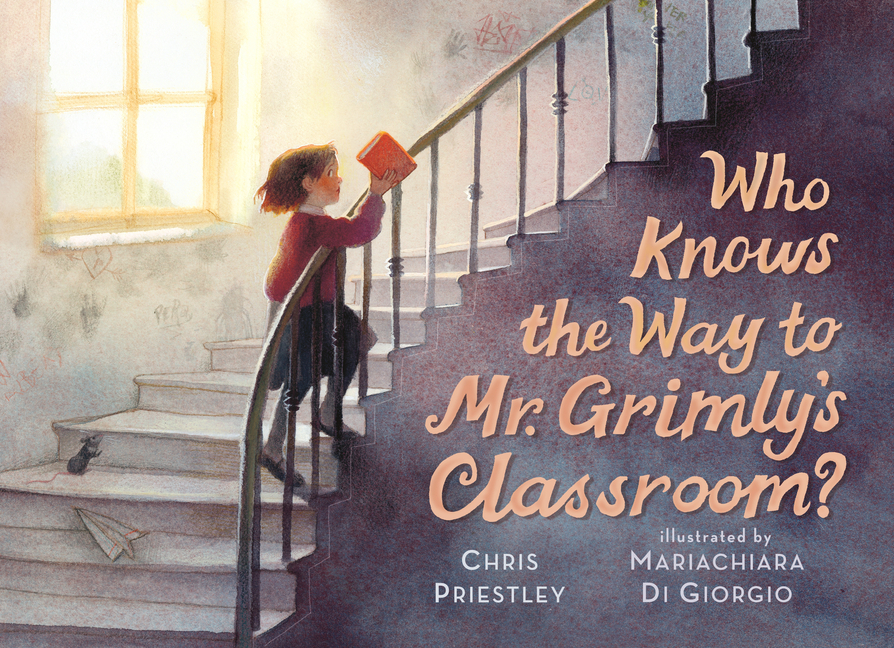
Who Knows the Way to Mr. Grimly's Classroom?

Chris Priestley, illus. by Mariachiara Di Giorgio

Who Knows the Way to Mr. Grimly's Classroom? is a darkly charming picture book featuring a child questing through her eerie new school.

Who Knows the Way to Mr. Grimly's Classroom?

Chris Priestley, illus. by Mariachiara Di Giorgio

Candlewick | $18.99 | 9781536245011

Who Knows the Way to Mr. Grimly's Classroom? is a deliciously dark picture book about an overachieving student who roams the halls of a school populated with majestically creepy settings and oddly named personnel on a quest to return a borrowed book.

When Grace's teacher asks the titular question, Grace's hand shoots up and she blurts out, "Me, Miss. I know the way, Miss!" Miss Flytrap hands the eager girl a book and asks her to take it to Mr. Grimly. But this is Grace's first week at "her strange new school," and she does not actually know where to find his classroom. "I'll just have to ask someone along the way," she decides as the corridors become "darker and darker and more and more cobwebby." Pale librarian Miss Endpaper steps out of the shadows to point Grace onward, but the girl soon realizes she's lost again. The tall, thin head teacher, Mrs. Nightshade, advises Grace, but the directions prove unhelpful. Grace is subsequently aided by a talking bat, a sign "with a long pointing finger," and school cook Mrs. Macaroon before finding her way ("At last!") to Mr. Grimly--who says the book actually belongs to Miss Scuttling and asks for a volunteer to deliver it....

The magnificently gloomy, dreadfully imaginative narrative by Chris Priestley (Still Water) revels in all things uncanny and mysterious. His text is deliberate, allowing Grace's quest to unfold in a way that feels puzzling rather than threatening. Illustrator Mariachiara Di Giorgio (The Midnight Fair) uses light and shadow to produce stunningly dramatic art. Her interiors immaculately conjure Priestley's eerie, fantastical tone. --Lynn Becker, reviewer, blogger, and children's book author

Harper Muse: All My Sisters and Me by Sheryl Lister
BOOK REVIEWS
An unusual family navigates small-town Connecticut in 1979 with wacky adventures, conflict, and love in this funny, affecting debut novel.

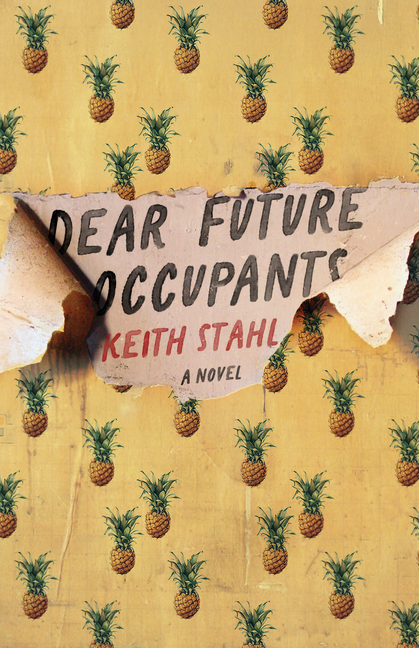
Dear Future Occupants

Keith Stahl

University of Wisconsin Press | $19.95 | 9780299359843

Keith Stahl's first novel, Dear Future Occupants, relates the poignant, madcap adventures of a dysfunctional but essentially loving family. In March of 1979, Bud Sommer moves his family back to Greenhill, Conn., having inherited his childhood home, a massive, crumbling 17th-century estate. Bud, a sometimes painter and aspiring restaurateur, also used his wife Rebecca's inheritance to purchase a nearby diner. Joining Bud and Rebecca are their middle-school-aged sons, Victor and Wade; their eldest son, Herman, who has spent recent years hitchhiking around the nation; and the family dog, named The Dog. Victor begins running around with the "lav rat" kids, who smoke in the restrooms. Meanwhile, his little brother, Wade, a piano prodigy, experiences one accidental injury too many and chooses to wrap himself in bubble wrap around the clock. Long-haired Herman likes to wear women's clothing, to the great distress of his parents. A literal skeleton is discovered in the basement of their dilapidated home, and a local adjunct professor moves in to study it. One absurdity after another plagues this motley household, until it seems that something will have to give.

Against the backdrop of conservative small-town Connecticut in 1979, the Sommers grapple with concepts of family, sexual identity, counterculture, and drug and alcohol use. With pathos, humor, compassion, and great energy, this novel offers a moving examination of the meaning and acceptability of Herman's cross-dressing and the value of family--in general and in this sweet, troubled individual case. Dear Future Occupants is arguably about the tension between conformity and authenticity in the Sommers' impact on a larger world. The result is preposterous, exuberant, and tender. --Julia Kastner, blogger at pagesofjulia

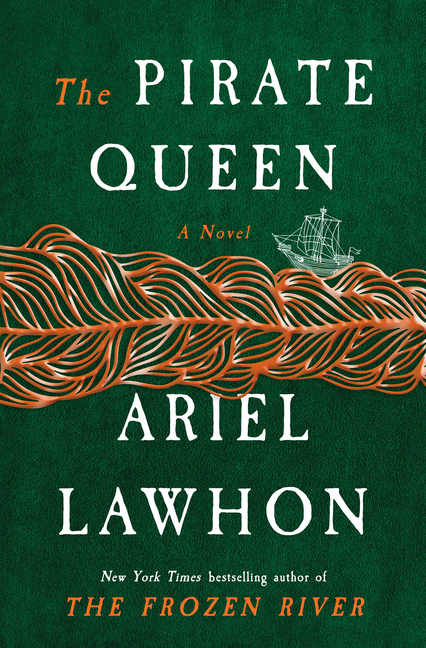
Ariel Lawhon's sweeping seventh historical novel follows the naval exploits and complicated personal life of Grace O'Malley, Ireland's legendary pirate queen.

The Pirate Queen

Ariel Lawhon

Doubleday | $32 | 9780385550345

Ariel Lawhon's sweeping seventh historical novel, The Pirate Queen, traces the life of Gráinne Ní Mháille (Grace O'Malley), the legendary female Irish chieftain and privateer whose naval exploits and devotion to her clan were unparalleled. Lawhon braids the story of Gráinne's life in three alternating narratives: Maiden, Mother, and Matriarch, delving into each time period to highlight different facets of her fierce, shrewd, complicated protagonist.

Lawhon (The Frozen River) paints an atmospheric portrait of 16th-century Ireland, populated by rival clans living in isolated villages and fortified castles, connected by intricate alliances of marriage and battle. Grace, firstborn daughter of chieftain Eóin O'Malley, longs to go to sea with her father but finds herself hampered by superstitions about female sailors and her culture's expectations for young women. As she grows, Grace learns the feminine arts of household management and social diplomacy, but she also becomes a skilled sailor determined to make her own mark in Irish (and perhaps other) waters. As an adult, she defies her tyrannical husband, sailing her beloved ship Niamh to defend her homeland from English colonizers and other foreign invaders. Her years-long pitched conflict with English governor Richard Bingham eventually brings her to the attention--and the court--of Queen Elizabeth I. Meanwhile, between sailing trips, Grace fights to nurture and protect her children, her kinspeople, and her four stalwart guards, who stand by her until the very end.

With swashbuckling battle scenes and intimate moments of love and loss, The Pirate Queen is an evocative account of a woman who fought relentlessly to live--and sail--as she pleased. --Katie Noah Gibson, blogger at Cakes, Tea and Dreams

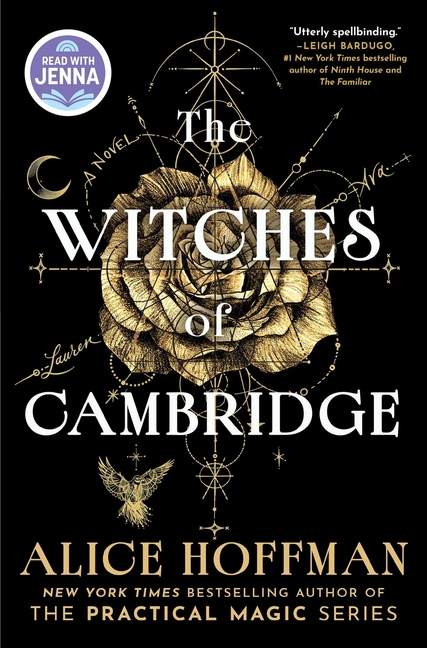
In Alice Hoffman's evocative novel, two women in an exclusive Radcliffe society in the 1950s embrace their ancestors' magic, and history offers a reminder of the threat of intolerance.

The Witches of Cambridge

Alice Hoffman

Scribner | $29 | 9781668074640

Following her 30 fiction books, which include the four-book Practical Magic series, Alice Hoffman's atmospheric novel The Witches of Cambridge merges magic and history. Hoffman links the narrative of the first witch of Cambridge, Mass., who arrived in Boston from London in 1692, with the stories of two women enrolling in Radcliffe College in 1950.

Raised on an isolated orchard in Maine, Ava has always known she was different, and a Radcliffe scholarship offers a longed-for escape. Lauren, a privileged Cambridge native, seems an unlikely friend. But when both are invited into the Lilith Society, established in 1693 "as a safe haven in the marshes of Cambridge" where women study "the Unnamed Art," they discover their shared legacy. At Harvard, the men's college at which Radcliffe formed in 1879, Jamie Mather, the 10th-great-grandson of "the most heartless man who had influenced the Salem witch trials," is smitten with the beautiful redhaired Ava. But because of the terrifying truth of his heritage, he must shun her.

Although the characters struggle with typical coming-of-age issues, their witchy talents guide their actions. Magic permeates the story--blood runs black, 12 crows follow Ava, the women learn charms and spells. Meanwhile, Hoffman includes details of the Joseph McCarthy-era political witch hunts that "persecuted left-wing intellectuals and artists," which parallel the 17th-century trials in Salem that targeted Ava's and Lauren's ancestors, lending immediacy to this evocative novel, the enticing first in a planned series. --Cheryl McKeon, Book House, Albany, N.Y.

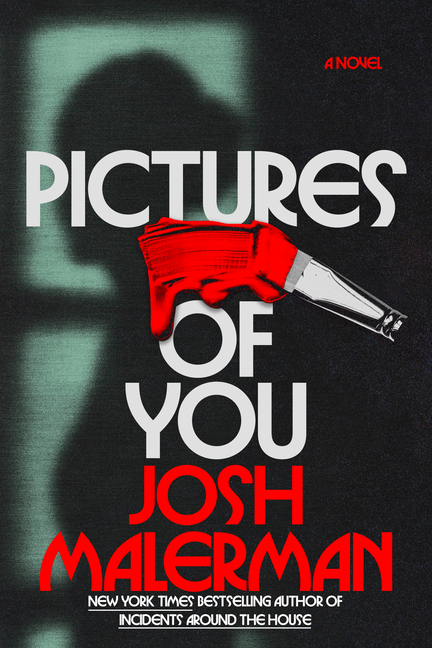
A woman must suffer for someone else's art in this claustrophobic suspense novel.

Pictures of You

Josh Malerman

Del Rey | $29 | 9780593723159

A sinister artist forces a woman into captivity to achieve her "vision" in Pictures of You, an intricate and surprising work of suspense from Josh Malerman (Unbury Carol; A House at the Bottom of a Lake).

Emily awakes the morning after a night out with her boyfriend, Jack, unsure of where she is. Even more disturbingly, she doesn't recognize the dress she's wearing. She can see the silhouette of a woman watching her through an empty frame. The woman warns her not to move and tells her that Jack will come to harm if Emily leaves "her piece." Trapped in a crazed version of a masterpiece with no hint of what will happen to her when it is finished, Emily must figure out how this would-be artist thinks and manipulate her way into a chance at escape.

The novel begins in medias res, disorienting readers in a way that's similar to how Emily feels under the effects of what she soon realizes is more than a hangover. Pictures of You's chapters alternate between Emily after she wakes in the strange room and scenes from the night before, which she spent out on the town with Jack. Hints emerge that the artist's abduction of Emily wasn't an arbitrary choice. The pre-kidnapping chapters provide glimpses of Emily and Jack's relatively new but increasingly serious relationship, intensifying the stakes for both of them to make it through the ordeal safely. Malerman's thriller presents a case of obsession that would do Patricia Highsmith proud. --Kristen Allen-Vogel, information services librarian at Dayton Metro Library

Princeton University Press: Monstrous Bitch: A History of Terrifying Women by Eleanor Johnson
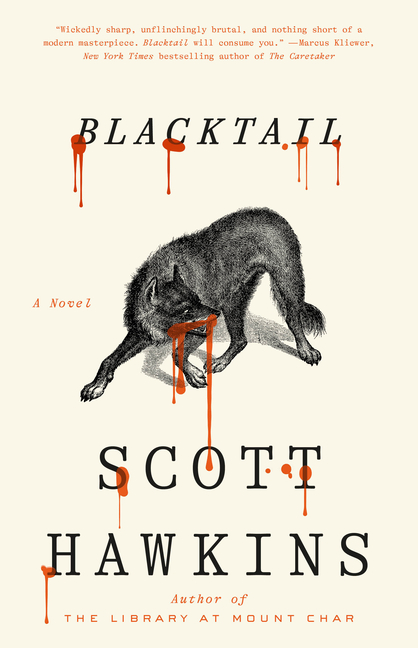
This second novel from cult favorite horror author Scott Hawkins introduces a half-wolf messiah on a quest to remind the world's animals of their feral nature.

Blacktail

Scott Hawkins

Crown | $29 | 9798217089963

In his highly anticipated sophomore work, Scott Hawkins (The Library at Mount Char) expands his eccentric bibliography with a novel told from an animal point of view. The titular character of Blacktail is "half wolf" and experiences compounding traumas early in his life--the death of his family, mate, and puppies, all caused, one way or another, by humans. He attacks those responsible, unknowingly setting off a chain of events that reverberates along a supernatural, bestial grapevine to catch the attention of an ancient feline witch. This revered figure petitions Blacktail to go on a perilous, lengthy journey to the realm of the Forest God on behalf of the animal kingdom, which has mostly lost its veneration for "the hunt" in subjugation to the "two-legs." The long-sleeping god needs to be awakened to save the world's creatures from the scourge of humanity, and Blacktail is the one to carry this burden. He sets off on a quest beset by horrific wonders and mortal wounds, uncertain how he will find the Forest God--and what might happen when he does.

While this tale of a lupine messiah is not for the faint of heart, it's as engrossing and intelligible as it is strange and gruesome. Hawkins depicts animals desperately devoted to survival, their deities, one another, and--infrequently--humans. Underpinned by questions about faith, respect, and obligation, Blacktail sweeps readers along a magical and emotional exploration of the wildness buried within the creatures around them, who may still remember the hunt in their bones. --Kristen Coates, editor and freelance reviewer

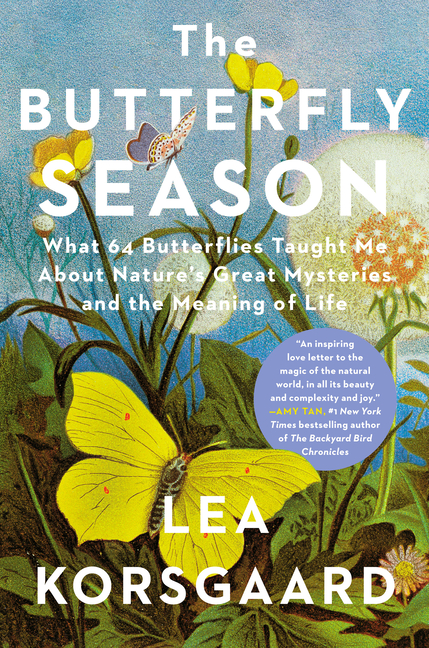
Danish journalist Lea Korsgaard undertakes to see all 64 of the country's butterfly species in a year and turns the resulting journey into a philosophical rumination on change, loss, and wonder.

The Butterfly Season: What 64 Butterflies Taught Me About Nature's Great Mysteries and the Meaning of Life

Lea Korsgaard, trans. by Sherilyn Nicolette Hellberg

Knopf | $32 | 9798217208869

In 2022, journalist Lea Korsgaard set out to see all 64 of Denmark's butterfly species within a year. The Butterfly Season, her first book available in English, translated from Danish by Sherilyn Nicolette Hellberg, is an engaging record of that quest and a profound meditation on metamorphosis, extinction, and connection with nature.

Compared to other year-challenge books, The Butterfly Season is heavier on historical research and philosophical reflection than the practicalities of the journey. She delves into the cultural significance of butterflies, often associated with spirits and eternal life. Indeed, Korsgaard's mother attributes glimpses of small tortoiseshells in significant moments to the continued presence of her late mother; the author's first sighting of the season was a small tortoiseshell in March.

For expert advice and in-the-field guidance, she consulted lepidopterist Michael Stoltze and precocious biology student Emil Blicher Bjerregård. Korsgaard is distressed that few are sounding the alarm over how capitalism and consumerism threaten biodiversity. Her realistic yet melancholy tone risks alienating readers who signed up for lighthearted butterfly-watching japes. However, her prose is lush with lyrical descriptions of landscapes and epiphanies experienced in them. Each chapter ends with a list of the species seen, accompanied by color sketches.

By summer's end, with several species unseen, Korsgaard feared her project was doomed. Yet it had become more than checking butterflies off a list. Instead, she was recapturing the holistic relationship with nature modeled by her family members. This allowed her to genuinely affirm, "This was not the end; this had only just begun." By turns pessimistic and mystical, The Butterfly Season is a nature book for the age of extinctions. --Rebecca Foster, freelance reviewer, proofreader, and blogger at Bookish Beck

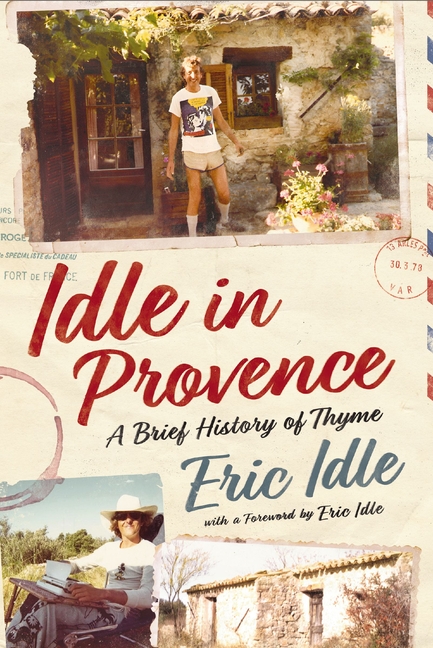
Idle in Provence, a witty memoir by Monty Python member Eric Idle, is the story of the vacation home in southeastern France that he has owned, through many joys and setbacks, since 1971.

Idle in Provence: A Brief History of Thyme

Eric Idle

Harper Select | $29.99 | 9781400256761

Since 1971, Eric Idle (The Spamalot Diaries) of Monty Python, a "semilegendary comedy troupe," has owned a vacation home in southeastern France. Idle in Provence, "a love letter to Provence, a thank-you, and a valentine to my favorite place," is a charming memoir that is equal parts cheeky and surprisingly melancholy. Idle and his first wife wanted a getaway from showbiz. She found the perfect spot, a forested property on a terraced hillside. It was idyllic, except for one small problem. The dwelling "was a total disaster," with rotted exterior doors and "no bedroom, no kitchen, no bathroom, no drains, no toilet, no plumbing, no floors, no windows, no fireplace, no chimney, no ceilings, no heating, no road, no electricity, no gas, and--ah, yes--no water." So, of course, they bought it.

What follows is a lovingly detailed account of the transformation of this "dream wreck" into a habitable home for himself and his second wife. Idle amusingly describes the challenges they faced, such as having to drill through 75 meters of limestone to find water and fishing an "ex-squirrel" out of the septic tank. He also dealt with personal trials, including the collapse of his first marriage, his pancreatic cancer scare in 2019, and his daughter's institutionalization for bipolar disorder. He handles all of this with a light touch and his customary wit. Idle calls this work "a travel book for people who like to stay home." Indeed, it is: a pleasant holiday with an affable guide. --Michael Magras, freelance book reviewer

Globally renowned author Isabel Allende meditates on her writing life, and in doing so, dispenses advice for those who want to consider how and why they write.

Story Telling: A Writing Life

Isabel Allende

Ballantine | $26 | 9798217094639

"Writing has defined me.... It's the lens through which I examine my presence in the world," opens Story Telling: A Writing Life. Isabel Allende (The House of the Spirits; My Name Is Emilia del Valle) has written roughly 30 books in her career and is read in more than 40 languages, but Story Telling is a singular addition to her oeuvre. Both a memoir and meditation on her writing life, this 11-part work outlines how she approaches her novels, her techniques, and the lessons she has learned about writing.

Story Telling, importantly, is neither a how-to guide nor lessons on how to create a bestselling novel. Rather, Allende is considering the power of words in society and as connections between people. Every chapter reads like a master class on studying one aspect of her writing process, demonstrating again and again the intimate care that goes into crafting a story. Wisdom on learning, on editing, and even on being willing to discard precious words abounds.

Story Telling is an impassioned defense of the labor and the art of writing, of recording the world as it could be as well as the horrors with it. Allende discusses how research underpins fiction and how writing has called her to scrutinize the world closely from many angles. Allende says: "Stories play a fundamental role in our lives and in society. They shape our reality, they define us as individuals: who we are, what we do, how we relate to each other, the ideas we have of ourselves and that others have of us." --Michelle Anya Anjirbag, freelance reviewer

Granta Magazine: Granta 176: American Berserk edited by Thomas Meaney
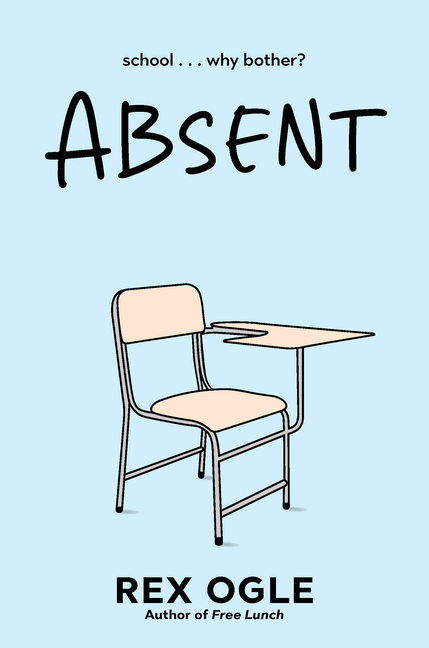
Three middle school boys detail their complicated relationship with attending--and not attending--school in this dynamic and emotional mixed-format novel.

Absent

Rex Ogle, illus. by LJ-Baptiste

Norton Young Readers | $17.99 | 9781324124894

Stonewall Book Award Honor winner Rex Ogle (Road Home) continues his fearless run of emotionally layered storytelling showcasing the complicated lives of teens in the nuanced and gripping Absent, a stirring mixed-format story of three middle school boys who can't seem to make it to school.

Manny Fueyo, Calvin Johnson Jr., and Liam Miller don't know each other. They all, however, keep journals of sorts tracking their days in--but mostly out--of Lincoln Heights Middle School. Manny, who spends his school hours at the skate park, is a lyricist who mourns his incarcerated father and expresses his anger by writing in his "BOOK O'RHYME$!!" Calvin is an artist whose comics show his efforts to get to school on time, only to be thwarted by the responsibilities laid upon him by his single dad. Liam uses a graph-ruled notebook for his meticulous accounts of being bullied and experiencing increasingly sharp panic attacks: "It's this... bad, awful, terrifying feeling." When all three are sent to detention for their absenteeism, they form a bond that helps make each day in school a little bit easier.

Ogle was inspired by his visits to schools where educators told him students missing class was their number one problem. This, combined with his own experience as a teen who had to skip school, forms the bedrock of Ogle's genuine and at times gut-wrenching novel. Illustrator LJ-Baptiste's grayscale art is expressive, entertaining, and exciting, making Calvin's comics shine bright in a book that delves into some dark places. Absent never condescends to its readership; it's an impeccably paced novel loaded with pathos, humor, and grace. --Luis Rendon

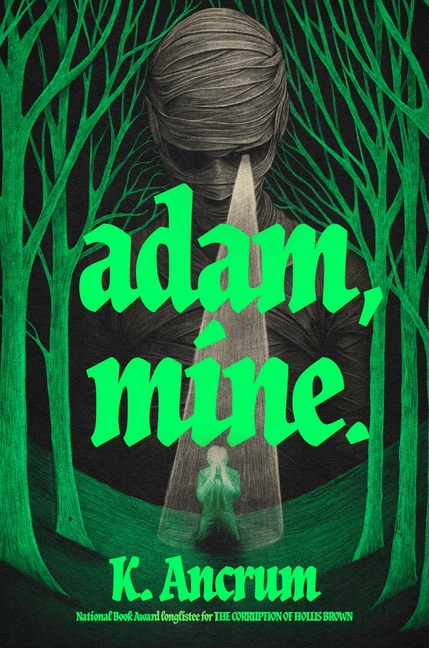
K. Ancrum's gripping reimagining of Mary Shelley's Frankenstein nods to the Romantic movement while warping the fine line between human and monster.

Adam, Mine.

K. Ancrum

HarperCollins | $19.99 | 9780063449022

Adam, Mine., the sixth young adult novel by National Book Award longlisted author K. Ancrum (The Corruption of Hollis Brown), is a stunning love letter to Mary Shelley's Frankenstein that highlights its central characters' capacities for humanity and monstrosity.

In 1890, 17-year-old Victor Frankenstein toils away as an alchemy student, sneered at by peers who deem his medical interests a grotesque perversion. Victor is insistent that by the time he graduates, he will have found a way to bring the dead back to life. But after repeated failures, his desperation reaches a fever pitch. When Victor meets soft-eyed Elias Hilfiker, an 18-year-old barkeep with "sugar sickness" (diabetes), Victor justifies violence against the bartender by calling him "a man with nothing to lose and everything to gain." Victor abducts Elias and uses an untested alchemical spell to feign Elias's resurrection. But Victor is unprepared for one of the invocation's results: the young men become irrevocably bound.

Frankenstein has been reinvented countless times, many of the iterations constructed through the lens of scientific ethics and philosophy. But Ancrum, less interested in a faithful retelling than in the emotion behind Shelley's novel, creates instead a warped mirror: her characters make magic instead of science and cheat in place of performing miracles as she plucks at the thread of connection between people who have wronged each other. Ancrum honors the Romantic movement to which Shelley belonged with prose that slices and soothes--but her greatest trick is the subtle sleight of hand that blurs the line between human and monster, demanding that readers reconsider which is which. --Mariel Fechik DesLaurier, librarian, freelance reviewer, music journalist

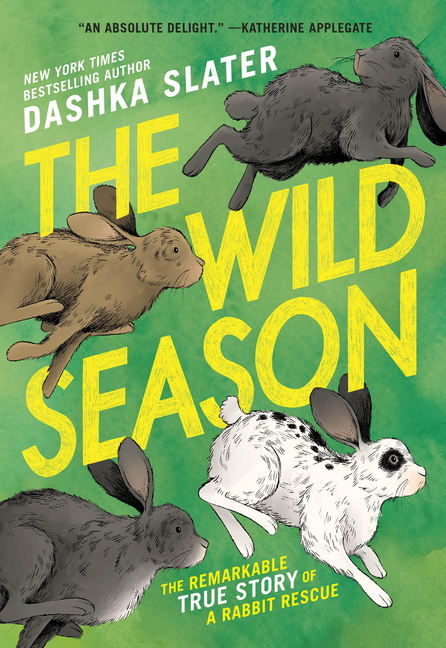
In this captivating and thoughtful middle-grade narrative nonfiction, a neighborhood search party seeks four wily domestic rabbits abandoned in a park.

The Wild Season

Dashka Slater, illus. by Jamey Christoph

Little, Brown Books for Young Readers | $18.99 | 9780316596275

A neighborhood races to bring four dumped domesticated bunnies to safety in the keen and courageous middle-grade nonfiction work The Wild Season by Stonewall Book Award winner Dashka Slater (The 57 Bus), in which the heroes are those who pay careful attention.

"One night in June 2023, someone approached a small park in San Francisco carrying bunnies." This person, "the Bunny Dumper," abandoned all four rabbits in Golden Gate Heights Park, a space that serves as a "communal backyard" for the houses along its border. The animals, accustomed to being fed by humans and nowhere near as afraid as "a wild rabbit needs to be," were unsuited for park life. The community--including children and adults--assembled a team to find and trap the bunnies before they could be eaten by predators or overrun the park. The "bunny search party" fought thorn bushes and public misconceptions (including the notion that the bunnies would be happier in the park) as they learned "to think like rabbits."

Slater uses a congenial, friendly tone and gives multilayered, textured context. She focuses one chapter on the domestication of dogs and includes passages addressing the evolution of hunting. She also describes the history of the park, depicting it as a little magical, a place that blurs the urban and wild, the mysterious and known. Realistic black-and-white illustrations by Jamey Christoph (Bones in the White House) root readers in the concrete world of the park and add an ethereal touch. The Wild Season is as inspiring as it is sincere. --Ari Mackoff, bookseller

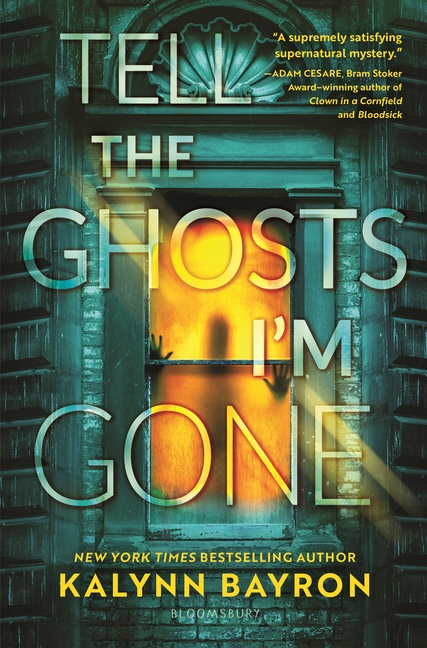
Tell the Ghosts I'm Gone is a captivating and suspenseful YA horror mystery about four Black teens with supernatural abilities who investigate a haunted mansion.

Tell the Ghosts I'm Gone

Kalynn Bayron

Bloomsbury YA | $20.99 | 9781547615896

Tell the Ghosts I'm Gone by Kalynn Bayron (Sleep Like Death) is a tense and energizing YA paranormal horror mystery that follows four teens who use their superpowers to uncover dangerous secrets.

Sixteen-year-old Moll's misfit friends are all fostered by Moll's magic-working mother, Hannigan, in Portland, Ore. The Black teens are "not related by blood," but "something much stronger": each, like Hannigan, has a supernatural ability. Moll can read and manipulate people's emotions; Redd, 17, can influence thoughts; Agnes, 18, is psychic; and Ossie, 13, can command rats. The four teens want to use their powers to investigate hauntings and help people with paranormal problems, hoping that one day they "won't have to harbor [their] abilities like some terrible secret." They develop a website, The Oculus, to find cases. While their first mission is successful, their next is unnerving. The owner of Alister's, a coffee shop run out of a Victorian mansion, claims that customers often get lost inside the home and a young woman recently disappeared. The teens' investigation reveals deadly mysteries, occult legacies, and more about their own mysterious powers.

Bayron develops a compellingly eerie mystery about Black teens, some of whom are queer, as they explore their identities, superpowers, and painful pasts while developing a deep sense of belonging. Through Moll's first-person perspective, Bayron builds a powerful friendship and complex family dynamic while also referencing spiritualism and paranormal history. Tell the Ghosts I'm Gone highlights how being "gifted" can feel both empowering and isolating and creates emotional moments that are just as captivating as the scary ones. --Natasha Harris, freelance reviewer

The Writer's Life

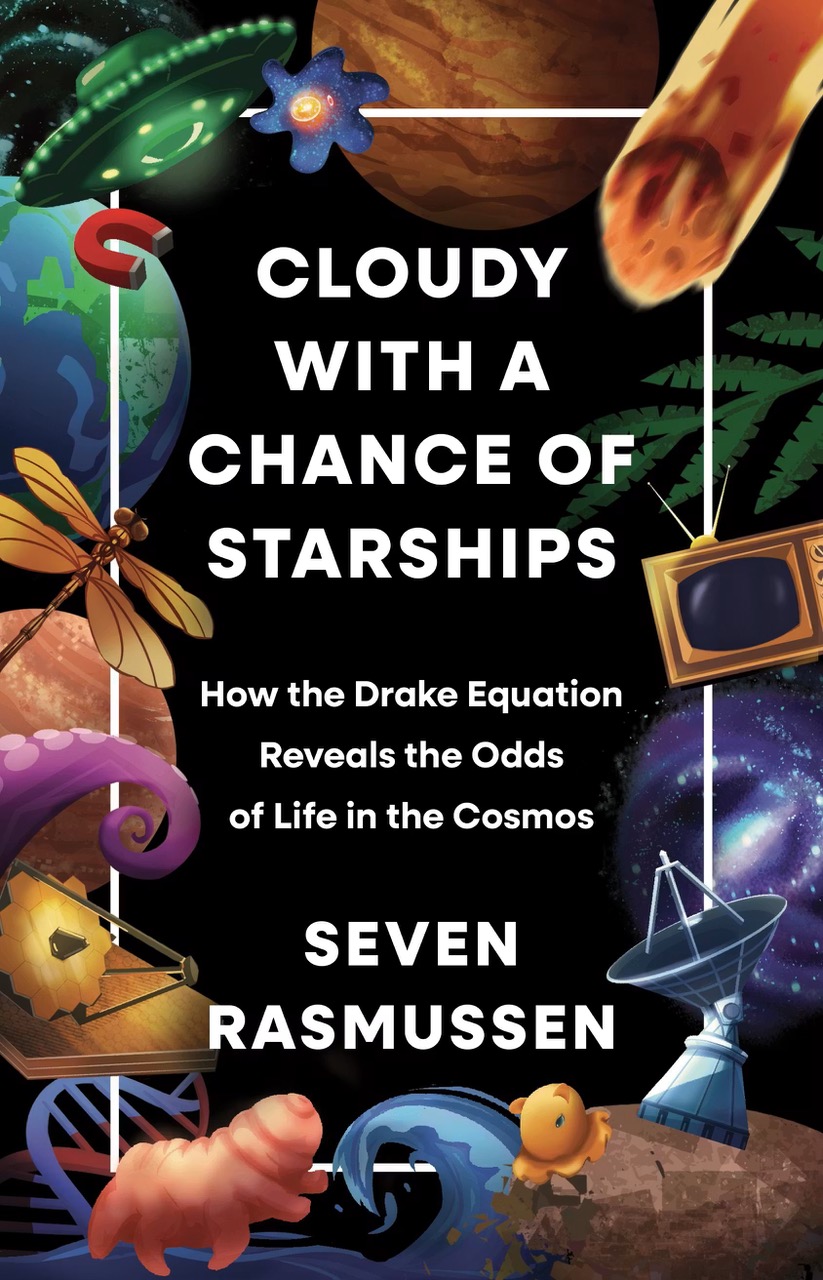
Seven Machina Rasmussen is an astrobiologist and the author of Cloudy with a Chance of Starships. She may have also been created in a lab from the remnants of a crashed UFO in an audacious attempt to create the world's gayest computer, but there's a lot more to the story than that! Find out how wandering around a bookstore convinced her that she should study astrophysics and whose work she considers to be the best science fiction of the decade.

The Writer's Life

Reading with... Seven Rasmussen

Seven Machina Rasmussen 
(photo: Cade Twilley)

Seven Machina Rasmussen was created in a lab from the remnants of a crashed UFO in an audacious attempt to create the world's gayest computer. Government officials claimed under duress that she is an astrobiologist, author, and science communicator. Rasmussen also writes science fiction under the pen name C.M. Fields, with recent works appearing in Clarkesworld, Diabolical Plots, and Neon Hemlock. She haunts the Internet as @toomanyspectra, and blurry images of her corporeal form occasionally manifest in Brooklyn. Her debut nonfiction is Cloudy with a Chance of Starships: How the Drake Equation Reveals the Odds of Life in the Cosmos (Princeton University Press).

Handsell readers your book in 25 words or less:

Are we alone in the universe? Princeton University Press asked astronomy's gayest and most terminally online autist to find out.

On your nightstand now:

Books that live on my nightstand, in my bed, and wedged between the box frame and the wall. Which ones am I actually actively reading? I'll never tell.

House of Leaves by Mark Z. Danielewski
A Larger Reality, collection of essays and poetry by Ursula K. Le Guin and commentary from scholars
One Hundred Years of Solitude by Gabriel García Márquez
The Complete Stories by Clarice Lispector (translated by Katrina Dodson)
Entangled States by Karmela Padavic-Callaghan
The Secret Lives of Color by Kassia St. Clair
The Edge of Space-Time: Particles, Poetry, and the Cosmic Dream Boogie by Chanda Prescod-Weinstein
Make Me Better by Sarah Gailey
Work to Do by Jules Wernersbach

Favorite book when you were a child:

The Chronicles of Narnia! I would read all seven books back-to-back over and over again. I still have the omnibus, which has a million water stains because I would read it in the bathtub. I was just so completely pulled into the storytelling. In my fiction, I'm always trying to re-create that complete absorption that captivated me as a child. And when I was very little, I loved Lewis Carroll's Alice's Adventures in Wonderland so much that I had the entire book memorized. My mom would take me and my book to parties and amaze people with her toddler who could read.

Your top five authors:

N.K. Jemisin's Broken Earth trilogy and short story collection, How Long 'Til Black Future Month, I consider to be some of the best science fiction of the decade. Dan Simmons wrote my favorite sci-fi series, the Hyperion Cantos. That's my gold standard of world-building. Jeff VanderMeer (the Southern Reach series) writes the weirdest, most brain-melting prose I've ever had the pleasure of reading. Ursula K. Le Guin (The Left Hand of Darkness) is the intellectual equivalent of staring at the sun (incomparably brilliant). Tamsyn Muir's Locked Tomb series taught the power of committing to an absolutely insane premise so hard that it permanently alters the brain chemistry of gay people around the world.

Book you've faked reading:

This is really terrible of me, but I've never read Contact by Carl Sagan. I've never even seen the movie. I have read several books by Sagan, I've met Jill Tarter (on whom the book is based), and I like to think I'm in the top 100 people the government would abduct to Area 51 to attempt first contact, but I have not read Contact. This is my cross to bear.
Book you're an evangelist for:

I am the #1 fan of the Soviet dystopian novel We by Yevgeny Zamyatin. We may have inspired both Aldous Huxley's Brave New World and George Orwell's 1984. It was the first book the Soviet Union banned as an act of censorship, so in 1924 it was smuggled to the United States and published there. It was only unbanned in the Soviet Union in 1988. I have TWO tattoos about We: one is of the antihero, I-330, and the other is the words NO FINAL REVOLUTION from my elbow to my wrist.

Book you've bought for the cover:

A novella called The Lies of the Ajungo by Moses Ose Utomi. I saw a signed copy at Wondercon 2024 and the cover absolutely blew me away. It's a great read too!

Book you hid from your parents:

I'm not sure how this happened but when I was 11, my grandmother passed away and I inherited her Nora Roberts collection. So before I ever took what passed for sex ed in my hometown I was reading '90s/'00s bodice rippers like The Calhoun Women series and Carolina Moon. This probably had no effect on my psychosexual development or romantic expectations.

Book that changed your life:

Okay, this is genuinely a crazy story. In high school I wanted to be a band director, but an internship at a local elementary school convinced me that I was not cut out to teach public school. So around graduation I quit my music major and had absolutely not the slightest clue what to do with my life anymore. But one day my parents went to the Sears at the mall for car tires and left me to wander around by myself. I walked into the Borders and saw a book on the front table called The Grand Design by Stephen Hawking and Leonard Mlodinow. I cannot tell you why I, a C student, decided to pick up a book about astrophysics. But I did. And you know what. It was written so accessibly that it convinced me in one afternoon that I could be an astrophysicist. And the rest is history.

Favorite line from a book:

In my humble opinion, the single greatest line ever penned is this one by Douglas Adams in The Hitchhiker's Guide to the Galaxy: "The ships hung in the air in much the same way that bricks don't." Brilliant. The pinnacle of literature. Imagine having the audacity to craft such a bold simile. This sentence alone makes Adams one of the greatest science fiction authors of all time.

Five books you'll never part with:

Annihilation by Jeff VanderMeer (signed in 2018)
The Scarlet Letter by Nathaniel Hawthorne (my high school copy)
Their Eyes Were Watching God by Zora Neale Hurston
An Introduction to Modern Astrophysics by Bradley W. Carroll and Dale A. Ostlie
Steering the Craft by Ursula K. Le Guin

Book you most want to read again for the first time:

The Traitor Baru Cormorant by Seth Dickinson. Absolute banger. Insert 100 fire emojis here. It's got festering lifelong thirst for revenge. It's got lesbians. It's got the most elaborate fantasy economics system I've ever read in my life. The prose alone makes me shake my fist at the heavens and rend my clothes. Every time I think about Dickinson's descriptions of scenery I want to chew on batteries. Seth if you are reading this, please take all the time you need to perfect Book Four. Also please come to my biweekly art salon here in Bushwick.


Book Candy
Rediscover

Gloria Steinem, journalist, author, editor, and feminist activist, died earlier this month at age 92. "Ms. Steinem helped usher in sweeping cultural transformations across virtually every facet of American life, from the boardroom to the courtroom to the bedroom," the New York Times wrote. "For more than half a century, she personified the women's movement and became its most enduring symbol." An autobiography, An Unexpected Life: A Memoir, is being published by Random House on September 22.
Rediscover

Rediscover: Gloria Steinem

Gloria Steinem, journalist, author, editor, and feminist activist, died earlier this month at age 92.

"Calling herself 'an entrepreneur of social change,' Ms. Steinem helped usher in sweeping cultural transformations across virtually every facet of American life, from the boardroom to the courtroom to the bedroom," the New York Times wrote. "For more than half a century, she personified the women's movement and became its most enduring symbol; her tinted aviator glasses and curtain of streaked-blond hair parted in the center made her one of the most recognizable women in the world....

"Her own feminist awakening didn't come until her mid-30s, when, as a journalist in 1969, she attended a 'speak out' of women discussing their illegal abortions. Charismatic, articulate, media savvy, deeply empathetic and a workaholic, she evolved into a political and cultural force."

In the 1960s, she was a prolific freelance journalist, contributing to a variety of publications. In 1968, she helped found New York magazine, where she wrote a regular political column. In 1971, Steinem co-founded Ms. magazine, the ground-breaking feminist magazine, and was an editor there for 15 years. Among many other achievements, she also co-founded the Ms. Foundation for Women, the Women's Media Center, and Equality Now, and produced documentaries.

An autobiography, An Unexpected Life: A Memoir, is being published by Random House on September 22. In it, Steinem writes about growing up "a curious child: going on road trips with her itinerant father, caring for her mother, and devouring every book she could find" and her slow awakening to the problems of poverty and women's roles in society, becoming a leading feminist--and the rest of her long, rich life.

Her earlier books were bestsellers and included:

Outrageous Acts and Everyday Rebellions (1983), which includes a variety of essays and material, including her exposé, "I Was a Playboy Bunny"; a tribute to her mother, "Ruth's Song (Because She Could Not Sing It)"; essays on female genital mutilation and the difference between erotica and pornography; and the satire, "If Men Could Menstruate."

Revolution from Within: A Book of Self-Esteem (1992), which draws on her own experiences with a lack of self-esteem as well as those of others, including Mahatma Gandhi.

The Truth Will Set You Free, but First It Will Piss You Off!: Thoughts on Life, Love, and Rebellion (2019), an illustrated collection of inspirational and outrageous quotes by Steinem along with her introduction and essays.

Marilyn: Norma Jean (1986), in which she "revealed the woman behind the myth."

My Life on the Road (2015), in which Steinem discussed the importance of travel. As she explained, "Taking to the road--by which I mean letting the road take you--changed who I thought I was. The road is messy in the way that real life is messy. It leads us out of denial and into reality, out of theory and into practice, out of caution and into action, out of statistics and into stories--in short, out of our heads and into our hearts."

Among her many honors, Steinem received the Penney-Missouri Journalism Award, the Front Page and Clarion awards, the National Magazine Award, the Women's Sports Journalism Award, the Lifetime Achievement in Journalism Award from the Society of Professional Journalists, the Society of Writers Award from the United Nations, the James Weldon Johnson Award for Journalism, and others. In 2013, she received the Presidential Medal of Freedom from President Barack Obama.

PICK OF THE WEEK

Ten Perfect Guests

by Jonathan Santlofer

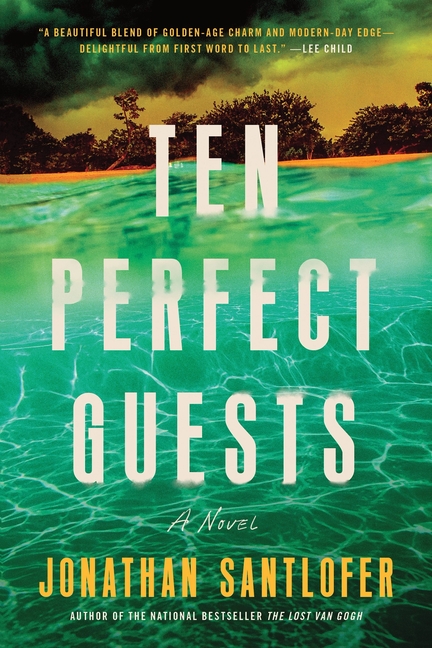
Jonathan Santlofer brilliantly reinvents the closed-circle mystery in Ten Perfect Guests, as 10 flawed, unlikable characters travel to a remote tropical island to learn what (and in some cases, if) they've inherited from a recently deceased, very wealthy artist.

Two rival art dealers, an ex-wife, a lackadaisical son, the current wife, the brother, a failed art critic, a pharmaceutical heiress, a girl no one knows, and a washed-up rock star walk onto an island... except the punchline isn't a joke at all, but the far more sinister threat of death--or perhaps worse, disinheritance. Each has received a custom invitation to the memorial service for the late Victor D'Arcangelo, whose sudden passing has left his immense fortune in question.

For a variety of reasons--debt, pride, desperation, love, resentment, despair, greed, closure--all 10 agree to attend

PICK OF THE WEEK

Ten Perfect Guests

by Jonathan Santlofer

Jonathan Santlofer brilliantly reinvents the closed-circle mystery in Ten Perfect Guests, as 10 flawed, unlikable characters travel to a remote tropical island to learn what (and in some cases, if) they've inherited from a recently deceased, very wealthy artist.

Two rival art dealers, an ex-wife, a lackadaisical son, the current wife, the brother, a failed art critic, a pharmaceutical heiress, a girl no one knows, and a washed-up rock star walk onto an island... except the punchline isn't a joke at all, but the far more sinister threat of death--or perhaps worse, disinheritance. Each has received a custom invitation to the memorial service for the late Victor D'Arcangelo, whose sudden passing has left his immense fortune in question.

For a variety of reasons--debt, pride, desperation, love, resentment, despair, greed, closure--all 10 agree to attend the memorial weekend, held at a remote hotel on a small Caribbean island. Accessible only by boat, and without cell signal, the island that welcomes the group is "part of an atoll... totally self-contained and totally isolated." The hotel is less upscale than the guests expect, and more past its prime, the pediment worryingly inscribed with the Latin Cursum Perficio: "My journey ends here." While the hotel lacks luxury amenities and any staff to speak of, there are comfortable rooms for each guest, a generously stocked pantry, and plenty of flashlights. The well-to-do, spoiled guests are horrified to learn that they're expected to fend for themselves for three whole days before a boat will arrive to fetch them back to the airport.

Santlofer doesn't leave readers questioning what's about to happen to these doomed memorial attendees, although it takes the guests a few beats to come to terms with that destiny themselves. From the one-sentence prologue, it's clear that nothing good is coming their way: "You have to understand. I was going to get caught unless I killed them. I had no choice." From there, Santlofer builds an expertly paced puzzle. As guests start to die one by one, the question becomes not only who the killer is, but who the next victim will be.

Ten Perfect Guests is a thriller in every sense of the word, with a set-up and cast of characters reminiscent of Agatha Christie at her finest. Santlofer pushes the shape of this whodunit well beyond the scope of its locked-island plot, deftly teasing out the backstories of each of the 10 guests on the island in ways that might not evoke sympathy, given the nature of their deceits, but giving nuance and depth to what could easily have felt like flat, one-dimensional villains. They absolutely meet the definition of unlikable in every way: they are selfish, conniving, scheming, presumptuous--and downright mean to one another. Of the Chelsea art dealer, Santlofer writes, "The part of him that had fallen in love with money had murdered the part of him that had fallen in love with art." The European gallerist bullies his way through the world, the abusive voice of his father always in his mind. The widow--who'd been trying to divorce Victor without breaking the terms of their pre-nup--reckons his money will be easier to access now that he's dead. The once-celebrated art critic turned freelance writer seethes over her unjust "retirement" years ago, "her job gone along with her influence and power." The son recalls his artist father demeaning his attempts at visual art; his mother wonders if Victor has left funds for another stint in rehab. The brother longs to return to the past success of his movie career, always overshadowed by Victor's global fame as an artist. The bitter ex-wife, who gave up her own artistic dreams when she married the egotistical Victor, rekindles her affair with the brother. The pharma heiress and her has-been rocker husband loathe each other. And there's also the heretofore-unknown daughter of the late artist. The morally questionable actions of each become even more apparent as guests start to turn up dead. How far will each go to protect their inheritance? And how much farther would they go to protect their own lives?

Ten Perfect Guests is perfectly twisty, with smart reflections on what motivates each of these unlucky guests--both on the island and in the actions that led them there in the first place. An island setting, a series of clues to untangle, and a well-developed and multi-dimensional cast of problematic characters make this a perfect escape, bound to pull readers in, from the ominous opening right up to the final death. --Kerry McHugh

Sourcebooks Landmark, $18.99, paperback, 416p., 9781464234811
Click here to read our interview with Jonathan Santlofer

PICK OF THE WEEK

Jonathan Santlofer: The Art of Unlikable Characters

Jonathan Santlofer
(photo: Douglas Lyle Thompson)

Jonathan Santlofer is an artist and the author of several books, including a memoir (The Widower's Notebook), and works of fiction (The Last Mona Lisa, The Lost Van Gogh). He is the recipient of two National Endowment of the Arts grants, and serves on the board of Yaddo. He lives in New York City. His new novel, Ten Perfect Guests (Sourcebooks Landmark), is a contemporary thriller in which guests are invited to a remote island for a memorial service, only to find themselves stranded, their lives and livelihoods threatened.

You're written numerous books, but you are also a painter, and several of your previous books are about artists. Ten Perfect Guests is, in a way, also about an artist (although the artist in question is dead). How does your work as a visual artist inform your writing, and vice versa?

I had a very serious art career as a painter, and I was actually pretty blessed. I had a very successful career. And then I had this big show in Chicago, and they had gathered the best paintings from museums and collectors, and the place burned down. That was really a turning point, because I only ever wanted to be an artist. I thought it was the only thing I was good at. After the fire, I was having a lot of trouble painting, but I started a novel.

Art school and being a painter are very disciplined. It is flow. It takes a lot of time and physical energy. I would say there's a similarity to almost all creative acts, which is that kind of bond you set up with the thing you're working on. Making marks on a paper or a canvas and reacting to them and putting words down and trying to make sense of them as you go along. They are very, very different. But also very similar.

This book is a different genre for you, after two historical novels. Did you have a different starting point, or a different writing process?

I rarely think about my books in that way. I mean, they're always organic. Although this is the first book that I really plotted ahead of time. Usually I have an idea, I know the beginning very well, and I know where it's going to end up in many ways. But this book I had to think about a bit differently, because having 10 main characters was a huge challenge. I had to figure out ways that I could keep them straight, and the reader could keep them straight. At one point I had charts pinned up on the wall with a little biographical data. I always want to understand my characters and feel a kind of empathy for them. So along the way I wrote biographical sketches of all of them, which I kept adding to and figuring out, even when I wasn't using much of that in the book itself.

I wanted to write a book that had the feel of an Agatha Christie novel, like a nest of vipers. One where nobody was instantly likable at all, which I don't really care about--a character that holds your attention is what I'm interested in.

What makes an unlikable character most fascinating to you?

Someone said to me about this book, "It must have been fun to work with all those nasty people." And, yes, absolutely, it was fun. But I don't really think of them that way. I think of them as a group of really flawed people, and along the way, you learn why they are the way they are.

It's a bunch of brats who get their due, a group of characters invited to a memorial they have to go to or risk forfeiting their inheritance. So the stakes are high for all of them, but many of them are certainly penalized far greater than the harms they caused. I feel something for all of them. They're trapped. They can't leave. Who's going to survive? Will anybody survive?

Is there anyone you sympathized with the most, or enjoyed writing the most?

Perhaps Nicky, the dead man's son. I just came to feel more and more for him and the mistakes he'd made in his life. And here's something--now we're going to have a little mild therapy session. The issues with his father? I had a rough father, and so I think as I wrote him, I wrote some of me into him too; I drew on myself.

But I also I liked the ex-wife, the artist. I kind of loved her, actually.

I don't like the way they all comport themselves in the world, and I'm not saying this is the way you should act, because I don't think it's the way you should act, but I did like them.

What it was like to approach a locked room (or locked island, as it were) mystery? Did it feel confining to you at all as a writer?

You know, the subject of what you're writing demands a certain kind of way that you are saying it. Finding the voice and the way to tell a story is so tied up with the kind of story you're telling. So for this, early on, I knew it had to be an omniscient voice, very close, so that you felt like as you were reading each character. But in fact, it's all one voice, right?

It's not that the island limited me. Or maybe it did in a way that was good: it focused me.

How did you go about preparing to write in this genre?

When you choose a genre, it immediately gives you a certain kind of container, because it has a history. I read a lot of people who I had not read in a long time: Agatha Christie, Edgar Allan Poe (mainly for getting inside the head of the lunatic, which he's so good at). Christie is a plotter. Her plots are kind of amazing.

Everything in the way this book is made is known. Going in, I knew I had a big group of people, the isolation, the different personalities coming together. So, how do you invest that with new life? That was fun part, bringing it into the moment, seeing what you can do with it to make it alive and pertinent right now. --Kerry McHugh

Advertisement

Sourcebooks Landmark: Ten Perfect Guests by Jonathan Santlofer

Kids Buzz
Read what authors have to say about their upcoming books...

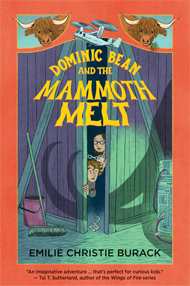
Dominic Bean and the Mammoth Melt

by Emilie Christie Burack, illus. by Anna Bron

KidsBuzz: Groundwood Books: Dominic Bean and the Mammoth Melt by Emilie Christie Burack, illus. by Anna Bron

Dear Reader,

I came across an article about woolly mammoth bones discovered in a bog near where I live in New Hampshire and got chills when I read it--the kind I hadn't experienced since I was a kid. Woolly mammoths! The makings of a great adventure story. Then I learned about current efforts to create hybrid woolly mammoths to help slow down Earth's rapidly melting Arctic permafrost and realized I could weave adventure, science, discovery, and community action into a middle-grade page-turner. I'm hoping your kid readers will agree with #1 NYT bestselling author Tui T. Sutherland that it's "an imaginative adventure with a very relatable hero, a cast of quirky characters... and a bedrock of fascinating science that's perfect for curious kids--plus the world's cutest baby woolly mammoth!"

Enjoy my "mad-scientist shenanigans and a high-stakes climate caper" (Azadeh Westergaard, The One & Only Googoosh).

Emilie Christie Burack
EmilieChristieBurack.com

Buy Now

Dominic Bean and the Mammoth Melt • Emilie Christie Burack • Publisher: Groundwood Books • Middle Grade Fiction • Ages 8-12 • List Price: $18.99 HC - ISBN: 9781779461858 • List Price: $14.99 PB - ISBN: 9781779461179 • Pub Date: Available Now

Powered by: Xtenit