Latest News
Viz Media: Champion of the Rose, Vol. 1 by Cat Aquino and Dominique Duran
July 10, 2026
WHAT TO READ NEXT: REVIEWS OF GREAT BOOKS

I recently asked some fellow readers what they reach for when preparing for a trip. Something breezy and fun, one replied; I'd imagine something like John Searles's "witty, buzzy" novel Single Girls, about Helen Gurley Brown's rise to helm Cosmopolitan magazine. Someone else said they prefer crime fiction; they'd probably go for Karen Odden's The Artful Dodge, an "enthralling... rapidly plotted" mystery about a women-only crime syndicate in Victorian London. Personally, I've been leaning into audiobooks for travel, and my favorites tend to be nonfiction with a strong narrative voice, such as Sophia Smith Galer's "eye-opening journey through endangered languages," How to Kill a Language, or Lixing Sun's "rare and spirited" study of reproduction in nature, On the Origin of Sex. With my earbuds in, my eyes are free to roam the airport and spy on what everyone else is reading.

--Dave Wheeler, senior editor, Shelf Awareness


FEATURED TITLES
Cover

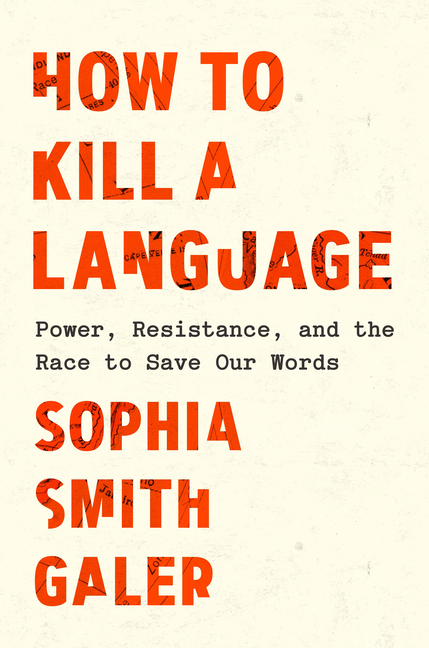
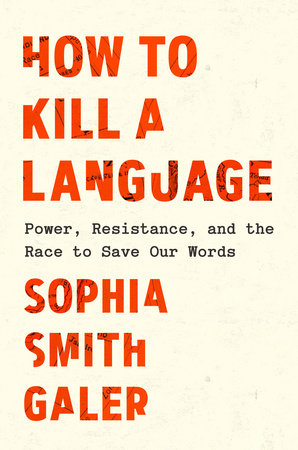
How to Kill a Language: Power, Resistance, and the Race to Save Our Words

Sophia Smith Galer

This eye-opening journey through endangered languages reveals how history and power have shaped the fate of many languages and how vital it is to save them.

How to Kill a Language: Power, Resistance, and the Race to Save Our Words

Sophia Smith Galer

Crown | $33 | 9798217086979

Journalist Sophia Smith Galer provides a fascinating peek into the possible future of many languages in How to Kill a Language: Power, Resistance, and the Race to Save Our Words. Languages are disappearing at an alarming rate: up to half of the world's languages are expected to die out in the next century.

Smith Galer highlights several reasons for this loss; one of these is expulsion. Ladino, a Sephardic Jewish language, survived in Greece for hundreds of years after the Ottoman Empire welcomed the Jews expelled from the Iberian peninsula. However, it largely disappeared when the Ladino-speaking population was again expelled, this time from Greece to Nazi concentration camps. Another cause is exploitation, which devastated Karuk and other Indigenous North American languages as settlers ravaged tribal lands and boarding schools punished children for speaking their native tongues. A final cause is criminalization: the Kurdish language is violently suppressed by the Turkish government, even though Kurds make up almost a fifth of Turkey's population.

Eminently readable and well-researched, How to Kill a Language presents complex linguistic ideas and colonial history in an approachable, journalistic style. Smith Galer frames this study with her own story--her grandmother and mother spoke a dialect of Italian that has almost disappeared, inspiring her to investigate vanishing tongues. Smith Galer takes readers on an armchair journey of exploration, showcasing 10 languages across several continents. Perfect for fans of Mark Abley or David Crystal, How to Kill a Language may inspire readers to seek out and celebrate the linguistic diversity around them. --Jessica Howard, former bookseller, freelance book reviewer

Cover

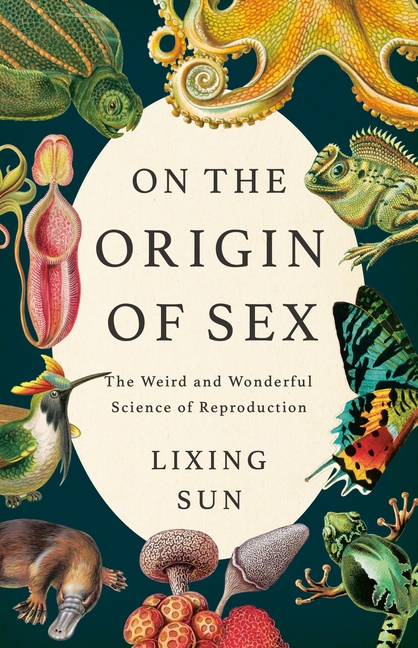
On the Origin of Sex: The Weird and Wonderful Science of Reproduction

Lixing Sun

On the Origin of Sex is a rare and spirited work poised to change not just what readers know but how they see the world.

On the Origin of Sex: The Weird and Wonderful Science of Reproduction

Lixing Sun

Basic Books | $32 | 9781541609174

On the Origin of Sex addresses the compelling question: What is the point of sex? Professor of biological sciences Lixing Sun (The Fairness Instinct) illustrates that asexual reproduction initially seems more efficient from a purely mechanical standpoint. There are no partner requirements--that is, no energy wasted on courtship rituals or competition, and the full complement of an organism's genes passes on to the next generations. Part of the answer is that "sex reshuffles the genetic deck, mixing genes from the broader pool and dealing out fresh combinations with every new generation," thus avoiding the accumulating mutations in asexual reproduction that, over time, can lead to extinction.

Sun's work examines life in all its forms across the globe and is in no way confined to mammals. There are examples of fungi with thousands of distinct mating types, slime molds whose sexual architecture defies easy categorization, plants that toggle between reproductive strategies depending on environmental cues, and fish that change sex not as anomaly but as part of ordinary life. The cumulative effect is a profound correcting of assumptions most readers never knew they held.

Sun doesn't shy away from following science into cultural territory. Questions about the biological basis of human sex and gender are addressed with a winning combination of empirical rigor and engaging writing. Sun reports what the biology shows and what it cannot yet resolve with the confidence of a researcher who has spent his career in conversation with his subject. On the Origin of Sex: The Weird and Wonderful Science of Reproduction excels at making complex population genetics and evolutionary modeling feel both intuitive and entertaining. --Elizabeth DeNoma, executive editor, DeNoma Literary Services, Seattle, Wash.

Sourcebooks Landmark: Most Ardently Yours by Freya Sampson
Cover

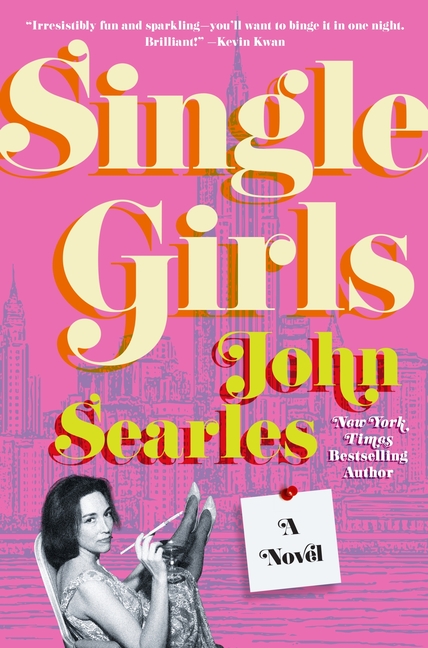
Single Girls

John Searles

John Searles's frothy, fizzy novel traces Helen Gurley Brown's transformation of Cosmopolitan magazine, gathering an all-female team to write smart, edgy stories that made single women feel seen.

Single Girls

John Searles

Mariner Books | $30 | 9780063485631

John Searles's frothy, fizzy fifth novel, Single Girls, charts the unlikely success story of self-professed "mouseburger" Helen Gurley Brown and the crackerjack team of female writers and editors she assembled to transform Cosmopolitan magazine in the mid-1960s. Searles (himself a former Cosmopolitan editor) dives into Helen's personal life, her complicated relationship with her mother and sister, and the inner lives of the half-dozen women who took a chance on Cosmopolitan--and on Helen.

Searles (Her Last Affair) begins with the 1932 elevator accident that killed Helen's father, Ira. As with much of the book, the incident is true and the details around it are imagined. Searles returns repeatedly to that pivotal moment as he explores Helen's fraught bond with her sister, Mary Eloine, and their difficult mother, Cleo. Searles takes readers through Helen's early years working as a secretary and copywriter in Los Angeles, her marriage to film producer David Brown, and their move to Manhattan in the wake of her smash hit book Sex and the Single Girl. When Helen gets the chance to turn around Cosmo's fortunes, she recruits a half-dozen writers and editors, some of them unlikely: a department-store window dresser, a bartender with a secret, a typist besotted with a married man. Together, the women fill the pages of the magazine with sharp, well-written, slightly edgy stories aimed at single female readers, trying to keep the (male) higher-ups happy while pushing the envelope.

Witty, buzzy, and full of magazine-worthy descriptions of midcentury fashion, Single Girls offers an entertaining look into the world of publishing and a tribute to the unassuming editor who revolutionized women's magazines. --Katie Noah Gibson, blogger at Cakes, Tea and Dreams

Cover

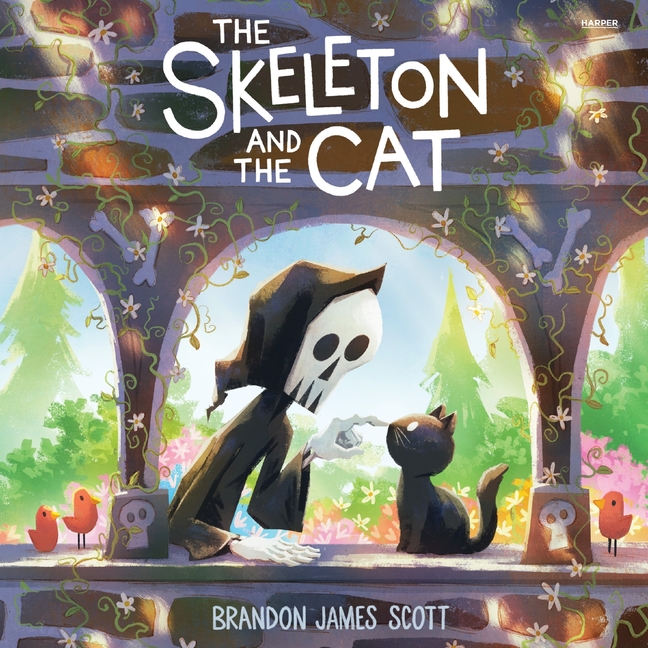
The Skeleton and the Cat

Brandon James Scott

Five understated episodes in this tender picture book trace the unlikely bond between a solitude-loving skeleton and the cat who refuses to stay outside her door.

The Skeleton and the Cat

Brandon James Scott

HarperCollins | $19.99 | 9780063455887

The tender and visually radiant The Skeleton and the Cat by Brandon James Scott (illustrator of A Bear, a Fish, and a Fishy Wish) is a picture book consisting of five short stories that each convey large emotional range.

In miniature chapters, Scott transforms a modest premise into a meditation on companionship, curiosity, and the gentle disruption of solitude, all through the coming together of an unlikely pair: a skeleton and an insistent black cat. Skeleton--cloaked in black, and perfectly content with her "simple and quiet" routine--lives alone and relishes the lack of "interruptions." Her calm is upended with "The Knock": Cat introduces himself and asks to be let in. Despite Skeleton's initial "no," the cat charms his way across the threshold with a well-timed (bad) joke. What follows is a friendship that builds through small, everyday encounters.

Scott's writing is economical with precise comedic timing. The humor often arises from the characters' matter-of-fact exchanges or from Skeleton's literal-minded attempts to navigate seemingly ordinary tasks. These moments keep the tone light while the emotional arc--Skeleton gradually letting someone into her carefully ordered life--unfolds. Visually, Scott draws remarkable expression from two characters who both technically lack mouths. Scott is particularly effective at illustrating light as it streams through windows and floods the garden, allowing for the supposedly macabre protagonist to feel cozy. This captures the book's spirit: awkward, exuberant, and jolly. The final page ends with a teasing "The End?" It's a fitting close for a book that will make readers hope for more stories with this winning partnership. --Julie Danielson

Sourcebooks: Lost in Curiosity: Field Notes from Scientists' Adventures Into the Unknown by Roberta Kwok
BOOK REVIEWS
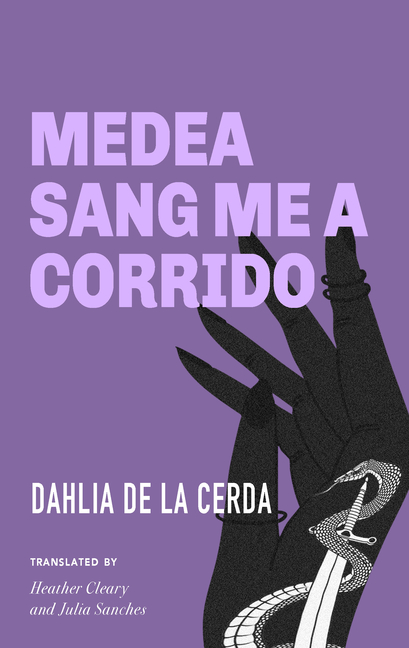
Mexican author Dahlia de la Cerda exposes male violence while bearing witness to feminist resilience in her provocative novel-in-stories.

Medea Sang Me a Corrido

Dahlia de la Cerda, trans. by Heather Cleary and Julia Sanches

Feminist Press | $17.95 | 9781558613669

Mexican author Dahlia de la Cerda reunites with translators Heather Cleary and Julia Sanches after her debut, Reservoir Bitches, was longlisted for the 2025 International Booker Prize. In Medea Sang Me a Corrido, she connects six chapters for a disturbing, illuminating novel-in-stories, interlinked through repeated appearances of Medea--yes, the mythical Medea who, betrayed by Jason of the Argonauts, murdered their children as punishment.

This novel's sorceress is an avenging feminist enabler in Aztlán, the mythic Aztec homeland that's not unlike the Mexico in which de la Cerda resides. She assists two young women with abortions--the first because her gangster boyfriend goes missing, the second because she needs to break free from her "golden cage." De la Cerda reveals the backstory of the missing gangster, Jordán, while Medea greets him in the afterlife. Medea next helps a would-be mother save her unborn child after surviving a cartel shoot-out. Jordán's mother confesses her decades of distant motherhood but, aided by Medea, she's determined to find Jordán's remains. Medea gets the last words, lamenting her own tragic story but admitting the "horrors" she's witnessed in Aztlán are "horrors that no Greek trag­edy could turn into metaphor," as she exposes abused mothers and lost children, addiction and murders, and so much death and destruction--but also dancing, tenderness, laughter, and survival.

Combining both rage and empathy, de la Cerda bears unfiltered witness to man-made suffering while highlighting impossible choices and challenging paths of women's endurance and escape. As founder of Morras Help Morras, a feminist collective empowering women on the fringe, de la Cerda transforms real-life experiences into raw, memorable, don't-look-away fiction. --Terry Hong

Eleven contemplative and emotionally evocative short stories explore the role of writing and storytelling in the human condition.

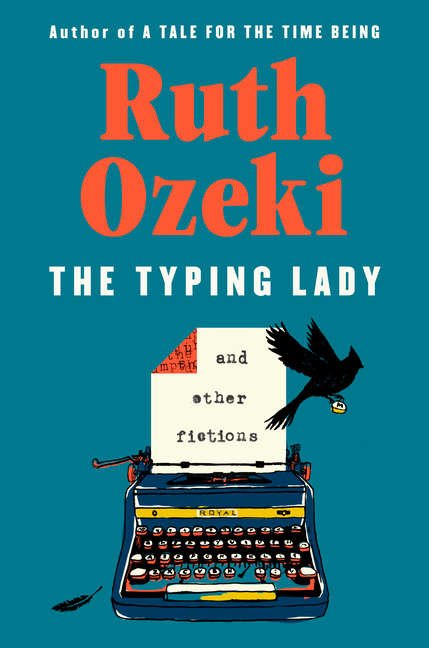
The Typing Lady

Ruth Ozeki

Viking | $31 | 9780593832714

The act and accoutrements of writing flow through several lives in The Typing Lady, a contemplative and emotionally evocative collection of 11 short stories by novelist Ruth Ozeki (The Book of Form and Emptiness).

The collection opens with its titular entry, a metafictional story in the form of an author's note in which three typing ladies appear: the narrator, a writer, and the writer's main character, a woman who collects typewriters. The narrator muses that storytelling is "how we co-create each other and dream ourselves into being," and a ribbon of stories about characters whose lives are touched by the written word unspools to prove her point. A would-be poet tends to an aging doctor with dementia in exchange for housing in "Leafblower." A married couple lives uneasily with the ghostlike forms of their lost aspirations in "Where Ambition Goes to Die." A novelist creates a fake dating profile to observe the kinds of young men her teenage granddaughter might date and takes her ruse too far in "The Problem of the Body." The protagonist in "Immortal" feels a compulsion to eat plastic; of the typewriter keys they've eaten, they say the vowels tasted best.

Ozeki's settings include a 21st-century college town, a drizzly island off the coast of British Columbia, and Yale in the late 1960s. Her deft, observant prose is studded with pinpricks of nostalgia, regret, and humor. Typewriters, invisible ink, and logophilia appear as repeating motifs and underscore the written word's integral place in the human condition. --Jaclyn Fulwood, blogger at Infinite Reads

Three newly translated stories from the late Belgian writer Jacqueline Harpman memorably capture women seeking, losing, and reclaiming agency.

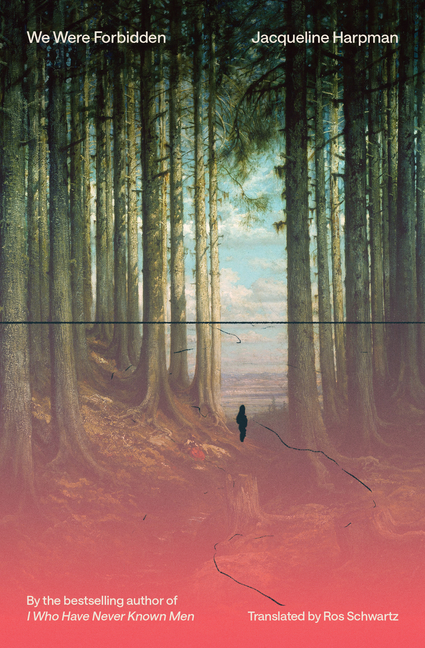
We Were Forbidden

Jacqueline Harpman, trans. by Ros Schwartz

Transit Books | $18.95 | 9798893380583

We Were Forbidden by the late Belgian writer Jacqueline Harpman (1929-2012) collects three intriguing never-before-translated stories. Throughout the trio, Harpman nimbly examines personal agency, particularly for women. Ros Schwartz, who also translated I Who Have Never Known Men, skillfully captures Harpman's unembellished clarity, reflecting the directness of her spare prose.

"The Ardennes Forest" opens the collection, a dystopian narrative about a military group assigned to patrol the forests during a seemingly senseless war. When they happen upon a deserted village, for a few days they eat their fill, drink wine, dance, sleep in beds--and remember comfort and community. Harpman's writing turns autobiographical in "The Outcast," which takes readers to Casablanca where her Jewish family fled to escape the Nazis during World War II. The 15-year-old narrator recalls the cleaving of a close friendship over twisted words, cruel accusations, striking ignorance--and an administration that unfairly ostracizes and silences her as punishment. The final story, "The Broom Closet," is also the best, a slyly entertaining meta-narrative spotlighting an author composing a story about a woman and her affairs. Harpman shifts without warning--but entertainingly--between writer and protagonist. The young wife is 22, "married for six tedious years" but later, her creator will decide, "twenty-two may be too old, let us say nine­teen and married three years."

Given Harpman's notable playfulness, certain details might imply connections between the three stories, like the soldier named Ulrich in "Forest" and "Closet." The suggestion of such liminal narratives makes Harpman's fiction even more cleverly enticing, while evergreen themes--war, coming of age, the fine art of writing--ensure Harpman's posthumous relevancy. --Terry Hong

An Artful Dodge follows a brilliant young woman who also happens to be one of London's best thieves on a dazzling venture into the Victorian city's criminal underworld.

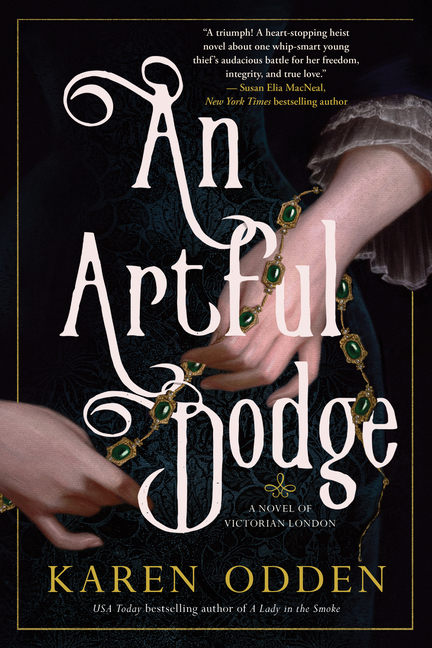
An Artful Dodge

Karen Odden

Soho Crime | $29.95 | 9781641297622

Karen Odden (Down a Dark River) brings the hidden criminal side of Victorian London brilliantly to life in this enthralling historical mystery. Perfect for fans of Sherry Thomas or Anne Perry, An Artful Dodge tells the story of 20-year-old Kit Jimeson, one of the most talented thieves in a women-only criminal network. Keeping both shopkeepers and patricians on their toes, Kit is determined to steal enough to keep herself and her 14-year-old sister, Sarah, safe and fed. Maybe someday she'll even save up enough money to be able to quit her criminal ways, since, as Kit says, "The Society for the Suppression of Vice would have you believe crime doesn't pay. It does, of course."

However, when a beautiful but vicious woman named Maggie, who was transported to Australia 20 years ago, returns to claim her role as leader of the thieving syndicate, everything starts to change for Kit. Maggie wants vengeance on everyone involved in her arrest, and unfortunately for Kit, her talent catches Maggie's eye. Kit becomes entangled in a huge heist of Maggie's devising--one that could put Kit and even Sarah in the noose if she fails.

Rapidly plotted and full of engaging characters, An Artful Dodge is historical fiction at its best. The complicated schemes within schemes that Kit devises are reminiscent of the Ocean's Eleven films. Throw in a bawdy Southwark crowd, sharp-eyed constables, and supercilious merchants, and An Artful Dodge delivers Victorian London right to readers' laps. --Jessica Howard, former bookseller, freelance book reviewer

Shelf Awareness Presents: Phictly Global Digital Book Festival. Click to discover more!
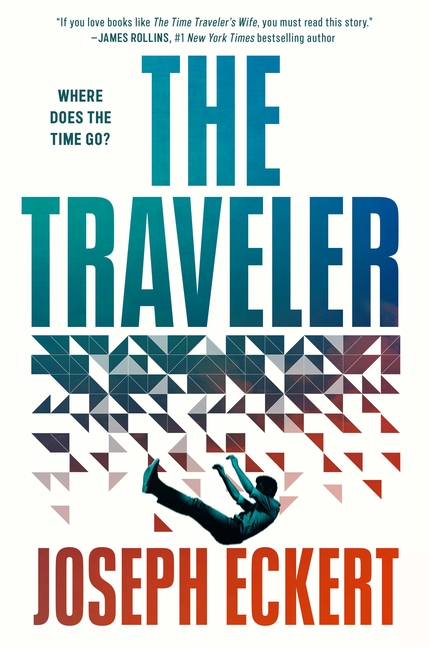
This tender family drama contained within an ingenious sci-fi adventure features a time-traveling father and his exceptionally gifted son.

The Traveler

Joseph Eckert

Tor Books | $28.99 | 9781250428554

A father and son are thrust into a mysterious new reality when one of them unwittingly slips into the future in The Traveler, Joseph Eckert's tender family drama contained within an ingenious sci-fi adventure.

Scott Treder is a programmer who resides with his wife and their exceptionally gifted son, Lyle, in Madison, Wis. En route to work one morning, Scott suddenly time travels to the next day. Every morning afterward, an utterly disoriented and resistant Scott find himself slipping forward for ever-doubling periods of time. Scott misses large chunks of Lyle's youth, but their bond deepens as Lyle makes it his mission to rescue his father. Scott's time travel is powered by an unknown force far greater than anything the experts have seen. Lyle, who becomes a famous physicist, is Scott's only hope of stopping it. Meanwhile, people he encounters in the future who have heard of Scott can't decide whether he is a prophet or a charlatan.

Eckert renders his future worlds with bold imagery and imaginative high-tech props, such as an electronic dog belonging to Scott's descendants. As Scott's time travel accelerates frighteningly toward the end of times, toward the "Omega," he realizes that the true purpose of his ordeal is a mystical, awe-inspiring path to a "new beginning," with Lyle right by his side. The Traveler is a fantastical yet emotionally resonant saga reflecting on the mysteries of existence, the limits to understanding the universe's magic, and the sorrow of being separated from loved ones. --Shahina Piyarali

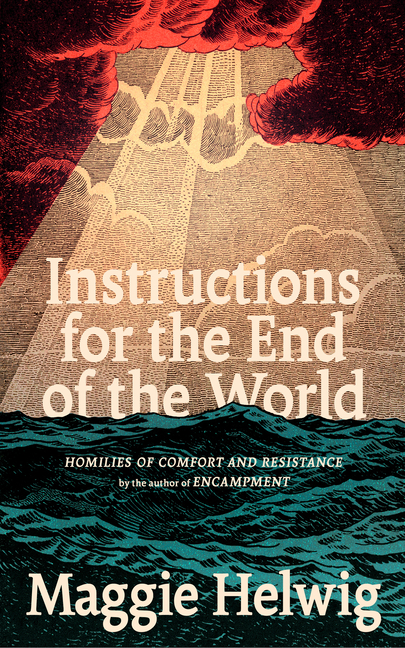
Maggie Helwig's stirring sermons espouse a practical, progressive theology and affirm the power of solidarity and a commitment to social justice in turbulent times.

Instructions for the End of the World: Homilies of Comfort and Resistance

Maggie Helwig

Coach House Books | $18.95 | 9781552455210

Instructions for the End of the World, a selection of Anglican priest Maggie Helwig's stirring sermons, affirms the importance of solidarity in turbulent times.

Helwig (Encampment) is the rector of inner-city Toronto's St. Stephen-in-the-Fields. Anglican homilies offer short reflections on set readings from the church lectionary. With the exception of a funeral address given for her father in 2018, these pieces date from 2020 to 2025. The early speeches--delivered online--capture the fear and isolation of the Covid-19 pandemic years. Helwig achieves the improbable, shedding fresh light on overfamiliar stories such as the parable of the Good Samaritan. Being a neighbor, she insists, means a willingness to step up. Wisdom comes from poetry by the likes of W.H. Auden and T.S. Eliot as well as from the Gospels and Hebrew scriptures.

With wars, climate breakdown, and the stripping of rights from transgender people and immigrants, "it is not in any way unrealistic to feel like we are living in the end times," Helwig acknowledges. Yet ordinary people committing to social justice can change the world, she asserts. This is not theoretical for her congregation but an everyday mission, seen most clearly in her church's efforts against the city's repeated attempts to shut down a camp of unhoused people in their churchyard. "To proclaim good news to the poor is an act of resistance," Helwig declares, fueled by Jesus's "logic of radical equality."

Helwig's vibrant voice speaks truth to power. This work of practical, progressive theology will likely elicit hearty amens from readers of Anne Lamott and Brian D. McLaren. --Rebecca Foster, freelance reviewer, proofreader, and blogger at Bookish Beck

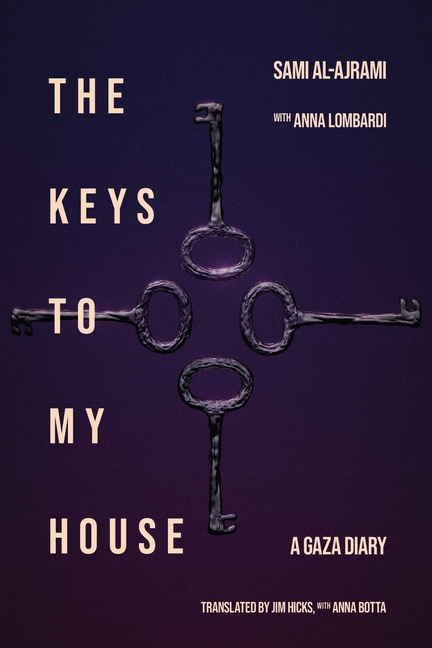
Palestinian journalist Sami al-Ajrami unblinkingly reports the horrific details--and glimmers of human triumph--during the first six months of surviving the war in Gaza.

The Keys to My House: A Gaza Diary

Sami al-Ajrami and Anna Lombardi, trans. by Jim Hicks and Anna Botta

Olive Branch Press | $20 | 9781623715540

The Keys to My House: A Gaza Diary by Palestinian journalist Sami al-Ajrami, assisted by Italian daily la Repubblica colleague Anna Lombardi, is a powerfully humanizing record of the ongoing war in Gaza, diligently translated by Jim Hicks with Anna Botta. Retired academic/editor Hicks also provides an illuminating introduction. Al-Ajrami bears unblinking witness to the destruction of Gaza as he loses his home, family, and friends, while he survives another day to report relentless atrocities to the outside world. Black-and-white photographs add visceral urgency. The first, placed before al-Ajrami's first entry and setting the tone for what follows, captures his "breakfast nook," where he began every morning. It no longer exists, and is the place he misses most; he can return to it only through the photo he "look[s] at every day."

On October 13, 2023, a week after the Hamas attack on Israel, al-Ajrami fled his four-story, multigenerational home, "the house... built literally stone by stone by [his] family." For the next six months, into April 2024, basic necessities of food, water, shelter, medicine, fuel, and power dwindled to inhumane levels. Bombings accelerated, hospitals shut down, displacements proliferated, whole families disappeared, corpses piled up. Al-Ajrami's father died from lack of medical care. But joy was still possible: al-Ajrami's teen twin daughters managed to bake him the "best cake" in impossible circumstances for his 57th birthday. Through sober observations and unadorned facts, al-Ajrami documents the quotidian ordinariness of human needs--quenching thirst, feeding hunger, finding safety, longing for comfort and community--amid unspeakable horrors. His memoir honors the lost and celebrates the living. --Terry Hong

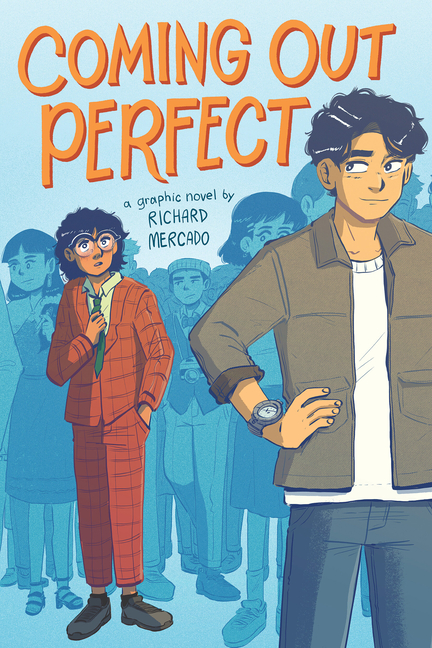
This empathetic, stirring YA graphic novel follows a newly out high schooler in the Philippines who seeks the help of his classmate, "the perfect gay teenager," to become popular.

Coming Out Perfect

Richard Mercado

Graphix | $16.99 | 9781339001593

In Coming Out Perfect, Richard Mercado's stirring, empathetic YA graphic novel, the Ignatz Award-nominated cartoonist uses his own story about telling his family he's gay to explore the nuances of queer experiences.

Kevin Reyes, a high schooler in the Philippines, feels invisible: most of his classmates act like they don't know him; his parents don't react when he tells them he's gay; and his sister overshadows him with her flawless medical school grades. Kevin wishes he could be more like Raymond, his rich and handsome classmate who is "the perfect gay teenager." Fortunately, Raymond sees potential in Kevin and agrees to give him a makeover--as long as Kevin runs as his vice-president in the student council election. Kevin agrees and is transformed into a brand-new person, with a haircut, new clothes, and a refreshed social media presence. But before Kevin knows it, he's drinking and ignoring his childhood friends while trying to fit in. Is popularity worth sacrificing his true self?

Mercado deftly depicts the pressure to chase perfection that teens can feel from familial expectations. Kevin's parents constantly compare him to his older, more accomplished sister, which pushes him into actions that don't fit his personality. Mercado's art is dichromatic, featuring a dark blue and washes of peach. His illustrations are expressive and realistically depict characters' emotions so that even wordless panels speak loud and clear. Coming Out Perfect also spotlights queer experiences in the Philippines (for example, showing the unspoken constraints placed on Raymond to be a socially "acceptable" gay person), allowing teens worldwide to easily approach this earnest queer coming-of-age story. --Lana Barnes, freelance reviewer and proofreader

This clever and expressive YA novel follows a Black teen who, after being released from a girls' detention center, tries to hide that part of her past from the new people in her life.

Free Girls

Kristen McCallum

Flatiron Books | $19.99 | 9781250320261

Author Kristen McCallum adroitly constructs Free Girls, a clever and expressive YA novel about a Black teen receiving a second chance after having been labeled "trouble."

When police caught 16-year-old Jasmine riding in a stolen vehicle with friends, she was remanded to the juvenile detention center Guiding Hearts Home for Troubled Girls, where she spent 12 months. Now she's back with her mother, and their circumstances have changed drastically: her mom remarried, they live in a "big fancy house," Jas has a stepsister, and she will be attending an exclusive high school. Jas's mom asks Jas to keep her time in detention secret--"We have a chance here, Jas, a chance to do things over... do things right." But as Jas is beginning to settle into this new, comfortable life, Amari, an eccentric girl she shared a romantic connection with at Guiding Hearts, reaches out to her. Jas feels bonded to Amari, but she's trying to put her past in the past. And in the present, Jas is focused on the intimidatingly beautiful and warm Deanna.

McCallum develops intimate and complex relationships; Jas and Amari's is especially captivating. Jas knows she has been misunderstood and misidentified, and her attempts at fitting into her new life are mesmerizing as they depict her vulnerability and social-intelligence growth. Amari, equally a victim of the system, represents everything Jas and her mother want to hide. McCallum keeps a rapid pace; "Then" and "Now" chapters from Jas's point of view switch between the facility and the present, providing readers a direct and emotional connection to Jasmine's fears, joys, and struggles. --Kharissa Kenner, school media specialist, Churchill School and Center

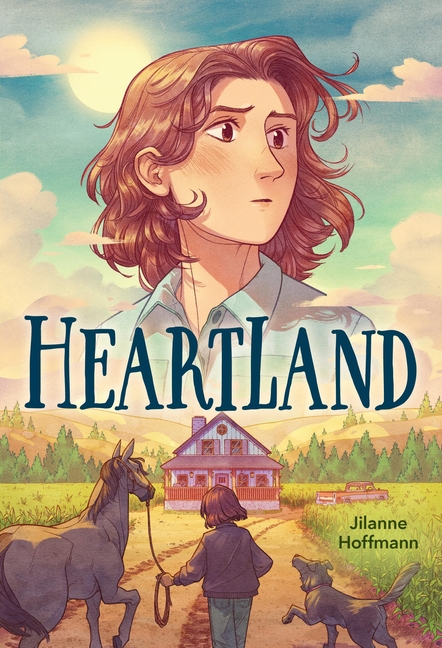
This warm, wise, and funny middle-grade coming-of-age novel showcases a charmingly offbeat farm girl who accidentally becomes an environmental activist.

HeartLand

Jilanne Hoffmann

Little, Brown Books for Young Readers | $17.99 | 9780316580052

In this radiant middle-grade coming-of-age novel, a reluctant and socially awkward farm girl with a penchant for droll, idiomatic language ("Babbling birdbrains!"; "Honking Hornworms!") launches an unexpected personal mission to protect her family's 150-year-old Iowa farm.

"Scattered" 12-year-old Xyla feels like she can't please her single mother, Cassiopeia, a hardworking fifth-generation farmer. Xyla is certain that if she could find her absent father, he would appreciate her and not make her do chores. At the same time, her new friend, Alegría, is desperately trying to convince her own father to let her have a quinceañera. When the industrial hog farm Porca Miseria leaks "a bunch of stinking, sloppy piles of sludge" into the creek that flows through Xyla's farm, the girls have a new focus: convincing Porca Miseria to clean up their mess. Luckily Xyla learns her dad is a lawyer for the hog farm. Surely, she thinks, he'll want to help.

Jilanne Hoffmann treats her first middle-grade novel as a blank canvas for her extensive creativity: she changes voices and times, alternates between prose and poetry, and uses animate and inanimate points of view. She also includes snippets from Cassiopeia's childhood diary throughout the text, offering surprising parallels between mother and daughter. HeartLand is a multifaceted and beguiling novel; it is a sensitive exploration of the complexities of multigenerational family business, a zealous ode to environmental stewardship, and a compassionate portrait of a girl who finds it hard to "pay attention" and "focus." Xyla's sincere, zany personality stands out in this exuberant novel, making her a perfect protagonist for readers who are trying to embrace their own quirks. --Emilie Coulter, freelance writer and editor

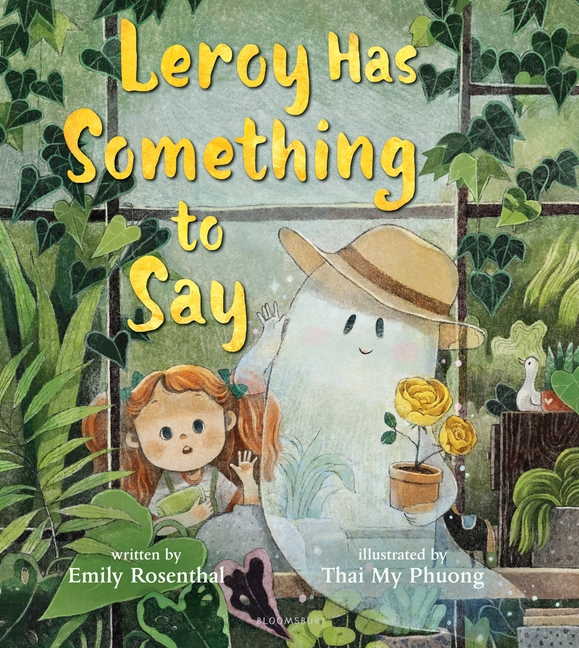
A silent ghost who loves to garden blossoms when a kind, nonspeaking girl helps him communicate in this sweet and charming picture book.

Leroy Has Something to Say

Emily Rosenthal, illus. by My Phuong Thai

Bloomsbury Children's Books | $18.99 | 9781547615834

Debut author Emily Rosenthal and illustrator Thai My Phuong (Another Word for Neighbor) craft the charming, empathetic picture book Leroy Has Something to Say, about a silent gardening ghost who finds a kindred spirit.

Leroy, a white-sheeted ghost wearing a wide-brimmed sun hat, tends to the plants in the abandoned greenhouse at Rosebud Manor. His azaleas and lilacs thrive, but when he tries to make friends with new residents by presenting them with a yellow rose (a token of friendship), they flee. Then Tara, a pigtailed, redheaded girl who uses an "Augmentative and Alternative Communication" (AAC) tablet to speak, moves in with her multiracial, plant-loving family. Leroy tries to connect by caring for the family's plants while they sleep, but they catch the soundless (but not invisible) gardener watering their bromeliad. Leroy presents a yellow rose to the family and Tara understands immediately: "You want to be friends." Tara demonstrates her tablet's text-to-speech features, empowering Leroy to communicate. The family and Leroy begin gardening together--just what Leroy "always wanted."

Rosenthal's text features measured, lilting sentences with poetic imagery to fertilize the imagination. The author, who uses AAC herself, includes a note to readers explaining that though someone may not speak, that doesn't mean "they don't have anything to say." Phuong's digitally colored graphite-pencil illustrations are comforting and use a soft, earth-toned palette to highlight Leroy's emotions: when Leroy is disappointed, the hues darken; when he's content, colors brighten, and transparent Leroy glows. Love for Leroy will likely take root in fans of Christy Mandin's Millie Fleur books and Tiffany Hammond and Kate Cosgrove's A Day with No Words. --Cristina Iannarino, children's book buyer, Books on the Square, Providence, RI.

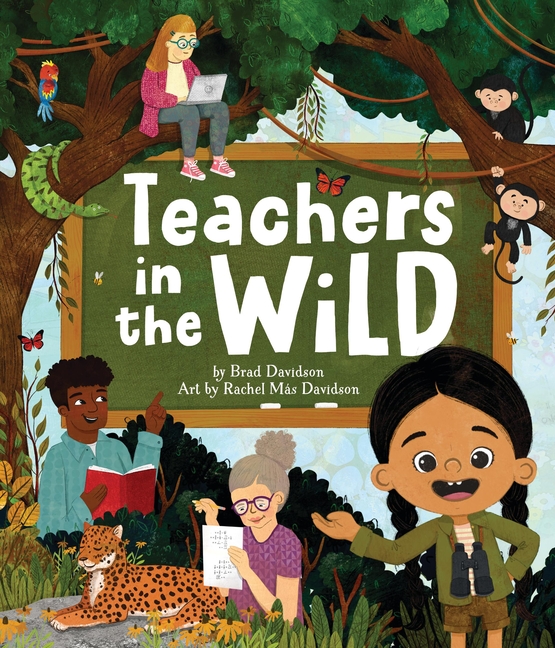
The picture book Teachers in the Wild cheerfully and cleverly employs an extended metaphor to compare teachers outside their classrooms with animals in nature.

Teachers in the Wild

Brad Davidson, illus. by Rachel Más Davidson

Little, Brown Books for Young Readers | $18.99 | 9780316516303

Author Brad Davidson and illustrator Rachel Más Davidson (I Like Your Face) collaborate on their third book for young readers, Teachers in the Wild, which cleverly and with great comic effect compares teachers outside their classrooms to animals in nature.

"Teachers are amazing!" asserts the cheerful, brown-skinned, braided narrator. At school, teachers are always in their classrooms, where they offer "warm smiles and cool handshakes," and "at the end of the day, they're always sad to see you go." But outside of school, teachers "behave very differently"; they "roam freely" and may be spotted anywhere, like a dentist's office, hair salon, or pet shop. They even camouflage themselves to look like "everyday people doing everyday things." While it can be shocking to discover a teacher in the wild, the narrator suggests that it's best to remain calm. They won't "bother you if you don't bother them," and they may even be surprised or confused to see you in your "natural habitat." However, if teachers and parents begin to tell stories about the student, the narrator recommends creating a distraction and fleeing. Luckily, in the classroom, things "will be back to normal"--at least until next time.

Throughout this amusing, warmhearted picture book, Brad Davidson uses matter-of-fact text to create his deft metaphor and normalize the "strange creatures" who prowl the pages. Rachel Más Davidson's humorous mixed-media illustrations expand on the text, exaggerating facial expressions, placing teachers and students in detailed "habitats," and highlighting the humor, such as when a student comes face-to-painted-face with a teacher at a soccer game. As the intrepid narrator exclaims, "It's all quite fascinating!" --Lynn Becker, reviewer, blogger, and children's book author

The Writer's Life

Sophia Smith Galer is the author of How to Kill a Language: Power Resistance, and the Race to Save Our Words, which focuses on 10 of the thousands of languages around the world that are currently threatened with various forms of linguicide. Find out more about the available strategies for preservation, why linguistic diversity remains a vital and valuable resource, and why it matters to the average person, no matter which language they speak.

The Writer's Life

Sophia Smith Galer: Learning from Every Language

photo: Jordan Rose

Sophia Smith Galer, a U.K. journalist, is the author of How to Kill a Language: Power Resistance, and the Race to Save Our Words (Crown; reviewed in this issue), which tells the stories of 10 languages around the world--Italian, Śḥerɛt, Ukrainian, Ladino, Karuk, Kurdish, Kichwa, Hebrew, Dagbani, and her grandmother's dialët--that have all been threatened with a variety of language death, or linguicide. As Smith Galer notes in her introduction, "many of the world's vulnerable languages are in their final generation of speakers, lingering for a little while longer before a policy, a natural disaster, or an autocrat sweeps them away."

How to Kill a Language seems to have been largely inspired by your discovery that your grandmother (nonna) was actually trilingual, speaking English, Italian, and her native local dialect from the Piacenza province of Italy. How did your background as a grandchild of immigrants influence your research?

It's what set off the whole journey for me. I was in my late 20s, my nonna was approaching her late 90s, becoming very ill, very frail. It was during this quest to discover the Italian landscape of my childhood that I began to study Italian, and discovered that nonna actually spoke another language--she called it dialët, she thought it was a regional dialect of Italian--but it's different enough from Italian that it is truly its own language.

How to Kill a Language covers a wide variety of languages in Africa, South America, North America, the Middle East. While studying so many different types of languages, did any particular words or phrases stand out to you?

I found it fascinating that in Karuk, an Indigenous language of California, they didn't have a word for "acorn." The local vocabulary is full of so many words for each individual variety of acorn and each part of an acorn, because acorn meat is a big part of their traditions. They had to borrow the word acorn from English to be able to refer to acorns as a group.

You share about people preserving their languages in some truly remarkable ways. Like in Ecuador, where Kichwa speakers promote the speaking of Kichwa to babies in utero, so that the language's patterns are familiar at birth. Or in Ghana, where activists are creating Wikipedia pages in Dagbani, to give the language a digital footprint. Are there any more unusual methods that didn't make it into the book?

If I ever got to do a sequel, I'd love to visit a te reo Māori Kōhanga Reo (Māori language nest)--a preschool that functions as full language immersion. They were created by te reo Māori revivalists in the 1980s, and very young children are immersed in preschools with elders who are fluent in the language, and interact with them only in Māori. I'd love to spend some time observing one and seeing language as it is lived and spoken.
In many countries there seems to be a push to promote one language as a form of unity. Can you briefly explain why language diversity is so important, and why linguicide for the sake of "unity" should be avoided?

Even if you isolate the fact that multilingualism is good for our individual brains, it brings a lot of cognitive and social benefits to a community when they build multilingualism.

Linguists think states have one of three attitudes towards languages: Do they see languages as resources? As rights? Or as a problem to solve? "One nation, one language" people see languages as a problem to solve. Other countries, like Ecuador, see languages as a right belonging to the people, a right which brings immense benefits. Rather than disturbing unity, sharing different languages is the glue that helps communities stick together during the good and bad times.

Linguicide is on the rise, but many people are resisting, such as Ukrainians fighting back against the Russification of their country. How can readers apply such resistance lessons? You mention learning a second language, but are there other ways for the average reader to help prevent linguicide?

I think if you don't, within your own family, have a connection to a threatened language, the best thing you can do is have curiosity and appreciation for the languages around you. Even if they're languages that no one gave much value to, or that have been overlooked at your school or your work, these are the languages that bind families together. Some of them have been used to pass down oral traditions for hundreds of years, and can teach us new things about the world around us. Language diversity, cultural diversity, biodiversity are all the things that make this planet interesting.

As you've been doing publicity for your book, what is a question you have not been asked, or that you wish more people would ask?

Something I'd like to talk about is a challenge I had writing the book and how I tried to overcome it. I wanted to travel around the world and visit where languages were spoken. In fact, the only languages I didn't physically visit their locations were for security reasons; otherwise, I would have traveled to them all. But the hard part is making it not sound like "I'm in a random place here, oh now I'm in a random place there!" I wanted to connect all the languages, showing what they have in common.

And as a writer in the U.K., I deliberately wanted to challenge readers, by not using U.K. languages like Welsh or Manx. The number one thing people ask me when they find out I'm writing a language book is, "Do you cover ____?" The answer is, I'm only covering 10 out of 7000 languages, so no, I might not have gotten to the one that you wanted me to cover. But the point of the book is not "is my language in there" but "I can learn something from every language."

What's next for you? More language research? Writing a new book?

I hope to write many more books about language. For the meantime, I've said what I've had to say about linguicide. I hope there may be documentaries and ongoing journalism about linguicide, but there won't be another book.

But I hope to have a chance to study and write about languages I've not written about yet. Hopefully I get to write a book where I don't have to pry apart any personal trauma, like discussing the death of my nonna in this book. Some of the most common feedback I've gotten from people who have read it is that it made them cry. I look forward to writing about joy in addition to pain and loss. --Jessica Howard, former bookseller, freelance book reviewer


Book Candy
Rediscover

Carlo Ginzburg, an Italian scholar "renowned for an approach to history that focused on the mass of humanity that existed outside the political and social elites of the Middle Ages and Renaissance," died June 17 at age 97. Ginzburg's most celebrated work was The Cheese and the Worms (1976), which told the story of an Italian miller who was burned at the stake in 1599 for his insistence that God and the universe had been created from rot.

Rediscover

Rediscover: Carlo Ginzburg

Carlo Ginzburg, an Italian scholar "renowned for an approach to history that focused on the mass of humanity that existed outside the political and social elites of the Middle Ages and Renaissance," died June 17 at age 97, the New York Times reported. During the 1960s, when he began his research, most historians focused on leaders and events of the past, not on peasants.

Ginzburg, however, "spent six years figuring out what a 16th-century miller meant when he said that the world was created from rotting cheese. He devoted even more time to unraveling the beliefs of peasants denounced by the Inquisition as witches and werewolves," the Times wrote, noting that "one of his more eccentric efforts involved an attempt to link Oedipus's swollen foot and Cinderella's missing slipper to ancient myths about journeying to the afterworld."

Ginzburg's most celebrated work was The Cheese and the Worms (1976), which told the story of that obscure miller, who was burned at the stake in 1599 for his insistence that God and the universe had been created from rot. A 50th anniversary edition is available from Johns Hopkins University Press.

"The more we discover about these people's mental universe, the more we should be shocked by the cultural distance that separates us from them," Ginzburg told the New York Times Magazine in 1991.

During his teaching career, he held positions at the University of Bologna, the University of California, Los Angeles (1988–2006), and the Scuola Normale Superiore di Pisa.

"Ginzburg showed that non-intellectuals had an intellectual life--and demonstrated what that life was," said Robert Darnton, author of The Great Cat Massacre. "It was a great feat that inspired lots of other scholars to attempt the same thing."

The influence of "microhistory" and "the history of mentalities," the currents of historiography represented by Ginzburg, "continues to be felt in the wave of academic, biographical and literary attention paid to previously overlooked groups, including women, minorities and the underprivileged," the Times noted.

Ginzburg's first book, published in 1966 and titled The Night Battles in English, was inspired by a visit to Inquisition archives in Venice, where he found an account of the trial of a 16th-century shepherd from a village north of the city. 

In The Judge and the Historian (1991), Ginzburg "sought to defend a close friend, Adriano Sofri, a left-wing journalist who had been convicted of murder in events related to the tangled aftermath of a 1969 terrorist bombing," the Times noted. He published books and essays on a range of subjects, including history, art, literature, mythology, and psychology.

Early in his academic career, Ginzburg was teaching students who cared about history primarily for the lessons it held regarding the mass worker strikes going on at the time. "I shared my students' political concerns," he later said. "But I had to admit that my professional interests had nothing to do with the turmoil around me. I learned in a painful way that history must be studied even when it has no visible relation to contemporary issues."

FEATURED PUBLISHER

Shelf Awareness celebrates the 40th anniversary of VIZ Media, the preeminent publisher and licensor of Japanese anime and manga in North America, shaping global pop culture through storytelling that transcends borders.

From its beginnings in 1986, VIZ Media has been a gateway for Japanese storytelling in the West and is now the leading English-language manga publisher and leading global licensor of manga and anime--and is also co-producing content.

VIZ Media has become a cultural, lifestyle force that shapes how manga and anime fans live, what they wear and eat and read and watch, and how they experience Japanese pop culture, which continues to grow in popularity around the world. VIZ Media has built connections and relationships with key Japanese creators and guides partners and fans to the right stories and makes the market even larger

FEATURED PUBLISHER

Celebrating VIZ Media's 40th Anniversary

From its beginnings in 1986, VIZ Media has been a gateway for Japanese storytelling in the West and is now the leading English-language manga publisher and leading global licensor of manga and anime--and is also co-producing content.

VIZ Media has become a cultural, lifestyle force that shapes how manga and anime fans live, what they wear and eat and read and watch, and how they experience Japanese pop culture, which continues to grow in popularity around the world. VIZ Media has built connections and relationships with key Japanese creators and guides partners and fans to the right stories and makes the market even larger.

Consider some of the company's recent moves. It has expanded to doing location-based entertainment and live events that include, for example, a 60-city symphonic tour and collaborations with Major League Baseball and the National Hockey League as well as collaborations with such companies as Converse, Burger King, and MrBeast. It offers apparel, collectibles, food, beauty, and immersive fan experiences around the world. 

The market is astounding: the worldwide anime market is estimated to be between $35.6 billion and $41.7 billion. (Grand View Research provides the most detailed reporting.) Japan is the single-largest market at a little more than 40%, but North America is the fastest-growing market. The global manga market is estimated at between $11.9 billion and $17.5 billion. 

VIZ Media was formed in 1986 in partnership with Shueisha, Shogakukan, and ShoPro. Forty years ago, the market was much different. As Hope Donovan, VIZ Media's editorial director, states, "Manga and anime fandom in the U.S. began as a subculture, and fans from 1986 would be shocked to see manga and anime today in malls and stores across the country, with media, merchandise and apparel widely available." They'd also be shocked, she continued, to see "well-stocked manga sections in bookstores and libraries, and streaming anime!"

Hope Donovan

Donovan notes "the immense role" libraries play in accessibility. "Manga series can be long and hard for a young person to purchase in their entirety. That's where a library can come in. It's also helpful to have a curated space to help find titles now that the manga industry has grown so much."

Manga continues to grow, and some genres that have been underrepresented in the past, including horror and LGBTQ+, are growing the fastest. Strangely, an early misconception that manga is all porn has persisted somewhat. As Donovan points out, "There are tons of genres and stories for readers of all ages. Right now there's more variety available in English than ever before, and hopefully exposure to tons of different kinds of manga has been chipping away at that misconception."

VIZ Media works diligently to translate manga for an English-speaking audience in a way that retains the originals' intent and meaning. For example, "we retouch sound effects, which gives readers of our books the same immediacy of understanding as Japanese readers," Donovan observes. "Each localization is its own work of art, created through the efforts of experienced translators, letterers, designers, editors, and other people who care a lot about manga." The efforts make for the most immersive reading experience for English-speaking fans.

Still, there are areas for expansion for VIZ Media. The main audience for manga and anime continues to be age 30 or below. As Donovan notes, "We have yet to cultivate a sizable audience of older readers in the U.S. interested in manga created for older readers in Japan."

In addition, as manga and anime become more mainstream, there are "casual fans" that VIZ Media can make more "part of the ecosystem," something akin to how "sports fans run the gamut from casual to hardcore," Donovan says.

For people who have never read manga, Donovan recommends titles that "match a person's existing interests," she says. Thus, "if someone likes Sarah J. Maas, I'd recommend Yona of the Dawn. If someone likes action movies, then titles like My Hero Academia will appeal to them." And depending on the readers' ages, some broadly accessible titles are Frieren: Beyond Journey's End, Minecraft: The Manga, Pokemon, and Dragon Ball.

Click here to learn more about Viz

FEATURED PUBLISHER

The VIZ Media Timeline: 40 Years of Shaping Global Pop Culture

1986: VIZ Communications is founded in San Francisco, the first company dedicated to introducing and selling manga to American audiences. Its mission: to bring authentic Japanese storytelling to the West.

1987: In floppy comic book format, the first VIZ manga titles appear in U.S. comic shops. The titles include The Legan of Kamui, Mai the Psychic Girl, and Area 88.

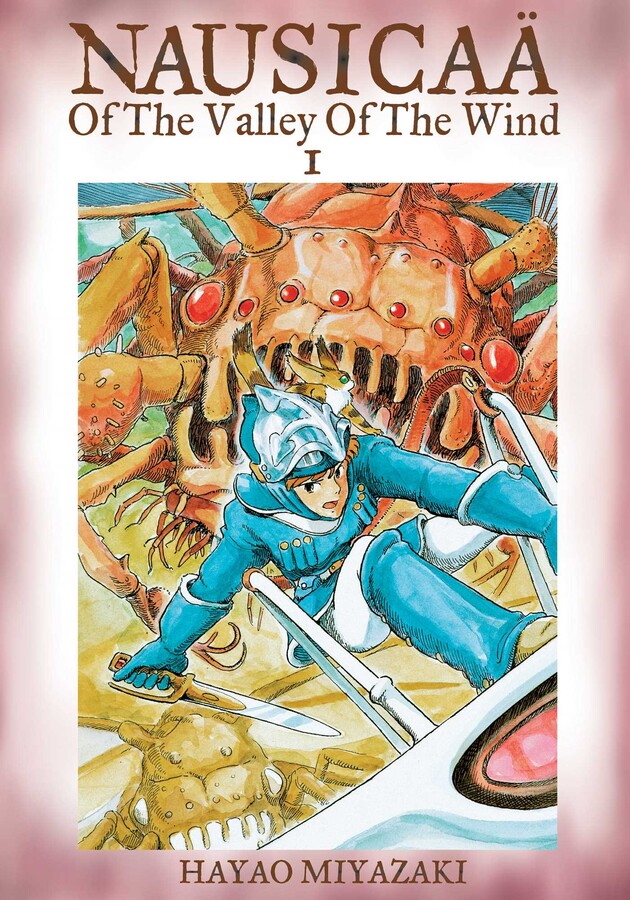
1988: VIZ publishes Hayao Miyazaki's Nausicaä of the Valley of the Wind in serialized comic format (with 27 issues). This marks VIZ's first collaboration with Japan's most celebrated animation studio, Studio Ghibli.
1992: The breakout hit of Ranma 1/2, the martial arts comedy by Rumiko Takahashi, paves the way for the greater acceptance of Japanese manga and anime by American audiences. The comics are colorized until it becomes clear that readers embrace manga's black-and-white format. 

1993: VIZ launches Animerica, a monthly magazine dedicated to anime and manga reviews, features, and fan culture. In following years, VIZ adds Animerica Extra, PULP, GameOn! USA, and Manga Vizion, expanding the company's media footprint and community of readers. (Shojo Beat magazine, sister magazine to Shonen Jump, launches in 2005.)

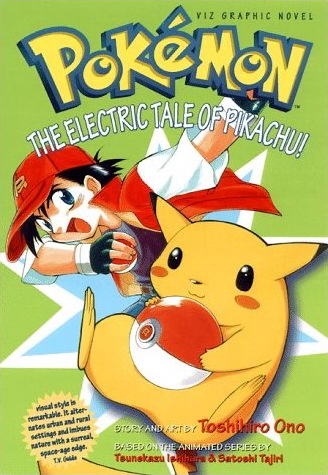
1998: VIZ publishes The Electric Tale of Pikachu, the first Pokémon manga in the U.S., in tandem with the anime's wild success on TV.
Also in 1998, Inuyasha by Rumiko Takahashi makes its debut. The series inspires anime, movies, video games, and devoted fans, and is another critical and commercial hit.

2000: Starting with Dragon Ball and a collector's edition of Neon Genesis Evangelion, VIZ becomes one of the first U.S. publishers to release manga in its original unflipped, right-to-left format, setting a new standard for authenticity.

2001: Uzumaki and Gyo introduce U.S. readers to Junji Ito's signature brand of psychological horror, cementing him as a cult icon. In 2021, his legacy is crowned with an Eisner Award for Best Writer/Artist, the first for a Japanese mangaka.

2002: VIZ launches the U.S. edition of Weekly Shonen Jump, introducing serialized chapters of Dragon Ball Z (part of Akira Toriyama's Dragon Ball property, with more than 250 million sold); One Piece, the bestselling manga of all time, with more than 516.6 million copies sold (close to surpassing Harry Potter's 600 million sold); Yu-Gi-Oh!, with more than 40 million copies sold; Yuyu Hakusho, with more than 78 million copies sold; and Sand Land, another Akira Toriyama hit with an animated film and video game).

Also in 2002, VIZ publishes Vagabond, which goes on to sell more than 82 million copies.

2003: Masashi Kishimoto's ninja Naruto makes its U.S. debut, creating one of the most enduring fandoms in modern pop culture. The anime premiered shortly afterwards on Cartoon Network. More than 250 million copies of the manga have sold globally.

2005: Fullmetal Alchemist by Hiromu Arakawa is launched and goes on to sell more than 80 million copies.

2007: Bleach by Tite Kubo is launched and goes on to sell more than 130 million copies.

2008: Slam Dunk by Takehiko Inoue is launched and goes on to sell more than 170 million copies.

2009: 20th Century Boys by Naoki Urasawa is launched and goes on to sell more than 127 million copies.
2010: The digital manga era begins when the VIZ Manga app launches, with titles including Naruto, Blue Exorcist, and Vampire Knight. Manga now thrives in both print and digital formats. (Today VIZ Manga's digital service is optimized for Android and iOS; is available in the U.S., Canada, the U.K., Ireland, Australia, and New Zealand; and offers more than 10,000 chapters of VIZ Media's manga.)

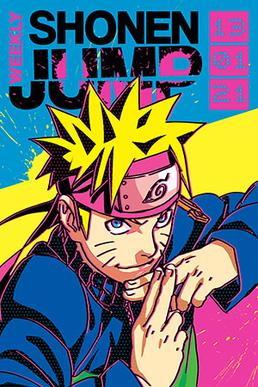
2012: Shonen Jump magazine shifts to a digital-first format, addressing growing piracy concerns while adapting to the rapidly changing media landscape. Latest chapters are now free for a limited time, attracting new readers, driving fans to the official platforms, and, with its low-cost subscription, proving wildly successful.

2013: One-Punch Man by ONE and Yusuke Murata is launched and goes on to sell more than 30 million copies.

2014: VIZ relaunches the Sailor Moon anime, with a new uncut English dub and new voice cast, introducing the series to a new generation of fans as well as restoring it for longtime fans.

Also in 2014, Food Wars written by Yūto Tsukuda and illustrated by Shun Saeki is launched and goes on to sell more than 20 million copies.

2015: My Hero Academia by Kōhei Horikoshi is launched and goes on to sell more than 85 million copies; Black Clover by Yūki Tabata is launched and goes on to sell more than 19 million copies; Tokyo Ghoul by Sui Ishida is launched and goes on to sell more than 50 million copies; Yona of the Dawn by Mizuho Kusanagi is launched and goes on to sell more than 15 million copies.

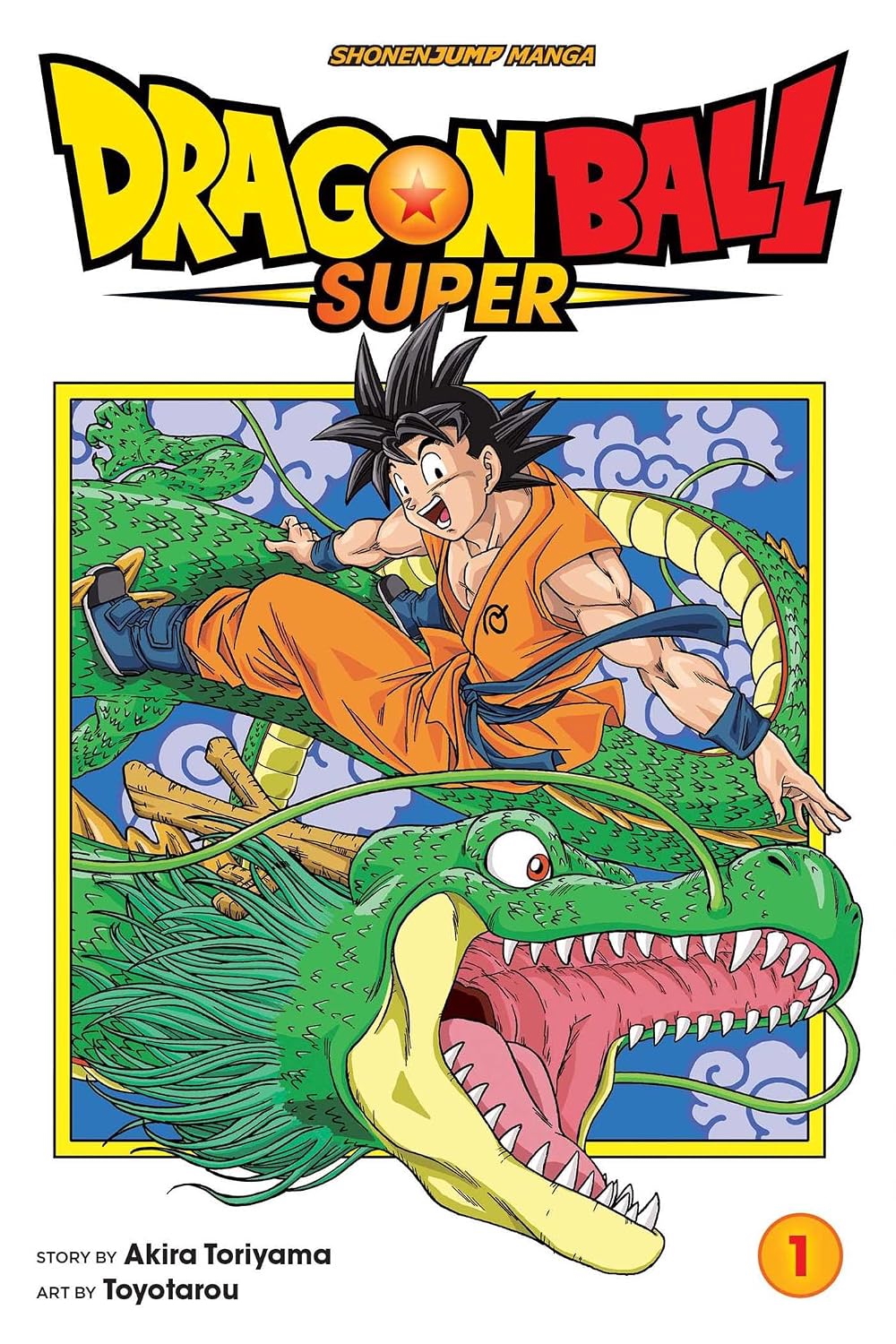
2016: Demon Slayer by Koyoharu Gotouge is launched and goes on to sell more than 150 million copies; The Promised Neverland by Kaiu Shirai and Posuka Demizu is launched and goes on to sell more than 42 million copies); Boruto: Naruto Next Generations, part of Masashi Kishimoto's Naruto property, is launched and goes on to sell more than 250 million copies; Dragon Ball Super, part of Akira Toriyama's Dragon Ball property, is launched and sells more than 250 million copies; Komi Can't Communicate by Tomohito Oda is launched and goes on to sell more than 16 million copies.
2017: Dr Stone by Riichiro Inagaki and Boichi is launched and goes on to sell more than 13 million copies.

2018: VIZ launches the on demand/simultaneous publication SJ (Shonen Jump) Service.

Also in 2018, Jujutsu Kaisen by Gege Akutami is launched and goes on to sell more than 80 million copies, and Chainsaw Man by Tatsuki Fujimoto is launched and goes on to sell more than 26 million copies.

2019: Fashion company Coach and actor, producer, and global face of Coach menswear Michael B. Jordan team up to launch a collection inspired by Jordan's cultural influences, community, and lifelong love of Naruto.

Also in 2019, Spy x Family by Tatsuya Endo is launched and goes on to sell more than 31 million copies.

2020s: With the global anime and manga boom, titles Demon Slayer, Jujutsu Kaisen, Chainsaw Man, and Spy x Family lead a surge in manga sales and anime viewing around the world. VIZ's PR and licensing strategy evolves to align with simultaneous digital releases, global streaming platforms, and high-profile media coverage.

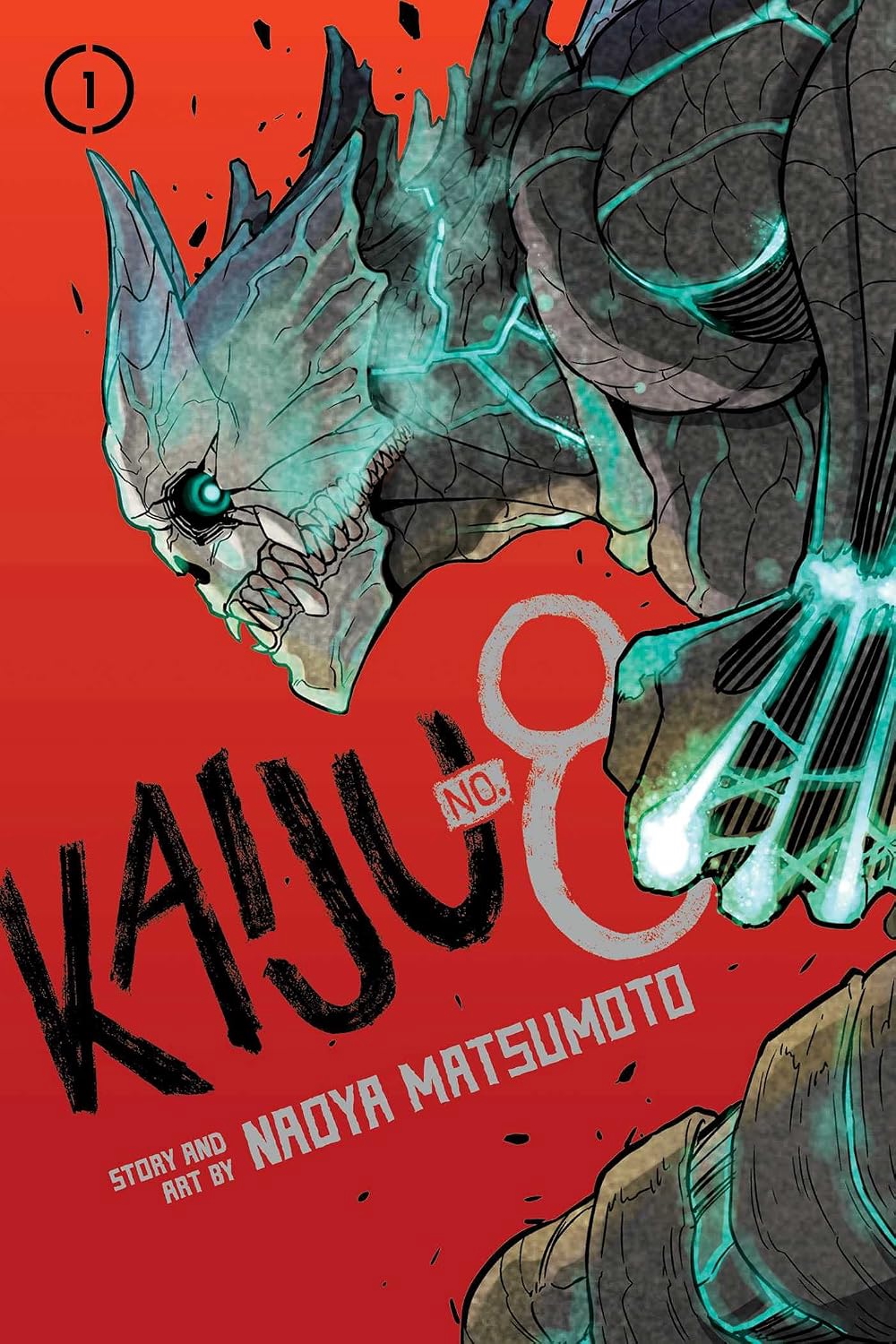
2020: Kaiju No 8 by Naoya Matsumoto is launched and goes on to sell more than 11 million copies.
2021: Demon Slayer creator Koyoharu Gotouge is named to the TIME 100 list, the first manga and comic artist to receive the honor and a testament to VIZ's position as a cultural tastemaker, bridging Japanese and Western media.

Also in 2021, Jordan brand/NIKE, NBA superstar Zion Williamson, and Naruto together create a line of Air Jordans inspired by Williamson and Naruto's parallel paths of overcoming adversity.

2022: VIZ Media makes its first global anime distribution deal, securing worldwide streaming and promotional rights outside Asia for Bleach: Thousand-Year Blood War, based on Tite Kubo's manga series Bleach. This revival of one of shonen's most iconic franchises cements VIZ's evolution from manga publisher to global anime powerhouse.

Also in 2022, VIZ Media creates the Shonen Jump shop, which features apparel and accessories with popular Shonen Jump characters.

2023: ZOM 100: Bucket List of the Dead is VIZ Media's first anime co-production, developed in partnership with Shogakukan and Shogakukan-Shueisha Productions. The series--part zombie horror and part life-affirming comedy and based on the manga by Haro Aso and Kotaro Takata--makes Netflix's Global 10 with its first episode and marks VIZ Media's expansion from licensing to creative collaborator.

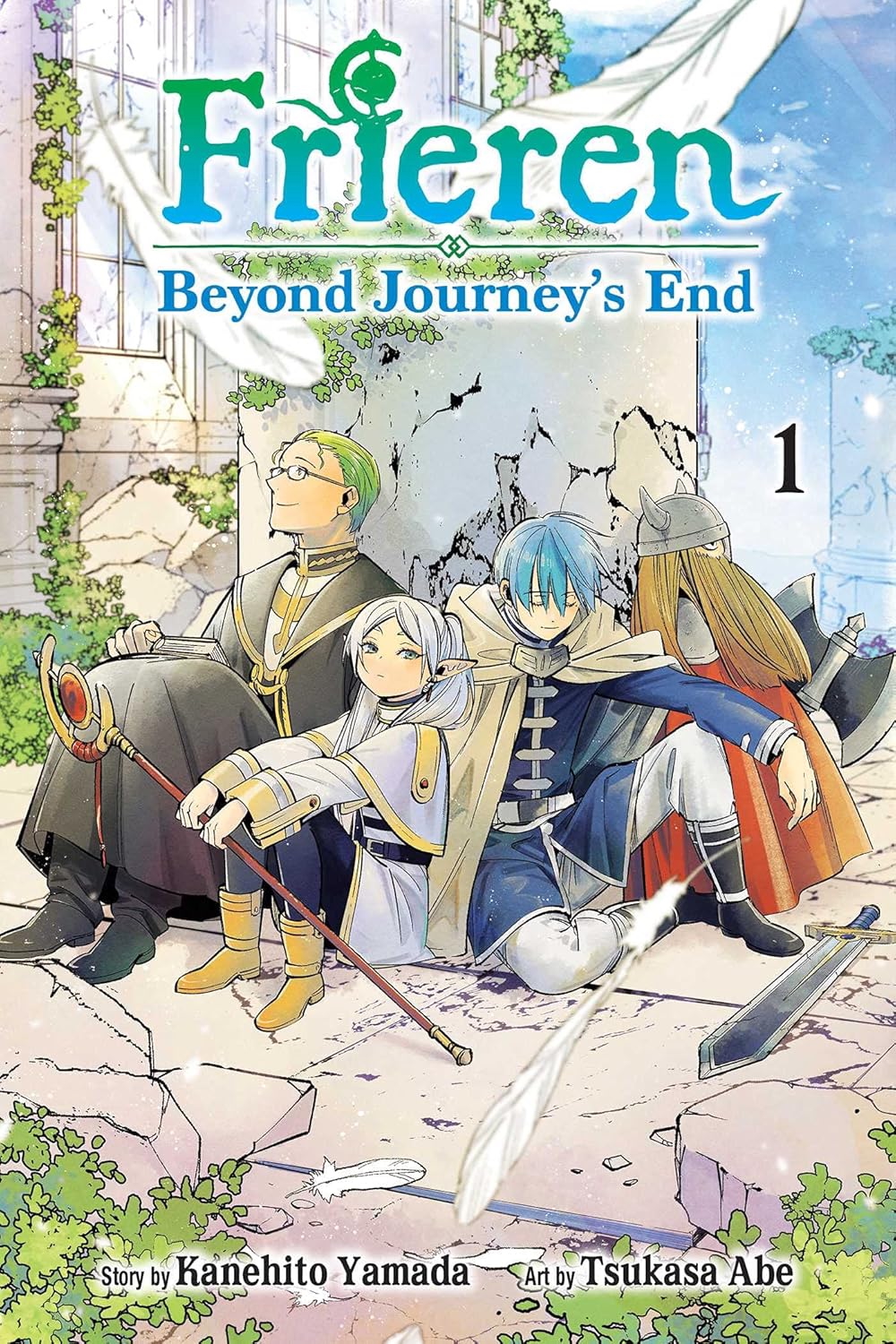
Also in 2023, Frieren: Beyond Journey's End written by Kanehito Yamada and illustrated by Tsukasa Abe is launched and sells more than 24 million copies.

2024: The American anime-inspired series RWBY becomes part of VIZ Media, marking the expansion of the company into original animation.

2025: Nana and Vivienne Westwood collaborate on a global collection of clothing and accessories, a partnership that celebrates the enduring cultural influence of Nana and brings its punk-inspired aesthetic from manga and anime to fashion runways around the world.

2026: VIZ Media marks its 40th anniversary as the leading publisher and global licensor of manga and anime in North America. With thousands of titles, millions of fans, and decades of innovation, VIZ continues to shape the future of global pop culture through storytelling that transcends borders.

Advertisement

VIZ Core: Experience the stories that defined generations of fans for over 40 years. Learn More!

Powered by: Xtenit