Latest News
Stonefruit Studio: If the Moon by Matthew Burgess, illustrated by Matthew Forsythe
August 7, 2026
WHAT TO READ NEXT: REVIEWS OF GREAT BOOKS

In a beautiful essay for Time magazine, Jen Benka, executive director of the Literary Arts Fund, mounts a timely "Defense of Reading Books" after a social event where a relative couldn't recall any they'd read. Last decade's infamous pivot to video has made personal devices and scrolling all the more addictive. It's tough for anything text-based to compete! But "learning each other's stories," she writes, "helps us be more compassionate, which, in turn, fosters our sense of connectedness and enables us to solve problems"--qualities more crucial than ever. I'm just as susceptible as anyone to overdoing it on screentime, so I often leave mine in another room when I sit down with a book. It's an effective strategy most of the time, and I find it helps keep me grounded long after I get out of my reading chair. Benka's essay offers some other strategies, and one of the best, in my opinion, is her suggestion to ask booksellers for reading recommendations.

--Dave Wheeler, senior editor, Shelf Awareness
FEATURED TITLES
Cover

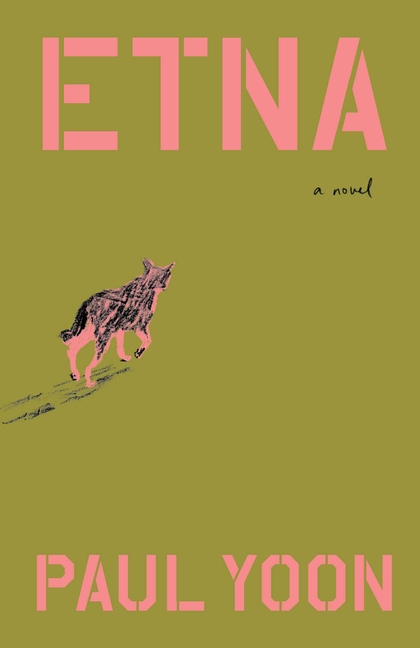
Etna

Paul Yoon

Paul Yoon's Etna is a quietly thrilling novel told from the point of view of a combat dog who is taken from his farm to serve in a war, then attempts to return home once the conflict ends.

Etna

Paul Yoon

Scribner | $28 | 9781668020821

Paul Yoon (Run Me to Earth) follows the lead of authors such as Paul Auster and André Alexis by using a dog as his narrator in the novel Etna. It's a smart choice, given that themes of loyalty, perceptiveness, and home are integral to this excellent work on the suffering brought about by the ravages of war.

In an unknown country, a 12-month-old mixed-breed shepherd lives on a farm. His is a happy life, until a woman in uniform arrives and says she is "hoping to find dogs to join up with and assist the armies arriving from North America and Europe." She names the protagonist Etna, after the volcano in Sicily, and tells him he's going to be a critical part of the war effort. "You're going to work hard," she says, "and save a lot of lives."

This exciting yet melancholy story begins with Etna's four years as a combat dog, in which he learns not only how to identify telltale smells but also how to attack a thigh artery or go for an enemy's throat. After hostilities end, Etna departs from camp in the hope of returning to the farm, which may or may not still exist. He encounters a troop of missionaries, meets a man named Hong who provides medicine to ravaged communities, and befriends a fellow dog called Semeru.

A propulsive narrative of unrelenting sadness may sound oxymoronic, but that's the conjurer's trick Yoon pulls off. The ability to return home after tragic events sometimes requires a redefinition of home, as Etna and his compatriots discover in this elegant work. --Michael Magras, freelance book reviewer

Cover

The New People

Andrea Uptmor

Newlyweds move into a house, unaware that the former owners are living in the attic, in The New People, a story with a sharp sense of humor and wry insights into the American Dream.

The New People

Andrea Uptmor

Little, Brown | $29 | 9780316602211

In Andrea Uptmor's The New People, newlyweds Emma and Rachel have relocated from Chicago to small-town Riverbend, Ind., pursuing a tenure-track professorship for Rachel while Emma recovers, emotionally and physically, from a recent miscarriage. Between the emotional angst of a stalled writing career and the physical challenges of IVF, it's easy enough for Emma to chalk up the odd and inexplicable occurrences in their small picturesque Cape Cod--a leaky washing machine, a flipped breaker, a splash of orange juice on the floor--to shoddy construction and her own fatigue. But the reality is far more concerning: Charlotte and Dirk, the former homeowners, are secretly living in the attic. The arrangement is only temporary, the aging couple having been displaced by foreclosure and left with nowhere else to go.

In The New People, Uptmor moves through examinations of privilege and identity, extraction and gentrification, politics and parenthood, holding it all with a delicate sense of emotion that keeps this debut from ever veering into the territory of diatribe. Instead, Uptmor successfully balances the tender and intimate revelations about these two couples, worlds apart and yet sharing the same roof over their heads, with a sharp sense of humor and wry insights into the many ways the myth of the American Dream leaves victims in its wake. The New People is a carefully crafted story of what makes a house a home: the people that share it, to be sure, but also the community built (or not) around it and the many marks left, both good and bad, on the spaces inhabited. --Kerry McHugh, Textus Collective

Canelo: The Residency by C.D. Major
Cover

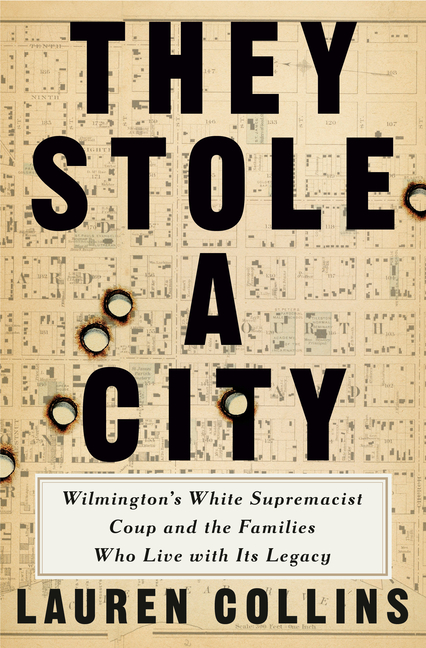
They Stole a City: Wilmington's White Supremacy Coup and the Families Who Live with Its Legacy

Lauren Collins

A comprehensive account of white supremacy in Wilmington, N.C., and the impacts of the 1898 violence that changed the face of the city forever, They Stole a City is essential reading.

They Stole a City: Wilmington's White Supremacy Coup and the Families Who Live with Its Legacy

Lauren Collins

Penguin Press | $32 | 9781984878816

In her sprawling and essential examination of a violent upheaval in 1898 Wilmington, N.C., Lauren Collins (When in French) establishes the thesis of They Stole a City: Wilmington's White Supremacy Coup and the Families Who Live with Its Legacy by explaining that "our understanding of history depends on where we place the parameters of an event." She argues that the events of November 10, 1898, were not singular but one moment on a continuum of race and power in the South, "a centuries-long day that isn't over yet."

Collins traces Wilmington's history through four families--two Black and two white--each with forebears linked to the violence that November. Occasionally unwieldy, the narrative launches these family histories in 1775, offering anecdotes combined with an excavation of historical records to document the rise and fall of Black political and social power in Wilmington. The day itself is granted the smallest share of the book, but the vivid and terrifying details prove it to have been an orchestrated effort to ensure the continuation of white supremacy and to purge Wilmington of its most influential Black citizens, forcing them out of town, out of office, and, in some cases, out of life itself. Throughout, Collins tracks the considerable causes and lingering impact of the coup, dismissing entirely the notion that it was an outlier event brought about by a few bad apples; instead, They Stole a City recounts a long train of progress and destruction, citing the Wilmington of 1898 as "a particularly flagrant case study in the thick American ledger of Black achievement and white backlash." --Sara Beth West, freelance reviewer and librarian

Cover

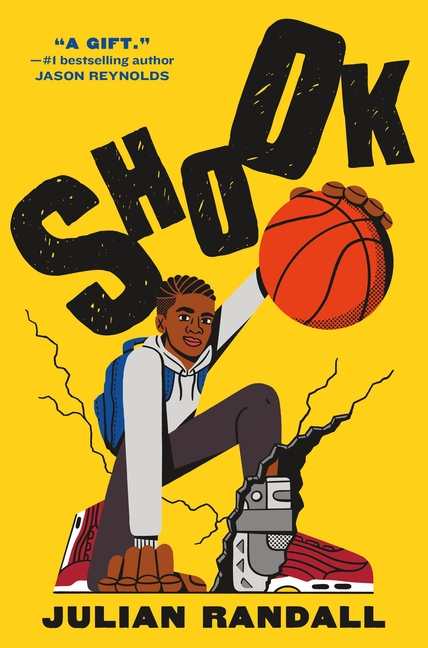
Shook

Julian Randall, illus. by Nathan Walker

A basketball player with a powerfully supportive community learns healthy ways to live with anxiety--and let his people "assist"--in this positive, emotional middle-grade novel-in-verse.

Shook

Julian Randall, illus. by Nathan Walker

Holt | $18.99 | 9781250882059

In Shook, an insightful and rhythmic free-verse novel by Julian Randall (The Chainbreakers) with art by illustrator and designer Nathan Walker, a 12-year-old boy discovers that he needs to give and receive assists on and off the basketball court.

Malik has plans: varsity basketball in eighth grade, college ball, then "first pick in the NBA Draft." He idolizes his father, a once-legendary player, who gave Malik the nickname "Shake": "Don't nothing shake/ my son,/ not a thing." Shake is confident, his parents are his biggest fans, his teammates are like brothers--"The five of us, an assist that never stops"--and his best friend Kyla "feels like the only shade/ on a 1,000-degree day." But when Shake fractures his ankle at the championship game, possibly destroying his chances of varsity, he feels "more Shook than Shake." As his anxiety grows, he starts to experience panic attacks and retreats from his loving, supportive community. Despite the difficulties, Shake must ultimately learn that "sometimes/ the biggest problem we can have/ is letting anxiety make us forget/ we're not alone."

Randall plays with the text on the page, shaping lines into concrete poetry and using outlining and shadowing to highlight words: "swirls" spins and "dissolve" fades away. These dynamic typographical elements, along with Walker's chapter-introducing illustrations, encourage readers to "feel the rhythm of the game" right alongside Shake. Comparisons to Kwame Alexander (The Crossover) and David Bowles (They Call Me Güero) are natural and apt. But Randall's writing bounces with its own rhythm and rebounds, even in the midst of life-plan interference. --Emilie Coulter, freelance writer and editor

Hyperion Avenue: The Unheld by Luke Larkin
BOOK REVIEWS
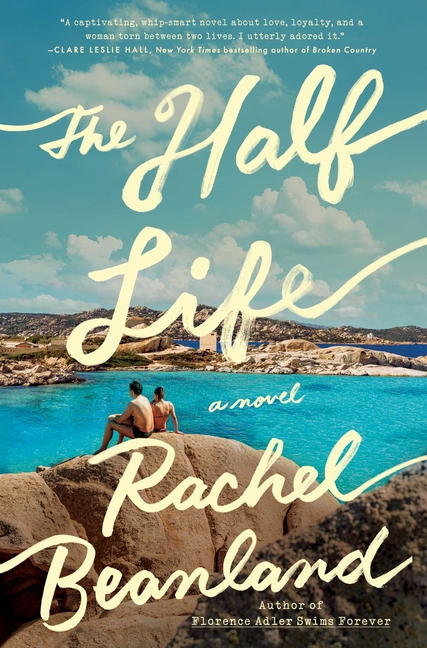
A naïve navy wife stationed on an Italian island in the 1970s discovers new sensual pleasures, a scientific vocation, and the disillusioning truth about the U.S. political purpose there.

The Half Life

Rachel Beanland

Simon & Schuster | $30 | 9781668069134

In Rachel Beanland's enchanting third novel, The Half Life, a young navy wife has a sexual awakening and discovers her scientific vocation while stationed on an Italian island.

Twenty-three-year-old newlywed Eileen Archer has never left the U.S.--or even her hometown of Charleston, S.C.--when she and Paul are sent to La Maddalena, an island off Sardinia, in 1974. She joins the spouses' club but forms bonds with locals, too, finding an Italian tutor and helping scientists test the water for contamination from U.S. submarines after the nearby hospital sees several cases of a rare birth defect. She enjoys the research so much that she enrolls in a distance course on biology. Her loyalties are divided: Paul works for RADCON, whose reluctance to share information with the Italian authorities following submarine accidents seems suspicious. But even as time runs short before the Archers' scheduled transfer to Connecticut in 1976, and as the anti-U.S. protests grow increasingly violent, Eileen falls in love with an investigative journalist.

The title cleverly suggests both nuclear fallout and how secrets constrain people. Beanland (The House Is on Fire) adeptly depicts grief, homesickness, and culture shock. Through Eileen's and her friend Laura's varying experiences, she explores choices related to motherhood. The novel also illuminates U.S. and Italian politics of the period, with Eileen shocked to realize that the U.S. presence in the region is about stamping out Communism.

Sensual and intriguing, this belated coming-of-age story reminiscent of Jess Walter's Beautiful Ruins and Elizabeth J. Church's The Atomic Weight of Love makes for an absorbing summer read. --Rebecca Foster, freelance reviewer, proofreader, and blogger at Bookish Beck

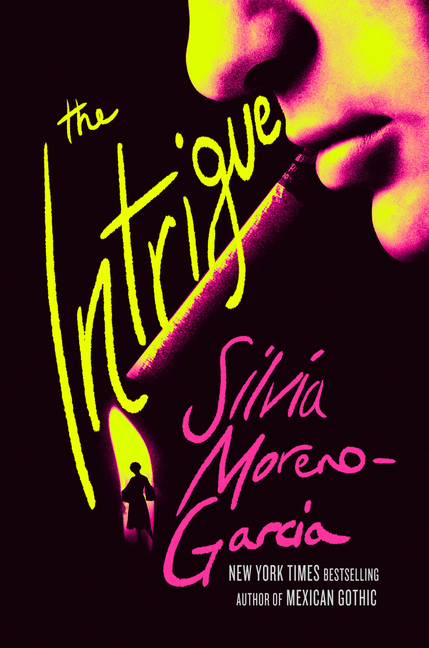
Silvia Moreno-Garcia's The Intrigue presents a simmering triangle of seduction and deceit in small-town Mexico.

The Intrigue

Silvia Moreno-Garcia

Del Rey Books | $31 | 9780593874356

A con artist, an unmarried, middle-aged boardinghouse owner, and the niece she keeps under her thumb become entangled in a web of deceit and seduction in The Intrigue, the tense noir thriller by Silvia Moreno-Garcia (The Bewitching; Silver Nitrate).

The place is Puerco Ahogado, a small town in Veracruz, Mexico, in the 1940s. Ulises ekes out a living bilking lonely women, although he has struggled since the death of his father, who was the brains of their operation. Ulises accepts an invitation to visit a guesthouse run by Perla, an older woman with whom he connected via a lonely hearts ad. Perla shares the run of the guesthouse with Inés, the daughter of her dead sister and a man who vanished long ago. Inés longs for the city, but Perla limits her access to money to keep her at home. Inés catches on to Ulises and offers a deal: she will help Ulises woo her aunt, and they will split her money. But getting Perla to part with cash proves harder than winning her heart, and Perla and Inés are both more capable of deceit than they seem.

Moreno-Garcia nails the essential noir quality of the setting as a character. The claustrophobic feeling of surveillance--particularly over the two women who have lived their lives in that small town and must maintain a standard of "respectability"--heightens the tension and passion in this dangerous triangle. This atmospheric thriller keeps the pressure simmering and restrained until the moment the secrets boil over. --Kristen Allen-Vogel, information services librarian at Dayton Metro Library

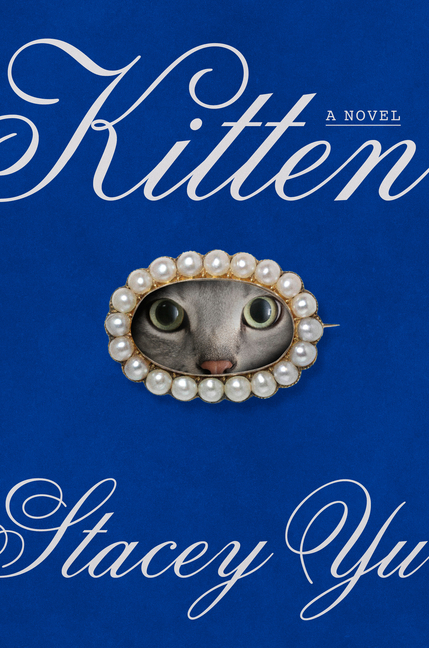
In Stacey Yu's unconventional debut novel, a young woman starts to come to terms with her unhealthy relationships while on a beach vacation with her boyfriend and his cat.

Kitten

Stacey Yu

Random House | $29 | 9798217155064

Stacey Yu's first novel, Kitten, is a peculiar, endearing fable about a young woman who identifies with her boyfriend's cat as she works to overcome codependency issues with him and her mother.

Chinese American Katie is a recent college graduate in Manhattan. Her work-study job has ended--leaving her with less than $50 in her bank account--and her roommate keeps reminding her the utilities payment is overdue. When Katie's boyfriend, James, invites her to stay at his parents' second home by the ocean for two weeks, it presents an opportunity to delay her job search. James is white and four years older, comes from money, and has a corporate job. That privilege cushions her, too. When he learns about her rental crisis, he encourages her to move in with him.

Katie grew up the cosseted only child of a single mother. James is her first boyfriend, and the first time she sees the ocean is with him. James's family pet, Silver, is also the first cat she meets. Katie is "struck by the intensity of my affection for her"--somewhere between maternal instinct and envy of the cat's comfort and security. Katie starts to almost imitate Silver, such as by lapping at a bowl of milk and licking James during foreplay.

Yu maintains the uncomfortable ambiguity of the central relationships as literal realities and psychological explanations coalesce. That Katie's estranged mother's nickname for her is "Kitten" connects the novel's major elements. A cross between If You Love It, Let It Kill You by Hannah Pittard and Rental House by Weike Wang, this debut is an offbeat charmer. --Rebecca Foster, freelance reviewer, proofreader, and blogger at Bookish Beck

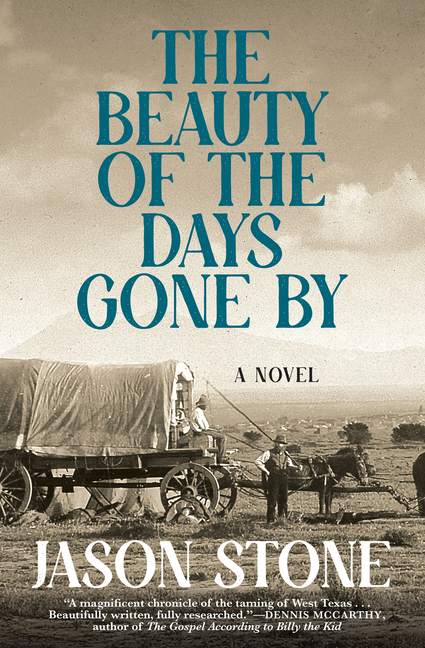
History and fiction blend in this well-researched story of iconic rancher Charles Goodnight and former Texas Ranger RL Terry, as they try to redeem lost kinsmen.

The Beauty of the Days Gone By

Jason Stone

Atlantic Monthly Press | $28 | 9780802167408

In his mesmerizing debut, The Beauty of the Days Gone By, Jason Stone brings the post-Civil War frontier to brutal yet ephemeral life, capturing the clash between white Texas settlers and the Kiowa and Comanche. Deeply researched, the novel is based on the life of legendary cattleman Charles Goodnight and his associates who helped "tame" the sprawling area of West Texas known as Comancheria.

Spanning two eras, the story begins in 1866 with former Texas Ranger RL Terry returning to his burnt-out ranch; his two boys have been taken by a Kiowa war party, and his wife dies in his arms. The other timeline, in the 1920s, sees the nonagenarian Goodnight unspooling his life to a university historian, J Evetts Haley (his real-life biographer). Over 400-plus pages, RL tracks across the Comancheria searching for his sons, while his eldest, Sam, accepts assimilation into the Comanche tribe under the approving eye of chief Quanah Parker. Stone expertly weaves the competing arcs into a propulsive narrative full of mellifluous sentences and unpunctuated dialogue that resembles oral storytelling around a campfire. It all leads to a final confrontation between Kiowa, Comanche, and Cheyenne warriors and Texans in 1874, and the revelation of a long-held secret by Goodnight in 1929. The Beauty of the Days Gone By is an ambitious and gorgeously written tale about survival, redemption, and how memory can shape the past just as much as the future. --Peggy Kurkowski, freelance book reviewer in Denver

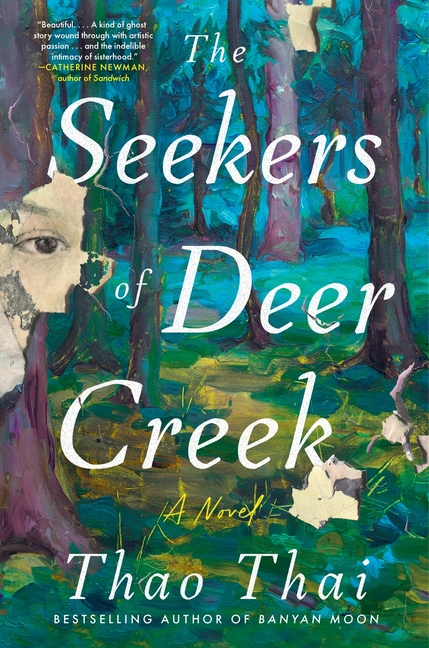
Thao Thai's luminous second novel follows two Vietnamese American sisters on a quest to unearth their family's connection to an enigmatic French Vietnamese artist.

The Seekers of Deer Creek

Thao Thai

Mariner Books | $30 | 9780063381599

Thao Thai's tense, luminous second novel, The Seekers of Deer Creek, explores art, love, loss, and family through the complicated story of two Vietnamese American sisters and their connection to an enigmatic French Vietnamese artist.

Growing up in rural Deer Creek, Wis., Vivi and Calla Nguyễn shared a fierce bond. They were wildly different in temperament but devoted to one another and their art. After their mother left, Vivi became the caretaker for Calla and their father, Tuấn, a mercurial man who rarely spoke of the family he left back in Việt Nam.

As adults, the sisters pursue different life paths: Vivi as a meticulous, respected art conservator at a Chicago museum, Calla as a brilliant artist who moves through the world and her studio with passion and boldness. Months after Calla's latest art opening--site of a dramatic falling-out between the sisters--their father dies, and Calla discovers among his papers a mysterious letter and an unfinished sketch, which bears a striking similarity to a piece called Blue Mirror by the French Vietnamese artist K.P. Lý. She convinces Vivi that these prove their family has a link to Lý. Reluctantly, Vivi agrees to join Calla on a quest that takes them from their native Midwest to the French countryside to their ancestral home in Việt Nam, and--more importantly and more dangerously--into the fraught terrain of their relationship.

Thai (Banyan Moon) deftly captures the nuances of the sisters' connection. Tender and spiky, like the sisters' relationship, The Seekers of Deer Creek mixes art history, family secrets, and psychological insight to create a dynamic portrait of two unforgettable women. --Katie Noah Gibson, blogger at Cakes, Tea and Dreams

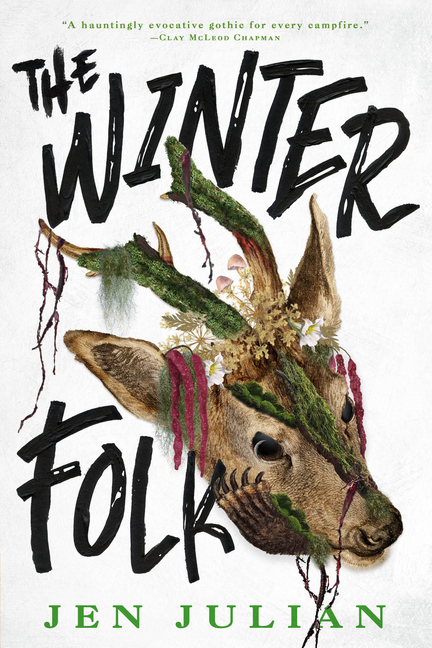
A woman from Appalachia works in a magical resort for wondrous, monstrous creatures in this atmospheric fantasy horror novel.

Winter Folk

Jen Julian

Run for It | $19.99 | 9780316580496

A woman from Appalachia works in a resort for monsters in the atmospheric fantasy horror novel The Winter Folk by Jen Julian (Red Rabbit Ghost).

Vera has returned to her hometown with her husband and teenage daughter after years away. She hasn't told them she's keeping her eyes open for any sign of the Winter Folk, wondrous but monstrous creatures who came every winter to stay at Deerhaven, a resort that lies through a magical door. Mr. Oslin, Deerhaven's antlered host, recruited Vera to the housekeeping staff when she was a struggling young woman by offering a wish in exchange for her service. Vera had to abide by strict rules, such as going by "Moth" and never speaking her true name, or she'd face dire consequences. She earned the trust of chillingly strange residents (including a "spindly, white-eyed specter who was twelve feet tall"), befriended other human staff members, and fell madly in love with the gentle, mysterious Oslin. She also left under disastrous circumstances. Vera/Moth details her adventures at Deerhaven with interstitial scenes from the present day.

Julian's gothic horror story has the feel of folklore and reads like a Cheshire cat smile with very sharp teeth indeed. Vera's struggles with her family's history of mental illness, addiction, and poverty underscore her drive to make a place for herself at Deerhaven. The dual timelines work together toward a propulsive conclusion that leaves the magic portal ajar for further horrors or healing. --Jaclyn Fulwood, blogger at Infinite Reads

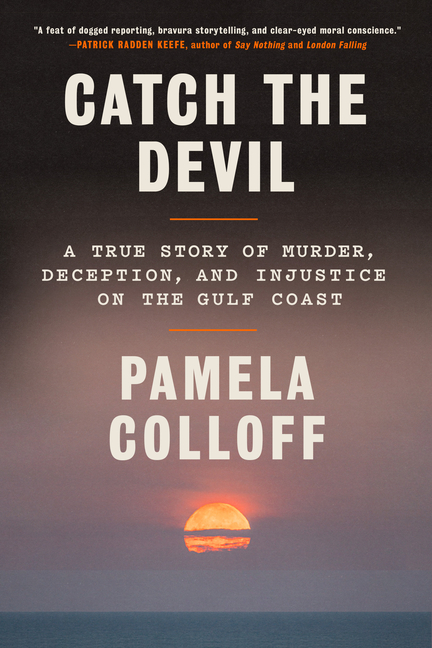
Pamela Colloff paints a disturbing portrait of fabulist Paul Skalnik and the role his manufactured confessions played in sending nearly 30 defendants to prison, four of them sentenced to death.

Catch the Devil: A True Story of Murder, Deception, and Injustice on the Gulf Coast

Pamela Colloff

Knopf | $32 | 9780593230862

Catch the Devil is ProPublica and New York Times Magazine journalist Pamela Colloff's measured but disturbing account of the outsized role one man played in the Florida court system to send at least 27 defendants to prison, including four to death row, through a series of fabricated confessions.

Colloff recounts the sordid story of Paul Skalnik, a serial con man, pedophile, and bigamist who displayed a preternatural talent for obtaining confessions from fellow inmates and parlayed his usefulness into bargaining chips to win favorable treatment for himself. Colloff focuses on Skalnik's role in the case of James Dailey. Dailey, who served three tours of duty in Vietnam, returned bearing severe emotional trauma, and turned to alcohol and drugs. He moved to Pinellas County, Fla., and in 1986, along with his friend Jack Pearcy, was charged in the savage stabbing death of 14-year-old Shelly Boggio.

With no physical evidence linking Dailey to Boggio's murder, and only the dubious testimony of his co-defendant to establish his involvement in the crime, prosecutors turned to Skalnik, who already had a strong track record as an informant. Their star witness soon miraculously related a "brief but lurid account" of the crime he claimed came from Dailey's mouth. Five days after the trial ended in a conviction, Skalnik was a free man.

"What made him so dangerous," Coloff argues, "was not his intelligence or cunning, but rather how readily the institutions that were supposed to uphold the law and protect the most vulnerable had amplified his lies." Catch the Devil is a sobering glimpse inside a criminal justice system bent on securing convictions at any cost. --Harvey Freedenberg, freelance reviewer

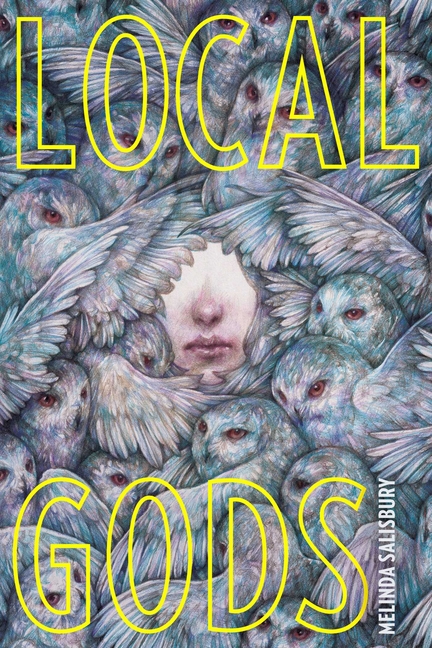
This twisty, mystical, supernatural folk-horror novel follows a teen whose town's fate is in her hands when she meets its dying god.

Local Gods

Melinda Salisbury

Sarah Barley Books | $19.99 | 9798347101450

Local Gods by Melinda Salisbury (Her Dark Wings) is a twisty, mystical, supernatural folk-horror novel about a teen whose town's fate drops into her hands when she meets its dying god.

"White, slim, conventionally pretty" 17-year-old Sylvie fled her privileged life in Pine Ridge Hollow when the FBI raided her home seeking her missing father on fraud and embezzlement charges. Six months later, Sylvie returns to her hometown, which has fallen into disrepair as the debts of those who were victimized by her dad's investment schemes mount. Now she and her mother live in semi-exile in a half-finished railway station in the West Woods, where the bloodthirsty and "inexplicably" all-white wildlife eat the town's livestock and pets. There Sylvie meets a cryptid named Illican, with a human body, golden eyes, "black ridged horns erupting from its temples," and white hair. She realizes Illican is not, in fact, a cryptid but a horned god bound to the town. Sylvie is drawn to the deity but learns he is dying as the impoverished Pine Ridge Hollow fractures at the seams.

Salisbury expertly includes generational trauma, abandonment, and socioeconomics in a mystery heavily steeped in paranormal and folk horror. Bewildering scenes and creepy animals abound; Sylvie imagines "flaying herself down to the marrow" and dreams of a blossom growing out of her mouth and suffocating her. Salisbury pairs these unsettling intrusive thoughts with deliciously disturbing animal imagery: a single white deer devouring a snake in three bites, a yellow jacket smashing itself repeatedly against a window. These visceral, atmospheric sequences are the perfect backdrop for this absorbing small-town mystery about magic, rebirth, and longing to belong. --Lana Barnes, freelance reviewer and proofreader

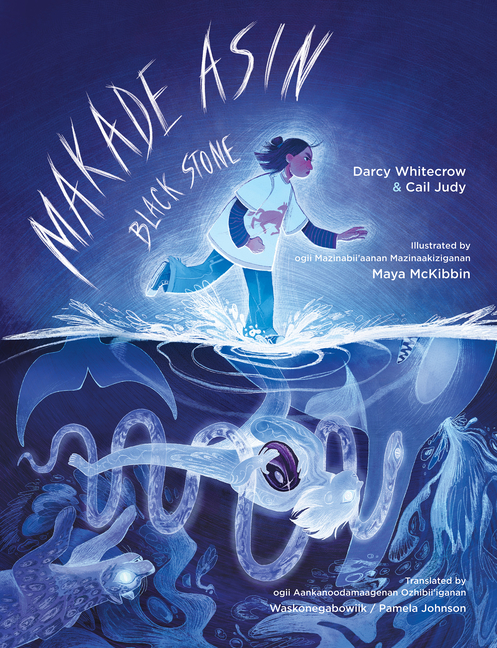
Makade Asin/Black Stone, a culturally grounded picture book about fear and self-discovery, invites young readers to confront the unknown.

Makade Asin/Black Stone

Darcy Whitecrow and Cail Judy, trans. by Pamela Johnson, illus. by Maya McKibbin

Groundwood | $19.99 | 9781779460158

Darcy Whitecrow (Across the Ice) and comics author Cail Judy's Makade Asin/Black Stone is a striking and contemplative dual-language picture book based on a traditional Indigenous story. The work opens with a question: "When you are full of fear... how do you stop being afraid?" This query immediately situates readers within an effectively direct emotional and philosophical framework. The abstract tone, though, may require a moment of adjustment for younger audiences before the narrative's action begins.

An unnamed Indigenous child seeks guidance from an elder, who instructs them to find a mysterious black stone that will lessen the hold of fear. The child embarks on a perilous trek through various landscapes: thick jungle, rushing waters, and quicksand. The episodic structure emphasizes moments of confrontation and self-realization as the child faces each challenge with increasing resolve.

The full-bleed digital illustrations by Maya McKibbin (The Song That Called Them Home, with David A. Robertson) make powerful use of the page, even adding panels atop areas of blank space. Swirling, kinetic lines and jagged forms heighten the sense of danger and urgency, and contrasting colors distinguish emotional states. The imagery is dense and immersive, reinforcing the intensity of the youth's experiences.

The bilingual presentation, with text in both Anishinaabemowin and English (translated by Pamela Johnson), adds an important cultural dimension. The narrative underscores themes of inner strength, cultural continuity, and self-discovery. The conclusion remains deliberately open-ended, allowing readers space to consider their own answers. Readers of any age--especially those with an appreciation for Daniel Nayeri and Matt Rockefeller's Drawn Onward--may leave Makade Asin/Black Stone with a feeling of strength, courage, solemnity, and creativity. --Julie Danielson

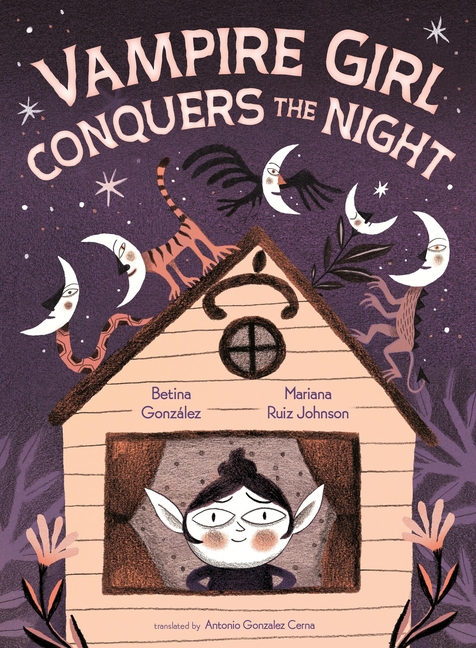
A vampiric child overcomes her fear of the dark in this folklore-infused, gently creepy Argentinian picture book.

Vampire Girl Conquers the Night

Betina Gonzáles, trans. by Antonio Gonzalez Cerna, illus. by Mariana Ruiz Johnson

Levine Querido | $18.99 | 9781646147267

A vampiric child longs to overcome her fear of the dark in Argentinian author Betina Gonzáles's gently creepy first picture book, Vampire Girl Conquers the Night, lavishly illustrated by Mariana Ruiz Johnson (The Book That Kibo Wrote) and translated from the Spanish by Antonio Gonzales Cerna.

Pale, pointy-eared Vampire Girl "dreams of conquering the Night." The girl "calls out to her," a figure with a crescent-moon head, elongated fingers, and a gown with skirts that teem with nocturnal animals. "But the Night is everywhere," as demonstrated by a dog's bark turning into a segmented, multilegged Night creature. Vampire Girl knows vanquishing the Night would give her power over her fear of the dark and turns to a host of ghoulish monsters (including Disaster Girl and Legendary Vampire) for advice. Vampire Girl, they say, can only become one of them if she finds her Dark Night of the Soul, "the most terrible of nights" that happens "within oneself." Vampire Girl tunes into her worries and exhales a small black cloud. Releasing her fear shadow frees Vampire Girl to fly into the hands of the Night and soar contentedly with the other monsters in the Night's rippling skirts.

Johnson's illustrations of violet darkness and the sharp-eyed creatures who live in it have a strong folkloric influence, filled with details that ask readers to slow down and look closely. Gonzales balances a realistic childhood fear with a wild and wonderful magical world as she stealthily gives young readers a practical strategy for soothing their fears. Vampire Girl Conquers the Night should beguile budding young horror fans during spooky season or all year round. --Jaclyn Fulwood, youth services manager, Allen County Public Library

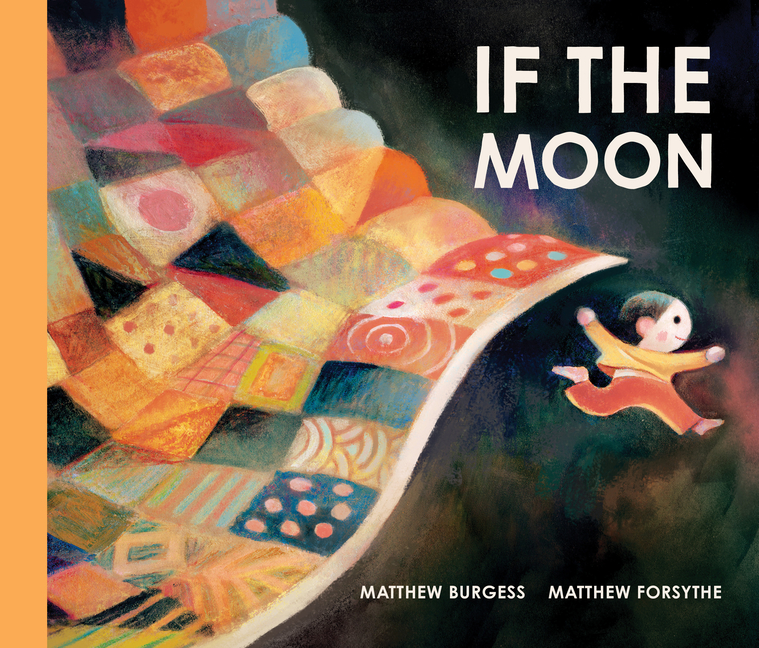
If the Moon is a gentle picture book that turns late-night worries into moments of wonder.  

If the Moon

Matthew Burgess, illus. by Matthew Forsythe

Stonefruit Studio | $19.99 | 9781464244049

If the Moon, written by Matthew Burgess (author of the Caldecott Medal-winning Fireworks, illustrated by Cátia Chen) and illustrated by Matthew Forsythe (Mina; Pokko and the Drum), is a quiet, thoughtful meditation on nighttime worry and imagination.

The book, which invites readers to reconsider the phrase "if" as an opening toward possibility, is structured almost entirely in questions. A young child lies awake under a patchwork quilt. "If can be a dark room where worries swell and rise...." In just a handful of words, paired with a single image, the emotional stakes are clear: this is a fearful child. A page turn offers a pivot: "Or." The child dives into a quilt panel as if it's water. The text's tone begins to loosen as the waves of color ripple out from the point of exuberant impact. From there, "if" becomes a launching point rather than a trap. Each scenario builds on the last, gently expanding the child's mental landscape away from worry and toward curiosity. Forsythe's illustrations reinforce this shift with formatting and a soft, cohesive palette. As the child's curiosity deepens, the illustrations expand as well; they move from contained panels to full pages and then to sweeping double-page spreads.

Burgess avoids overt instruction. There is no direct statement about managing anxiety. Instead, the book trusts readers to recognize the transformation: "If" moves from unease to a prompt for creative thinking. Spare in text yet expansive in implication, If the Moon offers a gentle reframing of a familiar childhood experience and positions imagination as a steady, accessible counterbalance to worry. --Julie Danielson

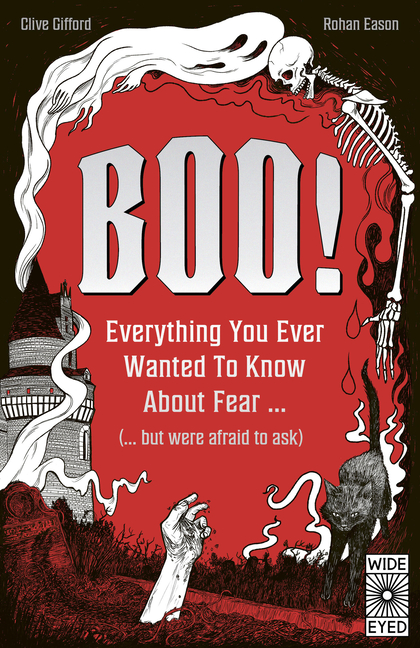
Clive Gifford and Rohan Eason shine a light on fear and show middle-grade readers how fascinating and entertaining terror itself can be.

Boo!: Everything You Ever Wanted to Know About Fear (but Were Afraid to Ask)

Clive Gifford, illus. by Rohan Eason

Wide Eyed Editions | $16.99 | 9781836005469

Boo!: Everything You Ever Wanted to Know About Fear (but Were Afraid to Ask) is a captivating middle-grade treasury of everything scary, written by Clive Gifford (How Airports Work) and illustrated by Rohan Eason (Wildwitch series illustrator).

Gifford delves into the realm of fear, discussing how and why the body reacts to terror; the history of spooky festivals, superstitions, and "scaretainment"; and even how to write scary stories. He uses direct, clear language to show the inner workings of the brain as it processes threats and how the body responds to the brain's signals. Once readers are educated in the science of fear, Gifford takes them through an unsettling maze of spellbinding history and exciting facts. Gifford requires no tricks, but he does treat readers to the history of scary stories and, in a section titled "Terror Teaches," explains the roles those stories have in "encouraging people to act in what their group or society thought was the right way." The final chapter offers writing advice, including story starters, grippers, "deadly descriptions," and twists.

Eason contributes to the text's disquieting tone with his black, white, and red mixed-media art. Blood drips from the tops of pages, a skeleton hand proffers a meaty red brain for viewing, and full- and double-page illustrations feature frightening images. Eason's art, which depicts the straightforward as well as the scary, is realistic, with heavy cross-hatching, fittingly reminiscent of the work of Edward Gorey. Readers should be intrigued by Gifford's extensive examination of this hair-raising subject and, armed with all this knowledge about fear, they may go forth and confidently face all that goes bump in the night. --Jen Forbus, freelancer

The Writer's Life

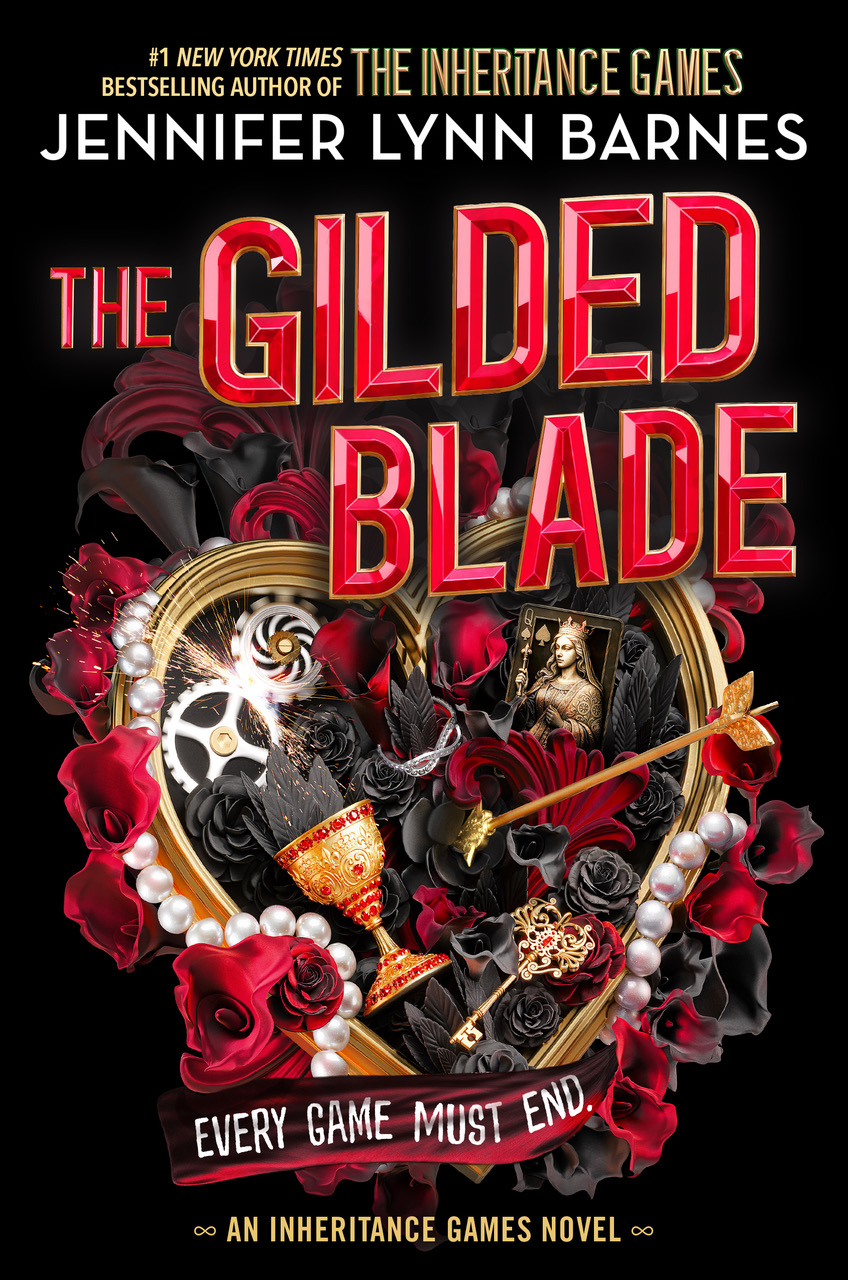
Jennifer Lynn Barnes, author of more than 25 acclaimed YA novels, chats with Kelly McWilliams about The Gilded Blade, the 10th and final title in Barnes's massively popular Inheritance Games Saga. Barnes talks about her process of mapping out puzzles; which elements of the cover fans should take an extra-long look at; and the reveals she has been waiting to write (and her fans have been waiting to read!) for years.

The Writer's Life

Jennifer Lynn Barnes: An Exhilarating and Challenging Puzzle

Jennifer Lynn Barnes is the author of more than 25 acclaimed young adult novels, including the Inheritance Games Saga, the Debutantes series, The Lovely and the Lost, and the Naturals series. Barnes is also a Fulbright Scholar with advanced degrees in psychology, psychiatry, and cognitive science.

Kelly McWilliams is the biracial author of Agnes at the End of the World, Mirror Girls, and No One Leaves the Manor (Little, Brown Books for Young Readers). Her work blends horror, history, and girlhood into stories sharp enough to cut.

Here, McWilliams interviews Barnes about the 10th and last title in Barnes's massively popular Inheritance Games Saga, The Gilded Blade (Little, Brown Books for Young Readers). Barnes talks about the reveals she has been waiting to write (and her fans have been waiting to read!) for years, her process of mapping out puzzles, and which elements of the cover fans should take an extra-long look at.

Kelly McWilliams: Congratulations! The Gilded Blade is a fantastic finale to a sweeping, globe-trotting, and explosive narrative. What was it like to write this last book--and now that's done, what will you miss the most about this extensive universe you've created?

Jennifer Lynn Barnes: The Inheritance Games was an experiment in consciously putting as much joy as I could in a story, so this series and this world are full of things I love to write. I had no idea when I wrote it that it would spawn a universe of stories that spans nine books, multiple continents, decades' worth of Hawthorne family history, countless mysteries, close to a dozen different romantic arcs, and so many puzzles, riddles, and codes.

Jennifer Lynn Barnes
(Kim Haynes Photography)

I went into writing The Gilded Blade with a long list of ambitions. I wanted it to be the perfect finale both for the Grandest Game trilogy and for the entire Inheritance Games Saga, and that meant that my list of must-haves for this book--in terms of character and relationship arcs, plot reveals, callbacks, emotional beats, and closure--was pages and pages long. Writing The Gilded Blade was both exhilarating and challenging in a way that no other book I've ever written has been. Finally getting to lay out all the reveals I'd been building up to for years was a total rush.

Now that the series is complete, there are a lot of things that I will miss about writing these books, chief among them the characters. I vividly remember writing The Hawthorne Legacy and much of The Final Gambit while my young family and I were locked down for the Covid-19 pandemic, so there was a season of my life where all my time was spent either with toddlers or Avery and the Hawthornes.

McWilliams: The books are all such a perfect puzzle, it gives me anxiety as a fellow writer! Did you ever worry about losing a thread?

Barnes: I didn't go into writing this series with a nine-book plan. I started book one not knowing if my publisher would want a second book, and then I had to finalize book two without knowing whether there would ever be a book three. I got in the habit of making sure each individual book worked on multiple layers, that it tied together the story, mystery, and puzzles in that book while secretly laying in the groundwork for future puzzles and twists. Sometimes, I knew exactly what the puzzle pieces I was laying in meant, and how they would come up again in the future; sometimes I'd know that something mattered without knowing why. From book three on, I started keeping a running list of all the clues, what I knew, what I suspected, and the possibilities that intrigued me the most, and when I was revising The Grandest Game, I had a very good idea where the story was headed.

By the time I got to The Gilded Blade, I had the list of clues from all the prior books that I'd already laid in, and it was just a matter of figuring out the order of the reveals and the nitty-gritty details of each element of the puzzle. That part of the book was far easier for me than balancing the sheer number of character and relationship arcs that needed to come to a fruition in the finale.

McWilliams: The Gilded Blade features the perspectives of Jameson, Rohan, Gigi, and Lyra (one of my personal favorite characters!). Do you ever miss the days of the single-POV trilogy, or do you enjoy juggling perspectives?

Barnes: As a writer, I have a strong preference for writing first person with a single narrator. The original Inheritance Games trilogy and my earlier books, like the first four books in The Naturals series, were very much in my comfort zone because I used that point of view. After I wrote The Final Gambit, though, and started thinking about where I wanted to take the Inheritance Games universe next, I knew that I would need multiple points of view to tell the story I wanted to tell. I still think that was the right decision, but I missed writing first person--and centering the narrative on a single protagonist--in every single book!
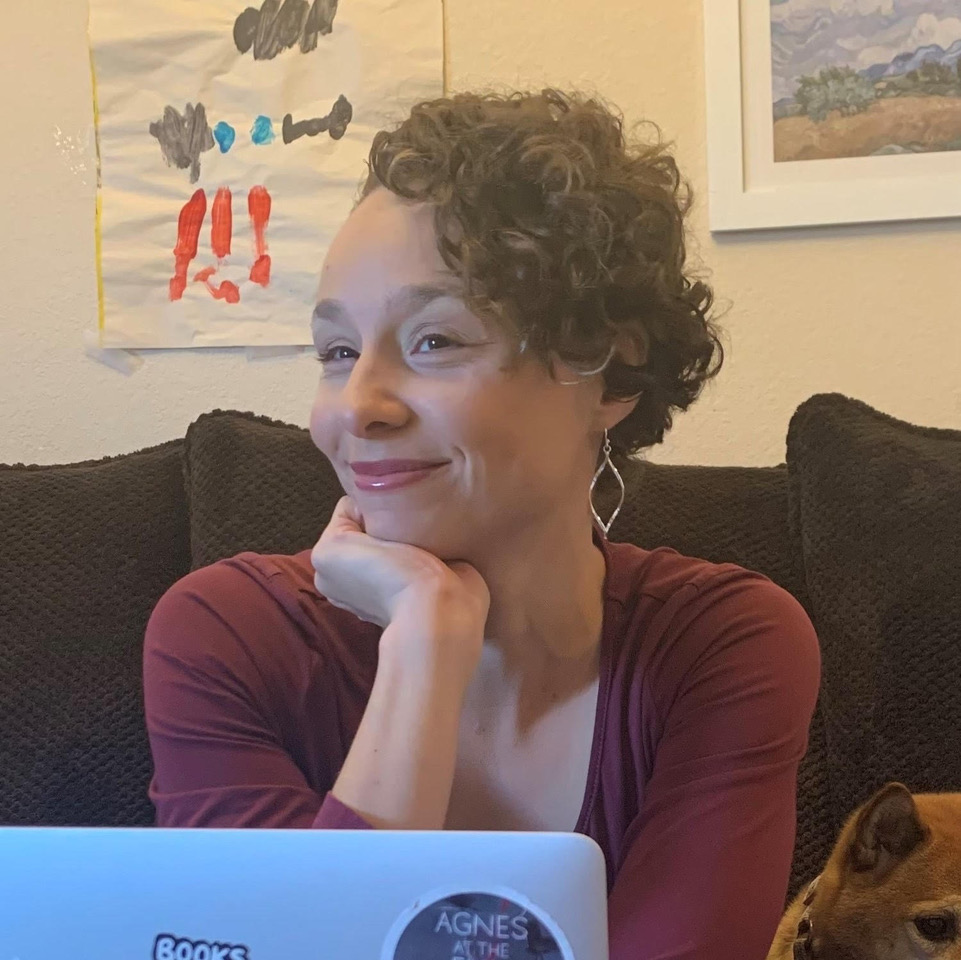
Kelly McWilliams
(photo: Bill Mullen)

McWilliams: I've been reading your books for a long time, and I've always really appreciated the covers. Can you point us in the direction of any special clues on the cover of The Gilded Blade? I know everyone is watching for the Queen of Spades...!

Barnes: It has been such a joy working with my publishing team on the packaging for these books, because the covers themselves do function as a puzzle. Like Lyra in the books, I have aphantasia, a lack of a mind's eye, which means I can't visualize anything, so my role in the covers really is just that puzzle aspect. It's amazing to me to send off a list of possible puzzle pieces and see what my brilliant cover designer and equally brilliant cover artist come up with.

As for The Gilded Blade, you've hit on one of the most meaningful parts of the cover, which is that Queen of Spades card. Every element of that card--not just the fact that it's the Queen of Spades--has a hidden meaning that ties to the book. Of all the other objects, I'd say that the one longtime readers might want to pay special attention to is the key.


Book Candy
Rediscover

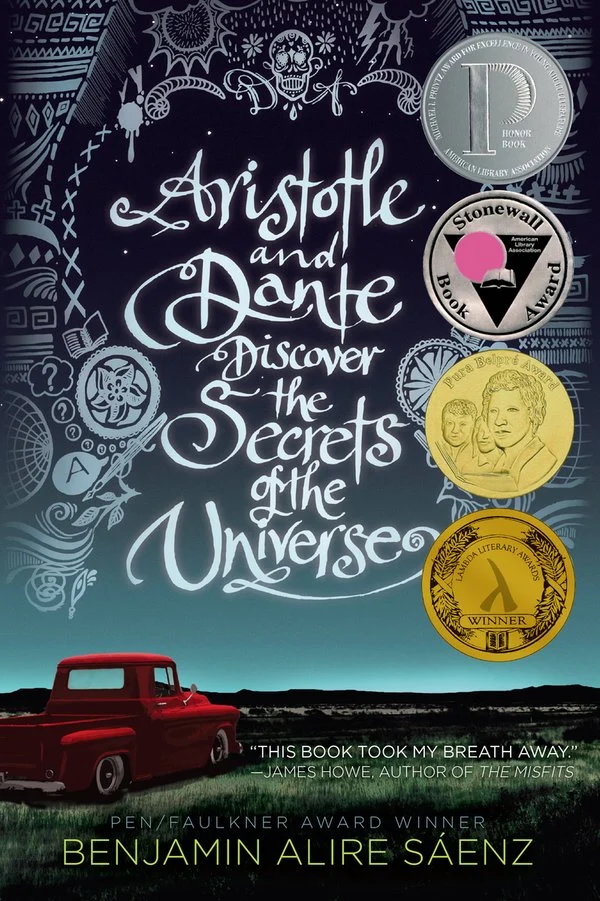
Benjamin Alire Sáenz, a farmboy, priest, teacher, poet, novelist, and artist "whose complex life and acclaimed work have been widely recognized," died July 28 at age 71, El Paso Matters reported. Sáenz's works include the PEN/Faulkner-winning Everything Begins and Ends at the Kentucky Club and the bestselling Aristotle and Dante novels. 

Born in Old Picacho, N.Mex., a small farming community near Las Cruces, Sáenz drew from his life for his writing.

Rediscover

Rediscover: Benjamin Alire Sáenz

Benjamin Alire Sáenz, a farmboy, priest, teacher, poet, novelist, and artist "whose complex life and acclaimed work have been widely recognized," died July 28 at age 71, El Paso Matters reported. Sáenz's works include the PEN/Faulkner-winning Everything Begins and Ends at the Kentucky Club and the bestselling Aristotle and Dante novels.
Born in Old Picacho, N.Mex., a small farming community near Las Cruces, Sáenz drew from his life for his writing. "It is my stubborn heart that's made me the writer that I have become. There was no Plan B. I was going to become a writer," he said in a TEDx Talk in El Paso in 2023.

"What Ben did that nobody else could get away with is be bold enough to be sentimental, to write heartbreaking things that some people might think are too emotional," said author and friend Daniel Chacón, who is chairman of the Creative Writing Department at the University of Texas at El Paso. "That's what he did best."

In 1972, Sáenz earned a bachelor's in humanities and philosophy at the St. Thomas Seminary in Denver. He later studied theology at the University of Louvain in Belgium before entering the Catholic priesthood, serving in El Paso for three years before leaving his order.

"Ben was irrepressibly hopeful of the human spirit," said Ruben Garcia, a friend and founder of the Annunciation House network of migrant shelters in El Paso. "That was non-negotiable for him--the human spirit--and he was incredibly protective about that."

After leaving the priesthood, Sáenz returned to school, earning a master's in creative writing from the University of Texas at El Paso and then joined the faculty there, teaching creative writing and serving as chair of the department while publishing poetry and fiction. He retired from the university in 2016.

In the 1990s, Sáenz published his debut poetry collection, Calendar of Dust, which won an American Book Award; Carry Me Like Water, a novel that won the Southwest Book Award; and The House of Forgetting. He also wrote several children's books, including The Dog Who Loved Tortillas, A Gift From Papa Diego, and in 2006 the YA novel Sammy and Juliana in Hollywood.

His two most prominent books were published in 2012, El Paso Matters noted: "Aristotle and Dante Discover the Secrets of the Universe, a young adult novel set in El Paso in the 1980s, centers on two Mexican-American teenage boys who become friends and fall in love. His collection of short stories, Everything Begins and Ends at the Kentucky Club, is set in El Paso, Ciudad Juárez and the bar at the foot of the international bridge that connects the two cities." In addition to the PEN/Faulkner Award for Fiction, the book, published by Cinco Puntos Press, won a Lambda Literary Award and a Stonewall Honor.

The Texas Institute of Letters honored Sáenz with a Lifetime Achievement Award in 2020. The organization's current president, Chris Barton, said Sáenz is "one of (Texas') most significant writers.... In 2009, TIL inducted a poet, a children's book author, a terrific author of fiction, and a mentor and teacher to a lot of Texas writers. And that was all one person." 

Sáenz published Aristotle and Dante Dive into the Waters of the World, a sequel to the earlier novel, in 2021. It was adapted into an independent film in 2023. On September 29, two new books will be released: When the World Was Happy (Simon & Schuster Books for Young Readers) and Grandma Fina's Wonderful Umbrella, illustrated by Raúl the Third, with color by Elaine Bay (HarperCollins).

Susie Byrd, whose parents published numerous Sáenz books at Cinco Puntos Press, said El Paso was the primary character in his work: "He just loves this place so much, and that's so present in everything he writes about. He loves the people, he loves the geography, he loves the complexity, and he wants everybody else to love it. And he's determined to make you see what's beautiful and important about this place."

Powered by: Xtenit