Latest News
Flatiron Books: Meet the Newmans by Jennifer Niven
WHAT TO READ NEXT: REVIEWS OF GREAT BOOKS

Several exciting novels have gone around the sun enough to wind up in new paperback editions. Tilt (Scribner) by Emma Pattee features an expectant mother returning home from the labyrinth of an IKEA, after a harrowing earthquake. "Tilt may sound like a nightmare..." our reviewer wrote, "yet Pattee's surprisingly tender portrait of motherhood is enough to buoy even the most fearful reader."

Private Rites (Flatiron Books) by Julia Armfield explores in prose "as mesmerizing as it is cathartic" the existential dread of staying afloat in a drowning world with Shakespearean overtones. And Such a Bad Influence (Quirk Books) by Olivia Muenter delves into the machinations of the influencer economy when a social media star goes missing, for a riveting thriller sure to leave readers' heads spinning.

Read on for even more great recommendations! --Dave Wheeler, senior editor, Shelf Awareness

FEATURED TITLES
Cover

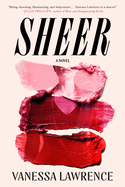
Sheer

Vanessa Lawrence

Thoughtful and provocative, Vanessa Lawrence's propulsive novel examines the dark side of the beauty industry.
Cover

Sheer

Vanessa Lawrence

Dutton | $29 | 9780593854860

In her gripping and sharply observed second novel, arts and fashion journalist Vanessa Lawrence (Ellipses) offers an insider's view of the power dynamics within the beauty industry through a brilliant but flawed protagonist whose secrets threaten to destroy her career.

The novel begins when Maxine "Max" Thomas learns that the board of Reveal, the successful cosmetics company she founded, is planning to remove her after an explosive allegation. Holing up in her luxury NYC apartment over the next few days, Max looks back over her life. Max has always known that she was attracted to women and wanted to use her talent with makeup to make them beautiful. Rejected by her loveless parents, she left home while still a teenager, doing makeup for wealthy women and depending on referrals to survive. With a client's investment and her own single-minded drive, Max created a bestselling brand. The trade-off was keeping her sexuality a secret and looking away from misogyny and homophobia in the industry. But the suppression of her sexual identity, the grind of corporate politics, and her own ambition has come at a personal cost. When Max embarked on an affair with her much-younger assistant, Amanda, she was too blinkered to see the lines she was crossing. Now, as she prepares for a showdown with Reveal's board, Max stands to lose everything she has worked so hard to achieve.

Lawrence lends thoughtful insight into the cosmetics trade, including the development and marketing of products. Sheer is a smart, provocative examination of how women in business are forced to juggle competing loyalties to themselves and one another at the intersection of exploitation and empowerment. --Debra Ginsberg, author and freelance editor

Cover

The Moon Without Stars

Chanel Miller

Chanel Miller's sophomore middle-grade novel brilliantly discusses popularity in a way that invites in every reader--no matter their (perceived) status.
Cover

The Moon Without Stars

Chanel Miller

Philomel Books | $17.99 | 9780593624555

The Moon Without Stars by Newbery Honoree Chanel Miller (Magnolia Wu Unfolds It All) is an exemplary work of middle-grade realism that is both immediately relatable and intensely kind, accessible to any child reader no matter their (perceived) place in their social hierarchy. 

Twelve-year-old Luna and Scott have been friends since they were little. They eat lunch together at the redwood tree, silently building their complementing talents of writing (Luna) and art (Scott). Luna, whose father is white and mother is Chinese, recognizes that she and Scott are "pretty invisible, under-the-radar people," but this doesn't worry her--Scott's friendship is "as obvious as the sun in the sky." This changes, though, when Luna and Scott create a zine to boost a classmate's confidence. Soon, they are making zines to help everyone: a popular boy upset about his bacne, a girl whose boobs are "uneven sizes," and one kid whose deodorant makes them smell like "sour weeds." As Scott and Luna become known for uplifting those around them, Luna is befriended by popular June and leaves Scott behind.

Miller succeeds marvelously at developing each child into a fully formed character--there is no Regina George here, just a bunch of adolescents figuring it out. Her plot appears effortless; every small interaction influences Luna's friendships and self-esteem. And, when things go terribly wrong, Miller is honest with her readers: "to be a seventh grader was to be stuck inside your circumstances.... Everything you did followed you." Miller's realism is enhanced by the kindness, need, and hope her characters exude. This is an excellent reading choice for fans of Erin Entrada Kelly or Kate Messner. --Shaina Gates

Neal Porter Books: Bored by Felicita Sala
Cover

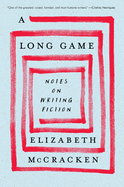
A Long Game: Notes on Writing Fiction

Elizabeth McCracken

Longtime writer and teacher Elizabeth McCracken shares a few (okay, 280) insights on writing fiction in this funny, thoughtful, and pithy collection of her observations.
Cover

A Long Game: Notes on Writing Fiction

Elizabeth McCracken

Ecco | $26.99 | 9780063375291

Perhaps the greatest gift of A Long Game is Elizabeth McCracken's assumption that readers of this book are writers, students in her class, and she is here to encourage them. But, in fact, even for those who simply enjoy reading, this book is a gem and makes an ideal gift for all readers (and secret writers).

"I believe in modes of thinking, not rules," McCracken (Thunderstruck) writes in one of the book's 280 numbered sections. "Occasionally a student will beg me for a rule. 'Just one,' the student will say. 'Something, anything.' I refuse," reads another. McCracken loosely organizes the honest, open, and pithy sections (some comprising two sentences, others two pages) into 10 thematic chapters.

One of McCracken's best tips is about breaking through "a block of any kind": Struggling with a title? "Generate as many as you can." An event? "Write at the top of a page, What can happen next? and then a list." She blows open clichés such as "write what you know" and "real writers write every day"; "me, I harness the power of my own self-loathing" to get work done, she confesses.

McCracken discusses narrators and timelines, critics and perfectionism and humor, and shares a terrific observation about plot: "Event is what happens in a story, but plot is the electricity between events, how events lead one to the next, working the way through the characters." Once at the beginning and again at the end she writes, "I'm talking to myself." Readers get to be her lucky witnesses to this funny, insightful, and instructive soliloquy. --Jennifer M. Brown

Cover

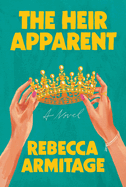
The Heir Apparent

Rebecca Armitage

Loaded with nearly as much drama as the real British royal family, The Heir Apparent introduces readers to a new yet very familiar version of the monarchy.
Cover

The Heir Apparent

Rebecca Armitage

Cardinal/Grand Central | $29 | 9781538776308

In her debut novel, The Heir Apparent, Rebecca Armitage delivers a reimagined British royal family, one full of secrets.

Lexi loves her life in Tasmania: she has excellent friends and is in her second year of her medical residency. She is also third in line to the throne of the United Kingdom. When her father and brother die together in a skiing accident, she is thrust back into the world she fled after her mother's tragic death. With a scheming uncle, her brother's social-climbing widow, and her grandmother--the queen herself--all trying to sway her, Lexi has a year to decide if she will accept the crown or return to her quiet life on the other side of the world.

Armitage successfully draws readers into her complex alternate universe. Lexi is as skilled at political negotiation, public comportment, and keeping royal secrets as she is at home on a farm in Tasmania with her found family while completing her medical residency. Readers will be left guessing until the end about which world, and life, she will choose.

With parallels to the House of Windsor, The Heir Apparent does not shy away from the many quirks and flaws of the royals. It is cognizant of modern critics of the monarchy and the role colonialism has played in shaping the world. Like a grown-up version of Meg Cabot's The Princess Diaries, The Heir Apparent brings readers a princess who is mature and messy, relatable and regal, and, above all, intelligent. Readers may have a strong desire to grab the latest issue of Majesty magazine. --Alyssa Parssinen, freelance reviewer and former bookseller

BOOK REVIEWS
Cover
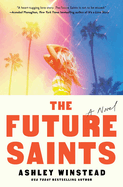
Ashley Winstead's gritty, glamorous seventh novel follows the changing fortunes of a rock band struggling to stay together after their manager's death.
Cover

The Future Saints

Ashley Winstead

Atria | $29 | 9781668024669

Ashley Winstead's propulsive seventh novel, The Future Saints, follows the titular rock band--singer/lead guitarist Hannah, bassist Ripper, and drummer Kenny--as they navigate newfound fame and complicated relationships, including the one with their new manager, Theo. Winstead (This Book Will Bury Me) layers in the emotions of the band's journey like an achingly emotive rock song: grief, longing, anticipation, misunderstanding, and a persistent spark of hope.

When Theo, who has a reputation as "the Fixer," meets the Saints, they've hit rock bottom: playing gigs in dive bars and constantly arguing with one another. Since Ginny, the former manager and Hannah's sister, died in a drowning accident, the band has floundered. Hannah's clinging to what scraps of Ginny's presence she can still feel, but when she unleashes a new, darker sound with a song about Ginny's death, the Saints unexpectedly skyrocket to fame--though no one knows if it will bind them closer together or break them apart for good. As Theo wrestles with growing feelings for Hannah, his hopes for the band, and his burgeoning sense that his bosses at the label are playing a dangerous game, he must decide whether and how he's willing to help the Saints stay on top of the charts--even if it means betraying the fragile trust they've built.

Winstead explores the glamour and grit of life on the road, and she plumbs the complexities of grief. With compelling characters and surprising emotional depth, The Future Saints pays tribute to the glitz and guts required for a life dedicated to music. --Katie Noah Gibson, blogger at Cakes, Tea and Dreams

Cover
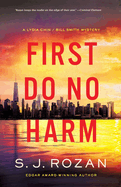
Among the sturdiest and drollest books in the Lydia Chin/Bill Smith series, First Do No Harm finds the private investigators looking into a murder rap against a Manhattan hospital's morgue assistant.
Cover

First Do No Harm

S.J. Rozan

Pegasus Crime | $27.95 | 9798897100323

As far as fictional Manhattan private-investigator couples go, the heirs apparent to Nick and Nora Charles, who lit up Dashiell Hammett's The Thin Man in 1934, must be Lydia and Bill of S.J. Rozan's Lydia Chin/Bill Smith series (Family Business; The Mayors of New York). Although they're not married--Lydia's ultratraditional Chinese mother isn't sold on "white baboon" Bill--the couple have been bantering Nick-and-Nora-style through one investigation after another. First Do No Harm is among the sturdiest and drollest installment in the series.

River Valley Downstate Medical Center morgue assistant Jordy Kazarian did the right thing: he phoned 911 after he found a nurse dead with a needle in her arm in the Manhattan hospital's basement. Now Jordy is being accused of killing her. One theory is that Jordy, a former addict, helped the nurse shoot up and, when she OD'd, freaked out and called the cops--never mind that Jordy says he never met the woman. Jordy's lawyer hires Lydia and Bill to nail down what really happened.

As Lydia and Bill tear through Manhattan interviewing hospital staff and associates, the storied city becomes a character, but the fun of this series is that Rozan strays so far from the beaten path in every book that New York is like a different city each time around. Throughout First Do No Harm, Lydia's narration reflects her bubbly tenacity, and her conversations with Bill (about the case, about his cigarette habit) capture the couple's easy rapport--Nick and Nora in a flirty-squabbly downtown incarnation. --Nell Beram, author and freelance writer

Cover
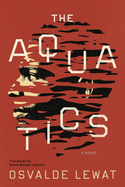
Cameroonian documentary filmmaker Osvalde Lewat's brisk, crisp debut novel tackles disturbing subjects in its excoriating focus on grief, friendship, and injustice.
Cover

The Aquatics

Osvalde Lewat, trans. by Maren Baudet-Lackner

Coffee House Press | $18 | 9781566897457

Peabody Award-winning Cameroonian documentary filmmaker Osvalde Lewat's dynamic debut novel, The Aquatics, translated from the French by Maren Baudet-Lackner, tackles disturbing subjects in its excoriating focus on grief, friendship, injustice, and government-endorsed homophobia in the fictional African nation of Zambuena. All four themes hinder 33-year-old narrator Katmé Abbia.

An unsettling prologue establishes the triggering plot point: Katmé buries her mother in a fumbled funeral. Twenty years later, the body must be exhumed and reburied to make way for a new highway. At the same time, Katmé's high school friend, Samuel "Samy" Pankeu, an activist sculptor, is arrested while putting on a significant solo show. His Ante Mortem exhibit includes a series of photographs called The Aquatics, which depict "terrified faces emerging from wastewater and flooding, ID cards floating, women hoisting babies, lamps, or suitcases overhead, the swollen face of a drowned man."

In Zambuena, it's not illegal to express disagreement with rulers but it is a criminal offense to be gay. After a newspaper outs Samy, he is imprisoned and suffers horrifically brutal attacks. Katmé enlists her abusive, serial adulterer husband, Tashun, to intervene. It gets complicated because Tashun is a prefect running for governor.

The tense novel plays out Katmé's "corset of indecision and fear" as she struggles with split loyalties and tests Samy's cautious proviso that "one should only ask from a friend what he is capable of." Lewat's brisk, crisp, straightforward prose elevates the gut-wrenching material of The Aquatics into a compulsive read. --Robert Allen Papinchak, freelance book critic

Cover
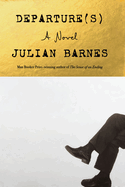
In Departure(s), Julian Barnes writes about an author named Julian Barnes who, at 77, has an incurable form of blood cancer and shares memories of college friends who have reappeared after 40 years.
Cover

Departure(s)

Julian Barnes

Knopf | $27 | 9780593804506

Fans of "agnostic/atheist" Julian Barnes (The Sense of an Ending; The Noise of Time) know that his major obsession is death, which he has written about in such works as the brilliantly titled memoir Nothing to Be Frightened Of. For Barnes, as he states in the intricately layered novel Departure(s), life "is a farce with a tragic ending, or, at best, a light comedy with a sad ending." This work, he says, "will definitely be my last book--my official departure, my final conversation with you." In it, a 77-year-old British writer named Julian Barnes has a form of blood cancer that "isn't curable, but it is manageable." Not surprisingly, he's thinking about departures, not just his inevitable demise but also friends and family who, through death or estrangement, are long gone. Two in particular are the subject of this work: university friends Stephen and Jean.

Events are rarely straightforward in Barnes's fiction, and that remains gloriously true here as he recounts their days as Oxford classmates in the 1960s, when he helped unite Stephen, "a scholarship boy of middle-class background," and "slightly posher" Jean. The couple soon broke up, and the trio lost touch. Forty years later, divorced Stephen contacts Barnes out of the blue and asks him to help reconnect him with Jean. The results are anything but smooth. As always with Barnes, references to French literature are plentiful, and the prose is enviably elegant, as when he writes that fiction "requires the slow composting of life before it becomes useable material." Literary nutrients abound in this generous work. --Michael Magras, freelance book reviewer

Cover
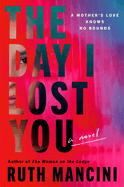
In Ruth Mancini's dexterously plotted second thriller, one Englishwoman accuses another of kidnapping her two-year-old son.
Cover

The Day I Lost You

Ruth Mancini

Harper Perennial | $18.99 | 9780063340596

Baby envy gets out of hand in The Day I Lost You, Ruth Mancini's dexterously plotted sophomore thriller. At its heart is a vexing practical question: Whose baby is it?

As the novel begins, Lauren Hopwood, an Englishwoman living in a Spanish fishing town, finds two policemen at her door: "We've come about a missing child.... An English child," one cop tells her. Lauren says she knows nothing about a missing kid and that the toddler sleeping in the bedroom is her son--and she has the birth certificate and passport to prove it. Regardless, the cop tells her that "the police in the UK were given your name by his parents, who say that fifteen months ago, you abducted their child from their home in England." Not long after the cops leave, Lauren and the toddler hightail it out of town. What happened seems obvious. But is it?

The novel hops back in time one year, when Hope Dunsmore, the Englishwoman claiming that Lauren kidnapped her child, takes up the point of view, after which the book continues to jump chronologically backward, alternating between Lauren's and Hope's perspectives until Hope's husband finally weighs in. Although everyone's voice sounds alike, the three different viewpoints afford the pleasures of watching a hypothetical three-sided tennis match. The Day I Lost You finds its three central characters at least thinking about doing the right thing; meanwhile, Mancini (The Woman on the Ledge), a lawyer, uses her expertise to show that morality and the law aren't always natural allies. --Nell Beram, author and freelance writer

Cover
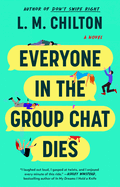
Set in the English countryside, this horror-inflected, mordantly funny thriller finds a journalist trying to figure out how a dead influencer appears to have revived an old group chat.
Cover

Everyone in the Group Chat Dies

L.M. Chilton

Scout Press/Gallery | $19 | 9781668094174

What's the most entertaining way to skewer clickbait culture? If you're L.M. Chilton (Don't Swipe Right), it's by writing a horror-inflected, mordantly funny thriller, namely Everyone in the Group Chat Dies.

As the novel opens, narrator Kirby Cornell, a journalist, receives a notification from an old group chat: "Esme" texts "miss me?" Missing Esme isn't unthinkable, given that she's been dead for 12 months. From here the novel springs back a year, when Kirby is living in "the arse-end of the English countryside" and reporting for the Crowhurst Gazette. The moribund town has a claim to fame: "Thirty years ago," notes Kirby, "Crowhurst was home to the UK's seventeenth-worst serial killer," who is believed to have died by suicide. And yet this put-to-rest story brings charismatic influencer Esme Goodwin to town: "I've come here to catch a serial killer," she informs Kirby.

Kirby's narration flits between her observations about Esme's investigation and, in the one-year-later present, her own detective work while whoever has Esme's phone proceeds to threaten everyone in the group chat. Although humor abounds--the chatter among Kirby and her roommates has the rat-a-tat of a prestige sitcom--Everyone in the Group Chat Dies has serious points to make, including about the importance of local media. (Kirby and the Crowhurst Gazette are up against a news organization that runs click-generating stories such as "22 Celebrities Who Don't Look Alike.") A few readers may anticipate the novel's big reveal, but they'll probably miss the clues with which Chilton sneakily seeds his paralleling creepy-crawly narratives. --Nell Beram, author and freelance writer

Set in the English countryside, this horror-inflected, mordantly funny thriller finds a journalist trying to figure out how a dead influencer appears to have revived an old group chat.

Cover
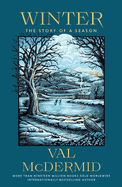
Val McDermid offers seductive, lighthearted reflections on her favorite time for thought and memory in this cozy, contemplative handbook written in lyrical prose as crisp as the winter season. 
Cover

Winter: The Story of a Season

Val McDermid

Atlantic Monthly Press | $22 | 9780802167811

In a satisfying departure from her numerous dark Scottish mysteries, Val McDermid (Queen Macbeth) offers Winter: The Story of a Season, a charming memoir of sorts to treasure for all seasons. Her supple prose, engaging regional descriptions, and thought-provoking observations, tinged with sparkling humor, follow festivals from Halloween through New Year's Day. McDermid renders her reflections on her cherished Fife childhood and Edinburgh adulthood with nostalgic affection.

The enticing four-part collection of 20 brief reminiscences begins with the tradition of guising, a "forerunner of the anaemic trick or treat," with improvised costumes (nothing store-bought) and gutting neep ("rock-hard" Swedish turnips). Next comes November's celebration of "gunpowder, treason and plot" surrounding Guy Fawkes's failed 1605 coup against the English Parliament. Captivating Christmas "lightfests" at Edinburgh's Royal Botanic Garden "hold the darkness at bay." McDermid bemoans the loss of traditional town square Hogmanay activities, replaced with "expensive corporate and heavily restricted events." Making soup sustains her, like "central heating for the soul," building out her recipes with "a good rummage" through whatever she has on hand.

With January, McDermid's literary imagination benefits from the perfect climate for a crime writer of "devious deeds done in the dark." It's also an ideal time "to snuggle indoors without guilt; to curl up on the sofa with a good book... or a wee whisky to hand." Readers can savor the same pleasures, along with Philip Harris's 15 delightful images that complement McDermid's already descriptive and winsome text--birds, barren woodlands, the "ghost ship" of Queensferry Crossing, a steaming pot of soup, youthful ice skaters. --Robert Allen Papinchak, freelance book critic

Cover
Samantha Ellis's insightful memoir explores the joys and complexities of passing on her Iraqi Jewish heritage--and language--to her London-born son.
Cover

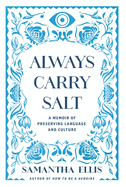
Always Carry Salt: A Memoir of Preserving Language and Culture

Samantha Ellis

Pegasus | $28.95 | 9798897100286

Samantha Ellis's insightful memoir, Always Carry Salt, explores the complexities of the author's attempts to pass on her Iraqi Jewish heritage--food, mannerisms, history, and most of all, language--to her London-born son. Blending historical context, personal experience, and occasional recipes, Ellis traces her family's journey from Baghdad to the United Kingdom, and the joys and struggles they experienced while holding onto their culture. As she collects words in Judeo-Iraqi Arabic, Ellis asks probing questions about language and power, noting the ways Iraqi Jews--like many other marginalized groups--have been erased from both religious and cultural narratives.

Ellis (How to Be a Heroine: Or, What I've Learned from Reading Too Much) describes the grief of realizing that her language is disappearing from her own psyche and the larger world, and she shares part of the history that reflects the "violence... in the vanishing of languages." As she mourns, she also tries to re-create and share her culture, making makhboose (date-stuffed pastries) for her son to take to school and planting nabug (an Iraqi fruit) in her London garden. Her attempts to pass down a "joyous, jumbled, multilingual life" that includes specific cultural practices (idioms, dances, favorite snacks) embodies a generous, openhearted curiosity about other people and their backgrounds. While she is honest about the pain of erasure, Ellis also continues to "insist on the possibilities of being an Arabic-speaking Jew," even or especially when that identity is fraught. Always Carry Salt is a thoughtful account of one woman's reckoning with cultural loss, and the hope and creativity to be found in moving forward. --Katie Noah Gibson, blogger at Cakes, Tea and Dreams

Cover
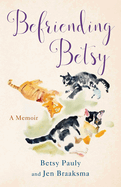
This posthumous memoir-in-essays spins funny stories from volunteer cat and dog rescue work and ponders the special, unexpected friendships such work fosters with animals and people alike.
Cover

Befriending Betsy: A Memoir

Betsy Pauly and Jen Braaksma

She Writes Press | $17.99 | 9798896360209

Betsy Pauly's posthumous memoir collects 19 sassy, uplifting essays about rescuing stray cats and dogs. Jen Braaksma edited the sparkling sketches into shape, but Befriending Betsy does more than showcase Pauly's writing; it also reflects on what people leave behind, in life and on the page, and celebrates the connections that pets--and books--enable.

Pauly, a painter and entrepreneur, died of a rare lung condition at 58. Her epitaph says it all: "Sure Had Fun.... Spay Your Pets." Though an optimist, she railed against irresponsible pet owners who dumped unwanted animals at the roadside or didn't neuter them. She rehabilitated more than 100 abandoned pets and gave would-be adopters the third degree. However, when planned pairings fell through, the Paulys' menagerie grew--to 13 felines, plus a dog or two. Many rescues warrant a dedicated piece, such as Atticus Finch, a cat who appeared one Thanksgiving; and Marvelous Marvin, a boisterous mutt who bulldozed a nativity display. Pauly describes the animals and humans of her "own little Mayberry" (Carthage, Mo.) with equal dexterity. Not all endings are happy, but the charming stories highlight communion across species lines.

Braaksma values Pauly's authenticity and sense of humor and deems her a literary kindred spirit. Her editorial commentary adds autobiographical parallels, draws life lessons, and announces themes. A few essays seem thin or repetitive, but all benefit from Pauly's alliterative punning and colloquialisms ("my whiskery psych ward of maladjusted misfits"). Pauly was "all heart," Braaksma declares, and animal lovers will get the warm fuzzies from her altruistic adventures. --Rebecca Foster, freelance reviewer, proofreader, and blogger at Bookish Beck

Cover
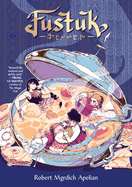
Robert Mgrdich Apelian crafts a heartwarming YA fantasy graphic novel about family, food, and culture that celebrates Armenian and Persian cultures.
Cover

Fustuk

Robert Mgrdich Apelian

Penguin Workshop | $25.99 | 9780593658895

Robert Mgrdich Apelian makes his debut with the tantalizing YA graphic novel Fustuk, a sumptuous fantasy likely to be devoured by readers.

"I never knew my father, but I have dreams of him.... like memories that don't belong to me." Unlike his older sister, Talar, and older brother, Garaked, 19-year-old Katah was too young to know their father, a chef whose food was so good it "won the heart of a div" (a creature from Persian myth). Additionally, Katah is the only child who didn't inherit his father's skills; although his aging mother needs more help as she suffers with a long-term illness, Katah can't make even simple food. But the young man's "really specific" dreams feel remarkable and he begins to wonder if he has jadoo (magic). When the dreams ultimately lead Katah to Az, a powerful div who knew his father, Talar, Gara, and Katah ask Az to try to save their mother. Az, however, is mischievous and unpredictable: it will save her "if--and only if--you can feed me a dish at least as good" as their father's.

Fustuk is a fascinating fantastical blend of Armenian and Persian culture in which Apelian displays the hybridity of the Middle East through traditions, lifestyle, food, and family. Each chapter is named after a food, and the family's identity as an ethnic minority is made visible through multiple languages and scripts. The blend of timelines and languages can be disorienting at first, with the layered narratives identified primarily by color palette. Once readers locate themselves within the story, though, the narrative is multifaceted and as fulfilling as khoresh-e gheysi. --Michelle Anya Anjirbag, freelance reviewer

Cover
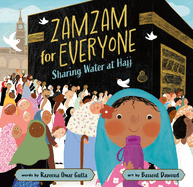
In this warm and uplifting picture book, a young girl in Makkah shares Zamzam water.
Cover

Zamzam for Everyone: Sharing Water at Hajj

Razeena Omar Gutta, illus. by Bassent Dawoud

Barefoot Books | $17.99 | 9798888592366

In the spirited, joyful picture book Zamzam for Everyone a girl, in Makkah with her family for Hajj, dedicates herself to sharing.

Mariam is "one of millions" in Makkah to perform Hajj, the once-a-year Islamic pilgrimage. The girl, in a light blue hijab and red polka-dotted dress, stands on the tips of her toes to see the Ka'aba "through the sea of people." When Mama tells Mariam, "Hajj is a time to do good, share, and be thankful," Mariam decides to share her Zamzam water (blessed water from the ancient Zamzam Well). As Mariam interacts with other pilgrims, she learns how to express gratitude in various languages ("Shukriya" from an older Pakistani woman; "Terima kasih" from Indonesian sisters). In exchange, Mariam is offered dates, "pandan cookies," "crunchy fried dough," and more. Pronunciations are included for every thank you and yummy treat.

Author Razeena Omar Gutta (Ramadan on Rahama Road) immerses readers in the bustle of Makkah during the annual pilgrimage by tracking every step and shared drink of Mariam's Hajj. She and her family "walk seven times around the Ka'aba," "walk between the mountains of Safa and Marwa," and camp "in the tent city of Mina"; Mariam shares Zamzam "on the wide plains of Arafah" and "under the stars in Muzdalifa." Illustrator Bassent Dawoud's digital collage shows the diversity of those at Hajj, depicting varying skin tones, hijab styles, clothing, and physical abilities. Her overlapping patterns and saturated colors capture the movement and activity. Ample back matter includes details about Zamzam and important information on Hajj, inviting non-Muslim readers to celebrate alongside Mariam. --Hadeal Salamah, blogger, librarian, freelance reviewer

Cover
This middle-grade picture book is a delightful, educational, and bite-sized celebration of Black hair care throughout history.
Cover

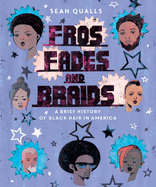
Fros, Fades, and Braids: A Brief History of Black Hair in America

Sean Qualls

HarperCollins | $19.99 | 9780063144279

Mixed-media artist and Coretta Scott King Honor Award winner Sean Qualls (John Was a Jazz Giant with Carole Boston Weatherford) makes his authorial debut with the middle-grade picture book Fros, Fades, and Braids, an ardent celebration of Black hair throughout history.

Qualls opens with an illustrated "Black Hair Style Guide," depicting Black people wearing different hair styles (Jheri curl, locs, cornrows) followed by a cinematic "featuring" list that includes items like curl activator and relaxers. Hair is important, Qualls says, because it is "the closest to heaven. And since it's all the way up there, some people consider their hair a crown." He begins with brief bios of hair-care pioneers Madam C.J. Walker, Annie Malone, and Garrett Morgan, then divides the book into six sections: "the conk," "the Afro," "the Jheri curl," "locs," "the fade," and "braids." Each chapter is further subdivided into topics including "Black Women with Straight Hair" and "The Natural Hair Movement."

Qualls's lyrical nonfiction demonstrates the many ways Black hair care, styles, and people have transformed the United States. He writes passionately about the role Black hair played in the advocacy for civil rights as a "powerful statement... that gave people permission to be themselves" and tells readers directly that "whatever you do with your do--do you." The author's acrylic paint, paper, colored pencil, and collage illustrations give the book the feel of a magazine composed entirely of gorgeous 1970s advertisements for Black hair. Although there is a lack of citation and further resources, big, bold letters, a newspaper font, short blocks of text, a casual tone, and illustrations of various hairstyles make Fros, Fades, and Braids highly approachable for young readers. --Kharissa Kenner, school media specialist, Churchill School and Center

Great Reads

Poet Mary Oliver lovingly described trees as giving off "such hints of gladness," and today's feature surveys a joyous array of literary works whose deep appreciation for nature showcases the many lessons to be found there, whether through scientific inquiry, historical research, or quiet contemplation. Appreciating our arboreal surroundings can reveal so much more than what meets the eye.

Great Reads

When I Read Among the Trees

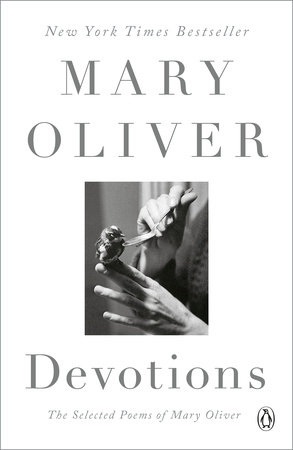
Mary Oliver, keen observer of nature and poet extraordinaire, once wrote about the power of trees to teach and comfort: "When I am among the trees,/ especially the willows and the honey locust,/ equally the beech, the oaks and the pines,/ they give off such hints of gladness./ I would almost say that they save me, and daily."

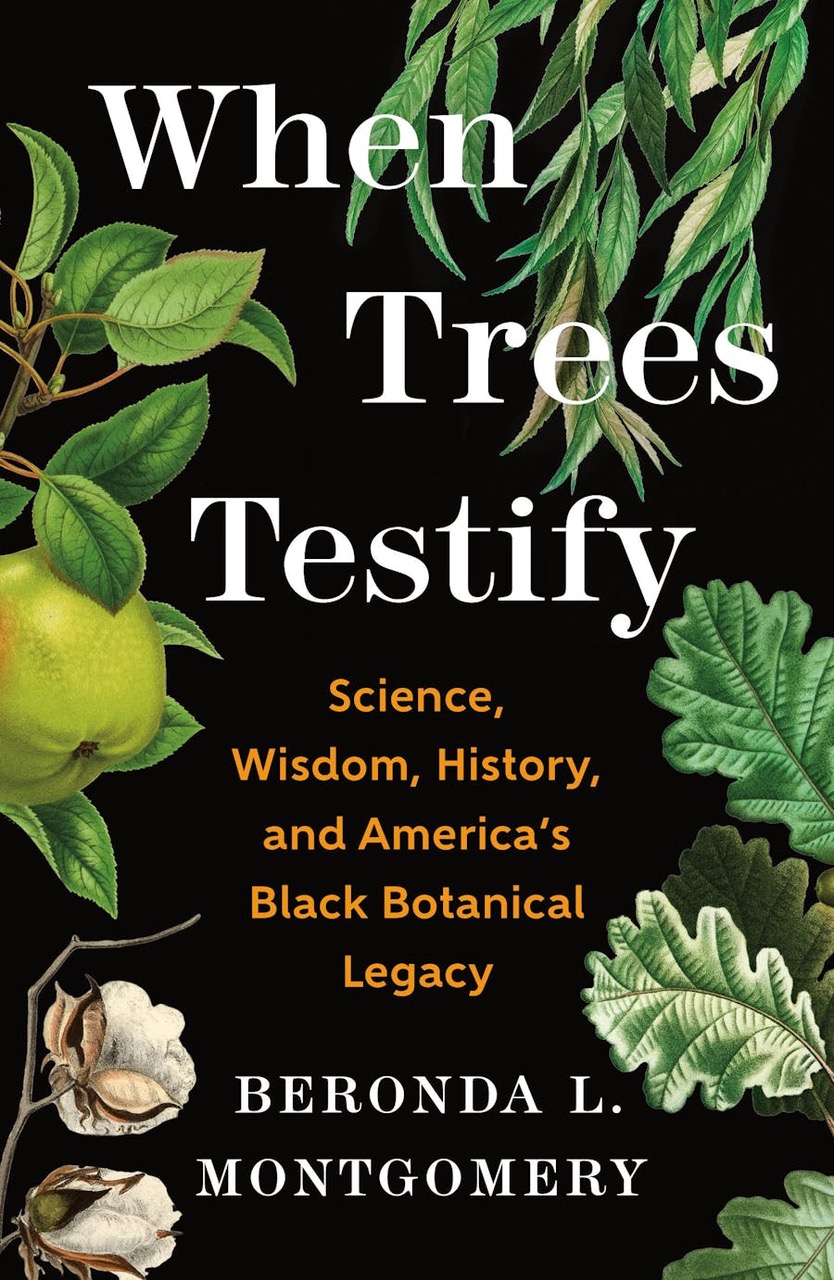
These words, from "When I Am Among the Trees," included in one of her final anthologies, Devotions: The Selected Poems of Mary Oliver, came back to me recently. I was interviewing botanist and plant biochemist Beronda Montgomery, author of When Trees Testify: Science, Wisdom, History, and America's Black Botanical Legacy. Montgomery explores the history of Black botany in United States history by grounding each chapter of her insightful book in a different species of tree. It's not always an easy history, so rooted in the bleak and violent realities of chattel slavery and the racism that persisted long after abolition, but it's one Montgomery explores with candor and wisdom, revealing the many lessons trees can teach us about history and memory, community and interconnectivity, identity and self.

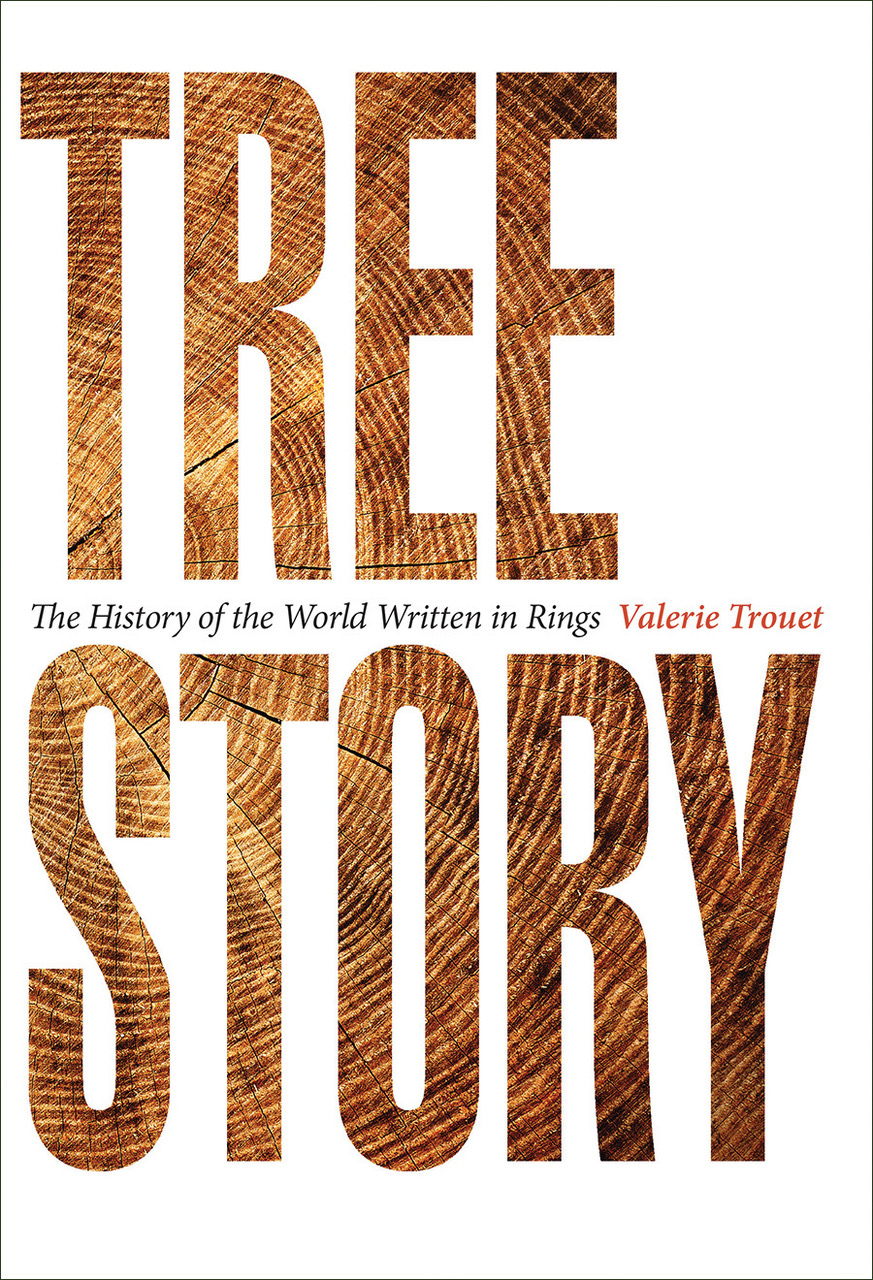
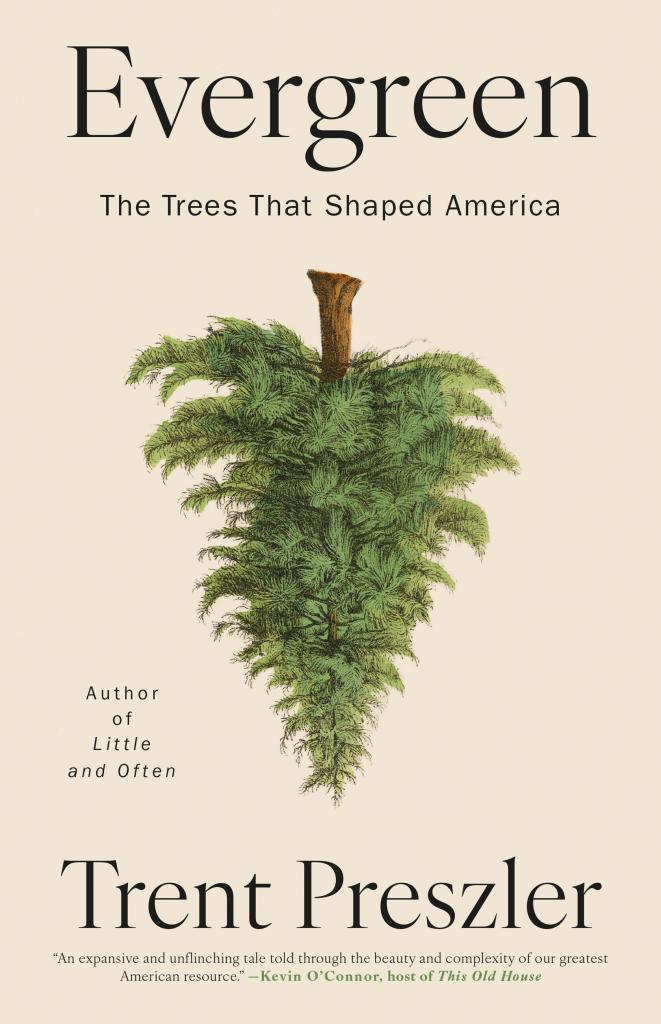
In Tree Story: The History of the World Written in Rings, Valerie Trouet looks not at the narratives surrounding particular trees for historical knowledge, but at the rings found within trees' trunks. Trouet contends that these rings harbor codes that reveal histories of climate change, linking those climate shifts to major historical events going back thousands of years (such as the fall of the Roman Empire, or the outbreaks of global pandemics). Likewise, Evergreen: The Trees that Shaped America explores how deeply interrelated they are with history, particularly focusing on how trees (and the lumber they provide) shaped the land that became the United States. And environmental journalist Fred Pearce makes the case for reforestation--particularly given how much woodland has been destroyed by historical and modern-day overdevelopment--in A Trillion Trees: Restoring Our Forests by Trusting in Nature.

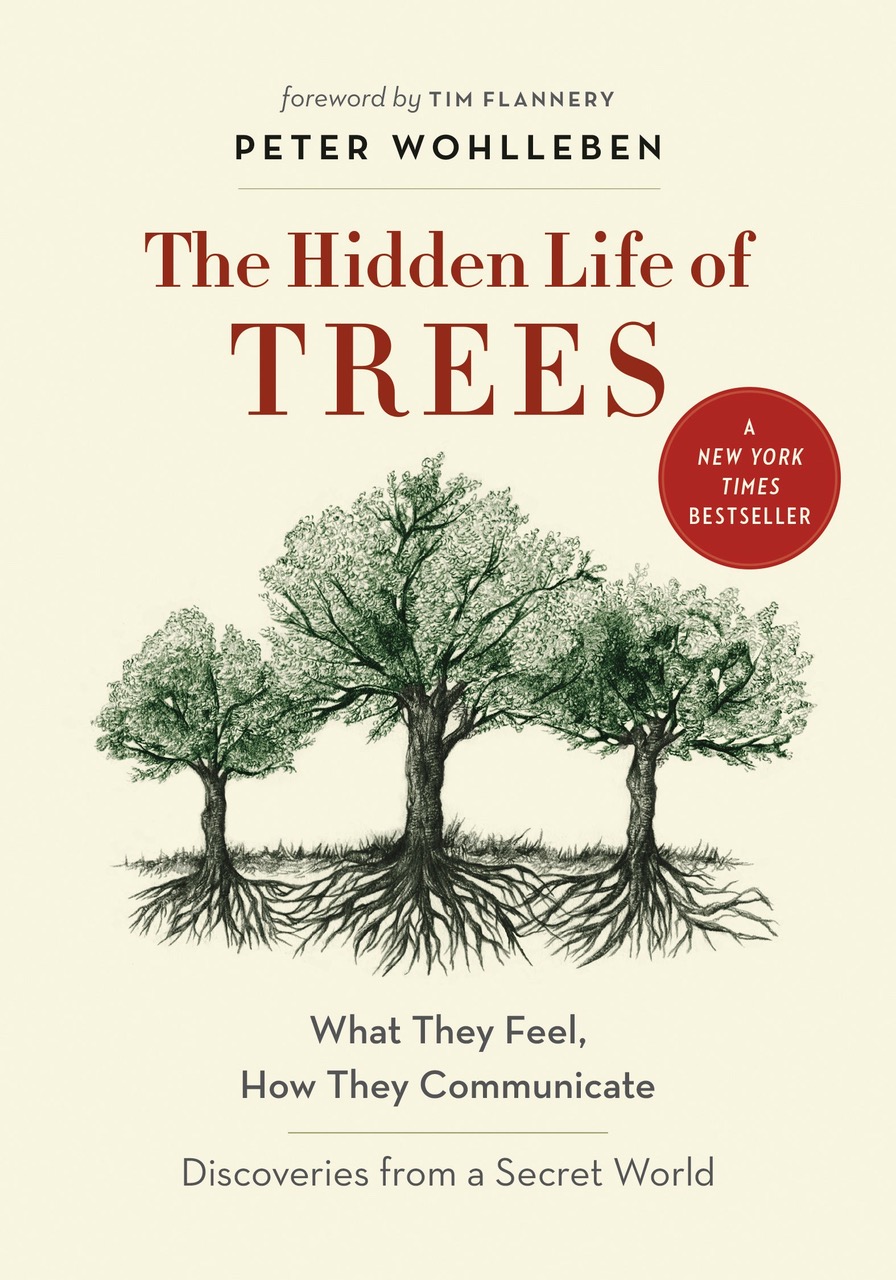
Moreover, The Hidden Life of Trees: What They Feel, How They Communicate by German forest ranger Peter Wohlleben urges an expanded role in human care of trees and forests, calling for trees to be recognized as sentient beings with rights and memories and stories to tell. Trees, Wohlleben argues, with their roots intentionally tangled together beneath the ground, are not commodities, but rather are wise and sturdy teachers of interconnectedness. (Quotable passages and particular gems from this popular tome have also been collected in a companion book, The Wisdom of the Hidden Life of Trees, and depicted with beautiful artwork in The Hidden Life of Trees: A Graphic Adaptation.)

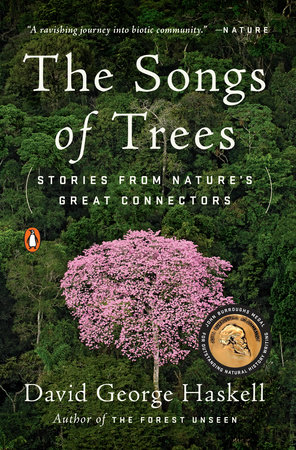
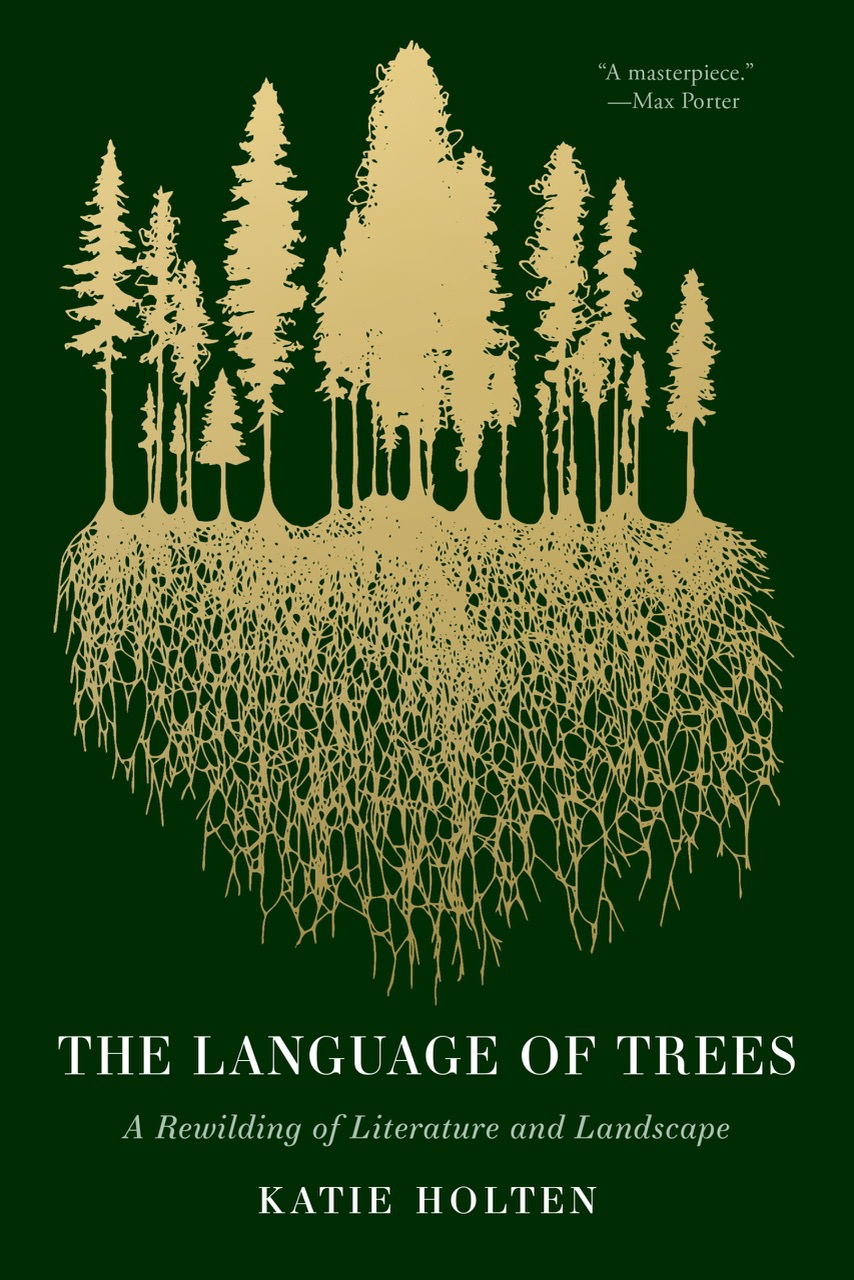
David George Haskell (The Forest Unseen) similarly studies this interconnectedness in lyrical essays about trees and their lessons of symbiosis in The Songs of Trees: Stories from Nature's Greatest Connectors, examining how they interact not only with humans but also with the flora and fauna that surround them. And in The Language of Trees: A Rewilding of Literature and Landscape, author Katie Holten uses a custom-made arboreal alphabet, to translate various bits of writing (essays, poems, aphorisms) from dozens contributors into a literary, visually stunning account of trees' interactions with our human world.

There's a deep appreciation for nature and its many lessons in all of these books, with calls to recognize the ways the natural world maintains records--both literally and figuratively--of what occurs within and around it. But it can feel overwhelming to begin applying those same lessons in the woods of our world. When I asked her about where one might start listening to trees, Montgomery encourages me (and others) to start where we already are. "Know the trees in your yard," she said. "Know the trees in your neighborhood. These are the trees you're living with every day. These are the trees that are capturing your breath." 

And so I wonder: What breaths might the trees out your window be capturing today? And what might those same trees share back, if you take the time to sit and listen? Mary Oliver would tell us: " 'It's simple,' they say,/ 'and you too have come/ into the world to do this, to go easy, to be filled/ with light, and to shine.' " --Kerry McHugh, freelance reviewer

Book Candy
Rediscover

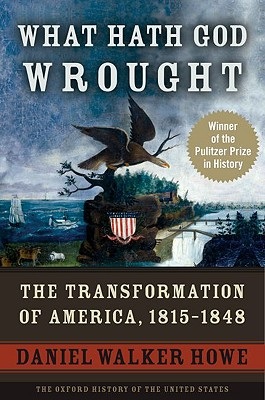
Historian Daniel Walker Howe, "who sought to dethrone Andrew Jackson as the defining figure of his era of American history, arguing instead for the central importance of technological advances and the rise of journalism and a women's rights movement, among other turning points in the country's early life," died on December 25 at age 88, the New York Times reported. 

Howe was best known for his book What Hath God Wrought: The Transformation of America, 1815-1848 (2007), which won

Rediscover

Rediscover: Daniel Walker Howe

Historian Daniel Walker Howe, "who sought to dethrone Andrew Jackson as the defining figure of his era of American history, arguing instead for the central importance of technological advances and the rise of journalism and a women's rights movement, among other turning points in the country's early life," died on December 25 at age 88, the New York Times reported. 

Howe was best known for his book What Hath God Wrought: The Transformation of America, 1815-1848 (2007), which won the Pulitzer Prize in history. The book was his first attempt to write for a nonspecialist audience. He had already retired into emeritus status at the two universities where he taught--the University of California, Los Angeles, and the University of Oxford.

The title phrase, taken from the Old Testament, was used by Samuel F.B. Morse as the first official message sent by telegraph. The Times noted that Howe argued that this invention, part of a "communications revolution," brought about a more dramatic change in society than even the Internet has.

The book ended with the chapter "A Vision of the Future," about the Seneca Falls Convention of 1848 on the rights of women. "I wanted to highlight that which had first surprised me, but then convinced me--the principle that material improvement in society fostered moral improvement," he said in an interview with the National Book Critics Circle.

"The book had sought to upend consensus in several respects," the Times wrote. "Esteemed historians of the period--particularly Arthur M. Schlesinger Jr., Charles Sellers and Sean Wilentz--had considered it 'the Age of Jackson,' crediting the president with embodying America's democratic spirit."

Howe, by contrast, saw the country's ills stemming from many of Jackson's policies, including his expulsion of Native Americans from their ancestral lands in violation of treaty guarantees, a precedent for "geographical expansion and white supremacy that would be invoked in years to come by advocates of America's imperial 'manifest destiny,' " Howe observed. He also emphasized that Jackson, a slave trader as a younger man, had continued to support slavery.

Howe contended that the U.S. "would head toward greater equality among the races and the sexes, along with a more activist federal government, leading him to characterize the Whigs, which held the White House through much of the 1840s and into the 1850s, as 'the party of America's future,' " the Times noted, adding that "years after What Hath God Wrought was published, many on the left described it as an unexpected guide to modern America, drawing praise from the writers and political commentators Ta-Nehisi Coates and John Ganz as well as Jake Auchincloss, a Democratic member of the House of Representatives from Massachusetts."

"It discusses how Andrew Jackson built the Democratic Party in 1828 as a Christian nationalist anti-elitist party--if that sounds familiar to people--and then how the Whigs came to contest him and ultimately won in the 1840 election," Auchincloss told the Times last year. "And I find that template to be informative for the political era we're living in now."

PICK OF THE WEEK

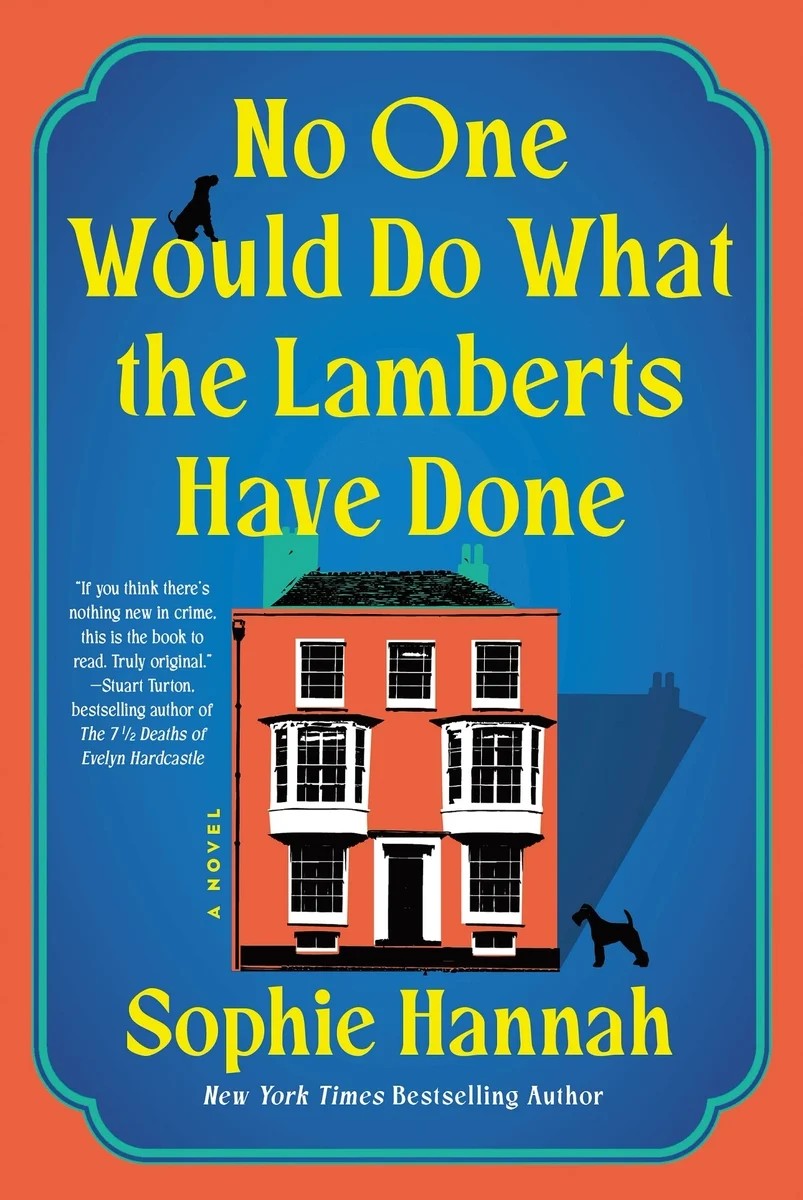
It might be true that no one would do what the Lamberts have done, as the title of Sophie Hannah's contemporary mystery suggests, but it's equally true that the Lamberts have, in fact, done it. It's just not entirely clear what exactly "it" is, which forms the crux of Hannah's impossibly clever murder mystery as she explores just how far a family might go to protect one of their own.

Detective Connor Chantree is in receipt of... something. A document? A manuscript? A book, perhaps, or a "spruced-up rectangularized heap" of a story he's managed to assemble out of the box of "maimed and defeated pages" he's been sent by an unknown person. Whatever "it" is, it offers new details into the closed case of Tess Gavey, the teen whose autopsy "ruled out any deliberate action," though her death remained something of a mystery even to the detectives assigned to it months earlier.

The rest of No One Would Do What the Lamberts Have Done is presented within this frame, presumed to be the content of those mysterious pages.

PICK OF THE WEEK

No One Would Do What the Lamberts Have Done

It might be true that no one would do what the Lamberts have done, as the title of Sophie Hannah's contemporary mystery suggests, but it's equally true that the Lamberts have, in fact, done it. It's just not entirely clear what exactly "it" is, which forms the crux of Hannah's impossibly clever murder mystery as she explores just how far a family might go to protect one of their own.

Detective Connor Chantree is in receipt of... something. A document? A manuscript? A book, perhaps, or a "spruced-up rectangularized heap" of a story he's managed to assemble out of the box of "maimed and defeated pages" he's been sent by an unknown person. Whatever "it" is, it offers new details into the closed case of Tess Gavey, the teen whose autopsy "ruled out any deliberate action," though her death remained something of a mystery even to the detectives assigned to it months earlier.

The rest of No One Would Do What the Lamberts Have Done is presented within this frame, presumed to be the content of those mysterious pages. Written almost entirely by an unidentified narrator (yet another puzzle to solve within the novel), the pages tell the story of "the Lambert-Gavey War" and the gruesome and shocking way it ended.

It begins like any normal June day: Sally Lambert is singing made-up Champ-themed songs to Champ, the family's dog, when she is interrupted by the doorbell and finds a policeman who's come to discuss Champ himself. The officer explains that the Gaveys--also known as the Lambert's sworn enemies, with a matriarch Sally considers to be "Satan-adjacent"--have accused Champ of biting their daughter, Tess, and that police will be investigating what may become of--to Sally--"completely, indisputably innocent" Champ. But--no. "That cannot be allowed to happen. Can't be considered, let alone tolerated, as a possibility." And so, like any good mother, Sally moves directly into protective mode. She and the family, she decides, will go on the run, hiding from the police, from the Gaveys, from any possibility that Champ may be removed, harmed, or killed.

From this premise, No One Would Do What the Lamberts Have Done becomes something of a fugitive novel, a story of refuge and revenge, a convoluted tale with surprises at every turn. At its heart, the novel is both deeply funny ("I do feel like we're all kind of... trapped in an irrational, menopausal panic attack, maybe?") and also rather dark, with Sally unable to trust anyone around her and willing to do just about anything--legal or not--to protect Champ. The Gaveys, she reasons, "should be, must be, punished for all the things or else it won't be proper."

Hannah (The Monogram Murders; The Couple at the Table) addresses this paradox head-on within the text itself, as our unnamed narrator explains the absurdity impediment: "I can't give you any excuse to say, 'Oh, come on, that's absurd!' and dismiss my story." And yet, in some way, that's exactly what happens: readers follow the Lamberts across the country on a haphazard road trip, complete with burner phones and unexpected accomplices along the way, with laugh-out-loud moments of seemingly ridiculous goings-on threatening to hide the very real, very emotional plot pulsing beneath the humor.

What could be funnier than a family on the run from the law, fully aware that no one is chasing them? "This isn't an international manhunt, or even a national dog-hunt," Sally's husband tells her. "It's not a hunt at all. No one's looking for us, as far as we know. I'm not convinced anyone official is even aware Champ isn't at home." But that, Sally knows, is not the point. The family's security has been "compromised," and home is no longer the safe haven it needs to be for them. "It turns out there's no such thing as having a grip on life; doesn't he realize?" And what could be more dangerous than a mother pushed to the edge to protect her family, with nothing left to lose except those she loves the most? "What [others] were loudly proclaiming no one would do, the Lamberts of Swaffham Tilney, Cambridgeshire, had demonstrably done. And, what's more, we couldn't have done it to any greater degree or a single jot more comprehensively than we had."

Hannah is no stranger to complicated mysteries: she's written numerous standalone thrillers and multiple Hercule Poirot novels authorized by Agatha Christie's estate. But she considers No One Would Do What the Lamberts Have Done to be one of her most personal projects, with Champ inspired by her own Welsh Terrier, Chunk, and the story influenced by how strongly she feels that her dog is a full-fledged member of her family. This entry point grounds No One Would Do What the Lamberts Have Done in the humanity of its key players, inviting readers into a novel that is as smart as it is heartfelt. Dog lovers will rejoice, and eagle-eyed clue-seekers will delight in the unexpected twists and turns throughout. Hannah has crafted an emotionally believable tale that will leave readers guessing to the very end, a perfectly plotted whodunit (or who done what) that is both Christie-esque in its cluing and yet wholly original in its execution. --Kerry McHugh


Click here to read our interview with Sophie Hannah

PICK OF THE WEEK

Sophie Hannah: The Furry Fugitive, Absurdity, and Emotional Depth

Sophie Hannah

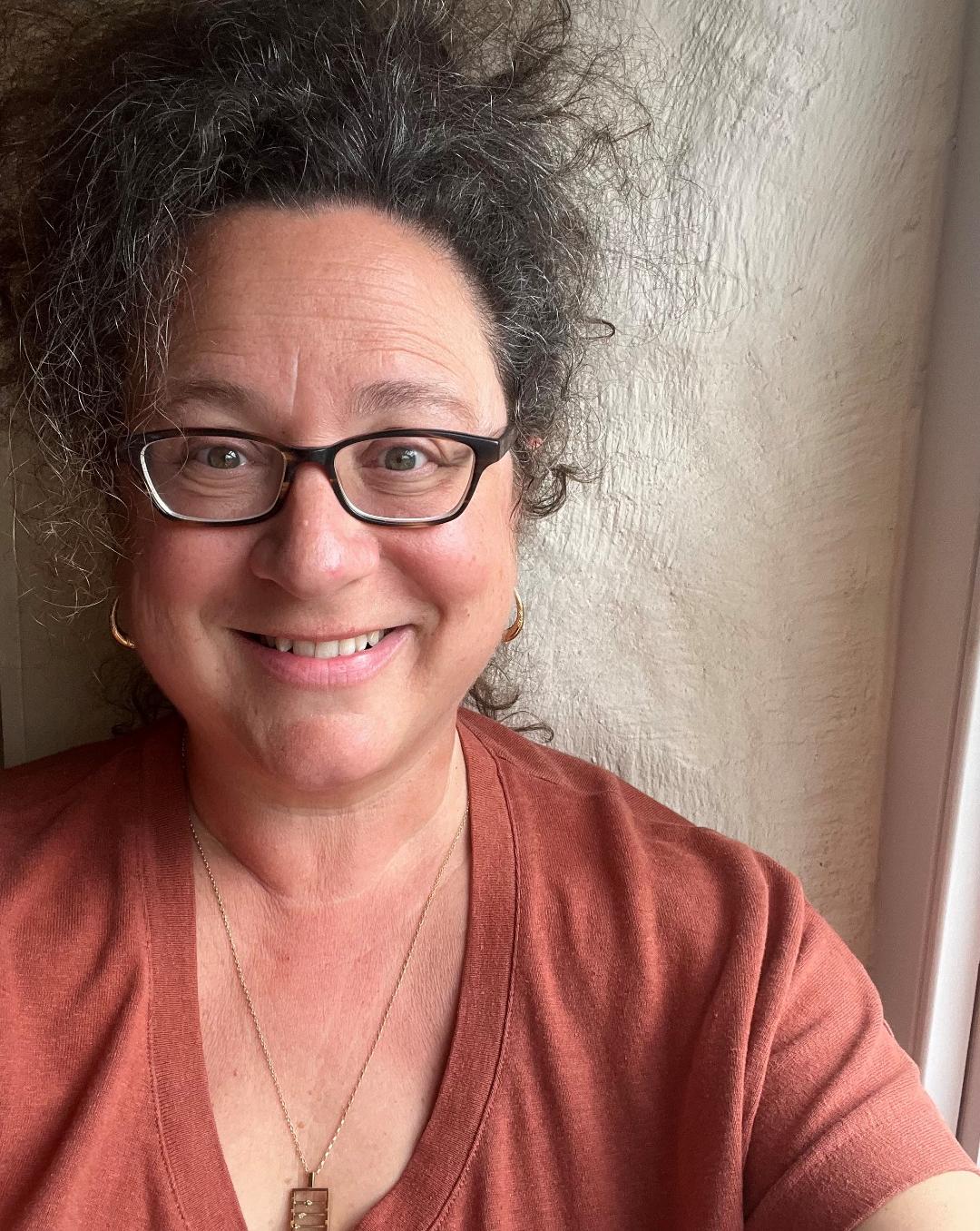
Sophie Hannah is the author of numerous contemporary thrillers, a series of mysteries featuring Agatha Christie's Hercule Poirot, and several self-help titles, one of which inspired her podcast by the same name, How to Hold a Grudge. No One Would Do What the Lamberts Have Done (Sourcebooks Landmark) is a contemporary whodunit about a family on the run from the law, determined to save Champ, their beloved dog. Hannah lives in Cambridge, England, with her husband, children, and a dog named Chunk who is, among other things, the inspiration for the Lamberts' fictional dog.

This book is wild--and very different from some of your other novels! How do you talk about it when folks ask what you're working on?

I have two different ways of describing it. Depending on how I feel, sometimes I'll start with the more mysterious one, and then go to the more detailed one. But my initial pitch is: it's about an ordinary family that does the unthinkable.

That generally makes people go, "Oh my god, I have to know what they do. What do they do?" And then I will often say, "Well, actually, I can tell you what they do, because what they do isn't really the reveal, or the solution--what they do is what sort of starts off the action. What they do is they go on the run to save the life of their dog."

Really, for me, the emotional and conceptual heart of the book is that most families just would not do this. I think that 99 out of 100 families, if not 100 out of 100 families, it just wouldn't occur to them, or even if it occurred to them, they'd just think it could never work. I love the idea of Sally Lambert, in particular, just being willing to do the unthinkable, and being willing to do anything to save the life of the dog.

It's also a book with a message: dogs are members of the family. So just like you'd do anything to save your husband or your wife or your child? I feel the same about the furry members of my family. I'm always shocked when I occasionally meet or hear about people who treat their dog as a kind of optional element of the household. Like if a family moves house, to somewhere it wouldn't be quite as convenient to have a dog, and they just give their dog away. I find that absolutely scandalous. I mean, are they even human?

Also, I just love fugitive stories. My favorite is The Fugitive with Harrison Ford. I loved the idea of writing a fugitive story. My working title, a sort of nickname for the book as I was writing it, was "The Furry Fugitive." My other nickname for it was "Gone Dog." (I found a way to work both of those into the book, too, because they were cute and fun.)

But the actual title landed somewhere different.

I also love the long title. I think it highlights the idea that while absolutely no one would do this, these people are, in fact, doing it.

One of the things I was thinking of when writing was that it couldn't be a fugitive story exactly like The Fugitive, because in that, Harrison Ford is a convicted murderer. He is being pursued by the authorities for good reason. When you're a family with a dog that may or may not have bitten somebody, if you go on the run, no one's actually going to come after you. The police don't care that much. They're not going to devote any time, manpower, or resources to tracking down the Lamberts. But at the same time, the Lamberts cannot go back, because the minute they go back, it all starts up again. The policeman turns up at the door, et cetera, et cetera. I just loved the idea of writing a fugitive story where no one is chasing the fugitive. And yet, the fugitive still cannot return home.

It's not quite a satire or a send-up of the fugitive genre, then, although in some ways it is quite comical.

Right, and with deep feelings involved. The fear that the dog will end up being killed by the powers that be, and the passionate desire to save this life of a family member. That is all deadly serious and deeply felt. And at the same time, there are some profoundly absurd elements to what's going on.

There's a reference within the book itself to this thing called the absurdity impediment, that often when absurdity is present in a situation, people fail to notice the seriousness of it. I'm trying to say to people, yes, this might look absurd, but there are deep feelings here. There is a battle between good and evil going on. And just because it's a bit ridiculous doesn't mean we shouldn't take it seriously.

That is actually present in a lot of my writing, and I got it from studying Iris Murdoch's fiction at university. Murdoch was a very serious novelist and moral philosopher and would use her novels to act out little morality plays. She was profoundly serious about her fiction writing. And yet, what was often happening at the plot level was utterly absurd.

One of the criticisms of Murdoch is that her plots are so unrealistic and nobody behaves like that. It's true that generally people don't behave the way they do in her novels--or indeed as the Lamberts do--but what is also true is that if we weren't trying to put on a respectable, normal surface appearance (and if people could read each other's minds), then Iris Murdoch is actually very realistic.

And Sally Lambert is a character who in many ways is not afraid to reveal her absurdities, right?

Yes. She doesn't even think about whether it's strange or not. She names her houses, because to her, a house, once it's yours, is a member of the family, and so it becomes not an "it" but a "he." No further justification needed. She's quite intuitive, and she does her own thing. She kind of lives in her own imaginative world, as well as in the real world.

I'm often asked why I write about such strange, dysfunctional people. The answer is because they're flipping everywhere. I can barely believe the ridiculousness and awfulness of many people. Not all people--loads of people, I think, are great. But more often than one might suspect, I meet people and I think, you are, in some way, utterly bonkers, or utterly monstrous.

If I tried to write about normal characters, I just wouldn't feel I was writing realistically, and when I write books like Lamberts, and people think, "This so quirky and weird," I'm like, "This is my real life. These are the kind of people I meet, this is the kind of person I am myself."

You've also written six novels now featuring Christie's famous detective, Hercule Poirot. Given some of the Christie-ish elements of Lamberts, did this feel very different to write?

It was quite different. I enjoyed writing this book a lot; it felt like the book I most wanted to write, and I was writing it mainly to have fun myself, doing it for myself, because I just loved the idea of the book and just wanted it to exist. And I wanted to write a book for people who love dogs as much as I do. It felt a bit like, if every writer could put only one book they'd ever written into a time capsule to represent them, this is the one I'd pick. --Kerry McHugh
Advertisement
Powered by: Xtenit