Latest News
Poisoned Pen Press: Beneath a Broken Sky (Ben Packard #4) by Joshua Moehling
WHAT TO READ NEXT: REVIEWS OF GREAT BOOKS

Pride Month has begun, and we have some sweet, enticing, and heartfelt reading recommendations to help you celebrate all month long! A charming French courtesan brings a brooding member of the nobility to her knees in Anna Cowan's sizzling Regency romance, The Duke; and a shopkeeper inherits a fortune he has no clue how to manage in KJ Charles's charming novel of manners, How to Fake It in Society. Meanwhile, The Lost Book of Lancelot by John Glynn cracks open the queer mysteries surrounding the most legendary Arthurian knight, and The Summer Boy by Philippe Besson looks back at an idyllic 1985 summer off the coast of France. And there's plenty more where those came from!

--Dave Wheeler, senior editor, Shelf Awareness
FEATURED TITLES
Cover

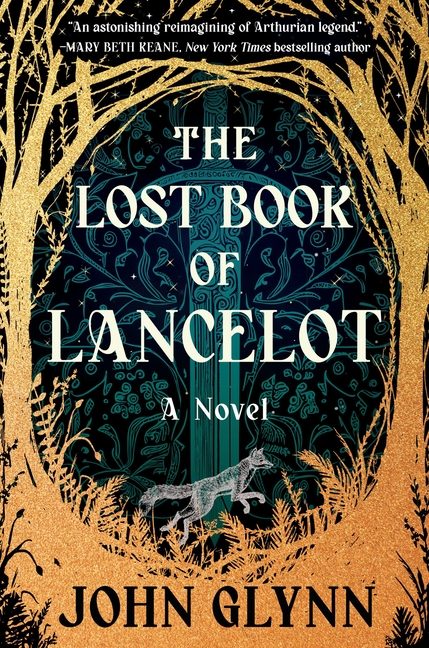
The Lost Book of Lancelot

John Glynn

John Glynn's debut is a refreshing, enchanting queering of the life of Lancelot, reinventing Camelot in a way that manages to feel both new and familiar.
Cover

The Lost Book of Lancelot

John Glynn

Grand Central | $29 | 9781538775233

John Glynn's first novel, The Lost Book of Lancelot, is a beautiful foray into Arthurian legend from the point of view of one of its most notorious but less explored characters, Lancelot.

Glynn begins Lancelot's story on the Isle of Women, where he is being raised, nameless, by a mysterious and magical sisterhood. He is the only man or boy allowed to reside there, until the handsome Galehaut is brought to train with him to become knights. Lancelot discovers his name, his family, his true love, and the prophecies about him from the great Merlin--prophecies Lancelot wishes to reject--but fate has other plans.

Despite his best efforts, he finds himself at Camelot, grief-ridden. He is in the service of King Arthur, growing close with Queen Guinevere, and trying to prove himself worthy of knighthood among the Round Table, and of the quest for the grail especially. But little about Camelot, or even about who holds true power in this world, is straightforward.

Glynn's queering and expansion of the tale is thoroughly researched and knowledgeably done. He finds the opportunities in historical texts to reinvigorate these stories and characters in a way that feels modern but also fits seamlessly into the wider body of Arthuriana and existing adaptations. Readers will meet characters they think they know well, as well those pulled from historical ephemera, in this exquisitely layered novel. The Lost Book of Lancelot is astounding in its perspective on a legendary time through the lens of various forms of love, including first love and the deepest friendships. Glynn imagines a more multifaceted past underneath the familiar story. --Michelle Anya Anjirbag, freelance reviewer

Cover

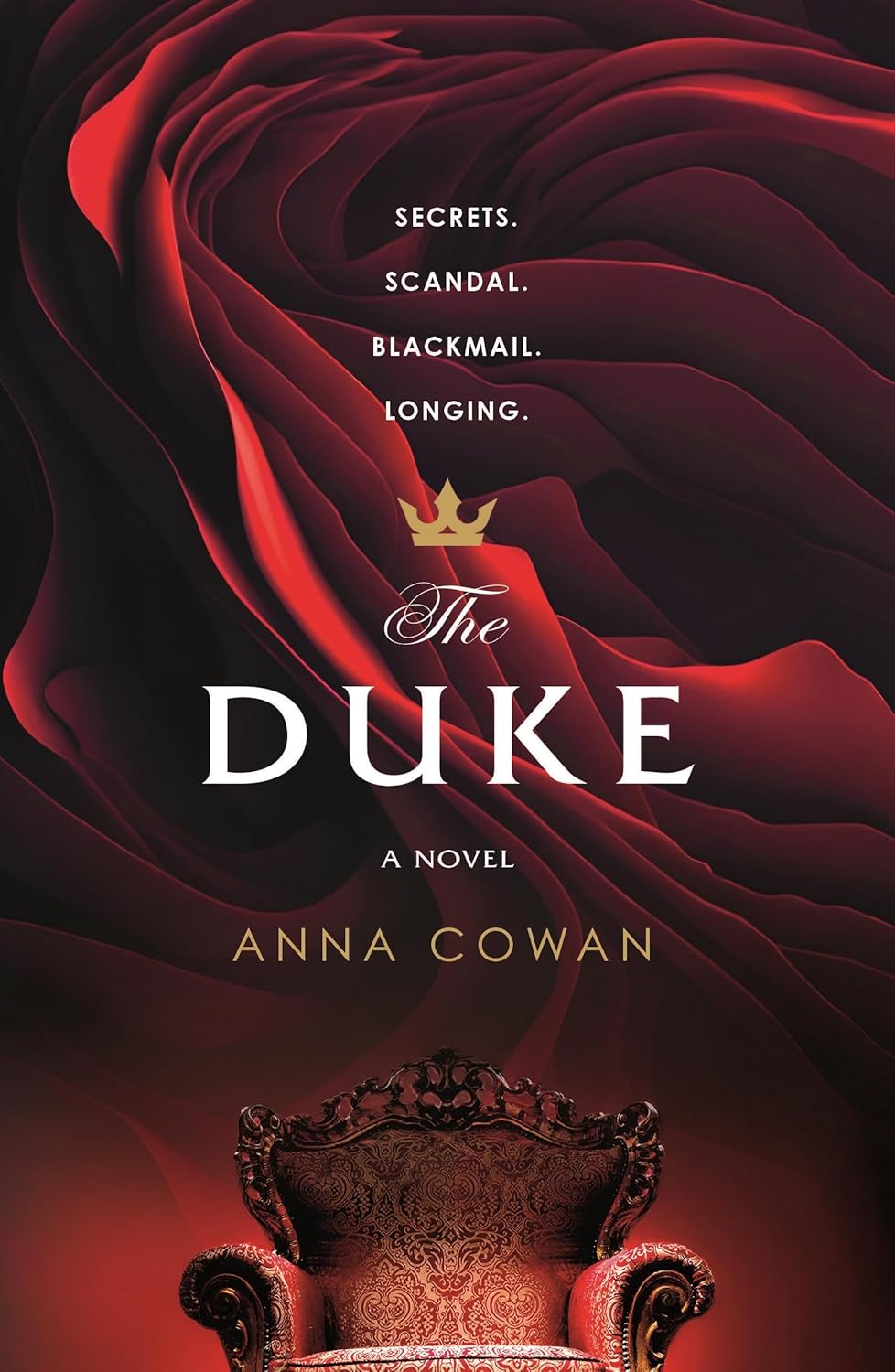
The Duke

Anna Cowan

A charming French courtesan brings a brooding female duke to her knees in this smoldering sapphic Regency romance set in an England where women can inherit and hold titles.
Cover

The Duke

Anna Cowan

St. Martin's Griffin | $19 | 9781250382849

A desperate woman fleeing chaos from the French Revolution blackmails a powerful noble in Anna Cowan's smoldering sapphic Regency romance, The Duke. In Cowan's England, women can inherit and hold titles, and her female characters are every bit as dissolute or ruthless as the men who populate classic historical romances.

Kate, the Duke of Howard, has single-mindedly fought her way to a level of power that no one can challenge. But she has a secret: she's responsible for her family's death due to accusations of treason stemming from a foolish prank letter she wrote in her youth. When a bedraggled Celine arrives at her door claiming to have the letter, Kate has no choice but to agree to Celine's demands that Kate introduce her in society and secure her a comfortable marriage.

Former mistress and sex worker Celine has been under the thumb of powerful men since childhood and knows exactly how to use her prodigious skills to charm the ton and the duke. Kate is harsh, unyielding, and determined to rid herself of Celine and the letter for good--if only the two women weren't so drawn to each other.

Cowan (Untamed) employs time-honored romance tropes to great effect, gender-swapping the archetype of the brooding aristocrat with fantastic thighs to create the same dynamics in a sapphic relationship. Fans of romances by Loretta Chase and Sarah MacLean and readers who dream of tall, powerful women brought to their knees for the women they love will adore The Duke. --Suzanne Krohn, librarian

Poisoned Pen Press: The Divorce by Freida McFadden
Cover

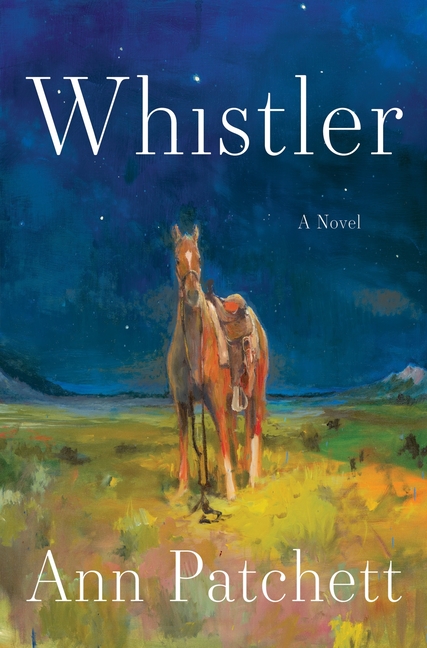
Whistler

Ann Patchett

Ann Patchett is a master on the subject of family dysfunction, and her 10th novel, a stepdaughter-stepfather love story, is as wise as ever on secrets, traumatic memories, and storytelling.
Cover

Whistler

Ann Patchett

Harper | $30 | 9780063511637

Ann Patchett's 10th novel, the exceptional Whistler, ponders the persistence of childhood trauma and of even short-lived bonds.

Daphne Fuller, 53, teaches English at a New York City girls' prep school. She's touring the Metropolitan Museum of Art with her husband, Jonathan, when he notices an older man following them. They're astonished to discover it's her stepfather: Eddie Triplett was (briefly) her mother's second husband when Daphne was nine years old. Daphne starts weeping, indicating a traumatic backstory--which unfolds at just the right pace.

At 76, Eddie works as a book editor. He and Daphne have a warm relationship of easy conversations. But the detritus of the past must be dealt with (for Jonathan, too, who's clearing his late mother's home), so Daphne unpacks it for her sister, Leda, who happens to be a therapist. Third-person "Interstitial" sections recount the events of January 1980. Abigail, the girls' mother, was at the hospital with Leda, whose appendix had burst. On their way home, Eddie and Daphne drove to a raspberry farm to look at the stars but veered off the road and were trapped in the car overnight. While pinned in his seat, an injured Eddie recounted for Daphne the storyline of a manuscript memoir he'd read that day of a Wyoming woman and her horse, Whistler.

Patchett (Tom Lake) is an expert on blended families and their secrets. The bittersweet tone is perfectly judged. Daphne's banter with her loved ones is a delight. The plot whisks along, its satisfying full circle returning to the Met, and incorporates a clever metanarrative twist. Whistler is quiet but surprising, witty yet heartrending. --Rebecca Foster, freelance reviewer, proofreader, and blogger at Bookish Beck

Cover

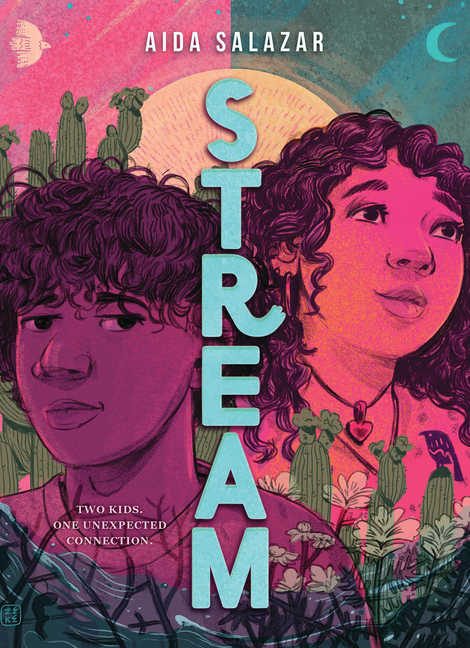
Stream

Aida Salazar

Perpetually online 13-year-olds Elio and Celi are sent to an off-the-grid rancho in Mexico in this effervescent middle-grade novel-in-verse about connecting to others, oneself, and the environment.
Cover

Stream

Aida Salazar

Scholastic | $18.99 | 9781338775679

Aida Salazar unites the protagonists of her Pura Belpré Honor recipient, Ultraviolet, and International Latino Book Award winner The Moon Within in Stream, a whipsmart, heartwarming middle-grade verse novel about two 13-year-olds sent to work "on an off-the-grid" rancho in Mexico.

Although recent eighth-grade graduates Elio and Celi have never met, both have parents who are concerned their children are being lost to screens. Both are sent for an Internet-free summer on the Atoyac rancho in Zacatecas, Mexico. Elio helps fortify the arroyo (stream) that "changed since the old government/ built a big dam a few miles upstream." Now, during summer storms, the arroyo could flood and "wipe out" Atoyac. Celi, meanwhile, assists her tías, who are curanderas, as they heal locals using herb and flower tinctures. The distraction of the tweens' phones--"it feels like my mind/ has a sugar craving"--slowly gives way to an organic kinship with the land, and an IRL attraction to each other. 

Salazar immerses Elio and Celi in ways of living that mirror the experiences of their Caxcan forebears in a warm, natural setting of dirt-floored clay houses, dry canyon vistas, and burbling brown water. Elio's sense of humor carries his bouncy poetic verse while his shimmering descriptions of Celi ("a dancing rainbow of light") reflect his emotions. Celi delves into moving inner monologues, realizing she is "more than what's on a screen" and discovering the freedom of being herself, "lucky... to wax and wane/ to ebb and grow." Together, over pre-Columbian-style meals, Indigenous music, and waterfall hikes, the teens encounter the healing that can come from real-world connection. --Samantha Zaboski, freelance editor and reviewer

Poisoned Pen Press: Bone of My Bone (Deluxe Edition) by Johanna Van Veen
BOOK REVIEWS
Cover
Young Midwestern women in New York City resist societal expectations with an anti-marriage pact in this funny and resolute novel about finding oneself.
Cover

The Anti-Marriage Pact

Lindsay MacMillan

Harper Muse | $18.99 | 9781400348107

Lindsay MacMillan's The Anti-Marriage Pact is an angst-ridden, humorous drama of self-discovery, feminism, and friendship set in contemporary New York City.

"We refused to dull our fabulous edges to fit the Midwest's archaic definition of a successful woman: married by twenty-five with two kids before thirty." After moving to Brooklyn, four women share a basement apartment in Bushwick that they call the Dunge Inn. There's a serial entrepreneur whose next idea is sure to make it big; a late joiner still trying to find her calling; an up-and-coming actor; and the novel's narrator, EJ. They call themselves the Redstockings, after "the 1970s feminists who performed street theater with all these brilliant political messages about how they were caged by the patriarchy."

At 28, EJ is an aspiring playwright, between babysitting and driving for Uber. She's the group's ringleader and authors their revolutionary anti-marriage pact. But the friends are each navigating their own young lives, professionally, creatively, and yes, romantically. At the kind of art opening she'd usually never attend, EJ meets a man she can't stop thinking about. Surprising even herself, she becomes attached to his dog. And she learns she has old wounds that need reexamining.

The Anti-Marriage Pact interrogates cultural norms through its strong-voiced protagonist. EJ--a huge personality, joyfully and unapologetically abrasive, and sure she's never had a bad idea--finds that life may still hold some surprises for her, and her hard-won journey will be the most revealing of all. EJ is not always a sympathetic character, but she keeps readers guessing as to her next move. --Julia Kastner, blogger at pagesofjulia

Cover
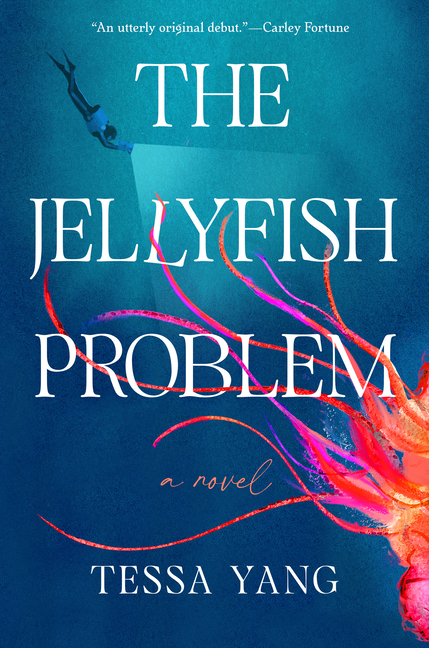
Tessa Yang's first novel, The Jellyfish Problem, intriguingly spotlights a marine biologist on the cusp of great discoveries, both professional and deeply personal.
Cover

The Jellyfish Problem

Tessa Yang

Berkley | $30 | 9780593955826

Tessa Yang intricately explores human and aquatic relationships in her first novel, The Jellyfish Problem. For marine biologist Dr. Josephine Ness, "jellyfish were [her] first thought on waking and [her] last thought before falling asleep." For three years, she's been writing The Modern Medusa: A Jellyfish Primer with best (and only) friend Aldo. Unfortunately, Aldo's been dead for seven months, after a scuba accident that Jo insists was her fault. She has since been living "a stalled and hollow life."

Then Jo gets a call from Nadia, whom she hasn't spoken to since their college graduation. Jo doesn't want to be "that most tragic of gay stereotypes: the pitiful lesbian pining after her straight best friend," but Nadia needs help only Jo can provide, because the tiny Maine island Nadia calls home is "having a really big jellyfish problem." The video footage may look fake, but this mysterious medusa is possibly the biggest in the world. When Jo arrives, however, Nadia's gone missing, and her husband's nonchalance over her not coming home the previous night is unnerving. Jo needs to meet the jellyfish--improbably named Clementine by a local child--and figure out who and what she is, and then somehow free the island from her luminous thrall.

Yang is a casual, intimate writer, drawing in audiences with dropped hints and slow reveals. She seamlessly blends detailed marine science and magical realism--all with welcome doses of well-timed humor--interweaving relationship drama, love (and hate) story, mother/daughter confrontations, corporate labyrinths, and a few pokes at the publishing industry. Glowing at the novel's core is the universal need for finding community. --Terry Hong

Cover
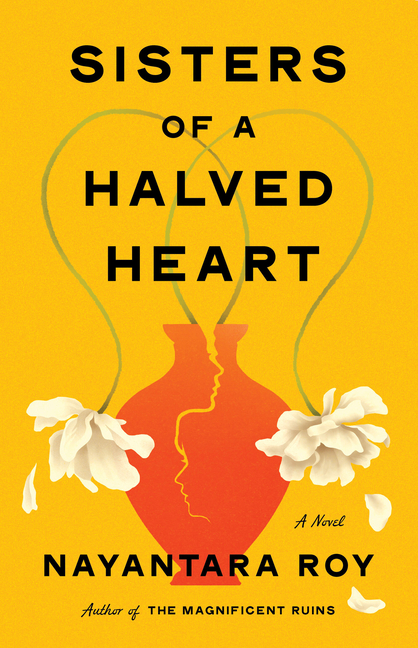
Nayantara Roy's blazingly honest second novel maps the complicated emotional terrain of two half-sisters trying to rebuild their relationship after a betrayal.
Cover

Sisters of a Halved Heart

Nayantara Roy

Algonquin | $29 | 9781643757698

Nayantara Roy's achingly powerful second novel, Sisters of a Halved Heart, maps the complicated emotional terrain between two half-sisters who try to mend their relationship in the wake of a cataclysmic betrayal.

Narrator Mira Guhathakurta, a poetry editor at a well-known literary magazine, has spent five years in London following a calamitous breakup. Returning to New York to rebuild her life, Mira settles tentatively into an apartment in Brooklyn, reconnecting with old friends and her father, gradually (and grudgingly) interacting with her sister, Joy. Younger by eight years, Joy is bold and sharp yet fragile, a corporate lawyer whose sense of self depends on her relationship with Mira and their father. As the sisters circle one another warily, bound together by their lifetime connection and their father's uncertain health, Roy examines the ways in which people hurt, question, support, reassure, and even abandon the ones they love most.

Roy (The Magnificent Ruins) unfolds the story of Mira and Joy's relationship: their blazing love for one another, tempered by the "language of small barbs" that peppers their constant jockeying for position. Their father is delighted to have both his girls back in his orbit but frustrated by their seeming inability to make peace. At the same time, Mira reflects on her relationship with Jack, the man who became the love of her life, and the ways their relationship sustained her until its sudden, catastrophic ending. Roy's characters achieve both a layered complexity and a certain "hard-won sweetness" to their love. With subtle grace and a fierce, deep compassion for her characters, Roy paints an unforgettable portrait of sisterhood and family. --Katie Noah Gibson, blogger at Cakes, Tea and Dreams

Cover
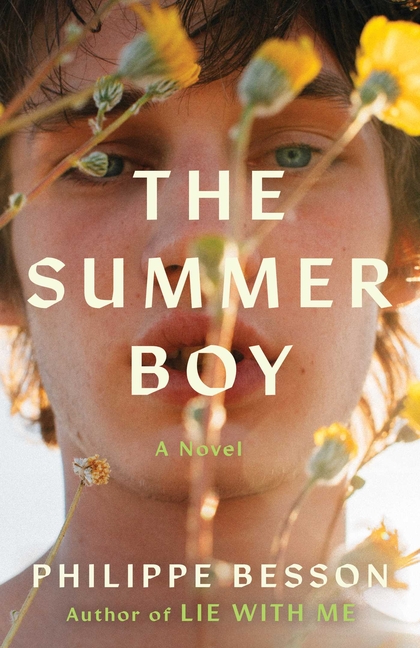
The Summer Boy is a moving work of autofiction that gently and intelligently recounts the summer 18-year-old Philippe spent on a French island, and the tragic episode that marred an idyllic holiday.
Cover

The Summer Boy

Philippe Besson, trans. by Sam Taylor

Scribner | $26 | 9781668204047

Anyone who hasn't figured out that life is ephemeral, with its daffodils and sunsets, will get an elegant reality check from The Summer Boy. Philippe Besson's moving work of autofiction, translated from the French by Sam Taylor, describes a period of his life that wasn't as halcyon as it should have been. In the novel's present day, Philippe sees a man who resembles someone he knew long ago during "that fateful summer that he would be greatly changed." The action then shifts to 1985, when Philippe was 18. He and his parents take a ferry to an island off the coast of France. Their host is Philippe's father's best friend and his wife. Philippe is to share a bedroom with François, the couple's son, who is Philippe's age. What follows will be a carefree holiday of sun, parties, and relaxation, right?

Wrong. The vacation has its pleasures, as Besson (Lie with Me) stylishly dramatizes, including good times with new friends Nicolas, a seemingly contented teen, and siblings Alice and Marc; Alice becomes a not-so-obscure object of desire for François and Nicolas. In a refreshing touch, no one seems to mind that Philippe is queer. That bodes well for his designs on Marc, with his "swimmer's body: healthy and reassuringly well-balanced." An unexpected tragedy mars everyone's idyll, however, and leads to thoughtful introspection about the nature of existence. It's all intelligently rendered in this gentle work. --Michael Magras, freelance book reviewer

Yen Press: Four in Love by Crystal Kung, translated by Xiao
Cover
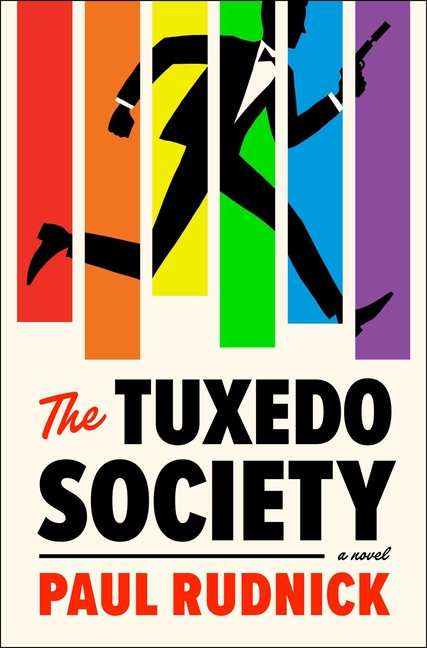
Paul Rudnick's The Tuxedo Society is a hilarious spy novel about a gay aspiring actor recruited by an all-queer counterespionage group to recover stolen jewels the First Lady wants to repatriate.
Cover

The Tuxedo Society

Paul Rudnick

Atria | $28 | 9781668212615

Readers who would be stirred, not shaken, by a comedic spy novel featuring hot gay characters should check out The Tuxedo Society by the reliably hilarious Paul Rudnick (Gorgeous; Playing the Palace; What Is Wrong with You?). The story's accidental James Bond is Andrew Birnbaum, a gay aspiring actor who lives in the East Village and sells candles at Smells of the Season. A friend who "missed out on a modeling career due to being overly perfect" invites him to dine with the all-queer Tuxedo Society, an underground counterespionage group that works with the U.S. government. The group employs members' skills--their contingent includes an Olympic diver and a celebrity florist--to infiltrate the ranks of politicians and oligarchs and thwart their evil schemes. They need an actor for their latest assignment: at the request of the First Lady, they are to recover three jewels thought to have mystical powers and help her repatriate them.

That's the setup for Rudnick's wacky adventure, a madcap romp that includes a Republican senator from Alabama who votes against every LGBTQ+ bill but secretly patronizes a male Tuxedo Society member's OnlyFans, a French mogul who wants to loot every priceless antiquity and whose handsome son takes a shine to Andrew, and more. Buried amid the fun is a quasi-serious message about the power and pride of queer people, but fun predominates in this delightfully impudent book. What's not to like about a novel in which spies are equipped with phones that, for authentication purposes, recognize not thumbprints or passwords but the owner's penis? --Michael Magras, freelance book reviewer

Cover
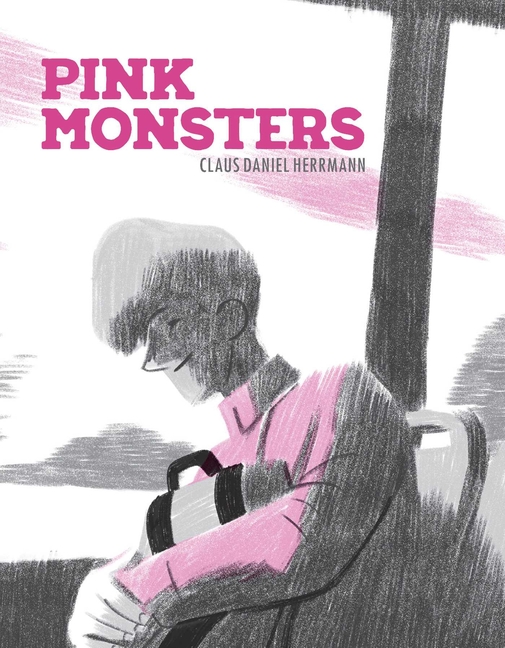
Graphic novelist Claus Daniel Herrman's English-language debut gently highlights a young teen's coming-of-age amid his father's stifling depression.
Cover

Pink Monsters

Claus Daniel Herrmann, trans. by Thomas Mauer

Oni Press | $29.99 | 9798894881324

German graphic creator Claus Daniel Herrmann's Pink Monsters is a thoughtful comic about a sweet teen caught between his father's depression and his own burgeoning self-discovery. Thomas Mauer, letterer for the text, resonantly translates this English-language debut.

When Frank arrives home and his mother hasn't yet returned from her library job, the house remains quiet, although Frank isn't alone. Isolated and uncommunicative, Frank's father, George, seems trapped in darkness. Frank grabs a snack, then retreats to his room, where his music and art keep him company. "[George] hasn't been this down in the dumps for a long time," Frank's mother observes. She has called in "a healer" since "the docs are out of ideas." Thea arrives the next day, bringing unconventional methods--energies, feng shui, personal crystals--that involve the whole family. For a while, George appears to be improving.

Meanwhile, at school, Frank's become frenemies with volleyball teammate Michael, who's initially a bully, then an ally, then maybe something more. Following Michael's requests, Frank's drawings depict the monstrous, although they're eventually discarded at Thea's insistence that they're harmful. Ironically, Thea's heinous homophobia proves the most destructive, and the family will need to find other paths to recovery.

Hermann is an empathic storyteller, memorably realistic and eschewing easy answers. His depiction of Frank's relationships with his concerned mother and detached father are particularly well considered, and the carefully modulated bond growing between Frank and Michael endearing. Herrmann's panels and pages begin in black-and-white, then are interrupted intermittently by swaths of pink that grow in intensity, cleverly and beautifully overwhelming a once-monotone existence. --Terry Hong

Cover
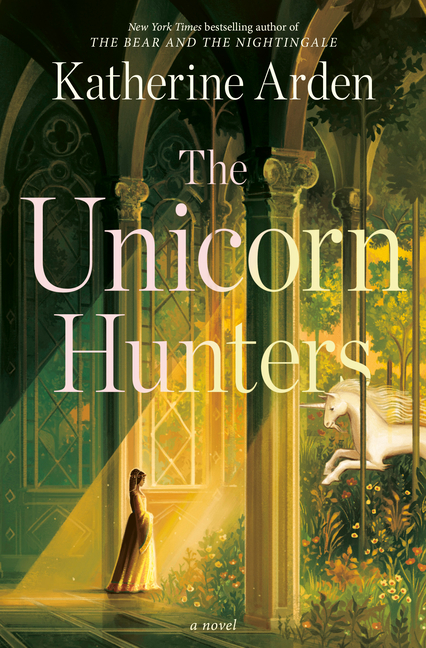
Katherine Arden reinvents the life of Anne, Duchess of Brittany, in this epic, ethereal standalone historical fantasy.
Cover

The Unicorn Hunters

Katherine Arden

Del Rey | $30 | 9780593128282

Katherine Arden (The Warm Hands of Ghosts) offers readers an alternate history shaped by the fortitude of an iconic heroine in the epic, ethereal standalone fantasy The Unicorn Hunters.

Anne, duchess of Brittany, promised her late father that she would not let France annex their tiny nation. Her upcoming forced wedding to the French king would guarantee the loss of Brittany's independence, so she hatches a desperate scheme: she arranges her own betrothal to the Austrian monarch, who has no interest in annexing Brittany. Anne coordinates a hasty wedding by proxy at an abbey in Brocéliande and starts a rumor of a unicorn sighting in the forest, stalling the French emissary with the promise of a unicorn hunt and giving herself an excuse to go to Brocéliande as the maiden bait. The unicorn hunt goes awry when an actual unicorn appears, followed by a man who claims to have been lost in the world of the korriganed, Brittany's fair folk, for centuries. Anne must continue to hold off the French while she waits for her true bridegroom, but strange outpourings of magic and a shadowy nemesis threaten her plans and all she holds dear.

This rewriting of the history of Anne of Brittany is a yearning and inspiring tale of an underdog ruler who decides to shape her own fate for the love of her nation. Arden again demonstrates her skill at creating feisty, full-hearted female characters. Her other gifts, including graceful turns of phrase and wry dialogue, also lend depth to this verdant, magic-laced world. Readers seeking a unicorn need look no further than this gorgeous fantasy. --Jaclyn Fulwood, blogger at Infinite Reads

Cover
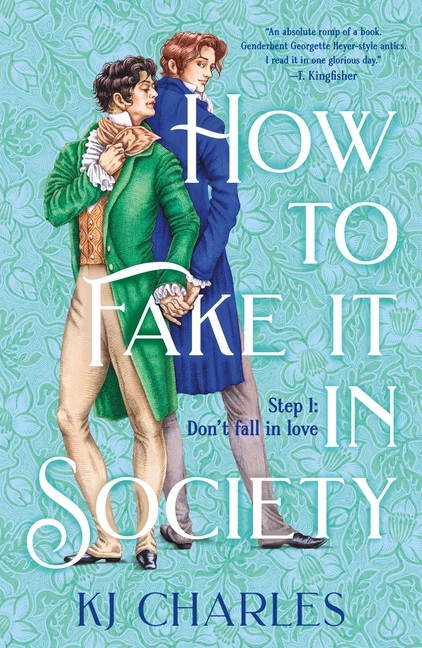
In KJ Charles's intriguing, charming romance, a newly rich shopkeeper learns to play the part of a wealthy man while falling in love with an aristocrat who's playing a role in more ways than one.
Cover

How to Fake It in Society

KJ Charles

Bramble | $18.99 | 9781250395917

In KJ Charles's How to Fake It in Society, a widower suddenly made wealthy through inheritance strikes up an unlikely relationship with the French aristocrat who had planned to marry his late wife.

Titus Pilcrow is making his living as a shopkeeper until an older customer, Miss Whitecross, dying from injuries sustained in a fall, marries him to spite her greedy nephew. Titus must now find his feet in the moneyed world; he's beset by fundraisers, con artists, and families with marriageable daughters. Then Comte Nicolas-Marc appears, claiming that Miss Whitecross had come to him first, but he wasn't reachable when she was dying. When Nico takes him under his wing and teaches him how to dress for his station, Titus understands that the cash-poor aristocrat is probably directing Titus's business to creditors Nico needs to placate. He just has no idea that Nico and his cousin are in debt to people much more dangerous than tailors.

KJ Charles (All of Us Murderers) weaves an intricate web of deceit while maintaining honesty in the private emotions between Titus and Nico as they start to fall in love. Titus is recovering from an emotionally abusive relationship, and Nico's tenderness and support help him to find a healthier way to navigate relationships. Readers learn early on that Nico is running a scam, but the fact that he quickly decides not to target Titus directly makes it easy to root for their happiness once the considerable obstacles caused by the subterfuge resolve. --Kristen Allen-Vogel, information services librarian at Dayton Metro Library

Barefoot Books: America's Founding Myths...and What Really Happened by Christy Mihaly, illustrated by Marta Sevilla
Cover
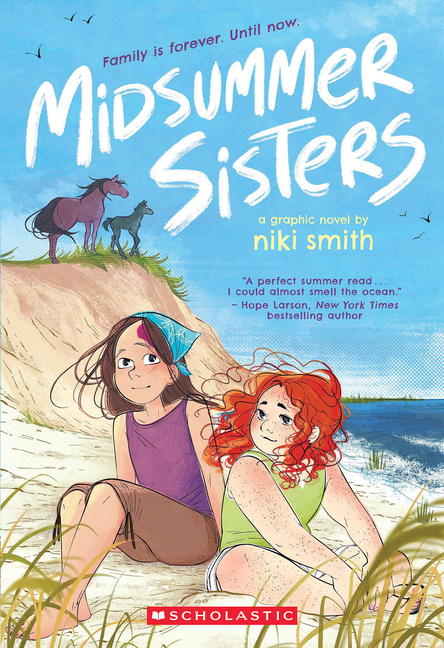
Two tween stepsisters stay at their grandma's beach house for what may be their last summer together in this marvelous middle-grade graphic novel about sisterly love.
Cover

Midsummer Sisters

Niki Smith

Graphix | $14.99 | 9781546128946

Tween stepsisters Kenzie and Quinn try to enjoy what they believe is their final summer together in this thoughtful, luminous middle-grade graphic novel.

Midsummer Sisters by Niki Smith (The Golden Hour; illus. of Sea Legs) opens with red dialogue balloons of Kenzie's dad and Quinn's mom yelling. The young stepsisters (Quinn redheaded and freckled, Kenzie brown-haired and light-skinned with nevus flammeus on her forehead) huddle together under a blanket. Soon, Kenzie's grandma--who sees both girls as hers--sweeps them away to spend the summer with her on the Outer Banks in North Carolina. As a duo, the girls fawn over the local wild horses, especially the herd's vulnerable newborn foal. Individually, Kenzie beach-combs and Quinn texts and video chats with Willow, a friend from home who makes her blush. The sisters' time in close quarters magnifies their disparate ways of handling the divorce and both fear the inevitable: with their parents' divorce, they "will just be strangers."

In this gorgeous ode to horse girls and the magic of summer, Smith portrays a nuanced, messy, and beautiful blended family with painful realism. Kenzie, whose mother died when she was young, particularly embodies the circumstances that can surround a blended family's split: "I'm not even gonna have a mom anymore." An infectious love between the sisters buffers the sadness. Smith's loose-lined illustrations and borderless panels depict expressive features and tons of action. Smith's wild horses seem especially lifelike, manes flowing and gentle eyes gleaming, allowing readers to find in them the same mesmerizing wonder that the sisters do. Spectacular. --Samantha Zaboski, freelance editor and reviewer

Cover
Myths surrounding the birth of the United States go under the magnifying glass in this entertaining middle-grade title that challenges young readers to identify bias and discover truths.
Cover

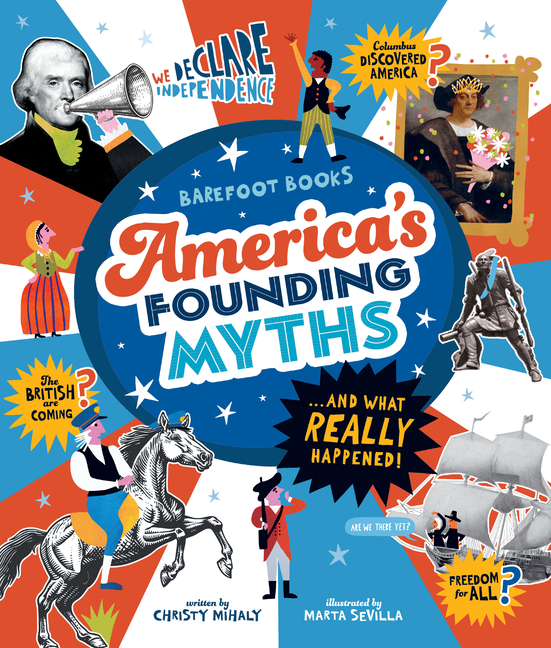
America's Founding Myths... and What REALLY Happened

Christy Mihaly, illus. by Marta Sevilla

Barefoot Books | $19.99 | 9798888599082

Author Christy Mihaly (Music and Silence) and artist Marta Sevilla (The Bard and the Book illustrator) address 15 common stories about the birth of the United States in America's Founding Myths, an interactive picture book for middle-grade readers. Mihaly encourages her audience to filter through bias to discover historical truth, noting that "stories become legends or myths that glorify the past" even when they are not true.

The book uses gatefolds to reveal the "truth" (literally) behind the "myth," inviting readers to lift the flaps to discover hidden information. For example, "The Myth of the Boston Tea Party" suggests readers "may have heard that all of the Patriots were in favor of dumping tea into the Boston Harbor." When the gatefold is opened, Mihaly gives both "The True Story" and an explanation of how the myth originated. As readers engage with the content, they encounter thought-provoking questions, such as, "Why do you think Longfellow wrote a poem about only Paul Revere and not the other riders?" and "How do I know what is true?" The topics cover a diverse range of events and people, asking and answering questions about Black Americans, women, and Indigenous people during the revolutionary era, as well as the Declaration of Independence and the U.S. Constitution.

Sevilla's humorous illustrations combine with modern and historic images to construct pages full of color, entertaining content, and infographics that enhance the insightful text. The book's back matter includes an explainer on determining truth, a glossary of terms, discussion about the book's creation, and resources for learning more. Mihaly and Sevilla make this complex material alluring amusing, and relevant. --Jen Forbus, freelancer

Cover
This gentle, charming picture book features a Black girl birding with her adoring dad to look for the bird she calls Blue.
Cover

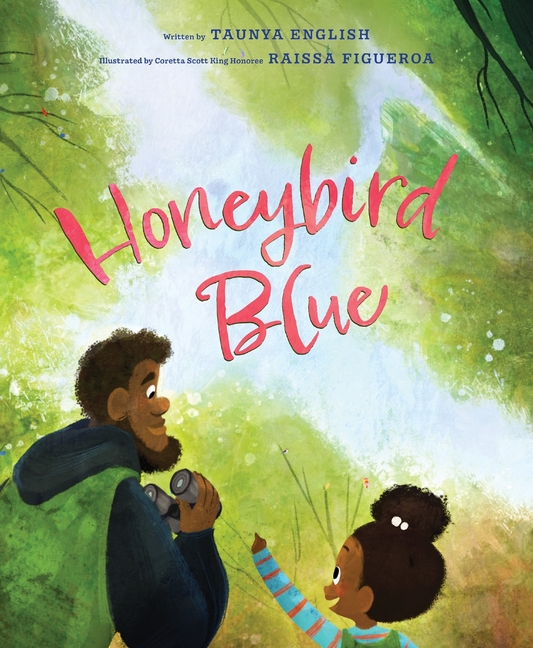
Honeybird Blue

Taunya English, illus. by Raissa Figueroa

HarperCollins | $19.99 | 9780063321953

Debut picture book author and naturalist Taunya English and Coretta Scott King Honor winner Raissa Figueroa (illustrator, We Wait for the Sun, Esi the Brave) deliver an exquisite, one-of-a-kind love story about the activity of birding in Honeybird Blue, a picture book featuring a birdwatching father/daughter pair.

Honeybird and Pop are at a national park for a "Black Birders Meetup" to practice "EARbirding," in which birders identify the species by song or call. Honeybird, wearing a puff ponytail, green romper, and bright yellow boots, is ready to search for the birds on her list, each identified by color ("Orange" robin? Tick!). The bird she especially wants to find is the great blue heron. Honeybird and Pop spend all day checking birds off the list ("Green" ducks, "Brown" geese), but Blue remains unseen. As the sun sets and Honeybird, Pop, and a group of Black birders take a selfie on their way out, they hear a loud "FRAWNK!" Could it be? "My last color," Honeybird narrates. "Tick!"

English thoughtfully balances the contrast of stillness and wildness in nature with scenes of Honeybird and her dad "tiptoe-squish[ing]" through the marsh only to be alerted to a bird's proximity by a loud "Tat! Tat! Tat!" or "HONK!" Figueroa's digital illustrations include abundant sunlight (from sunrise to sunset) and bountiful textures, creating a thriving environment. Despite all the (avian) celebrity appearances, Honeybird and Pop remain at the picture book's core, allowing for a gentle story about joy, perseverance, and listening to the natural world. --Kharissa Kenner, school media specialist, Churchill School and Center

Cover
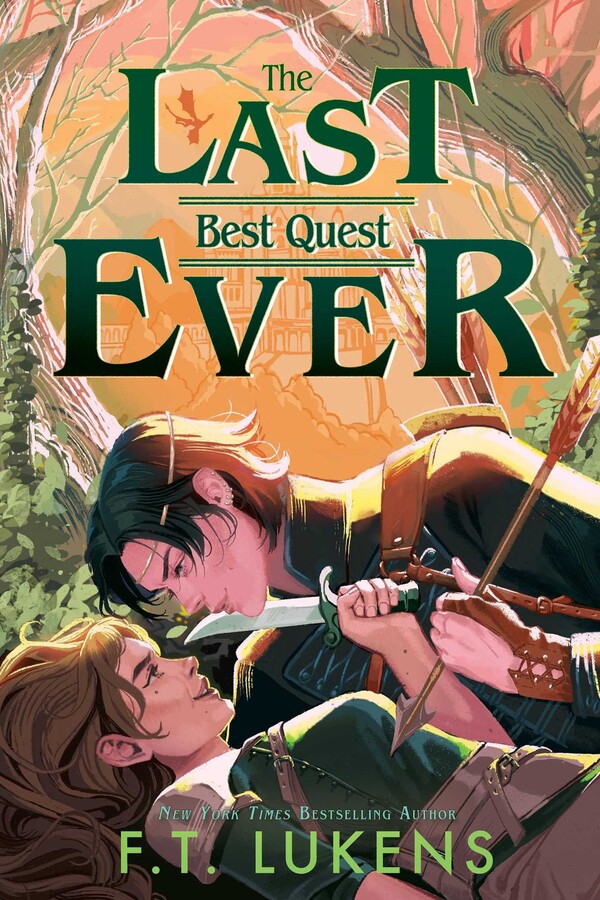
A famed adventurer who lied about her feats accepts a death-defying quest to fell a godlike beast in this highly entertaining YA cozy romantasy adventure.
Cover

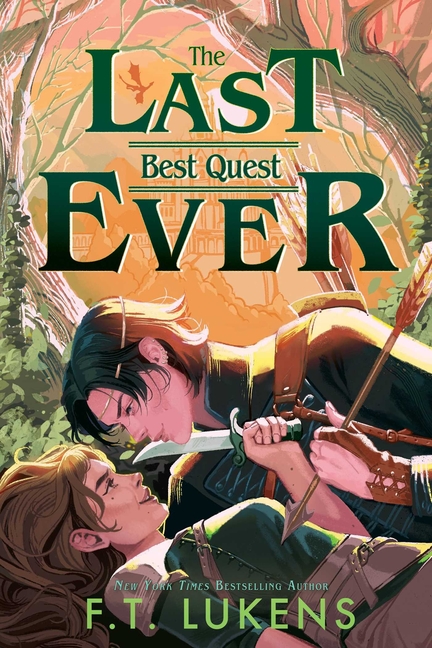
The Last Best Quest Ever

F.T. Lukens

Margaret K. McElderry Books | $19.99 | 9781665950978

Comedy adventure meets queer cozy romantasy in the immensely enjoyable, consistently funny, and friendship-filled The Last Best Quest Ever by F.T. Lukens (Love at Second Sight), about an adventurer who lied about her accomplishments and must now achieve the "nearly impossible" to save her brother's life.

Decorated quester "Ellinore the Brave" (17, fair-skinned) is ready to retire. She's bought her parents a house and knows she needs to quit while she's ahead--she doesn't want to push her luck with the whole "hero" charade. But Ellinore must postpone retirement when her wily yet reckless twin brother, Zig, wagers his literal heart on Ellinore killing the fabled, godlike Elder Beast. Zig demands to go questing with Ellinore; the pair is joined by Ellinore's rival, Princet Aven (18, fair-skinned), and two adoring fans: Farrah (Aven's "golden-brown"-skinned teen cousin) and Rylan (brown-skinned teen bard). Ellinore, unsurprisingly, lands the party in near-death incidents with mythical monsters, magical earthquakes, a haunted forest, and one particularly haughty lord. These setbacks, plus lying to the "unfairly attractive" Aven, send Ellinore spiraling to the conclusion that the real Ellinore can't save anyone.

The Last Best Quest Ever is a droll, high-stakes fantasy, a touching found-family story, and a satisfyingly slow-burn rivals-to-lovers romance. Ellinore's fear of being discovered a fraud and her budding relationship with Aven complicate her obstacle-ridden journey toward freeing her true self. This cleverly parallels the heavy burden of expectation on Aven, last in line to the throne, who longs to shed their "Pointless Princet" nickname and prove their worth. Lukens delivers a thoroughly entertaining escape that beautifully illustrates the boons of leaning on loved ones. --Samantha Zaboski, freelance editor and reviewer

 Harmony: 80,000 Hours: How to Have a Fulfilling Career That Does Good by Benjamin Todd
Reading with Pride

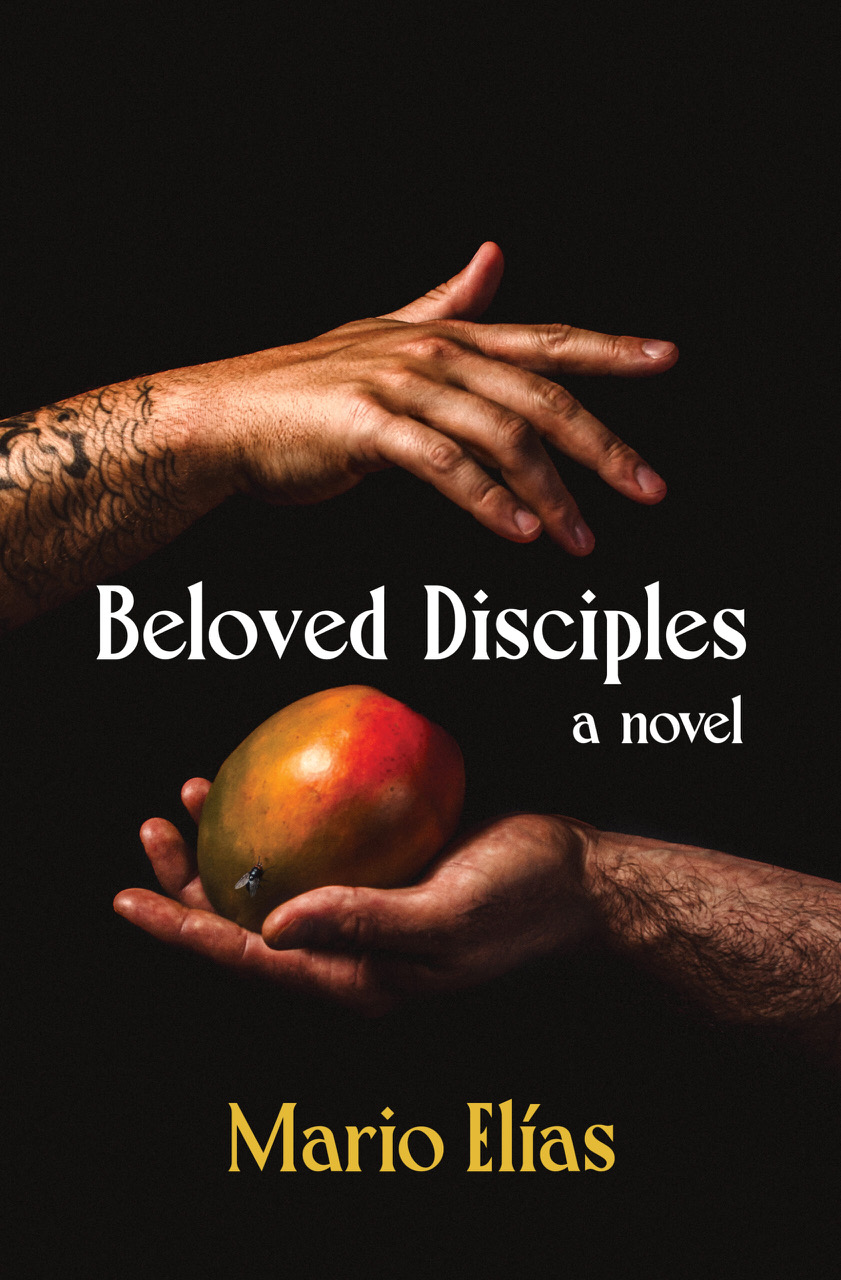
Mario Elías is a multidisciplinary artist of Cuban and Syrian descent whose debut novel, Beloved Disciples, captures the majesty of a first love, from the soaring heights of adoration down to the hollowed-out depths of bereavement. Today he shares with us the "freak of a book" that made him roll on the floor laughing as a kid, the writer who mentored his novel's first draft, and the many beautiful works that have wriggled their way into his heart.

Reading with Pride

Reading with... Mario Elías

photo: Doug Birkenheuer

Mario Elías is a multidisciplinary artist of Cuban and Syrian descent based in Chicago. Spanning fiction, nonfiction, and visual art, his work explores identity, memory, and cultural inheritance through a queer lens. He is the founder of The KindaSuper Project, a philanthropic initiative providing free photography and video services to underserved communities. In 2020, he self-published Queering the Male Gaze, a collection of portraits and art historical essays that reimagined masterpieces of the classical and modern canon, spotlighting the often-overlooked queer and female figures who shaped them. His debut novel, Beloved Disciples (Amble Press), captures the majesty of a first love, from the soaring heights of adoration to the hollowed-out depths of bereavement.

Handsell readers your book in 25 words or less:

After losing the love of his life, Simón discovers the line between devotion and obsession blurs when grieving becomes its own form of worship.

On your nightstand now:

I'm currently juggling three books: Confessions of a Mask by Yukio Mishima, Monstrilio by Gerardo Sámano Córdova, and Craft: Stories I Wrote for the Devil by Ananda Lima. They all fill such different holes in my brain! Monstrilio is very much my style of writing that easily wriggles its way into the heart--demented and full of aching love. Ananda Lima is so funny and intelligent in a way that really makes me consider how I write. And Mishima is a must read for anyone exploring queer literary history.

Favorite book when you were a child:

The Stinky Cheese Man and Other Fairly Stupid Tales! Written by Jon Scieszka and illustrated by Lane Smith. I would roll on the floor laughing when this freak of a book would be chosen. It is ridiculous postmodern metafiction with the sole purpose of making a mockery of beloved characters and tropes to remind you that nothing is set in stone and we can all just make things up as we go.

Your top five authors:

This is so hard! Reinaldo Arenas, James Baldwin, Ali Smith, Clarice Lispector, Michael Cunningham. And honorable mentions to Christopher Isherwood, Virginia Woolf, and Patricia Highsmith. These are all writers that I have and will continue to reread over and over again just to live in their version of reality.

Book you've faked reading:

Flowers in the Attic. To be honest, I refused to read it because I thought it was some sort of relation to Flowers for Algernon, and I just couldn't deal with the emotional trauma again. When I got to class, ready to fake my way through the lesson, I had never been more grateful for skipping a read.

Book you're an evangelist for:

Okay, I get that this will seem sort of off-brand, but I cannot tell you how many people I've tried to convince to read Dandelion Wine by Ray Bradbury. It's such a cozy read and makes you really stop and consider all of the magic that is swirling around us every second of every day. The message is to feel everything, name everything, bottle up summer and store it for a cold and gloomy day. I think about this book and the magic of being a kid all the time.

Book you've bought for the cover:

The New Life by Tom Crewe. The cover caught my eye and the title was intriguing in its ambiguity. This blind faith in vanity was immediately reinforced because the book is brilliant. On the very first page, you are thrust into a claustrophobic sex dream, and then taken on a cinematic tour of 1890s London and the fight for the acceptance of homosexuality.

Book you hid from your parents:

Boy Meets Boy by David Levithan. I had just finished eighth grade and was getting ready to start high school when this book came out. I folded paper and created a book cover to conceal the very gay title and cover.

Book that changed your life:

Guapa by Saleem Haddad. I read this book for the first time before the Covid-19 pandemic, when I was still living in San Francisco. I finished it and instantly started reading it again. The prose was beautiful, the aching longing, the weight of family and cultural expectations--it all just really hit me on a personal level. I posted something on Instagram about the novel and tagged Saleem, and he followed me back. Fast forward a couple of years, and he ended up being my mentor for the first draft of my debut novel, Beloved Disciples.

Favorite line from a book:

Quite often, I think of this line from Die, My Love by Ariana Harwicz (as translated by Sarah Moses and Carolina Orloff):

"She lived in her body as though it were an infested house, as if she had to tiptoe through it trying not to touch the floor."

It's so unnerving and eerie, yet it's a distinct feeling I have felt before but never tried to find the words to describe. Beautiful writing throughout this book.

Five books you'll never part with:

Singing from the Well by Reinaldo Arenas, How to Be Both by Ali Smith, A Single Man by Christopher Isherwood, The Price of Salt by Patricia Highsmith, and Guapa, of course!

Book you most want to read again for the first time:

Piranesi by Susanna Clarke. I read this in one sitting the day after Christmas in 2020 when the walls seemed to be closing in around us. The water was practically splashing through the pages. What a magical little book.

Chronicle Cooks: A community for home cooks and cookbook lovers. Follow us on Substack!
Book Candy
The Writer's Life

YA speculative fiction author F.T. Lukens's new book is The Last Best Quest Ever, a comedy adventure and queer cozy romantasy in which a renowned adventurer whose accomplishments are fake must complete an impossible quest. Lukens talked to us about role-playing games, talking dragons, imposter syndrome, and some of their favorite parts to write.

The Writer's Life

F.T. Lukens: On Quirky Characters and Fantasy Shenanigans

F.T. Lukens is the author of YA speculative fiction novels including Spell Bound, So This Is Ever After, Love at Second Sight, and The Rules and Regulations for Mediating Myths & Magic. Lukens resides in North Carolina with their spouse, three kids, three dogs, and three cats. The Last Best Quest Ever (Margaret K. McElderry Books; reviewed in this issue) follows a renowned adventurer whose accomplishments are fake, but who must now complete an impossible quest. Here, Lukens chats about the book, talking dragons, imposter syndrome, and some of their favorite parts to write.

You've got an impressive fantasy oeuvre, but The Last Best Quest Ever is a bit more D&D than the others. Do you play?

I have not played in many years. The most recent RPG (MMORPG) I played was World of Warcraft, in which my main was a Blood Elf Mage and my alt was an Undead Rogue. I mainly play card games now, with my recent obsession being Lorcana, in which I play Sapphire/Steel (ramp package) with Amethyst/Steel (control) being my backup. That said, a new set was just released so the meta is going to change and that might change the inks I play! (Amber aggro is looking strong!)

You did a lot of research for Otherworldly--did Last Best Quest Ever require the same kind of research?

Yes. I researched several myths for the creature that eventually became the Elder Beast in the novel. It's based on a folklore creature called the Indrik, which is like the unicorn's cousin. I also needed to fill out the rest of the world. So there was more reading and looking at medieval drawings of griffins and harpies and manticores, etc. Then all the little pieces, like researching bees and wasp habitats for the pixies, what kinds of feathers were used as fletching for arrows, and the meanings of coats of arms for various side characters.

What's the story behind the main character's name?

In Arthurian legend, Sir Pellinore was one of the knights of the round table and is most associated with the questing beast. Also, Dave, the dragon, is named after my friend's cat.

A talking dragon isn't easy to pull off without being silly--but you did it. Was Dave always going to be a part of the book?

Yes, he was Ellinore's BFF from the outline. I wanted to write a dragon because I had recently read a few books with dragons, and I had never written a book with one despite all the fantasy books I've written. However, I didn't want the dragon to be the focus. I wanted to create a world filled with fantasy creatures. And I'm probably the only person who loved the D&D movie, so I knew I wanted to write some kind of quest. And it wouldn't be a quest without quirky characters and shenanigans.
There's a "never meet your heroes" element here, but it's turned on its head because Ellinore's "flaw" is how kind she is.

Yes, I always knew Ellinore was going to be a fraud/imposter in that she wasn't going to complete her quests the "right" way. In a world where fighting dragons is the norm, that led to this "flaw" of thinking outside of the box and leading with knowledge and kindness. Add in the friendship with Dave, which teaches her that magical creatures have whole lives and backstories that she might not know, and she's even more reluctant to complete quests the way others think they should be completed.

Were you at all thinking about the prevalence of imposter syndrome when writing?

I wanted to laugh when I first read this question, because, yes, this book is all about imposter syndrome. Imposter syndrome really is the enemy of creativity. If you're always thinking about how to live up to expectations--how to live up to the last book or the last exam or the last major milestone in your life--how can you move forward? It causes a block or a freeze, and it can be exhausting. There are times when I chalk up success to "luck and timing," which is undoubtedly a factor, but that downplays all the hard work and time and sacrifices that happen as well.

Why is it so hard for Ellinore to see that her fellow questers are responding to her, not necessarily the stories about her?

Her whole life she's been told what the correct version of herself is. She is relying on societal pressure and her perception of what she thinks others want from her, not realizing that her group would love her even without all the fake accomplishments. She's tied her sense of worth to her accolades, and it takes her time to realize that she's worth the love and friendship from the group without those.

She does have a genuine connection with her troublemaker twin.

That was one of the fun parts of the book to write. It's a common trope to have one sibling be a standout successful person while the other one may not be. But the twist here is that Ellinore isn't really the person in the bard's tales, and Zig is much more successful in his line of "work." The fracture of their relationship was something I wanted to explore--going from twins who did everything together, to one of them feeling left behind and the other being thrust into a spotlight she didn't necessarily want, then navigating how to get back to being close once again after the years they spent being resentful toward each other. Healing their relationship means a lot of snarky dialogue and being surprised by each other's skills during the quest to cultivate a genuine desire to be closer.

You really put the whole party through quite the gauntlet!

Yes. One of my favorite obstacles, without being too spoilery, was the "rocks fall, everyone dies" trope moment that is a little Indiana Jones, a little Goonies, and a little bit of the irrational fear of being stuck in a cave.

Even in seemingly hopeless moments like these, there's a brightness underlining the quest. Why is it important to you to write optimistic stories?

Because the world is a mess. It's difficult to be optimistic now--living under a regime that will only be remembered for its deception and cruelty, and those in power being too feckless to put an end to the injustice of it all. Hopefully, readers will find a little hope and respite in a fantasy world where the main character's biggest flaw is kindness and where there are talking dragons.

As we could expect from you, this book is gay. I love it. What do you hope your queer teen readers take away from the story especially?

That you don't have to have yourself completely figured out as a teen. That there is always room to grow and change and that the person you are can be a stepping-stone to the person you will become. --Samantha Zaboski, freelance editor and reviewer


Powered by: Xtenit