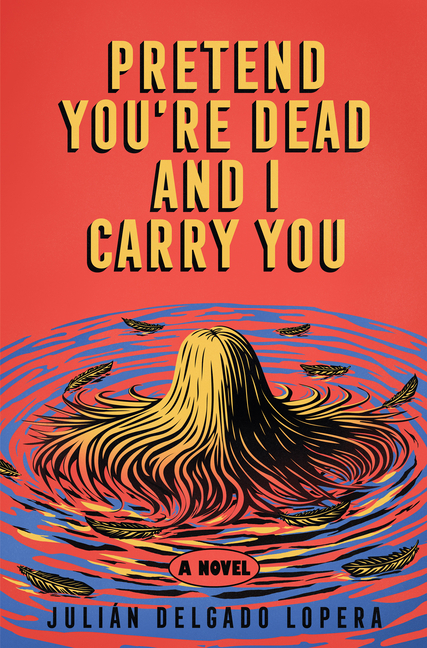
 Novelist Julián Delgado Lopera is the author of Fiebre Tropical and most recently Pretend You're Dead and I Carry You, an enthralling father-daughter saga set within a queer community in Bogotá, Colombia. In today's interview, Julián elaborates on who inspired this story's distinctive voice and the intricacies of writing in Spanglish, as well as the aspects of his childhood that he reimagined along the way.
The Writer's Life
Julián Delgado Lopera: A Childhood Reimagined
|
| photo: Vilerx Perez |
Julián Delgado Lopera is the author of Fiebre Tropical, winner of the 2021 Ferro Grumley Award and a 2021 Lambda Literary Award, as well as a finalist of the 2020 Kirkus Prize in Fiction and the 2021 Aspen Literary Prize. His illustrated bilingual collection of oral histories by LGBT Latinx immigrants, ¡Cuéntamelo!, won a 2018 Lambda Literary Award and a 2018 Independent Publisher Book Award. He is the former executive director of RADAR Productions and one of the founders of Drag Queen Story Hour. Born and raised in Bogotá, Colombia, he currently resides in Brooklyn, N.Y., where he is an assistant professor of creative writing and contemporary Latine literature at CUNY. His second novel, Pretend You're Dead and I Carry You (Liveright; reviewed in this issue), is an enthralling father-daughter saga set within a queer community.
Mamadora Eléctrica's narration is so vibrant and distinct. How did her voice come to you?
Tía Mama's voice is based off my trans mother's--Adela Vázquez--que en paz descanse. Adela was Cuban, trans, and an immigrant. She had an unfiltered voice and sass in unimaginable quantities. Fourteen years I spent listening to her storytelling, her travesti way of narrating the world, which was a combination of absurdity, chaos and camp. To be part of this family you must be a bitch! she said to me the day I was baptized into the family Oh, but look at her, she's a natural! She's a faggot! Come on now, niña! It was through her that I learned travesti poetics, the urgency of voice, a refusal to appeal to the normative and an embrace of chaos and play as points of departure.
What are your priorities when you craft prose that blends English and Spanish?
Sound, rhythm. There's so much about Spanglish that relies on how the sentence is constructed that has to do with phonetics. What kind of rhythm can I create when I mix both languages? On my first drafts there's way more Spanish, pages and pages, and then I begin to sculpt it and shape it. I also make sure that even people who do not understand Spanish will comprehend what is going on from context.
The father-daughter relationship of Ignacio and Valentina reminded me of those in memoirs like Alison Bechdel's Fun Home and Alysia Abbott's Fairyland. From where did you draw inspiration to explore that particular dynamic?
I loved those two memoirs and read them as part of the research/inspiration for Pretend! The novel bloomed from a short story I wrote about 14 years ago, about a father and a daughter cloistered in an apartment in Bogotá. I then searched for books that touched on a similar dynamic. I am estranged from my own father and so I wanted to reimagine and explore that relationship in a fictionalized narrative. I am only the first out queer person in my family, so I reimagined my childhood with a father that is closeted, the weight of the closet on both the main character but also on the people around him. Fun Home is great for this because it speaks to that tension of secrets, that pressure that it puts on the family. And then Fairyland is gorgeous in its display of the social dynamic with a gay father. I was also inspired by Papi by Rita Indiana, which follows the story of a young girl in the Dominican Republic who idealizes her mobster father. That book is written like a merengue, and it is one of my favorite books.
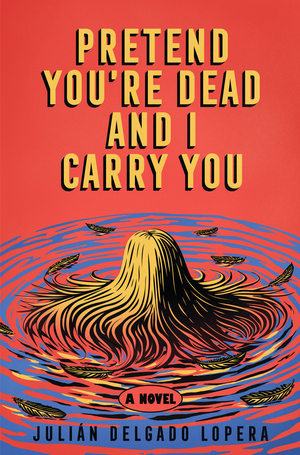 At the start, Mamadora Eléctrica tells readers that certain people are destined to transform into animals. Did you always imagine Ignacio as a bird, or did you explore other beasts in the writing process?
Ignacio was always going to be a bird. "Bird" in Spanish is "pájaro." There are many Spanish-speaking places that call faggots "pájaros," birds. Particularly in the Spanish-speaking Caribbean. My trans mother Adela, who was Cuban, used to call faggots pájaros, so it is also an ode to her lineage and language. It is also a nod to Camila Sosa Villada's marvelous novel Bad Girls, in which one of the characters, a travesti doing sex work, turns into a bird.
Natalia is a TV celebrity and a significant presence throughout the novel. Is she based on a real figure?
Yes. Many years ago, in one of my trips back to Colombia, I saw a billboard with a model that was an amputee. She appeared in all the most desired Colombian magazines and people seemed to be obsessed with her. Colombian culture is very obsessed with beauty queens and models, so I wanted to bring that into the narrative. Natalia's story is entirely fiction, but I was fascinated by the way the narrative around the supermodel circulated.
The Magdalena River bears both geographic and metaphoric weight for your story. How did you settle on it as the spine?
El Río Magdalena, the Magdalena river, holds a lot of weight in Colombia. Both literally and figuratively, it is the largest river in the country and it is also a river that has known intimately the violence plaguing the country for centuries. As a child, I learned about the river in school and as an adult I learned about the river through the news and the storytelling around the war. It is also a connector to the Caribbean, which is where Alma, Valentina's mother, is from and where she is found dead. When I was writing the book I could see the river as a metaphor for the ancestral trauma passed down to Valentina, living inside her.
What was your favorite part of writing this book?
I love writing all the super gay scenes in the small town of Ebaguí. Small towns are one of my favorite places to write. I remember my trips to this part of Colombia, el Tolima, as a kid and then reimagined them. --Dave Wheeler, senior editor, Shelf Awareness






















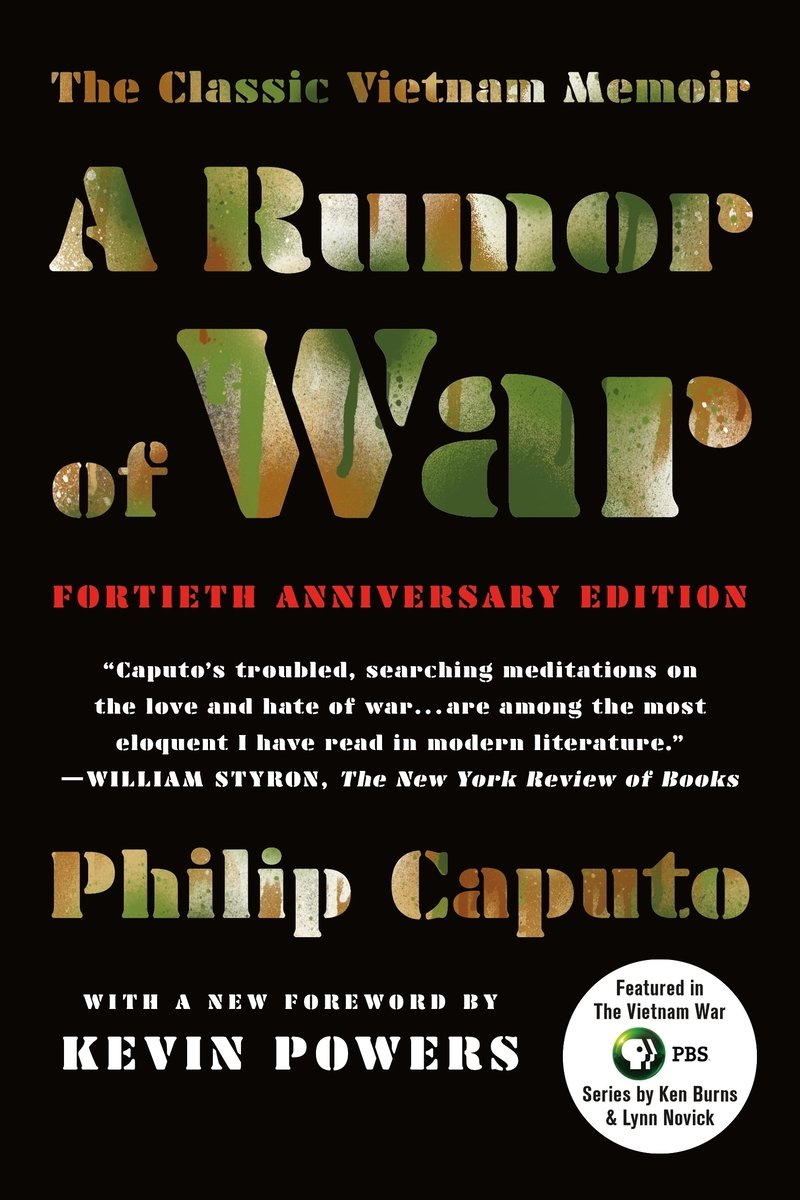 Philip Caputo, a Pulitzer Prize-winning journalist "whose bestselling, disillusioning memoir, A Rumor of War, about leading a Marine platoon through the sniper-riddled and booby-trapped jungles of Vietnam, entered the canon of wartime literature," died May 7 at age 84, the
 LEFTFIELDPUBLISHING.1009.T7.FORTUNEANDGLASS.png)