Latest News
Mariner Books: The True Confessions of First Lady Freeman by Deesha Philyaw
WHAT TO READ NEXT: REVIEWS OF GREAT BOOKS

Singer-songwriter Harry Connick, Jr. has published a musical biography of his mother, Babe: Elaboratio. It's an "intimate libretto" about her life and legacy, like a film score he wants to share with everyone, whether they knew her or not. Similarly, Keri Leigh Merritt's "revelatory" biography An Inconvenient Woman preserves the lasting impact of antisegregationist Lillian Smith. In both cases, these names could easily have been lost to history, but there's much to be said about the importance of ordinary people showing up for their families, their friends, and their communities on a daily basis. In fact, it's the premise of Madeline ffitch's new novel, Avalon, Rise, whose "sharp prose and gentle humor" depicts its everyday characters persisting in the midst of adversity. These and many others serve as praise songs for the common person.

--Dave Wheeler, senior editor, Shelf Awareness
FEATURED TITLES
Cover

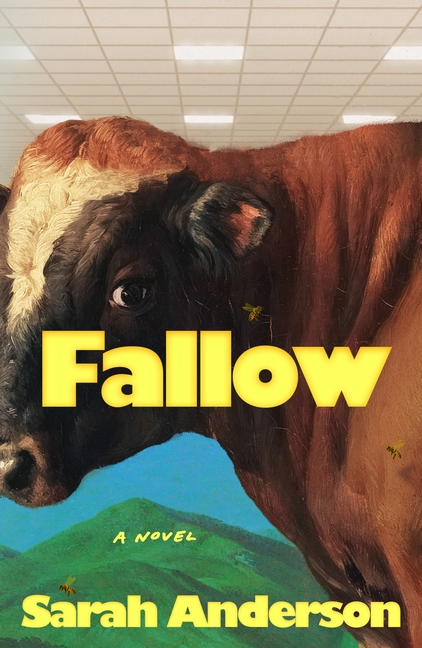
Fallow

Sarah Anderson

Sarah Anderson's Fallow cleverly examines labor in a funny and full-hearted novel about a young woman who spends her 20s as a pregnancy surrogate.

Fallow

Sarah Anderson

Farrar, Straus and Giroux | $29 | 9780374621148

Labor in all its forms is cleverly and hilariously toyed with in Sarah Anderson's enthralling debut novel, Fallow, in which a young woman spends her 20s as a surrogate for an unnamed corporation referred to as "The Company." Directionless 23-year-old Natalie is an hourly worker at a call center that fields workplace complaints when she suddenly finds herself in need of extra cash for dental work. One of her 10 sisters turns her on to selling her plasma at the blood bank, where she learns of a mysterious opportunity that quickly leads her to becoming the first in-house surrogate at The Company. The Company wants to solve the "problem" of pregnant executives and maternity leave by outsourcing pregnancy, and Natalie needs the money--not just for dental work but also for credit card debt and student loans. She happily signs away most of her autonomy in exchange for a luxury condo, private chef, salary, and bonuses for natural births. After a handful of drama-free births, the situation takes a turn when Natalie becomes emotionally entangled with the wife of The Company's new CEO. Natalie's situation thrillingly implodes further when The Company fires the executive whose baby she's carrying. It sets Natalie on a path to a feminist utopian, egalitarian working commune.

Anderson wittily upends the trope of the work-averse young woman in this novel that contains depth beneath its sarcasm and humor. She also mines the fertile subjects of loneliness, found family, and finding meaning without pedantry. Fallow is a great next read for fans of Rebecca Novack's Murder Bimbo and Rufi Thorpe's Margo's Got Money Troubles. --Nina Semczuk, writer, editor, and illustrator

Cover

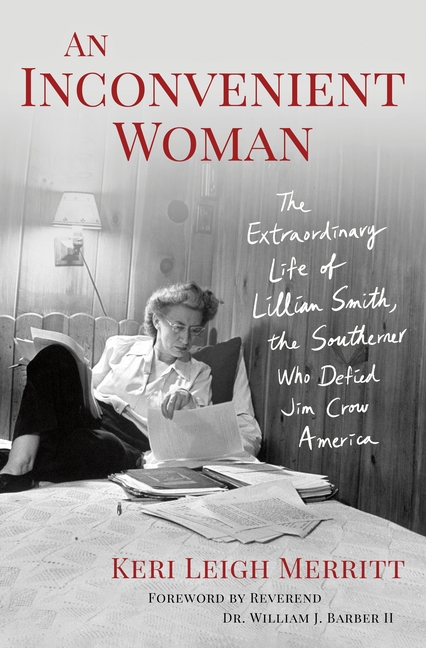
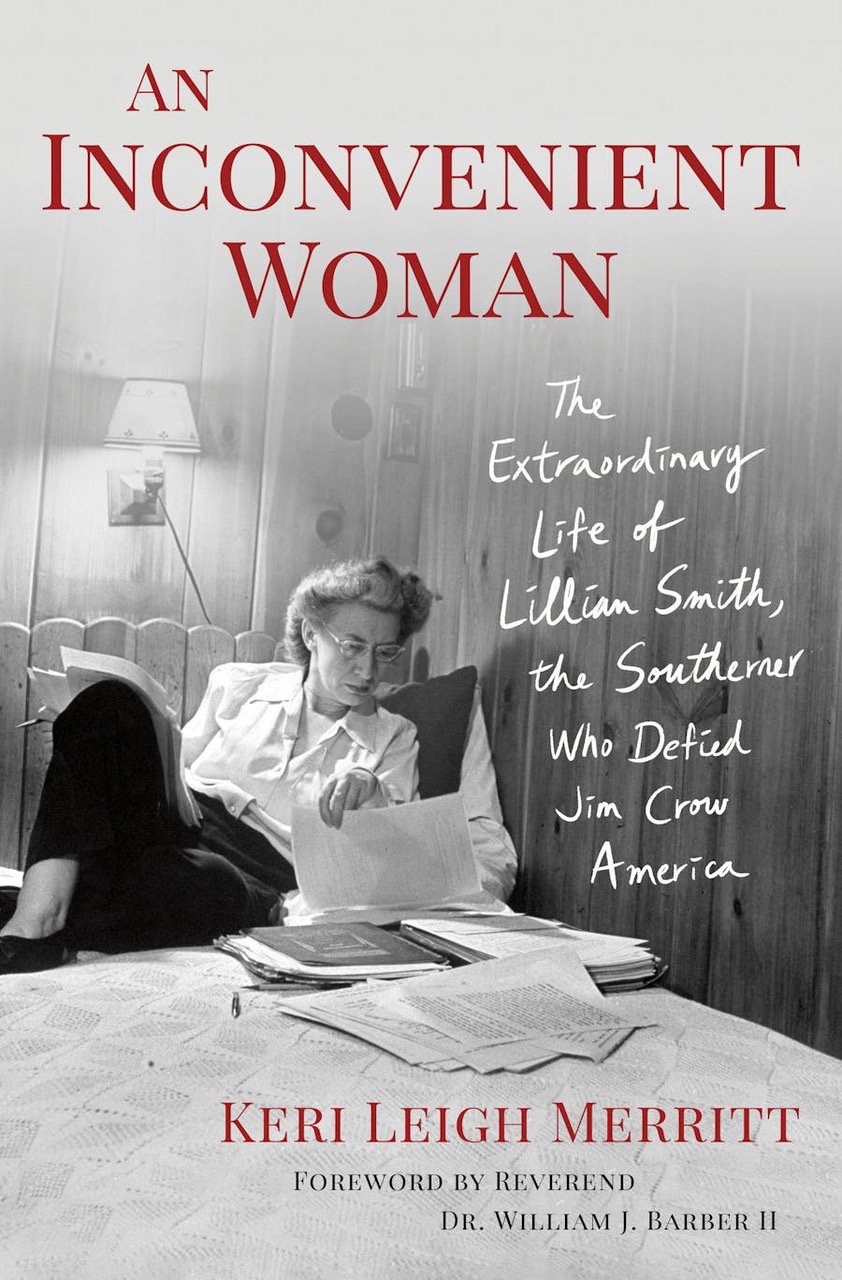
An Inconvenient Woman: The Extraordinary Life of Lillian Smith, the Southerner Who Defied Jim Crow America

Keri Leigh Merritt

The oft-forgotten life of Lillian Smith, a leading Southern voice in the early civil rights movement, receives an admiring and multidimensional reappraisal for a new generation of readers.

An Inconvenient Woman: The Extraordinary Life of Lillian Smith, the Southerner Who Defied Jim Crow America

Keri Leigh Merritt

St. Martin's Press | $30 | 9781250337931

One of the U.S. South's most outspoken champions of racial justice and civil rights emerges from history's forgotten halls in Keri Leigh Merritt's revelatory biography, An Inconvenient Woman. Lillian Smith (1897-1966) bucked every stereotype of her time: as a white woman in the South during Jim Crow, she was a fearless advocate for desegregation and civil rights, and she was a lesbian who lived with the love of her life, literary critic Paula Snelling.

Drawing upon unpublished archival material, Merritt provides the fullest portrait yet of Smith's inimitable and inspiring life, outlining her days running a progressive summer camp for girls, teaching music in China, publishing a literary journal for a decade, and writing her own books--both fiction and nonfiction--that called out "the sins of the white South, and of white America." Merritt engages both the public and private personas of Smith, while also providing impressively sharp analyses of her published books, such as Killers of the Dream and her controversial novel, Strange Fruit, to name just two. Merritt examines in detail Smith's reliance on psychology to explain why racism, a "psychosis," stunted her fellow Southerners' ability to experience empathy and creativity. Her reputation among Black civil rights leaders was impeccable, and the narrative folds in Smith's varied collaborations with the leading lights of the movement. Whereas previous scholarly biographies of Smith "are incomplete in significant ways," Merritt's An Inconvenient Woman delivers a first-rate and vigorous study that both illuminates and rouses. --Peggy Kurkowski, freelance book reviewer in Denver

Harper Select: Looking for Terry: A Memoir by Terry Bradshaw
Cover

True North: On the Road in Canada

Paul Theroux

True North is Paul Theroux's stellar example of what travel writing can do when written by an expert who looks as deeply inwardly as outwardly.

True North: On the Road in Canada

Paul Theroux

Mariner Books | $32 | 9780358451303

Paul Theroux has spent more than 50 years closely depicting the world, for example, on the trains of Asia in The Great Railway Bazaar or the heart of Africa in Dark Star Safari. Travel writing is more than simple adventure for him: "I always knew travel to be an enlargement of life, something richer than anything I'd experience at home. But... travel also offers an expansion of time."

True North focuses on a country that many in the U.S. have spent decades failing to actually see: Canada. What begins as the completion of a North American road trip trilogy becomes, once Theroux discovers his ancestral roots in the Quebec soil, a more personal quest. His forebear left France in 1693 for what was then Nouvelle France, eventually settling in the village of Yamaska, where many Theroux still live. That discovery gives this narrative its organizing emotion; Theroux the traveler is also a man tracing the long, obscure line of his own heritage.

From that Quebec starting point, Theroux (Mother Land) drives west and east. He ventures through the snowbound Ottawa of political protests, out to the Viking settlement at L'Anse aux Meadows in Newfoundland, through Toronto's immigrant neighborhoods, and on to Vancouver's Pacific edges. Along the way, he often meets and talks with other writers, such as John Irving, who lives in Toronto. The Canada Theroux finds is a nation being tested by the loudest possible provocation during the second Trump administration's threats of annexation and tariffs, and discovering, in that friction, a patriotism it had previously been too modest to claim earlier. True North is Theroux's masterful, timely dispatch: sprawling, intimate, and alive on every page. --Elizabeth DeNoma, executive editor, DeNoma Literary Services, Seattle, Wash.

Cover

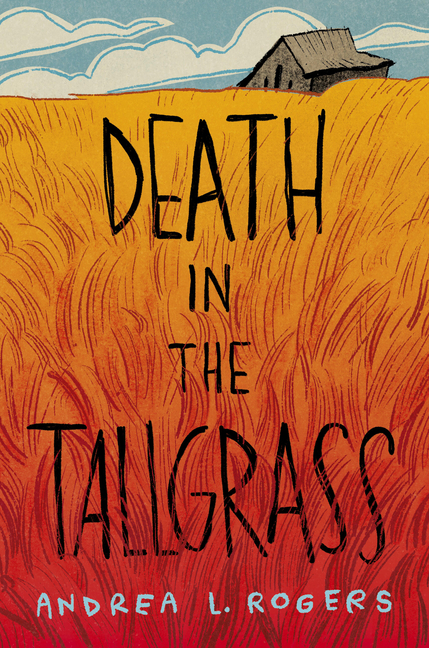
Death in the Tallgrass

Andrea L. Rogers

In this unsettling middle-grade murder mystery, a Cherokee girl learns that her white family members may be murderers and thieves.

Death in the Tallgrass

Andrea L. Rogers

Levine Querido | $18.99 | 9781646146345

In this slow-burn middle-grade murder mystery by Walter Dean Myers Award-winning author Andrea L. Rogers (Man Made Monsters), a citizen of the Cherokee Nation, a family grapples with complicated roots and societal transformation in late-1960s Oklahoma.

Twelve-year-old Cynthia's maternal grandparents are Cherokee, but she knows little about her heritage and is disconnected from her white paternal grandparents. When Cynthia's dad is recruited to teach law at the University of Tulsa, he makes a shaky truce with his parents, agreeing to visit them on their Snake, Okla., ranch. Bill and Martha, Cynthia's "mean grandfather and mousy grandmother," make the family's stay unpleasant. Cynthia and her younger sister explore the grounds and discover a journal written by nine-year-old Violet, whose Cherokee mother owned the property and married Grandfather Bill. Further investigation unveils headstones indicating Violet and her mother died in 1920--the year Grandfather Bill became the ranch owner. At the same time, Cynthia's mom is getting mysteriously sick. Slowly, Cynthia's family realizes they may be in very real danger from their own kin.

Rogers is cannily self-restrained in this complicated, discomfiting novel. She intentionally leaves threads untied, reflecting the convolution of a world where people are forced from their homeland and severed from their culture. Readers who enjoy a flavor of menace and intrigue are likely to be thrilled by Death in the Tallgrass, which makes a good companion to Anna Rose Johnson's The Blossoming Summer and Christine Day's I Can Make This Promise. --Emilie Coulter, freelance writer and editor

Becker & Mayer: Enter to Win The Blue Corn Kitchen: A Navajo Story of Food, Family and Tradition by Alana Yazzie, illustrated by Natalie Schnitter
BOOK REVIEWS
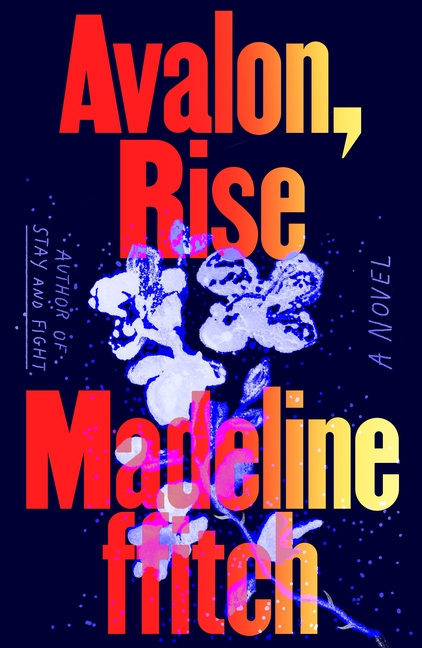
Avalon, Rise follows an ensemble cast in small-town Appalachia, deftly rendering them in loving detail as they protest white nationalism growing in their midst.

Avalon, Rise

Madeline ffitch

Farrar, Straus and Giroux | $29 | 9780374617769

Avalon, Rise by Madeline ffitch takes place in a small Appalachian town and deftly renders an ensemble cast of flawed characters in loving detail as they all just try to do their best.

Leroi and Woody lead separate lives after growing up as best friends. They're further split by increasing social and racial tensions as they navigate the dense web of small-town life. After the two drop out of high school, Leroi starts cooking free lunch in the park with a collection of local punks. Woody becomes addicted to pills but still wants to keep a close relationship with his young nephew. Emma, Woody's older sister, hesitates to let him watch the seven-year-old when he keeps letting him cook on the gas stove. Emma struggles as a single parent, wrestling with the intensity of her love for her kids and her anger.

Local librarian Eloise has good intentions for social change but remains noticeably behind the times. When the leader of a white nationalist movement comes to town and wants to host a "European Heritage Rug Braiding" workshop at the library, it kicks off a swirl of chaos that pulls everyone into the cyclone. The situation escalates into violence, including the injury of a child that might be difficult for some readers.

ffitch (Stay and Fight) writes with sharp prose and gentle humor, casting messy psyches and problematic behavior in a gentler, more accepting light. Avalon is full of people who keep flailing and landing knee-deep in situations they don't know how to get out of. But despite it all, they never stop trying to rise. --Carol Caley, writer

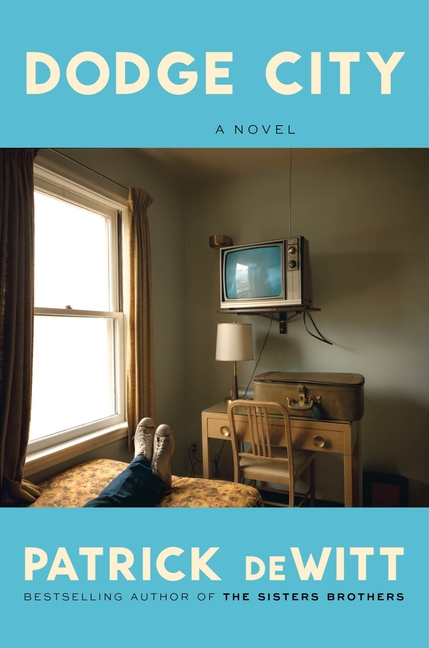
Patrick deWitt's Dodge City is a deceptively light Vietnam War-era novel about a young man in Los Angeles who drives across the country to escape to Canada after receiving his draft notice.

Dodge City

Patrick deWitt

Ecco | $28 | 9780063438118

For many U.S. draftees in the Vietnam War era, the question of whether to serve one's country or relocate to Canada was difficult to confront; it also forced them to address buried complexities in the lives they would leave behind. Such is the case with Lee Clarke, the protagonist of the wittily titled Dodge City, Patrick deWitt's fast-paced, dialogue-heavy story about a young slacker unsure of everything except for one important fact: he has no intention of serving in the war.

Lee is studying at UCLA, and all goes well enough until he gets into a fight at a campus party and drops his opponent with one punch to the teeth. Unluckily for Lee, that opponent's parents are "esteemed benefactors," so the college expels Lee, and he loses his draft deferment. Worse luck comes when he receives his draft notice. Lee decides to escape to Canada instead. With only his suitcase and an ample supply of "driving pills"--Benzedrine--from his pal Robin, Lee sets out. He follows a circuitous path to visit people from his past, including his father, living alone in Washington State and eking out a living as a dogcatcher; his mother, who ditched the family and moved to Montana when Lee was in high school; and his sister, Grace, a Manhattan nurse-in-training in an affair with a married doctor.

DeWitt (French Exit) expounds on themes of self-preservation and escape as each character addresses consequential decisions and their repercussions. "We're defined by our behaviors, by the choices we make," a character tells Lee, a lesson he learns with painful clarity in this deceptively light work. --Michael Magras, freelance book reviewer

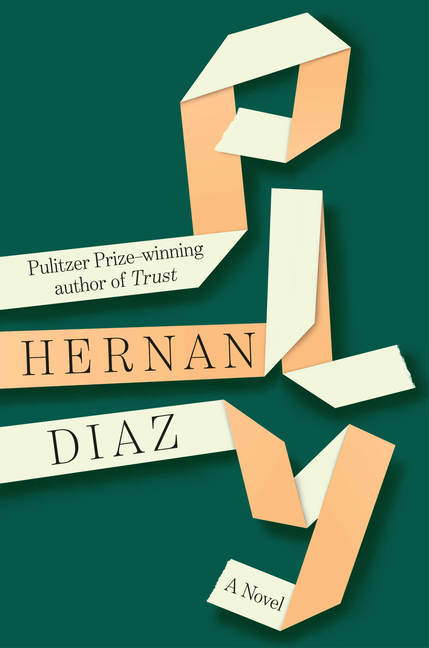
Hernan Diaz writes a touching, ambitious dystopia about a young woman with a talent for stealing electricity and an experiment that may unlock the nature of reality.

Ply

Hernan Diaz

Riverhead Books | $32 | 9780593719541

Ply, Hernan Diaz's first novel since his Pulitzer Prize-winning Trust, is both a touching story of a young woman's struggle to find security and peace in a dystopian future United States and a mind-bending reflection on the nature of time and space. Either story alone would be satisfying, but Diaz cleverly marries them in an intriguing union.

Ply is set in postliterate urban environment, several centuries after the collapse of the U.S. federal government. It features an unnamed, orphaned female protagonist who possesses a preternatural talent for "pinching," the practice of stealing modest amounts of energy from the electrical grid to charge "bricks" that serve both as batteries to power the concerts of her favorite bands and as a form of currency in the society's barter economy. The novel's second half focuses on an experiment hatched by an obsessive older physicist and inventor named Pola to "alter the fabric of reality itself." Pola has been stalking the pincher, convinced the younger woman has the talent to generate the massive energy required to power her jury-rigged collider, and she persuades her to enlist that expertise in the project.

Ply is a big, ambitious novel, but Diaz never loses sight of the pincher's personal drama and her palpable ache to be restored to something akin to the family she once knew. Some elements will appeal to avid science fiction readers and others to those who prefer fiction that illuminates character and human interaction. It's a radical departure in subject matter and style from Trust but unquestionably the product of a fertile imaginative intelligence. --Harvey Freedenberg, freelance reviewer

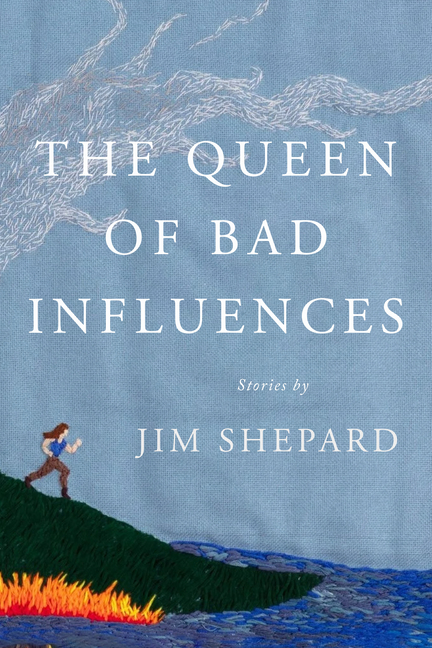
In Jim Shepard's sophisticated story collection, characters are imperiled by war or natural disaster, including the ravages of the Civil War and the Johnstown flood of 1889.

The Queen of Bad Influences

Jim Shepard

Knopf | $30 | 9780593804414

In fiction as in life, war and natural disasters are the most ruthless villains imaginable. Both are protagonists in the stories of The Queen of Bad Influences, the refined assortment of calamities set during actual incidents by Jim Shepard (The Book of Aron). Two war stories are epistolary works: "Our Day of Grace" is an exchange of letters between Civil War soldiers and their spouses (with one man writing somberly, "This war is a graveyard for virtues"); while "Where Are the Lads of New Zealand Tonight?" highlights correspondence from a British officer at a medical training center in Egypt during World War I. Other war tales include "Children of the Sun," in which Spanish soldiers who served in the Arauco War in Chile return to Madrid to lobby for back pay; and the title piece, in which two women discover a forbidden attraction before sailing on the RMS Lusitania.

Other stories bedevil characters with natural disasters, among them "Village of Islands," set during a 1935 Florida hurricane; "Privilege," which occurs during the Johnstown, Pa., flood of 1889; and "Engineer of Safe Havens," set during Maine's Portland Gale of 1898. A different kind of potential destruction is at the center of "The Mentally Ill Are Not Alone," an autobiographical piece about the author's older brother, a high-school dropout sent to a Yale-New Haven mental health facility, with his parents fearing he'll be "conveyor-belted into institutions for the rest of his life." There's plenty of pain to go around, but Shepard's storytelling sophistication makes it all palatable in this excellent collection. --Michael Magras, freelance book reviewer

Tommy Nelson: The Christmas House by Erin Napier, illustrated by Adam Trest
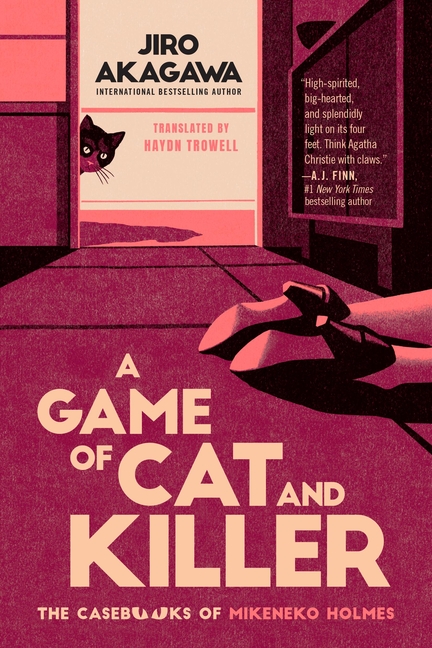
Jiro Akagawa's extensive detective-and-kitty mystery series finally gets an English debut with A Game of Cat and Killer, almost 50 years after its 1978 Japanese publication.

A Game of Cat and Killer

Jiro Akagawa, trans. by Haydn Trowell

Grand Central | $17.99 | 9781538786710

Among stunningly prolific Japanese mystery writer Jiro Akagawa's 650-plus books is the Casebooks of Mikeneko Holmes series, with more than 55 titles and still expanding. The intriguing first volume, originally published in 1978, arrives in the U.S. as A Game of Cat and Killer, smoothly translated by Haydn Trowell. Akagawa writes with a charming nonchalance reminiscent of the popular cozy mystery genre, but the body count may disqualify this title from those shelves.

Akagawa opens with a quick first murder: a student using sex work to make fast money is killed by her client. Katayama, 28, is the Tokyo Metropolitan Police detective assigned to the case, although he's "squeamish at the sight of blood" and even more afraid of women. But go he must to a women's university, where Dean Tomoo Morisaki alerts Katayama about a potential prostitution ring on campus. Katayama also meets Holmes, Morisaki's lucky calico cat. Morisaki's conviction that "cats may understand people far, far better than we think" proves prescient, especially after Morisaki is murdered and Holmes chooses Katayama as her next person. With a paw, a tail flick, a plaintive meow, Holmes knows exactly how to move an investigation along. But more murders happen before Katayama and Holmes figure out who's done what to whom and why.

Katayama's bumbling-but-possibly-brilliant persona is undoubtedly endearing enough to launch a series, although it's his feline accomplice who remarkably and readily remedies what he may lack in investigative (and people) skills. Amid the multilayered, didn't-see-that-coming revelations, Akagawa also presents Katayama with first love, sibling secrets, family legacy, and more. At least he'll now have lucky Holmes by his side. --Terry Hong

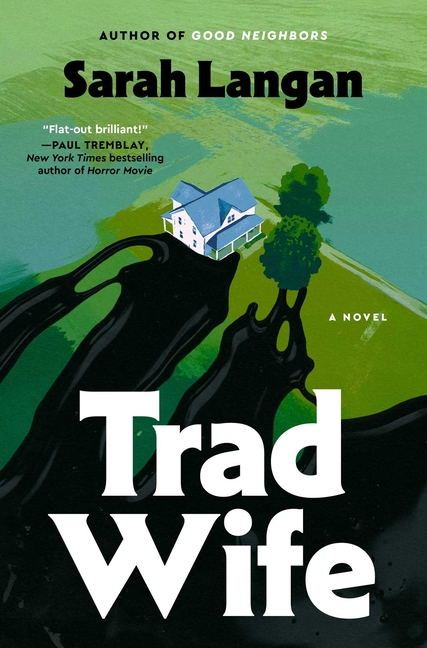
A trad wife influencer's squeaky-clean public image hides a secret world of suffocating terror in this intense, claustrophobic horror novel.

Trad Wife

Sarah Langan

Atria | $29 | 9781668229651

A journalist's suspicions about a homemaking influencer's squeaky-clean, perfectly curated image don't even begin to approach the sinister reality in the intense, claustrophobic horror novel Trad Wife. Three-time Bram Stoker Award-winner Sarah Langan (Good Neighbors) here blends existential dread with the dark truth of traditional gender roles.

Journalist Jenny Kaplan earned her 15 minutes of fame with a viral autobiographical essay about her abortion and her breakup with her mentally ill boyfriend. The moment of triumph soured quickly when a group calling themselves the Brotherhood of the American Agenda began harassing and protesting her, and Jenny's magazine fired her amid the backlash. Her editor offers her a freelance gig when popular "Trad Wife" influencer Mia Wright requests Jenny visit Black Swan Farm, Mia's husband's family land, and write a feature.

Mia styles herself as "a traditional Depression-era wife from the 1930s: strong, capable, self-sacrificing." Jenny considers trad wives "pod people," but she can't resist the opportunity to unravel Mia's allure, the strangeness of Black Swan, or the mystery of nearby Sylvan Village, known for its occasional "magic hour" of luminous yellow fog. Soon she realizes something hungry slithers through this haven of home-cooked meals and well-behaved children.

Langan's modern-day gothic narrative seethes with taut menace and scathing critiques of social media subterfuge and the pressure on women to meet a moving-target definition of perfection. Each step of Jenny's way is laced with an escalating loss of identity and bodily autonomy. A subtle callback to Charlotte Perkins Gilman's classic short horror story "The Yellow Wallpaper" cements the feminist lineage of this smart, chilling look at a polarizing trend. --Jaclyn Fulwood, blogger at Infinite Reads

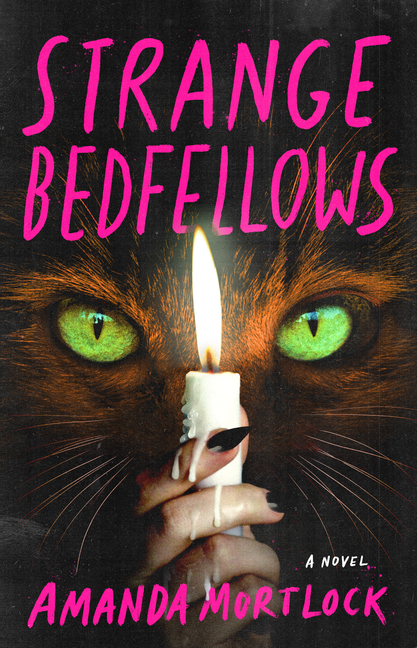
A familiar with dark secrets and her witch boyfriend team up with another pair to learn the truth of their shared past in this sexy contemporary fantasy.

Strange Bedfellows

Amanda Mortlock

Atria | $20 | 9781668205778

A cat familiar discovers her terrible past, finds her witch, and tries not to destroy the world in screenwriter Amanda Mortlock's genre-blending debut contemporary fantasy novel, Strange Bedfellows. Cleo is a human college student and a ginger cat. As Cat, she sleeps curled up with her favorite human and tenant, Wes, a musician who inevitably discovers the truth about her. They enter a passionate, messy relationship that is further complicated when witch Bailey and her dog familiar, Ollie, show up and ask to form a coven. But Wes doesn't know he's a witch, and Cleo hardly understands the runes Cat somehow knows how to use or the animals that follow her around, whispering about her worst insecurities.

Mortlock adds chapters from Ollie's perspective once the group starts trying spells together to unlock the mysteries of their shared past. This shift gives readers the chance to view Cleo's increasingly erratic behavior and her unhealthy relationship with Wes from the outside. As Cleo's secrets catch up to her and danger mounts, loyal hound Ollie is forced to decide if Cleo and their fledgling coven are worth risking the safety of the witch he loves unrequitedly.

Strange Bedfellows is an erotic take on destructive love, generational trauma, and fighting literal and figurative demons. With a satisfying but untidy ending, Mortlock leaves the door wide open for sequels. This novel is perfect for fans of the toxic romance in Layne Fargo's The Favorites, the goth vibes of Wednesday, and the supernatural camp of later seasons of Buffy the Vampire Slayer. --Suzanne Krohn, librarian

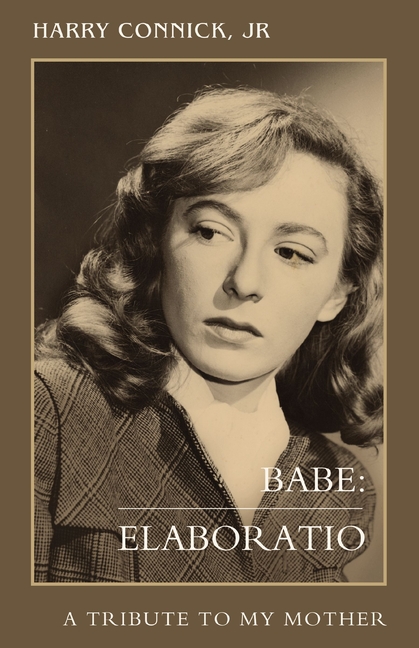
Author/composer Harry Connick, Jr. tenderly evokes his mother's presence in this companion to the musical composition he wrote in honor of what would have been her 100th birthday.

Babe: Elaboratio: A Tribute to My Mother

Harry Connick, Jr.

Harper Celebrate | $28.99 | 9781400258376

Think of Babe: Elaboratio as a kind of intimate libretto to accompany Harry Connick, Jr.'s original composition, the piece for big band and orchestra that he wrote in honor of what would have been his mother's 100th birthday. Babe serves as a guide to what is happening in the music--themes that tap into his mother's Hungarian and Russian roots, and, of course, New Orleans jazz.

Anita-Francis Livingston Connick was born on May 22, 1926, in New York City, and died when her son was just 13 years old. Yet the author/composer remembers her with clarity, including her love of music of all kinds (she started a record store in New Orleans called Studio A) and her lasting legacy as a judge. She earned the nickname "Babe" as the youngest of six children; the musical phrase of the notes B-A-B-E appears throughout the musical piece. Connick describes the melodic themes that accompany moments in her life, both upbeat and melancholy, with elements of classical music and jazz. He also explains the use of certain instruments and changes in tempo. He includes important musical bars so that novices may see how music is notated and musicians may see how the various instruments come together. Connick's humor infuses this musical memoir, and he includes a bounty of family photos.

Connick calls the experience of composing this piece akin to "writing a score for a movie that only I could see but wanted everyone to hear." His loving descriptions are thus likely to move readers with a desire to listen, and a QR code to purchase the music appears at the end of the book. --Jennifer M. Brown

Magic Cat: The Tree Zodiac by Luke Adam Hawker
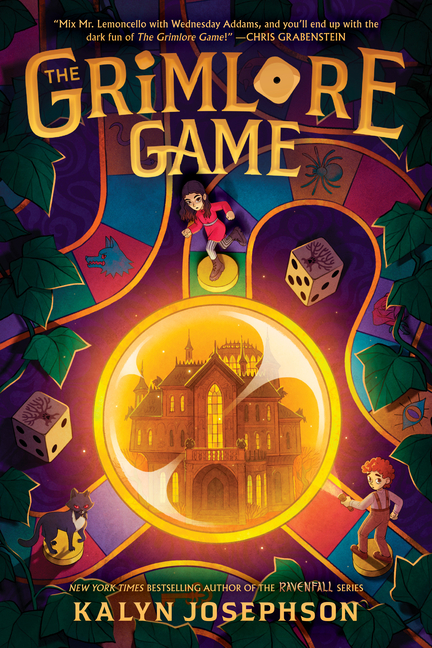
An appealingly unconventional and gutsy orphan works against the clock (and her scheming relatives) to solve a series of puzzles that may win her an inheritance--and break her family's curse.

The Grimlore Game

Kalyn Josephson, illus. by Alla Khatkevich

Delacorte Press | $17.99 | 9798217028351

The Grimlore Game by Kalyn Josephson (Ravenfall series) is a cozy gothic mystery with a clever protagonist who masks her anxiety and grief over her parents' deaths with eccentricity, insouciance, and love for a pet tarantula named Gregor.

Thirteen-year-old orphan Kit Devlin's family is under a curse. Every three years on April 13, "like clockwork," a Devlin dies. This year it's Kit's wealthy and renowned Grandfather Amos. Rather than a simple will distributing his apparently vast wealth, he leaves instructions for the family to gather at his Scottish home and compete in a series of puzzles and games; the winner will inherit his estate. Kit, along with cake-eating Gregor and her extended family, dives into the challenge but, unlike her relatives, doesn't take part in subterfuge and sabotage. She soon understands that she may be the only one who can break the Devlin curse--and, after a crimson-eyed cat in a bow tie talks to her, that her family has significantly more magic than she suspected.

Josephson writes compassionately about how greed and ambition can devastate a family. Kit eventually realizes the curse doesn't just take "the people themselves, but what it means to be a family." A map of the house and black-and-white spot illustrations by Alla Khatkevich (Helga the Fair) add whimsy and provide images of many of the novel's puzzles. The Grimlore Game's wordplay, riddles, scramblers, and artifact puzzles are likely to captivate fans of The Westing Game by Ellen Raskin and The Swifts by Beth Lincoln. This first volume in a planned series is chock-full of magic, mystery, achingly authentic family drama, and ultimately, hope. --Emilie Coulter, freelance writer and editor

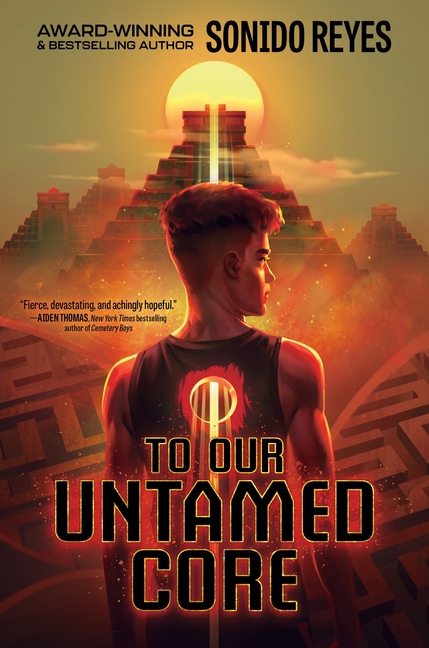
This thrilling, electric YA dystopia with a queer love triangle features three boys who must rely on one another to survive a televised death match.

To Our Untamed Core

Sonido Reyes

Versify | $19.99 | 9780063358447

National Book Award finalist Sonido Reyes (The Lesbiana's Guide to Catholic School) writes an electrifying, utterly gripping YA dystopia in To Our Untamed Core, about three boys who must survive a televised death match.

Over 600 years ago, conquistadors from the Order of Light brought their "righteous God" to the people of the Afueras. Now, all Afuereños are subjects of the colonial Holy Order and given state-mandated pills to "tame their innate violence." Any Afuereño who steps out of the Holy Order's line can be "sentenced to compete in El Torneo," a once-a-decade Hunger Games-style battle with no winner.

Seventeen-year-old Temo has spent his "entire life keeping [his] head down and avoiding trouble." But when he turns 18, he will have to undergo the sacrament of contribution; the fertility test will show he's been hiding his "child-bearing parts" to live as a boy. The only people who know Temo's truth are his direct family, boyfriend Ollin, and former best friend Socoyote, who practices outlawed brujería. As El Torneo approaches, Ollin gets arrested. Temo and Socoyote, who was once Ollin's sparring partner, are forced into collaborative action: they will break into the place no Afuereño has ever survived to save Ollin.

To Our Untamed Core is multifaceted and cleverly textured, and it depicts sweetness and mercy even in the midst of deadly stakes. Reyes uses flashbacks and alternating perspectives (Temo, Socoyote, and a handful of secondary characters) to compassionately show the choices people must make under colonialism. Readers craving atypical love triangles and exciting combat may find this novel a worthy contender in the arena of dystopian fiction. --Ari Mackoff, bookseller

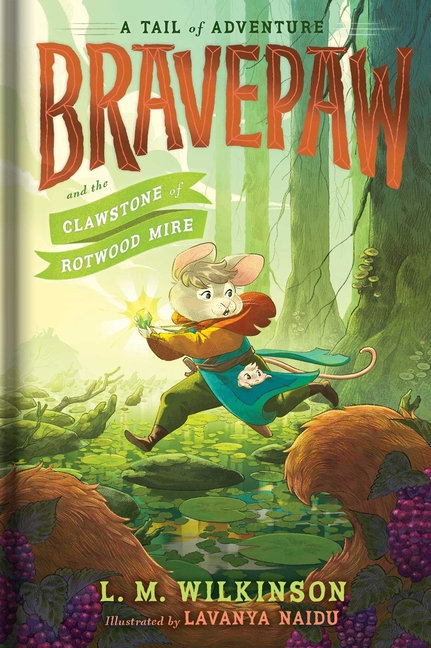
Animal friends work together to save a colony of squirrels from mysterious magic in the winsome and adventurous second book of the Bravepaw series.

Bravepaw and the Clawstone of Rotwood Mire

L.M. Wilkinson, illus. by Lavanya Naidu

Simon & Schuster Books for Young Readers | $13.99 | 9781665986618

Titch Proudleaf learns to overcome her doubt and embrace the power of community in Bravepaw and the Clawstone of Rotwood Mire, the second in L.M. Wilkinson and Lavanya Naidu's adorable and daring fantasy chapter book series (Bravepaw and the Heartstone of Alluria).

Mouseling mythology framed the famous hero Bravepaw as a real person, but in truth, Bravepaw is a title passed down through the generations. Titch Proudleaf is the new Bravepaw--or so she's been told. Yes, she managed to use the legendary Heartstone staff twice, but her quest with friend Huckleberry and pet puffling Dollop to "use the Heartstone to mend the crack in the world" is not going well. The trek is injurious and Titch can't make the staff work any longer. When Titch and Huckleberry meet roguish "warrior" squirrel Briar Nettlebrush, she tells them about her home, where the squirrels' "fur started to look gray," and they became oddly obedient to a turtle. With this strange magic afoot, the crew set off to rescue the squirrels.

Wilkinson continues to pull from classic fantasy works (with many nods to Tolkien in particular) in this sequel. Titch struggles to believe she's a hero and finds solace in community, an arc reflected in her new squirrel friend, who doesn't know "the difference between alone and lonely." Naidu brings these struggles to the forefront with whimsical, emotive black-and-white illustrations that depict the animals' sadness in solitude and joy in togetherness. Bravepaw and the Clawstone of Rotwood Mire is a fun fantasy romp that will likely leave kids wanting a Heartstone staff of their own. --Nicole Brinkley, bookseller and writer

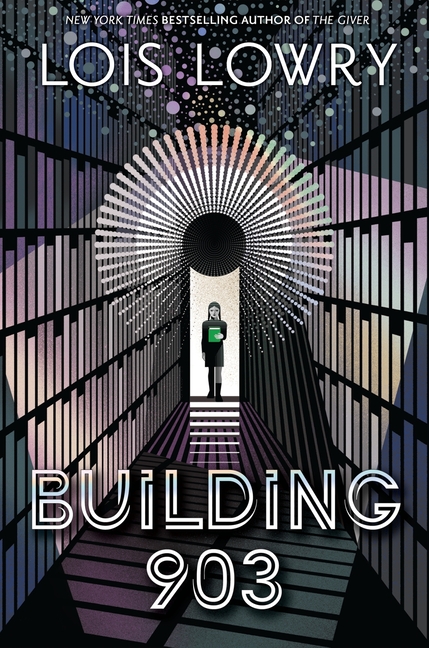
In the defiant middle-grade novel Building 903, Lois Lowry uses a dystopian setting to highlight the right to personal autonomy, the need for communal action, and the importance of the book.

Building 903

Lois Lowry

Clarion Books | $19.99 | 9780063515109

It has been nearly 15 years since Lois Lowry, author of the landmark 1994 Newbery Medal-winning The Giver, has returned to science fiction (Son). In the defiant middle-grade novel Building 903, Lowry uses a dystopian setting to highlight the values she has championed for 50 years: the right to personal autonomy, the need for communal action, and the importance of the book.

It's 2099, and 14-year-old Tessa lives in a society where all public spaces are monitored by a fascist police state dominated by Leader Zokiris. Despite his decades in charge, "most of the adult citizens despise... their leader." For Tessa, what matters most is that "things [run] efficiently" and she can stay under the radar. Her twin brother, Theo, however, is exceptionally curious and smart, designated X-Cogni-Superior. He and his father have been working together on a mysterious scientific project, until one morning Theo simply disappears. Tessa receives a clue that her eccentric, about-to-be-forcefully-retired next-door neighbor, Miriam, might know where Theo went. After Miriam leaves for ElderCare, Tessa and her parents must follow Miriam's clues to find Theo.

Although Building 903 doesn't have quite the nuance or creativity of Lowry's previous works, she offers young readers a dystopian future that is readily comprehensible and feels very timely. Building 903 asks readers to consider what they're willing to fight for, and reminds them that stories foster empathy and individual thinking. This middle-grade science fiction tale is an excellent example of Lowry's dedication to freedom, community, and the power of reading. --Siân Gaetano, children's and YA editor, Shelf Awareness

The Writer's Life

Keri Leigh Merritt is a historian and the author of An Inconvenient Woman: The Extraordinary Life of Lillian Smith, the Southerner Who Defied Jim Crow America, a revelatory biography of a key figure in the early civil rights movement, whose legacy was nearly erased from history. Find out what drew Merritt to her subject and the factors that have obscured Smith's work over time, as well as why her memory remains important today.

The Writer's Life

Keri Leigh Merritt: A Near Erasure from History

photo: Sarah Witherington

Keri Leigh Merritt is a historian and writer whose first book, Masterless Men: Poor Whites and Slavery in the Antebellum South, won both the Bennett Wall Award from the Southern Historical Association and the President's Book Award from the Social Science History Association. Her latest book, An Inconvenient Woman: The Extraordinary Life of Lillian Smith, the Southerner Who Defied Jim Crow America (St. Martin's Press; reviewed in this issue), is a revelatory biography of a white Southern woman who was a key figure in the early civil rights movement.

Lillian Smith has often been absent from the popular story of the civil rights movement. What first drew you to her, and why do you think her legacy became so obscured?

I was drawn to Lillian precisely because of her near erasure from history. I thought I had read every major Southern writer, and then (in graduate school!) realized I'd never heard of Lillian Smith. Her legacy was obscured in part due to her sexuality, but primarily because her philosophy was and is so threatening to the white supremacist status quo. By showing white Americans how racism injured them and their children, she changed the ways in which they understood and conceptualized white supremacy and segregation.

Tell us about the Laurel Falls Camp for Girls, which was a prime environment for her social vision. How did her work there influence her ideas on race and gender?

Lillian ran the summer camp her father started in Clayton, Ga., from 1925 to 1948. Serving as director, with her partner Paula Snelling as assistant director, Smith transformed the camp into a unique, life-changing experience. Every summer for two months, girls ages seven to 17 came from around the South to attend "Miss Lil's" camp. Some of the most prominent white supremacist families chose to send their daughters there knowing full well that the camp promoted integration and taught campers to view all people as deserving of honor and respect. Smith even tried to integrate the camp, and when that was unsuccessful, she invited local Black children over for events and meals with white campers.

Lillian Smith employed psychology and philosophy in her writing, showing that segregation and white supremacy hurt both races. Did Smith pioneer this application of Freudian theory to white supremacy in the South?

Smith definitely pioneered the fusion of Freudian psychology and Jim Crow (some of her main points are fascinating), particularly regarding sexual repression, attachment issues, and psychological resentment. But there were many others who used similar psychological frameworks at that time, even academics. Lillian was a tireless researcher and autodidact and would become almost obsessed with a field of study. If you look through her reading lists, you will see intricate, curated materials; it was as if she was preparing for doctoral exams in each subject. It's also important to note that her work was influenced by a group of (relatively) racially egalitarian sociologists at the University of North Carolina.

Smith balanced her criticism of the South with practical suggestions and solutions. What types of solutions did she offer fellow white Southerners to escape the cycle of hate?

Lillian Smith's first job was as a teacher, and she had total faith in the power of education. She believed that compassion and empathy could be taught and nurtured in each child. And during Jim Crow, she thought that breaking down the walls of segregation--having people get to know each other on a personal level--was the ultimate key to ending white supremacy. Furthermore, Smith was committed to fighting hate, in all its forms, with art. Creativity helps form and inspire social movements, and she believed that art serves as spiritual and psychological nourishment for activists.
In her controversial novel, Strange Fruit, she explored taboo topics of interracial love and same-sex attraction. What could she say in fiction that she could not in nonfiction?

Smith had several manuscripts destroyed in the various fires at her house, including a novel called Julia that she worked on intermittently throughout her life. Julia plainly and explicitly revolved around lesbian relationships, and that was the main difference in her fiction and nonfiction: in fiction she had the freedom to write about sex and sexuality. As much as she wanted to be able to write similarly in her nonfiction work, she was always concerned about how her family would react, and she also wanted to protect Paula from any possible backlash.

How did Smith's sexuality inform her sense of justice and fairness? What message does her life lend to younger generations of LGBTQ+ people?

While a lot of Lillian's progressivism came from her charitable, empathetic father, her sexuality certainly added to her sense of justice and commitment to human rights for everyone. I argue that she and Paula lived relatively openly; friends and family knew the nature of their relationship but never addressed it by name. The little rural community they created with other LGBTQ+ couples was beautiful, and the two women certainly "mothered" and nurtured other younger gay artists and activists. Lillian's message would be: find your people, create your community, love and nurture and care for one another. As a quick aside, Paula was an essential part of Lillian's success and a talented writer in her own right.

A curious feature of Smith's progressive vision was her intransigent stance on Communism. How do you explain this?

Smith's three years as a teacher in Huzhou, China, in the early 1920s profoundly shaped her attitudes toward Communism, as she saw firsthand the violence it wrought. She always considered communism as anathema to democracy (much like her friend Eleanor Roosevelt) and wrote frequently about her views, particularly during the Cold War years. But that did not stop the FBI from investigating her as a Communist over the course of decades: her 134-page file was longer than John Steinbeck's. She also acted several times to help protect her Black friends, including Mary McLeod Bethune and Paul Robeson, from charges of Communism.

Most of Smith's life work (manuscripts and letters) was destroyed in a 1955 fire--how did this impact your research?

Thankfully, Smith was so prolific there were still plenty of materials to work with! Most of my research is on antebellum America, often with non-literate people, so having tens of thousands of archival documents is an embarrassment of riches to me. The hardest part was wading through everything and figuring out the most important parts to tell. Smith had decades of correspondence with hundreds of people, some of the best artists and activists of the mid-20th century. She also had a decade of magazine publishing, two years of weekly columns, and seven books. Finally, during her 13-year battle with breast cancer, she made sure her biographical materials were well preserved. Once Smith passed, Paula dedicated the rest of her own life to cataloguing Lillian's papers and establishing archives at both the University of Florida and the University of Georgia.

What do you hope readers will come away with after reading An Inconvenient Woman?

For years we have had books telling people what NOT to do, so I hope this serves as instruction and inspiration. Everybody needs heroes, and uncovering instances of Americans who have put their backgrounds and privilege aside in the fight for freedom is always important to tell. May Smith's legacy remind each of us that we have the power to make the world a better place, even in some small way. --Peggy Kurkowski, book reviewer and copywriter in Denver


Book Candy
Rediscover

Robin Morgan, author, poet, editor, journalist, and leading feminist activist, died earlier this month at age 85. Morgan wrote more than 20 books of poetry, fiction, and nonfiction, and is best known for compiling and editing Sisterhood Is Powerful: An Anthology of Writings from the Women's Liberation Movement. A bestseller and highly influential feminist work, the book appeared in 1970 and included contributions from Kate Millett, Marge Piercy, and Eleanor Holmes Norton, among others.

Rediscover

Rediscover: Robin Morgan

Robin Morgan, author, poet, editor, journalist, and leading feminist activist, died September 5 at age 85. Morgan wrote more than 20 books of poetry, fiction, and nonfiction, and is best known for compiling and editing Sisterhood Is Powerful: An Anthology of Writings from the Women's Liberation Movement. A bestseller and highly influential feminist work, the book appeared in 1970 and included contributions from Kate Millett, Marge Piercy, and Eleanor Holmes Norton, among others; documents and manifestos from various feminist groups; and "verbal karate," Morgan's phrase for statistics and quotes about women. 

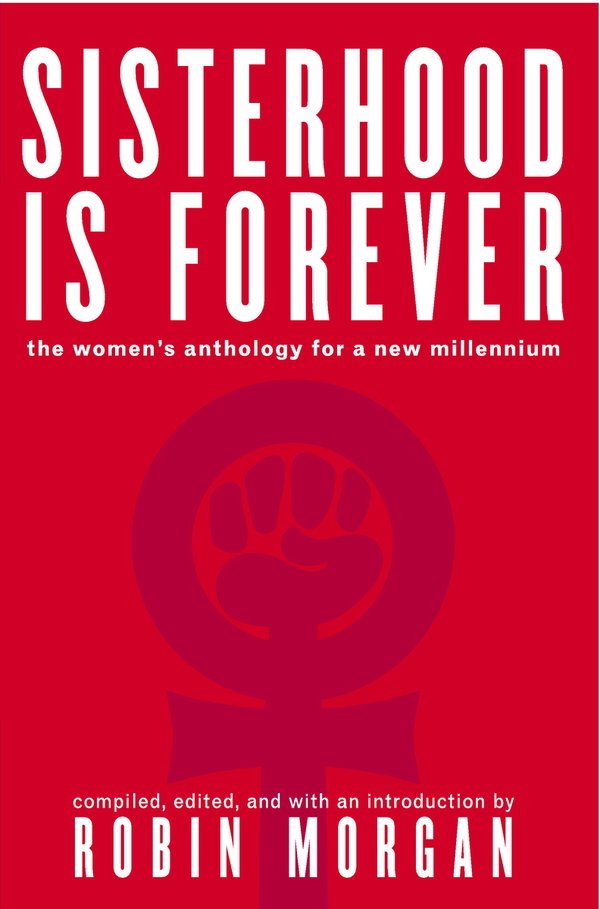
Sisterhood Is Powerful was followed by Sisterhood Is Global: The International Women's Movement Anthology (1984) and Sisterhood Is Forever: The Women's Anthology for a New Millennium (2003).

Morgan was a contributor to Ms. magazine and was editor-in-chief from 1989 to 1994. She also contributed to a range of publications, including the New York Times, Los Angeles Times, the Guardian, the Atlantic, the Village Voice, Essence, the Feminist Art Journal, Sojourner, and more.

Her poetry collections included A Hot January: Poems 1996-1999 (1999), Depth Perception: New Poems and a Masque (1994), Upstairs in the Garden: Poems Selected and New 1968-1988 (1990), Death Benefits (1981), Lady of the Beasts (1976), and Monster (1972).

Morgan's novels included Dry Your Smile (1987), The Mer-Child: A Legend for Children and Other Adults (1991), and The Burning Time (2006).

Her nonfiction included Going Too Far (1978), The Anatomy of Freedom (1984), The Demon Lover: On the Sexuality of Terrorism (1989), The Word of a Woman (1994), and Saturday's Child: A Memoir (2001).

Among many other accomplishments in her very full life, Morgan co-founded the Women's Media Center with Jane Fonda and the late Gloria Steinem. She also founded or co-founded New York Radical Women, the Women's International Terrorist Conspiracy from Hell (W.I.T.C.H.); the Sisterhood Is Powerful Fund; and the Sisterhood Is Global Institute.

She also helped organize the famous protest of the 1969 Miss America pageant; designed the feminist symbol of a raised fist inside the Venus symbol; and coined the phrase "herstory," in contrast to history or "his-story."

She was also a child actor, which she preferred not to discuss. Early in her adult life, she worked as a secretary at the Curtis Brown Literary Agency and as an editor at Grove Press, where she was arrested for occupying the offices after being fired for trying to unionize the house.

Powered by: Xtenit